Social Commerce on the Rise: a new mode for brand growth, led by GenZ, TikTok and China's playbook
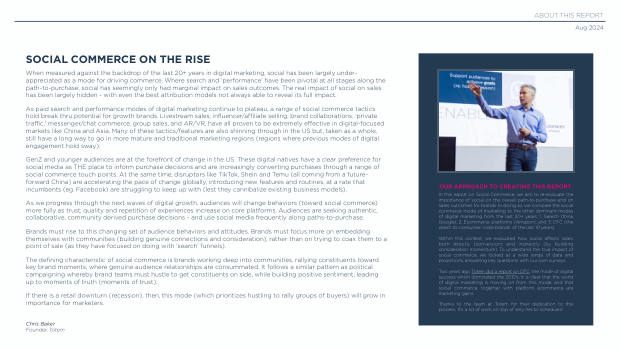
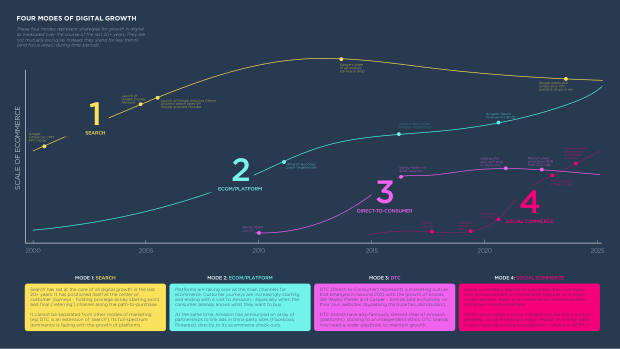
Social has long been under-appreciated as a commerce engine, its true impact hidden even from strong attribution models. As paid search and performance plateau, social-commerce tactics — livestream selling, influencer and affiliate sales, brand collaborations, private traffic, group buying and AR/VR — hold breakthrough potential. They are already proven in China and Asia and are surfacing in the US, but as a whole still have far to go in mature, search-centric markets.
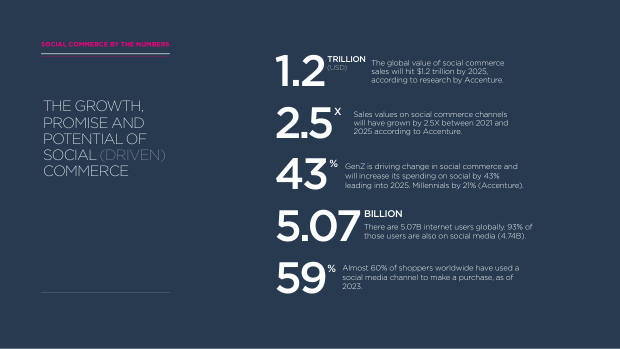
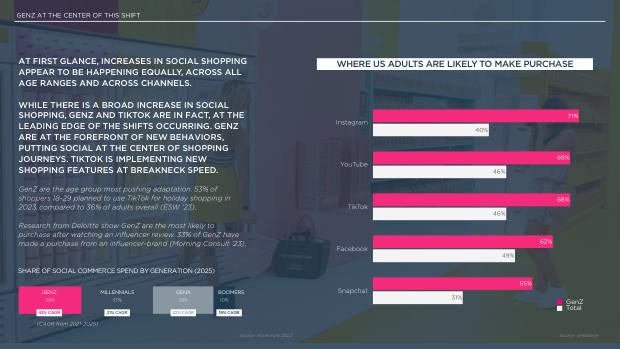
The numbers point up and to the right. Social-commerce sales are projected to grow 2.5x between 2021 and 2025, reaching US$1.2 trillion globally by 2025 (Accenture), against 5.07 billion internet users worldwide of whom 93% are on social. Almost 60% of shoppers worldwide had used a social channel to purchase as of 2023. GenZ leads the shift, projected to raise social spending 43% into 2025 versus 21% for Millennials.
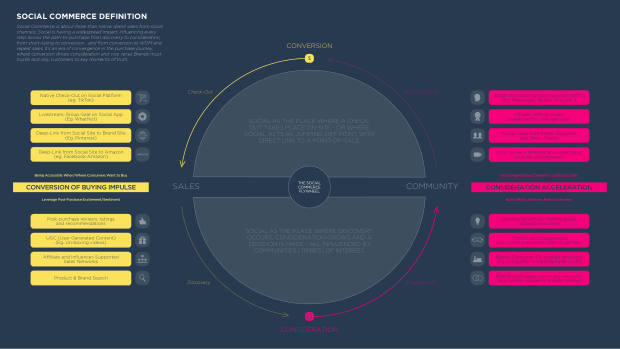
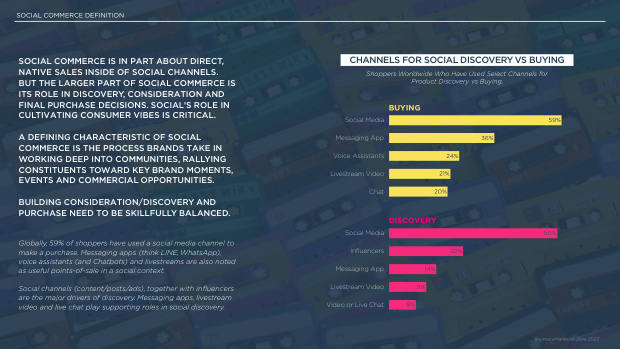
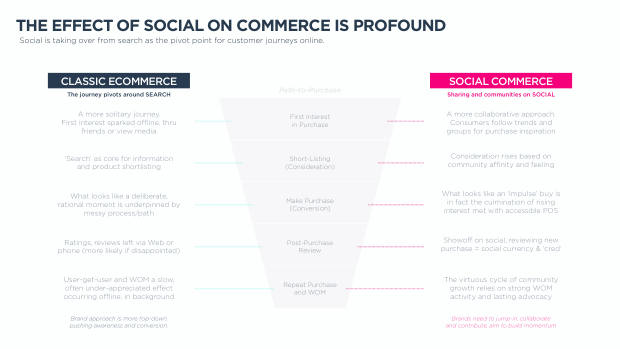
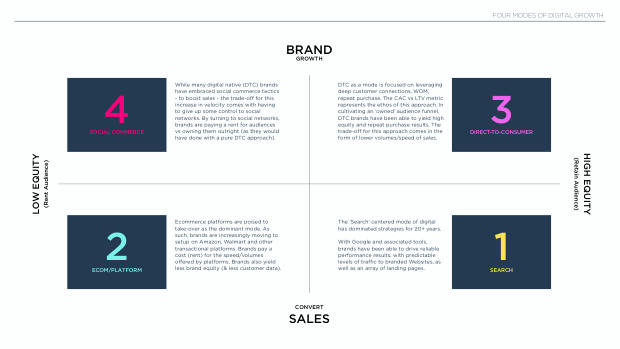
The report's core argument is that social commerce is a different mode, not a bolt-on. Its defining move is brands working deep into communities and rallying constituents toward key brand moments — closer to political campaigning than to search funnels. Brands must embed in communities and build genuine consideration rather than coax buyers to an isolated point of sale, and if a downturn comes, this rally-the-group mode grows more important.
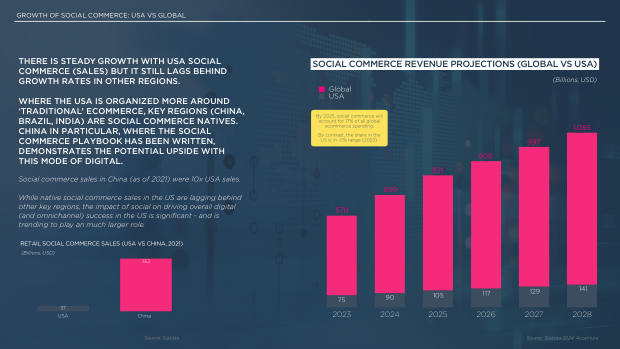
The US lags the world, and China wrote the playbook.
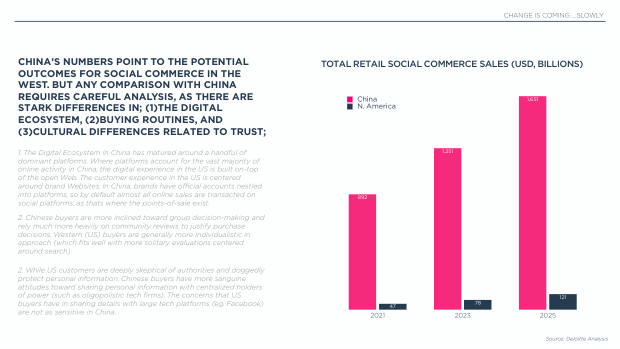
Social commerce is projected to reach 17% of all global ecommerce spending by 2025, but only about 5% in the US (2023). China's 2021 social-commerce sales were roughly 10x the US level (US$352bn vs US$37bn), because Chinese brands sit inside dominant platforms where the points-of-sale already live.
Change is coming slowly, then all at once.
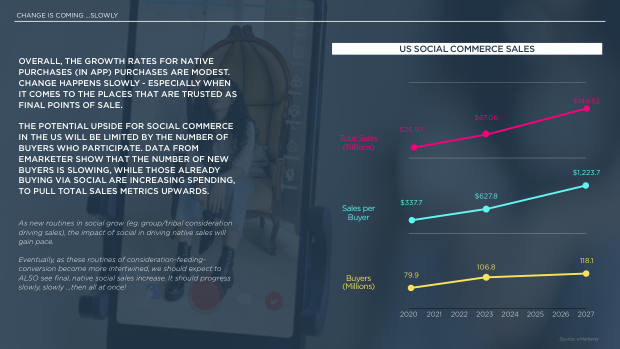
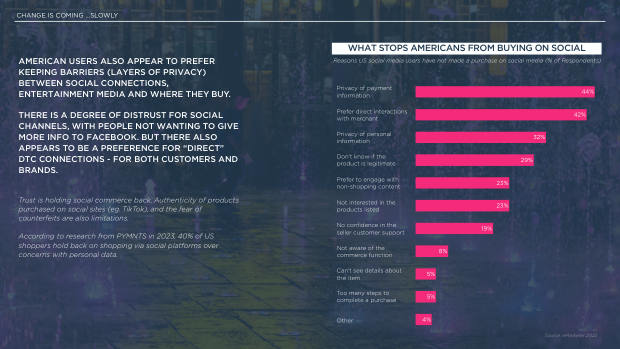
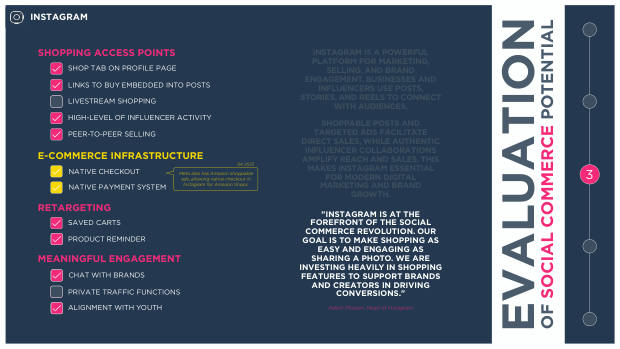
US native (in-app) purchase growth is modest and constrained by how many buyers participate — new-buyer growth is slowing while existing buyers spend more. Trust is the brake: 40% of US shoppers hold back over data concerns (PYMNTS 2023), and the top stated barriers are process friction and thin product detail, not disinterest.
GenZ drives the shift, but is not impulsive.
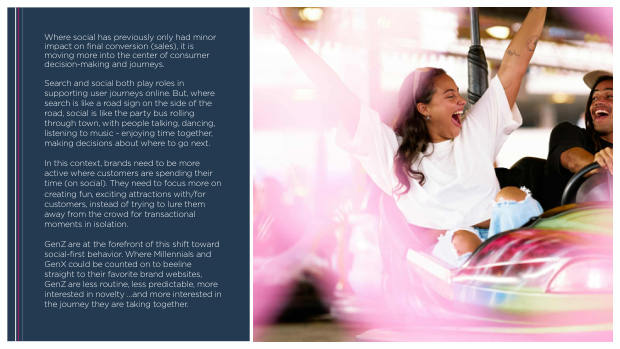
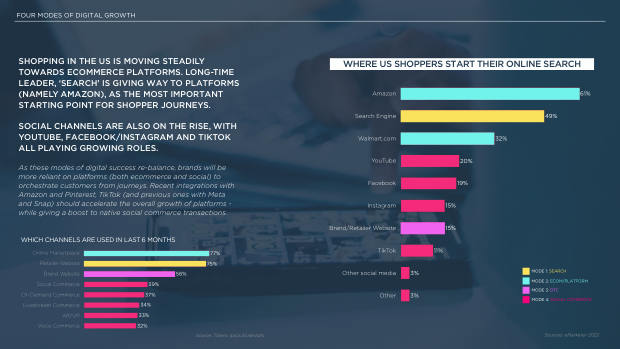
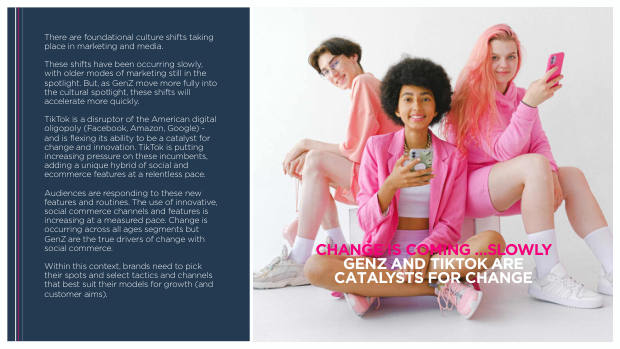
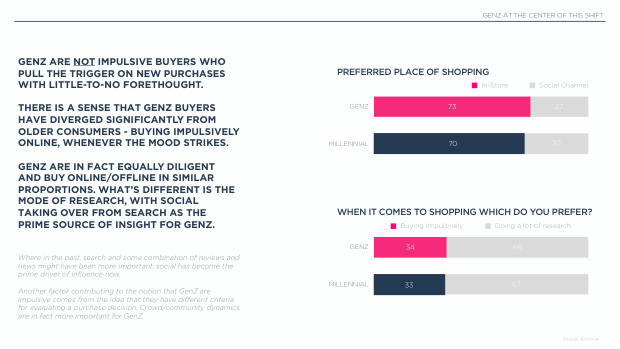
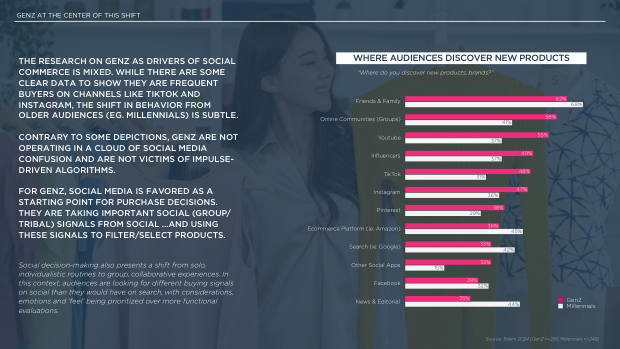
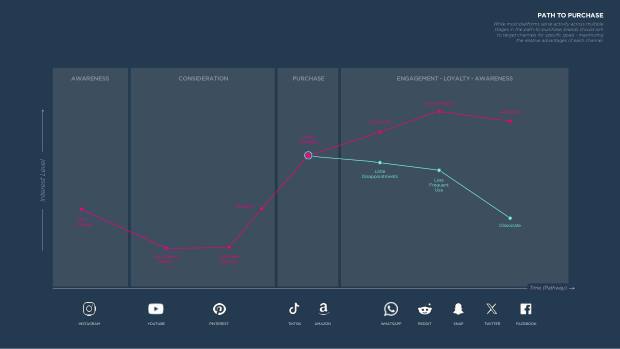
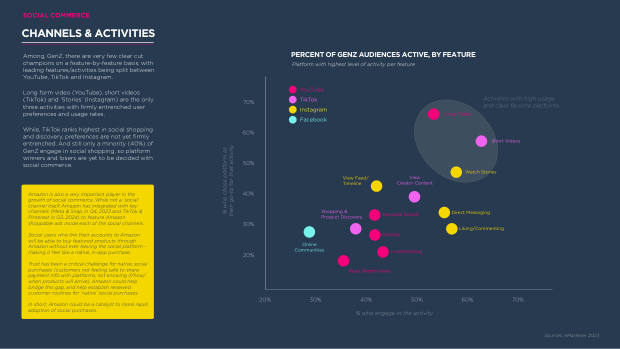
GenZ buy online and offline in similar proportions to Millennials and do heavy research; what changed is the mode of research, with social displacing search as the prime source of influence. In Totem's survey, social media, online communities and YouTube rank above Google as places GenZ discover products.
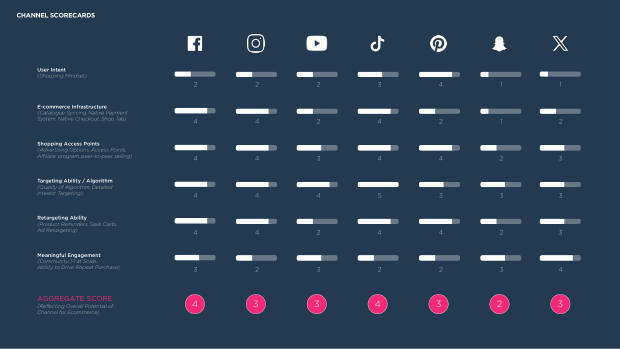
TikTok is the catalyst — closer to an Amazon rival than a Facebook one.
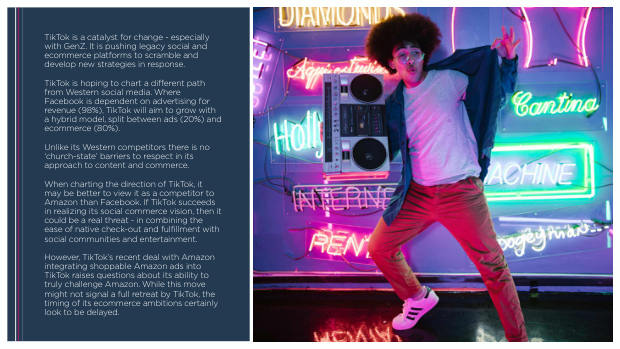
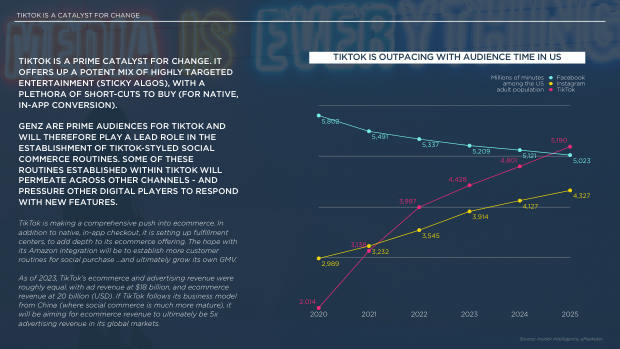
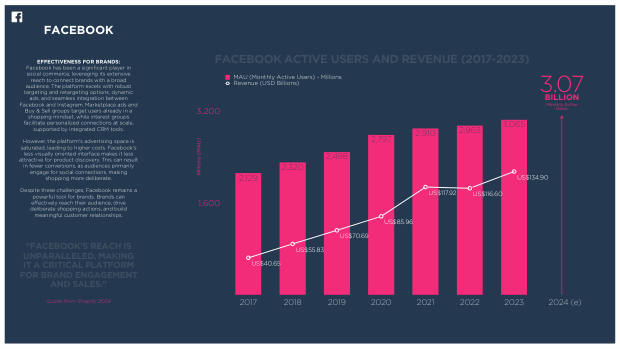
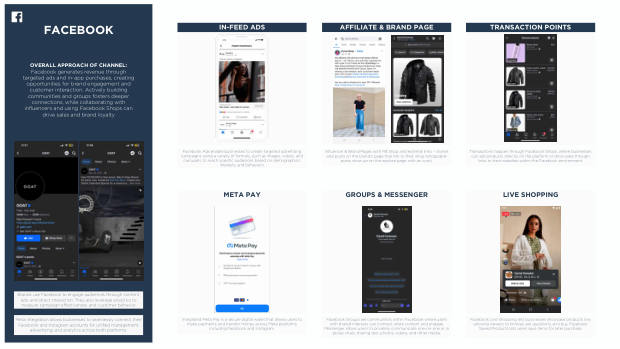
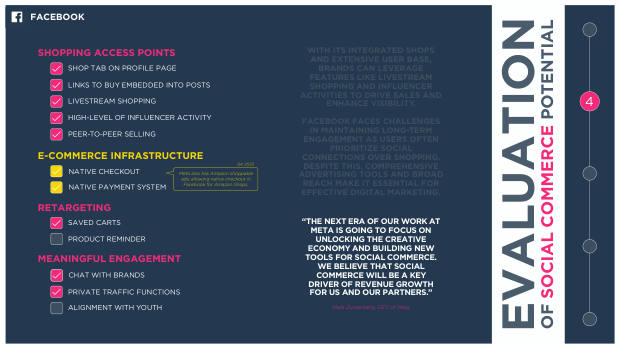
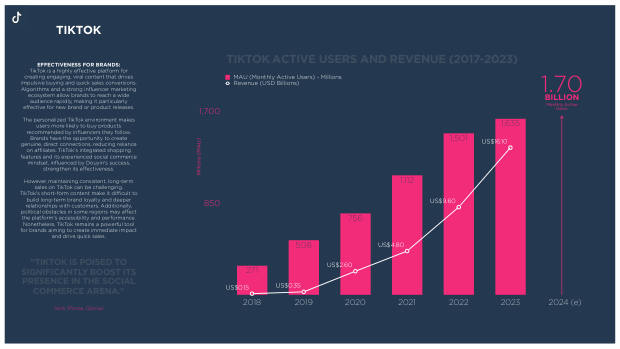
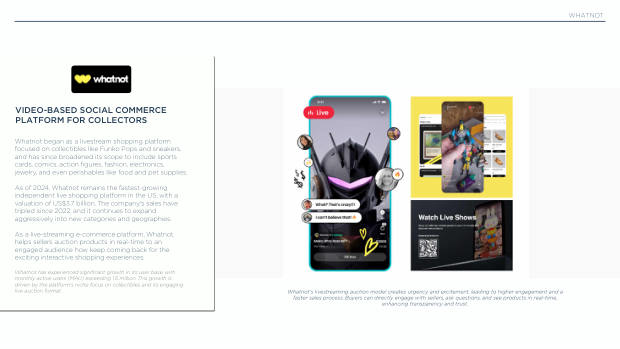
TikTok adds social-plus-commerce features at pace and aims for a hybrid 20% ads / 80% ecommerce model, unlike Facebook's 98% ad dependence. In 2023 its ad and ecommerce revenues were roughly level (ad ~US$18bn, ecommerce ~US$20bn); following its China model, it targets ecommerce at 5x ad revenue.
Conversion versus consideration splits by category.
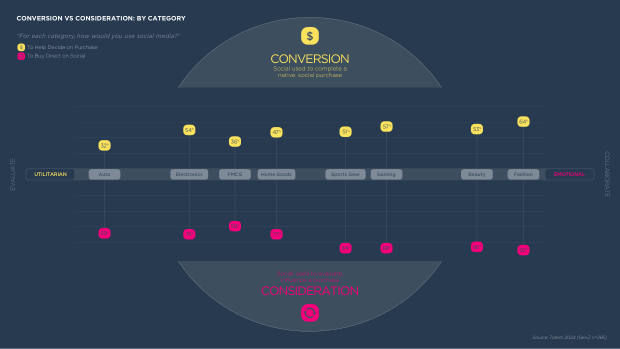
Totem's GenZ data show social used far more to help decide than to buy direct — 92% versus 64% in fashion, but only 59% versus 36% in autos — with emotional, expressive categories (fashion, beauty, sports gear) far more social-commerce-ready than utilitarian ones.
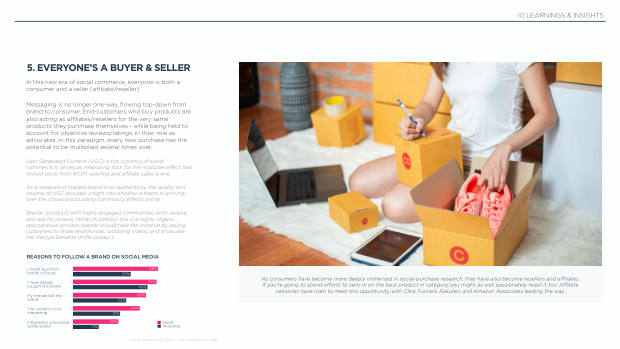
Everyone is now a buyer and a seller.
End-customers double as affiliates and resellers, making UGC the currency of social commerce and a proxy for brand trust. Affiliate networks (ClickFunnels, Rakuten, Amazon Associates) have risen to meet the opportunity, multiplying each purchase's potential reach.
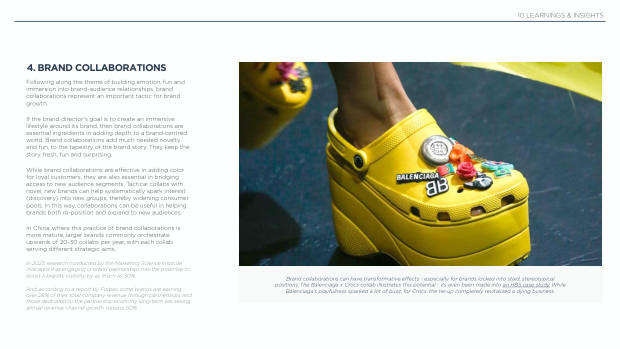
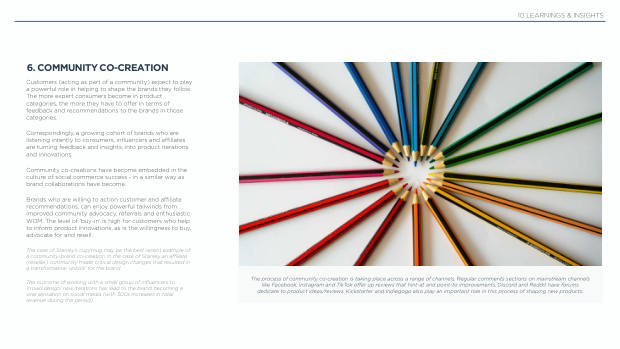
Collaborations and community co-creation are core tactics.
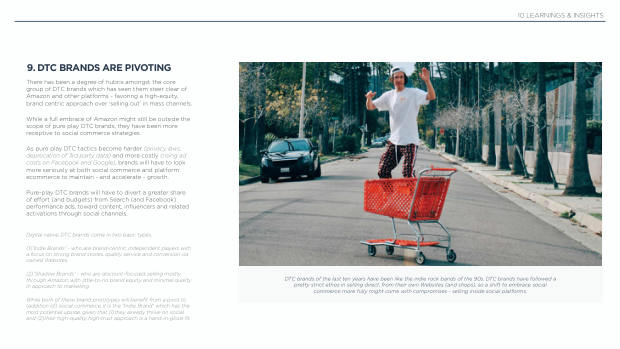
Brand partnerships can lift visibility by as much as 30% (Marketing Science Institute, 2023); in China, large brands run 20–30 collabs a year. Community co-creation delivered Stanley's roughly 300x revenue surge, showing how listening to affiliates and influencers can unlock a brand.
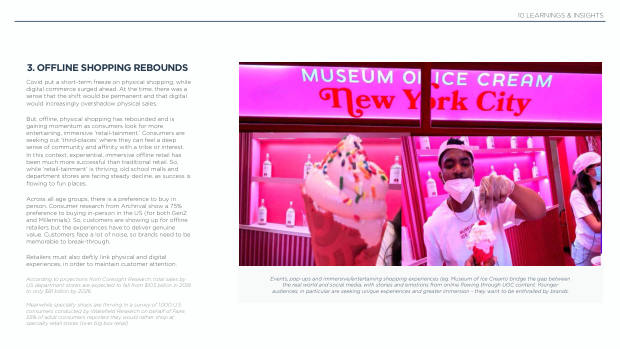
Offline rebounds as "retail-tainment," and brands must be more fun.
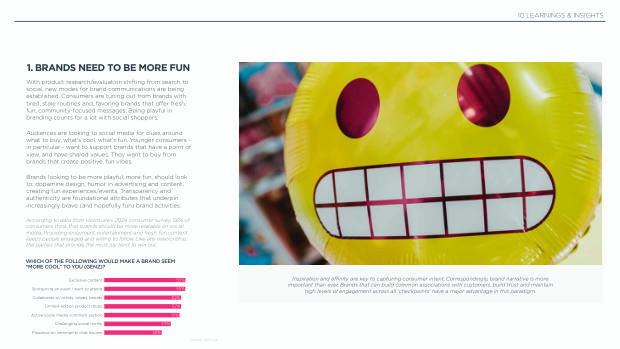
Across ages there is a ~75% preference to buy in person (Archrival), but experiential retail wins while department stores decline (US department-store sales projected to fall from US$103bn in 2018 to US$81bn by 2026). Meanwhile 56% of consumers want brands to be more relatable on social (Hootsuite 2024).



















How big is social commerce set to become?
Global sales are projected to grow 2.5x from 2021 to 2025, reaching US$1.2 trillion and about 17% of all global ecommerce spending by 2025 — though the US share sits near 5% (2023).
Why is the US behind China?
China's digital ecosystem matured around a few dominant platforms where points-of-sale already exist, buyers lean toward group decision-making, and there is less resistance to sharing data. US commerce is built on the open web, is more individualistic, and carries more platform distrust.
Is GenZ really driving the change?
Yes, but not through impulse. GenZ research purchases heavily; the difference is that social has replaced search as their prime source of influence, putting community and "feel" signals ahead of functional evaluation.
Why does TikTok matter most?
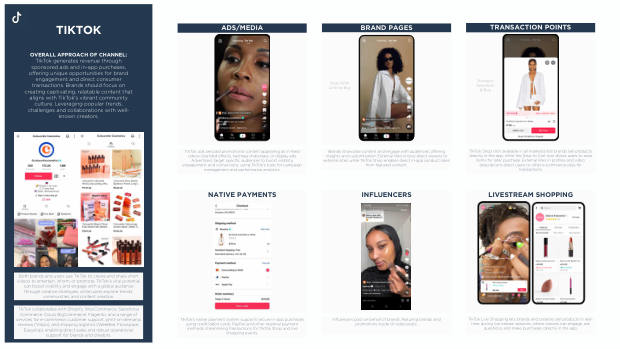
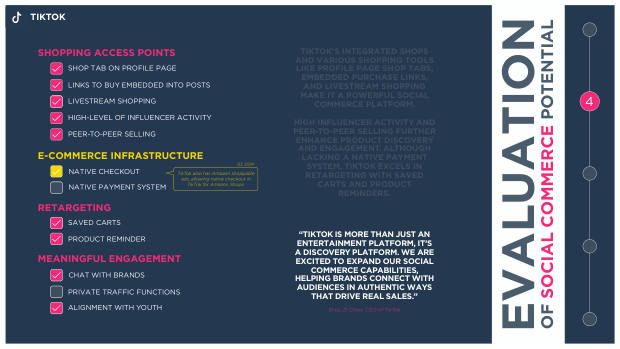
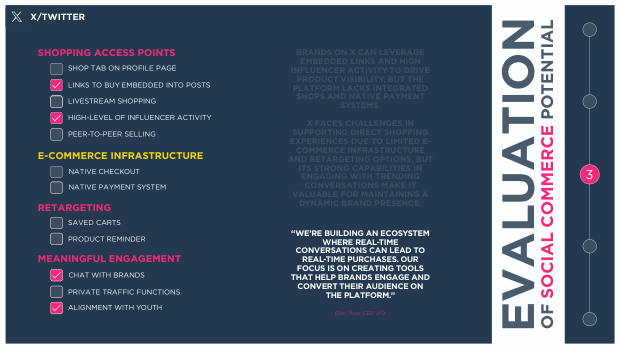
It fuses sticky entertainment with native, in-app checkout and is building fulfilment, pursuing an 80% ecommerce model. It is better viewed as a challenger to Amazon than to Facebook, and its routines pressure other platforms to respond.
What should brands actually do?
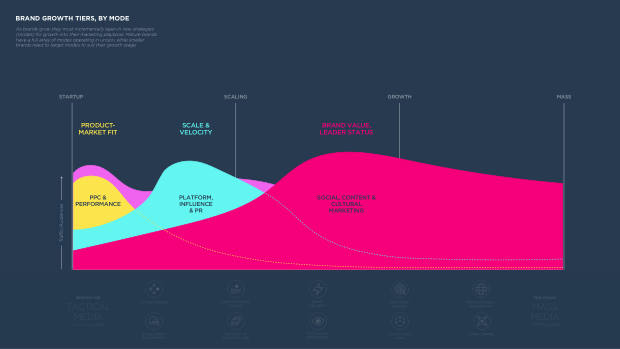
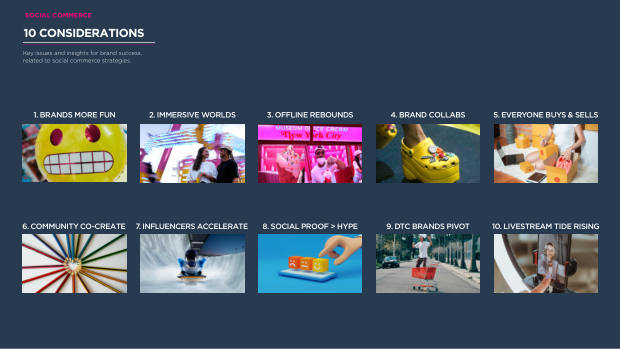
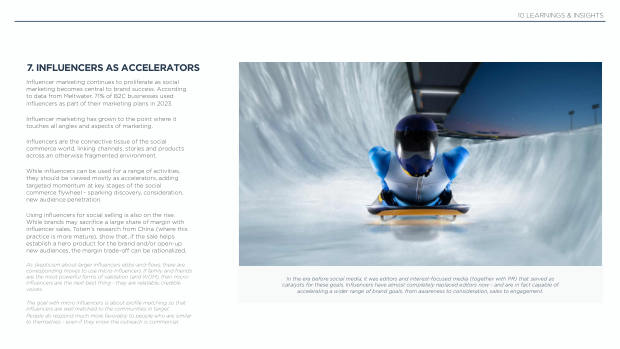
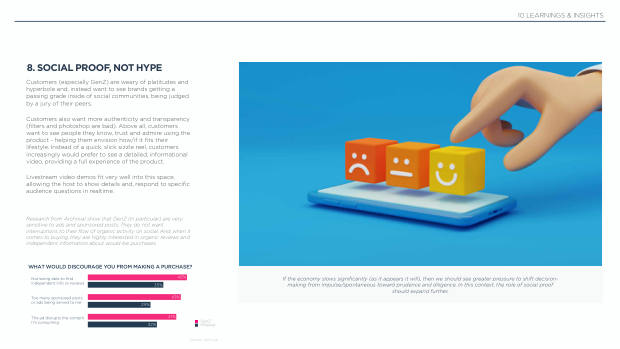
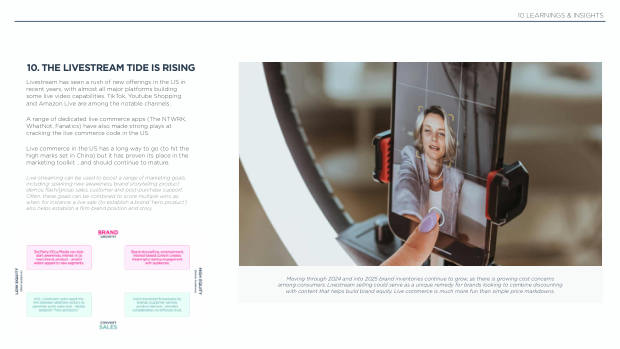
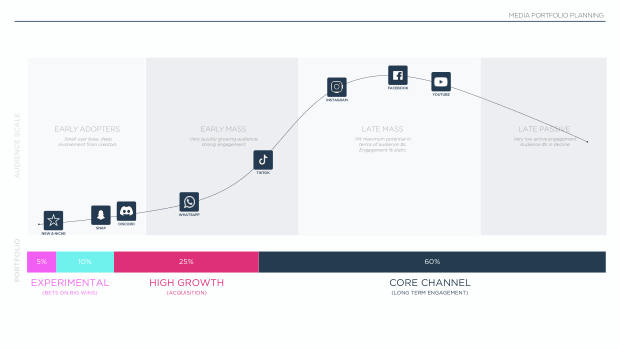
Embed in communities and build genuine consideration rather than push to an isolated sale — use collaborations, community co-creation, influencers as accelerators, UGC and social proof, and match tactics to category and growth stage.
Totem's re-evaluation of social's role across the path-to-purchase, comparing social commerce with the three prior dominant modes of digital marketing — search, ecommerce platforms and DTC. It builds on a body of third-party research (eMarketer, Statista, Accenture, Deloitte, Archrival) and adds Totem's own supplementary surveys of US GenZ (n=285) and Millennial (n=249) audiences, distilled into "10 Considerations" for brands seeking to grow through social commerce. *Note: the given publication date is 2025-01; the report's own cover and about-page carry a 2024 (Aug 2024) date.*
Get the full report
Leave your details — we'll email you the PDF and give you the download straight away.