China Trend Report for Beauty Brands 2023: RED, private traffic and the fight for share of voice
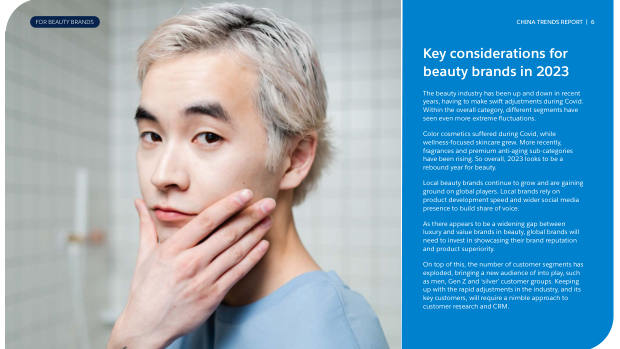
Beauty has been one of China's most volatile categories through Covid — colour cosmetics contracted while wellness-focused skincare grew, and fragrance and premium anti-aging have since risen — leaving 2023 shaping up as a rebound year. Local brands continue to gain on global players by moving faster on product and building wider social presence, while the number of customer segments has multiplied to include men, Gen Z and "silver" consumers. Keeping pace requires a nimble approach to research and CRM.
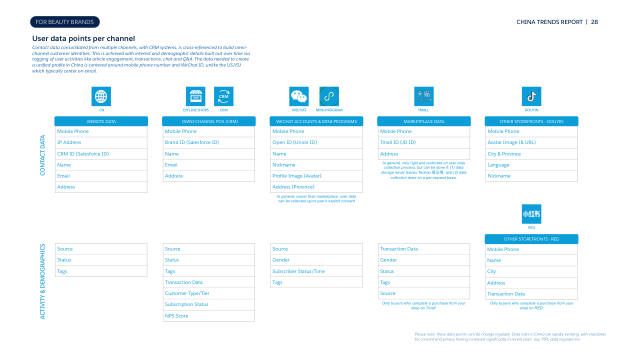
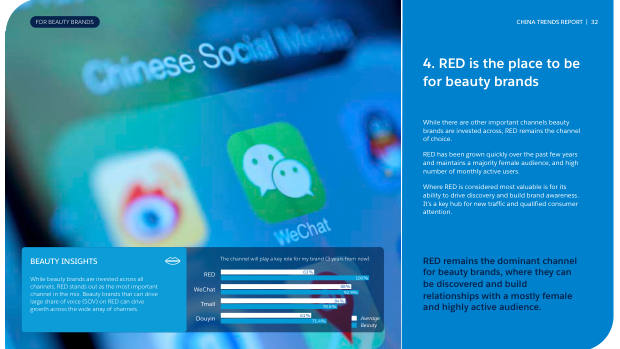
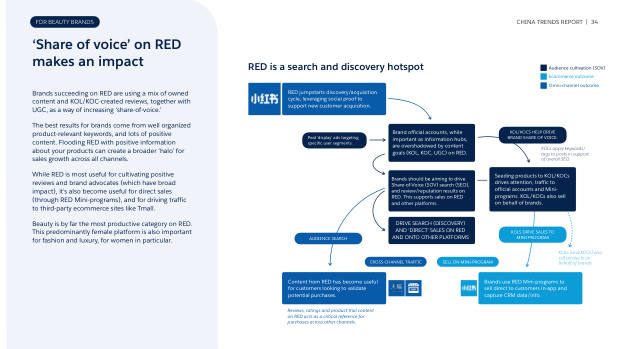
Beauty brands are more fully invested across channels than almost any other category, maintaining official social accounts, sales-and-loyalty Mini-programs, influencer relationships and ad programmes to hold share of voice. RED is the centre of gravity: a majority-female, highly active audience where discovery, reviews and social proof translate into demand across every other channel. Douyin, Weibo and WeChat round out a mix global brands must defend against a strong local push.
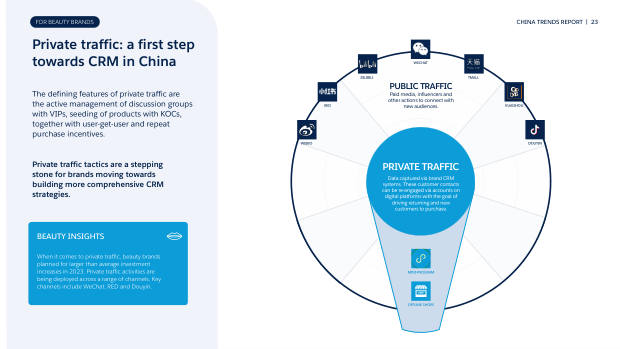
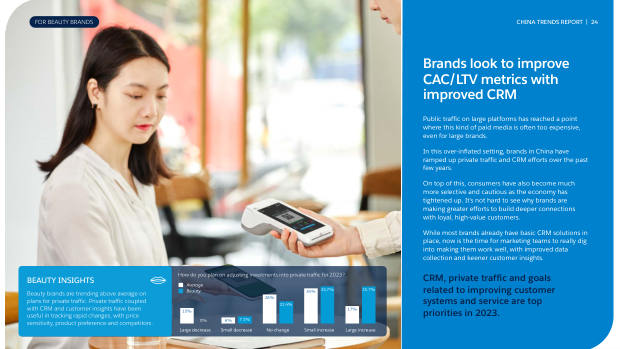
The report positions private traffic and CRM as beauty's route to tracking a fast-moving market — price sensitivity, product preference and competitor moves — before graduating tactical follower management into a comprehensive customer view. Beauty planned larger-than-average increases in private-traffic investment for 2023.
RED is the focus channel for beauty.
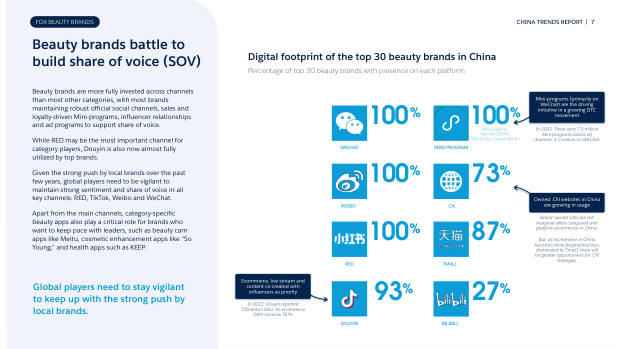
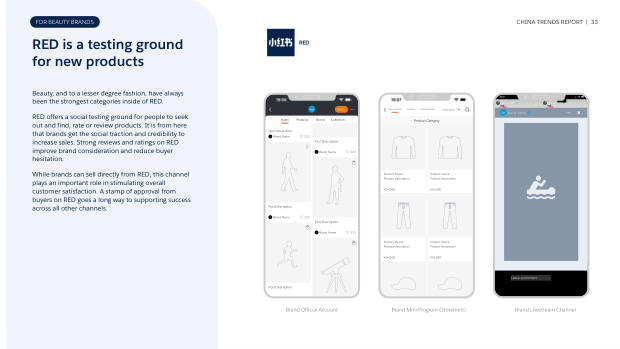
RED serves as the category's discovery and testing ground, where reviews and ratings reduce buyer hesitation and drive consideration across other platforms. All of the top 30 beauty brands are present on RED, and beauty respondents rate RED's future importance at 100% versus a 61% cross-category average.
Beauty is fully deployed across platforms.
The top 30 beauty brands sit at 100% presence on WeChat, Douyin and RED, with Weibo at 93% and Tmall at 87%. Mini-program adoption runs at 100% on WeChat, 83% on Douyin and 23% on RED — a breadth that reflects the constant battle for share of voice.
Local brands are closing the gap.
Local players rely on product-development speed and wider social presence to build share of voice, and the report warns of a widening split between luxury and value beauty — pressing global brands to invest in demonstrating brand reputation and product superiority across RED, Douyin, Weibo and WeChat.
Private traffic is a growth priority.
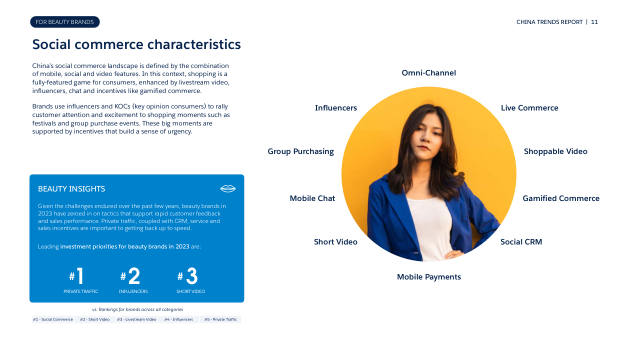
Beauty planned above-average increases for 2023, with roughly 71% of brands raising private-traffic investment (35.7% a large increase, 35.7% a small increase) versus a much softer cross-category profile. Private traffic, coupled with CRM, is being used to track rapid shifts in price sensitivity and product preference.
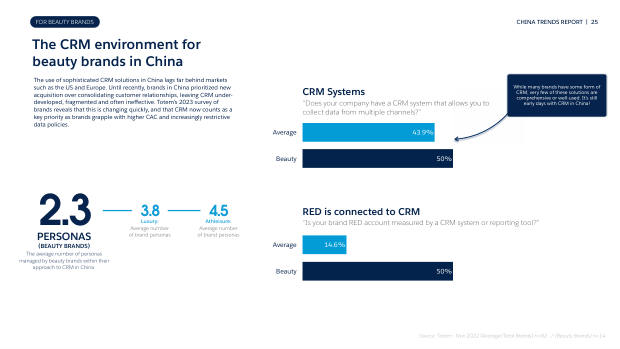
CRM is running ahead of the market average.
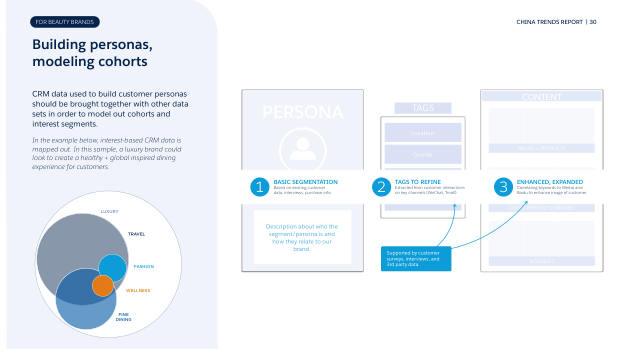
50% of surveyed beauty brands operate a multi-channel CRM (vs 43.9% overall), and 50% have RED connected to CRM against a 14.6% average — a notable lead on tying a discovery-led channel back into measurable customer data. Beauty manages 3.8 personas on average.
Livestreaming builds hero products, not discounts.
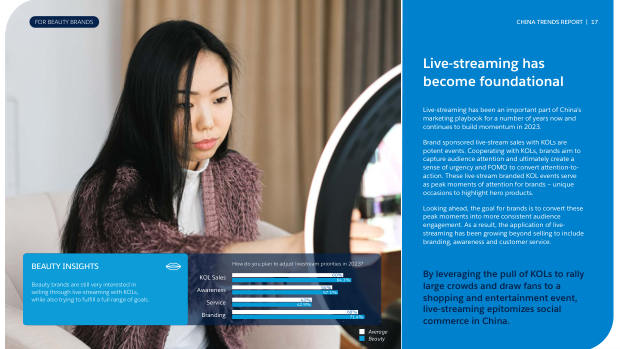
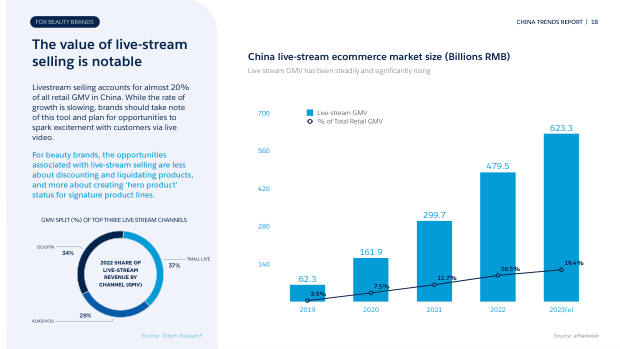
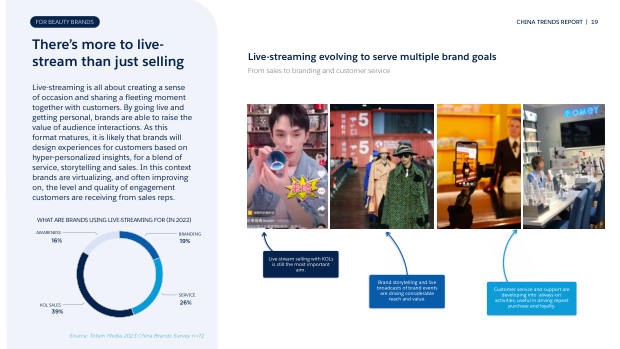
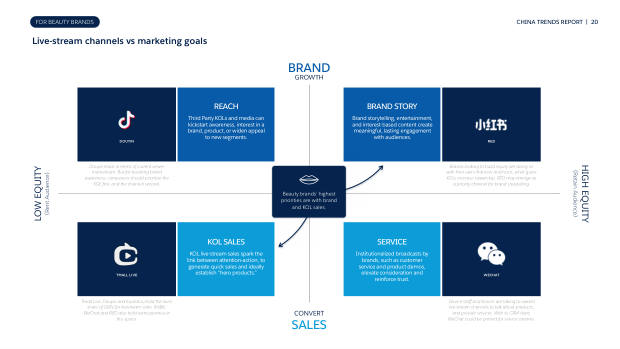
For beauty the opportunity in live-stream selling is less about liquidating stock and more about creating "hero product" status for signature lines. Reported priorities span the full range — KOL sales, awareness, service and branding — with the strongest weight on brand and KOL sales.
New segments demand faster research.
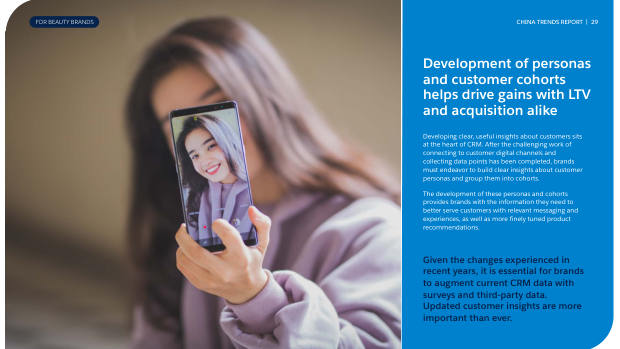
The explosion of customer groups — men, Gen Z, "silver" consumers — alongside beauty-specific apps like Meitu, So-Young and Keep means brands need continually refreshed personas and third-party data to keep CRM assumptions current.





Which channel matters most for beauty brands in China?
RED. It is the category's discovery and review hub, with a majority-female, highly active audience; all top 30 beauty brands are present, and respondents rate its three-year importance at 100% versus a 61% average.
How are local beauty brands competing with global players?
Through product-development speed and wider social-media presence to build share of voice. The report flags a widening gap between luxury and value beauty and urges global brands to showcase reputation and product superiority.
Are beauty brands investing more in private traffic?
Yes — above the market average. Roughly 71% of beauty brands planned to raise private-traffic investment in 2023, split evenly between large and small increases.
How mature is beauty's CRM?
Ahead of the average: 50% run a multi-channel CRM (vs 43.9%) and 50% have RED connected to CRM (vs 14.6%), managing 3.8 personas on average.
Who produces the report and what is the sample?
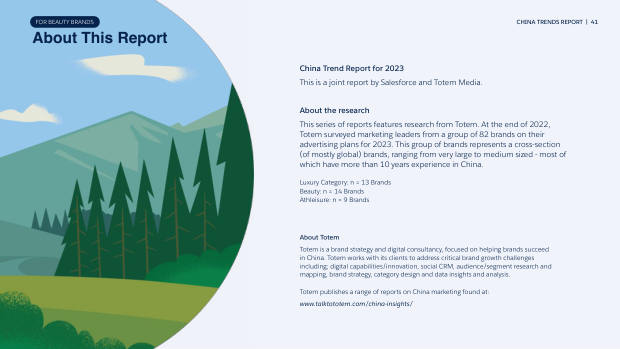
It is a joint Salesforce and Totem study, based on Totem's survey of 82 China brands (Nov 2022), of which 14 were beauty brands, most with more than 10 years' experience in China.
This is a co-branded China Trend Report published jointly by Salesforce and Totem Media, part of a series examining CRM and social commerce by category. It draws on Totem's annual survey of marketing leaders at 82 mostly-global brands — ranging from very large to medium-sized, most with more than 10 years in China — conducted at the end of 2022 on their 2023 plans. The beauty cut reflects the 14 beauty brands within that sample (n=14), supplemented by Totem's platform research on the digital footprint of the top 30 beauty brands and third-party sources including eMarketer and Group M.
Get the full report
Leave your details — we'll email you the PDF and give you the download straight away.