China Trend Report for Athleisure Brands 2023: Douyin, community and the omni-channel playbook
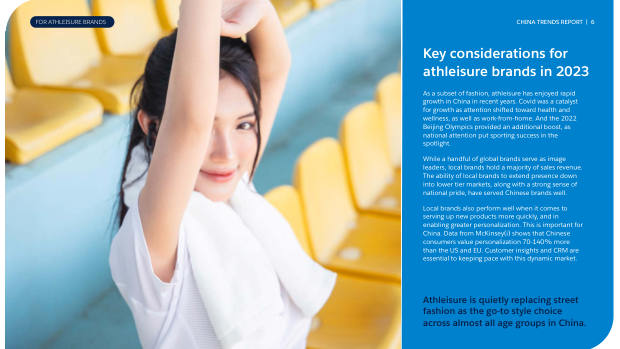
Athleisure has grown rapidly in China as a subset of fashion, catalysed by Covid's shift toward health, wellness and work-from-home and given a further lift by the 2022 Beijing Olympics. The category is now displacing street fashion as a default style across almost all age groups. But while a handful of global brands act as image leaders, local brands hold the majority of sales revenue — helped by lower-tier reach, national pride, faster product cycles and stronger personalization. Customer insight and CRM are essential to keeping pace, especially given McKinsey data showing Chinese consumers value personalization 70–140% more than US and EU shoppers.
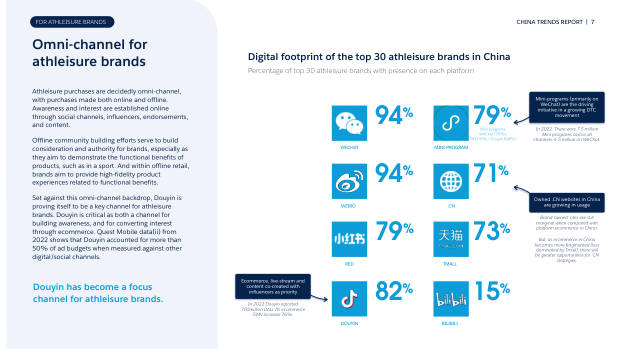
Athleisure buying is decidedly omni-channel: awareness and interest form online through social, influencers and content, while offline community-building and high-fidelity product experiences drive consideration. Against that backdrop Douyin has emerged as the category's focus channel — QuestMobile data for 2022 shows Douyin accounting for more than 50% of ad budgets among digital and social channels — valued equally for awareness and for converting interest through built-in commerce.
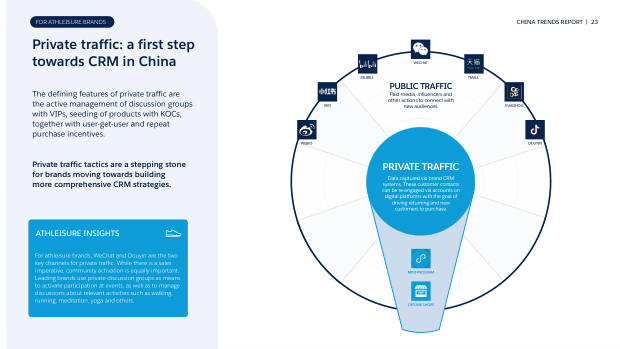
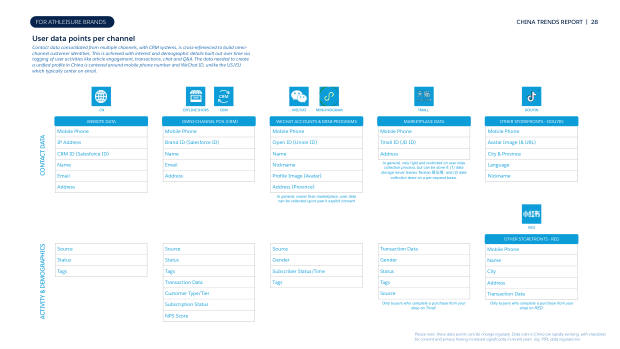
The report is candid that athleisure's CRM sits behind luxury and beauty. Its 2023 investment priorities tilt toward Mini-programs, live-stream video and private traffic — tools for rallying communities around function, fashion and sales — and the category manages the fewest customer personas of the three, underscoring how much room remains to build a unified customer view.
Douyin is the focus channel.
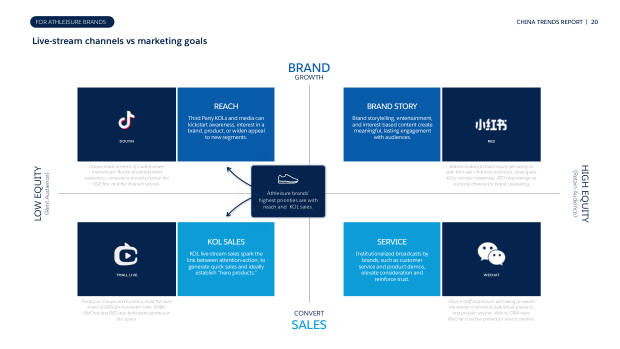
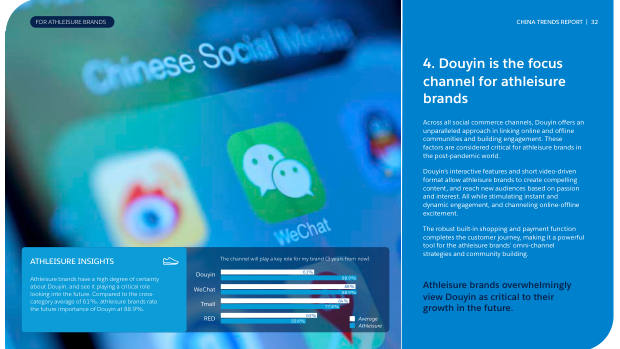
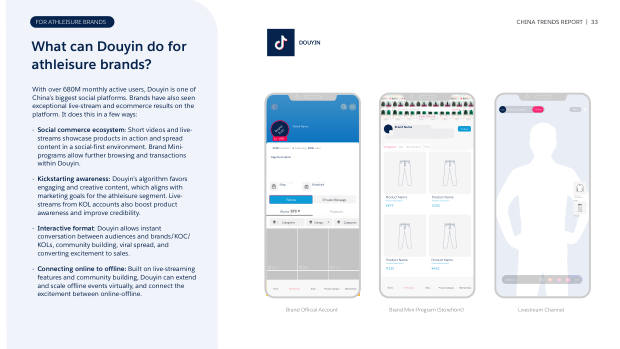
Douyin links online and offline communities, favours engaging content through its algorithm, and completes the journey with built-in shopping and payments. With over 680M monthly active users and more than 50% of athleisure ad budgets in 2022 (QuestMobile), it is rated a key three-year channel by 88.9% of athleisure brands versus a 61% average.
Local brands own the volume.
While global names lead on image, local athleisure brands hold the majority of sales revenue — extending into lower-tier markets, moving faster on new product and enabling greater personalization, all reinforced by a strong sense of national pride.
Personalization is a competitive necessity.
McKinsey data cited in the report shows Chinese consumers value personalization 70–140% more than US and EU shoppers — raising the stakes on customer insight and CRM in a category where local rivals already personalize aggressively.
The playbook is genuinely omni-channel.
Awareness and interest form online through social, influencers and endorsements, but offline community-building and hands-on product experience drive consideration — a balance that makes Douyin's online-to-offline bridging particularly valuable for post-pandemic athleisure.
Investment priorities differ from the market.
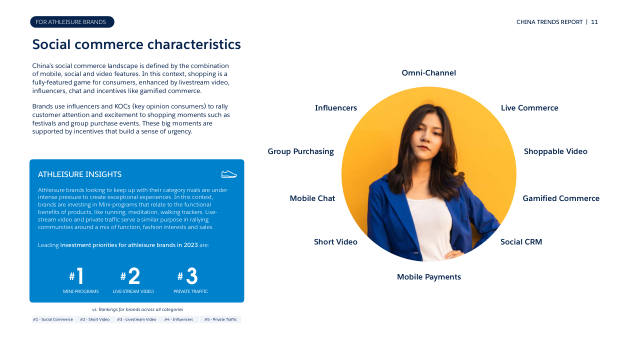
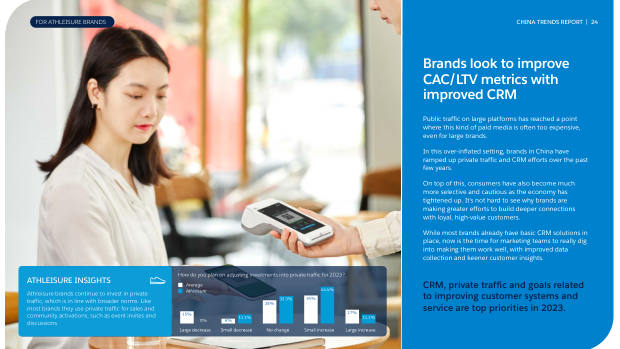
Athleisure's leading 2023 priorities are Mini-programs, live-stream video and private traffic — diverging from the cross-category order of social commerce, short video and livestream — reflecting a focus on function-led Mini-programs (running, meditation, walking trackers) and community activation.
CRM is the category's soft spot.
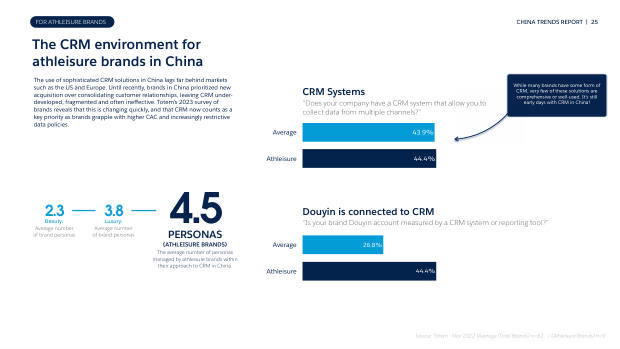
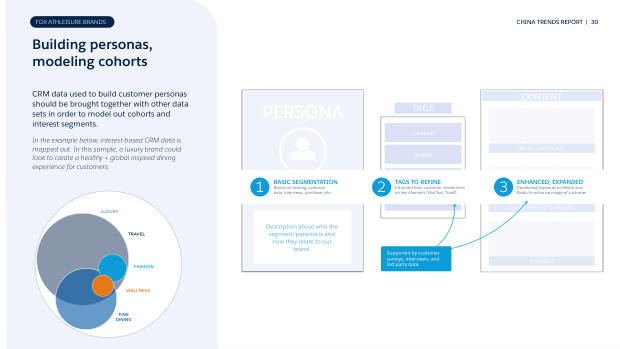
At 44.4%, athleisure's multi-channel CRM adoption is only level with the 43.9% average, and Douyin-to-CRM connection sits at 44.4% versus a 26.8% average. Crucially, athleisure manages just 2.3 personas on average — the fewest of the three categories — leaving the most headroom to build a unified customer view.
Douyin is delivering commerce results.
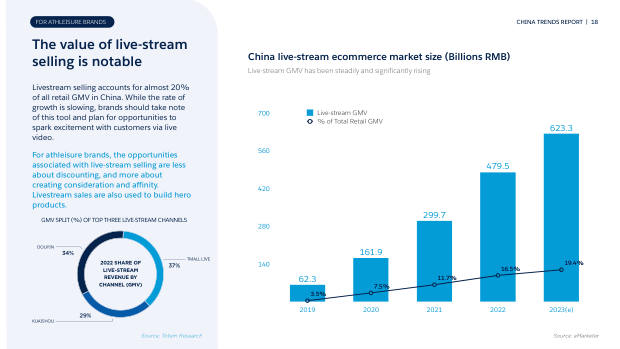
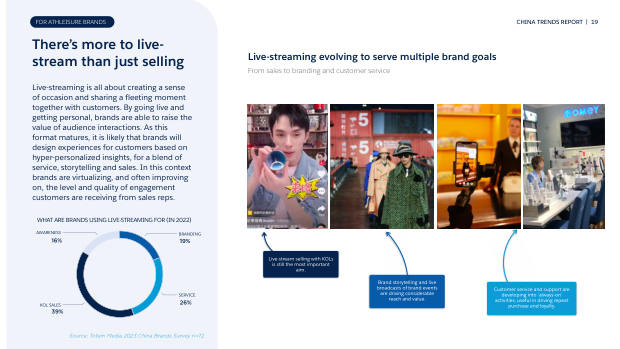
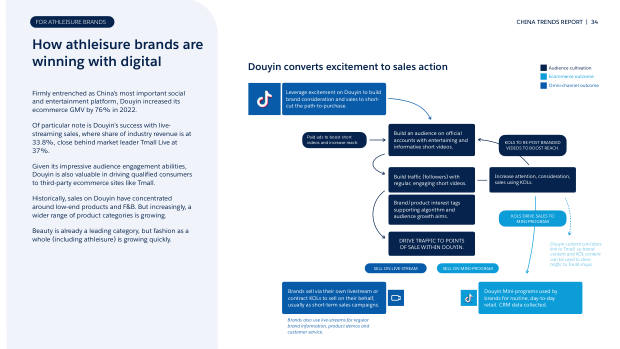
Douyin increased ecommerce GMV by 76% in 2022 and holds 33.8% of live-stream sales revenue, close behind market leader Tmall Live at 37% — and can also drive qualified traffic onward to third-party marketplaces like Tmall.







Which channel matters most for athleisure brands in China?
Douyin. It bridges online awareness and offline community, took more than 50% of athleisure ad budgets in 2022 (QuestMobile), and is rated a key three-year channel by 88.9% of athleisure brands versus a 61% average.
Do global or local brands lead Chinese athleisure?
Global brands lead on image, but local brands hold the majority of sales revenue — helped by lower-tier reach, faster product cycles, personalization and national pride.
Why does personalization matter so much in this category?
McKinsey data cited in the report shows Chinese consumers value personalization 70–140% more than US and EU consumers, making customer insight and CRM essential to competing with fast-moving local brands.
How mature is athleisure's CRM compared with other categories?
Least mature of the three. Multi-channel CRM adoption is 44.4% (about level with the 43.9% average) and athleisure manages just 2.3 personas on average, the fewest of luxury, beauty and athleisure.
Who produces the report and what is the sample?
It is a joint Salesforce and Totem study, based on Totem's survey of 82 China brands (Nov 2022), of which 9 were athleisure brands, most with more than 10 years' experience in China.
This is a co-branded China Trend Report published jointly by Salesforce and Totem Media, part of a series examining CRM and social commerce by category. It draws on Totem's annual survey of marketing leaders at 82 mostly-global brands — ranging from very large to medium-sized, most with more than 10 years in China — conducted at the end of 2022 on their 2023 plans. The athleisure cut reflects the 9 athleisure brands within that sample (n=9), supplemented by Totem's platform research on the top 30 athleisure brands and third-party sources including McKinsey, QuestMobile, eMarketer and Group M.
Get the full report
Leave your details — we'll email you the PDF and give you the download straight away.