NeiWai vs Ubras: two digital-native lingerie brands, two very different growth playbooks
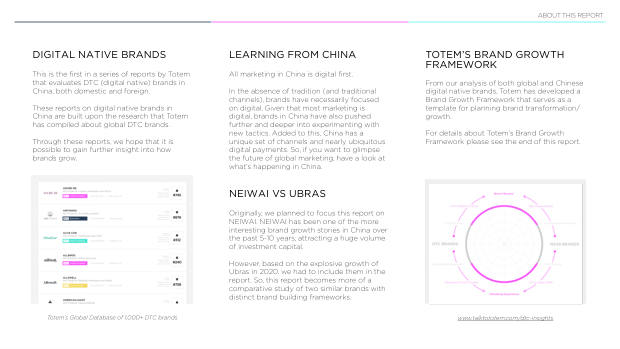
This is the first in a Totem series profiling digital-native (DTC/DNVB) brands in China through its Brand Growth Framework. It was planned as a study of NeiWai — one of China's more compelling brand stories over the prior 5–10 years — but Ubras's explosive 2020 growth turned it into a comparative study of two similar lingerie brands with very different building blocks.
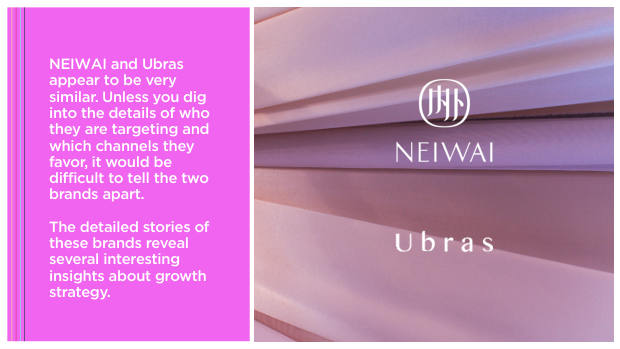
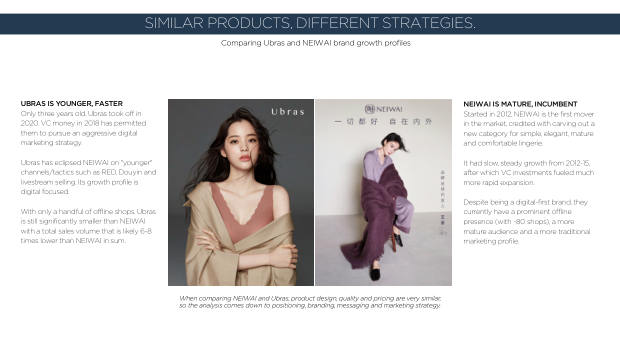
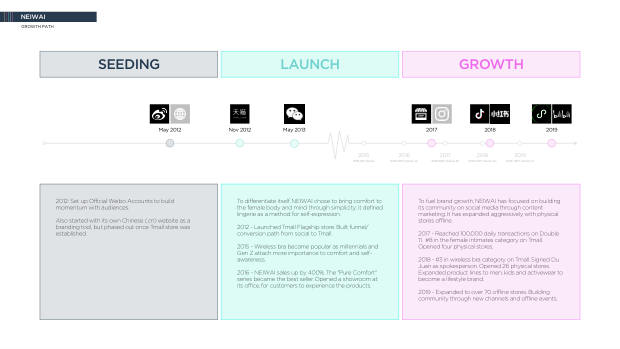
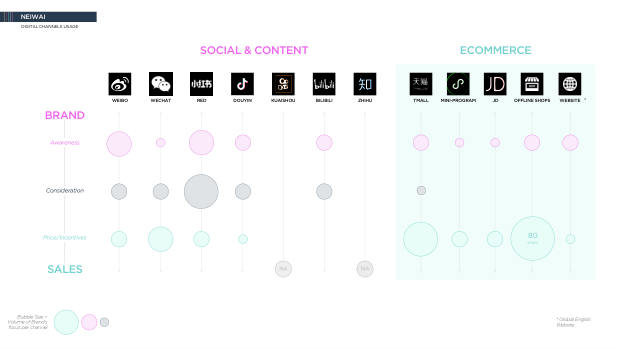
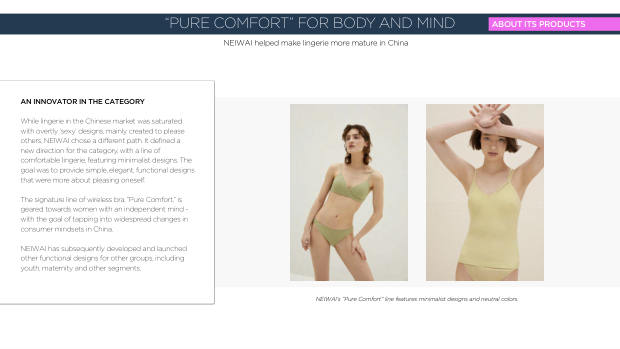
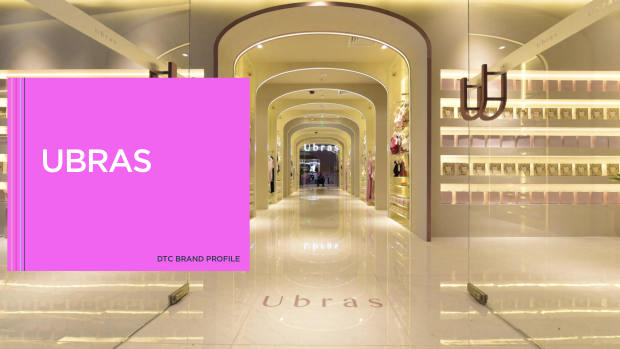
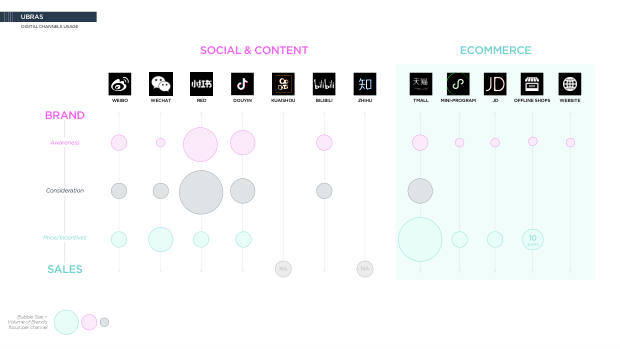
The two look alike on product, quality and pricing, so the analysis turns on positioning, channels and strategy. NeiWai, founded in 2012, is the mature first-mover that carved out a "comfortable, mature" lingerie category and built a prominent offline footprint (~80 shops) plus bold, emotional branding. Ubras, founded in 2016, is the fast-follower that used its "One-size" wireless bra, RED, Douyin and livestream to catch up fast with a digital-first profile and only ~10 shops.
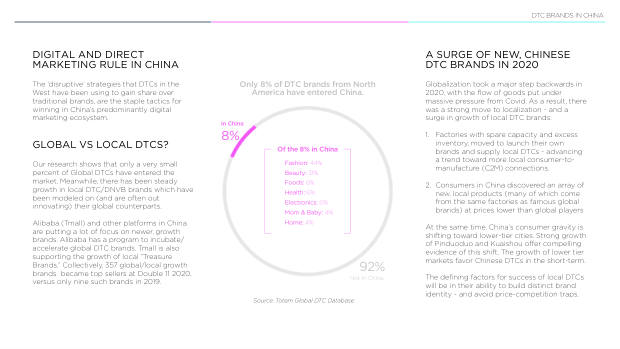
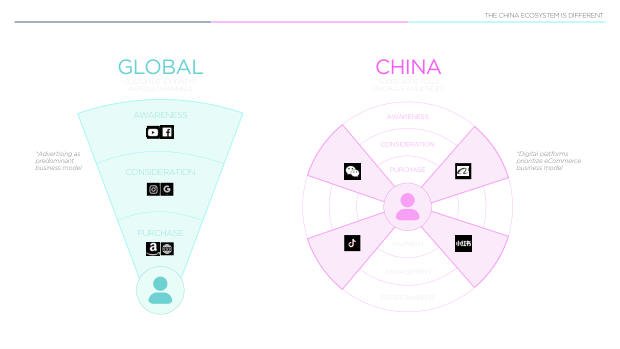
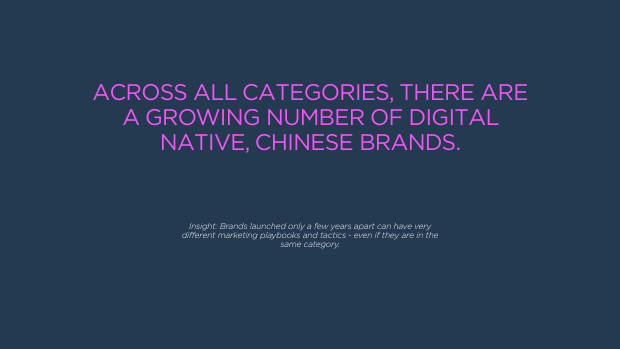
The report situates both against a wider shift: only 8% of North American DTC brands have entered China, while local DNVBs have surged — 357 growth brands were top sellers at Double 11 2020 versus just nine in 2019 — helped by a 2020 move toward localisation and lower-tier consumer gravity.
Same category, opposite profiles.
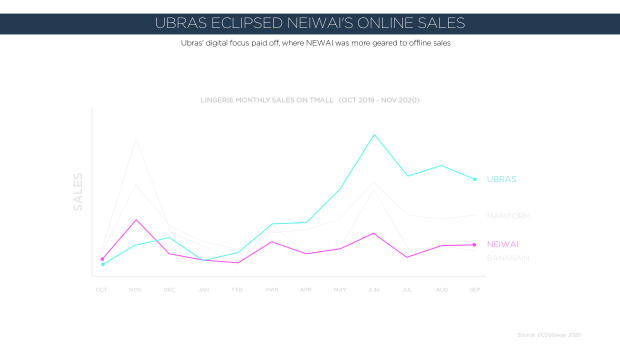
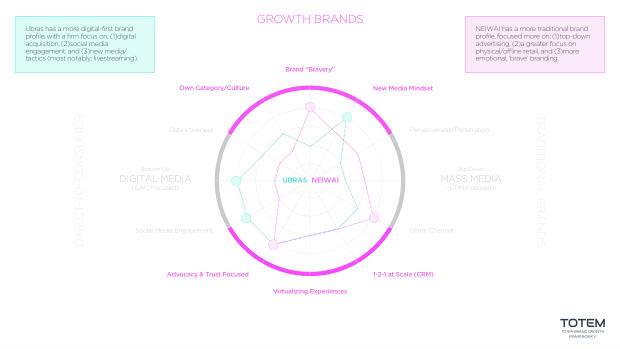
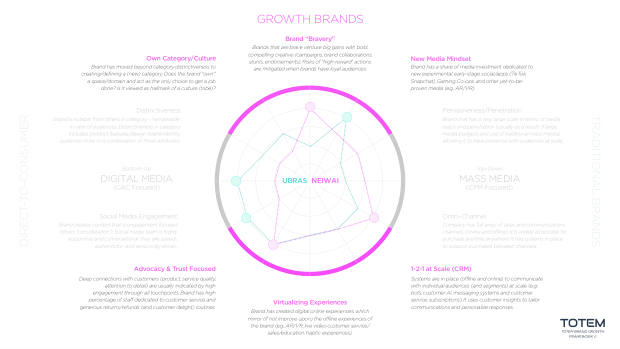
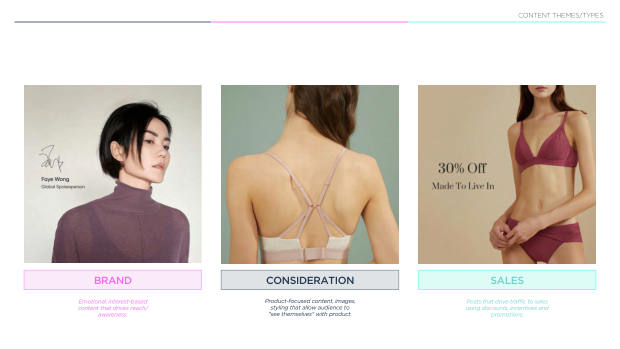
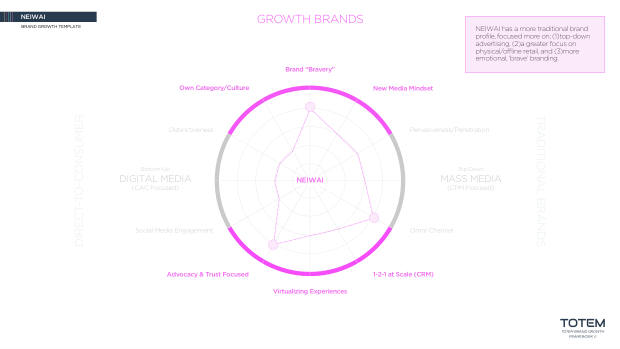
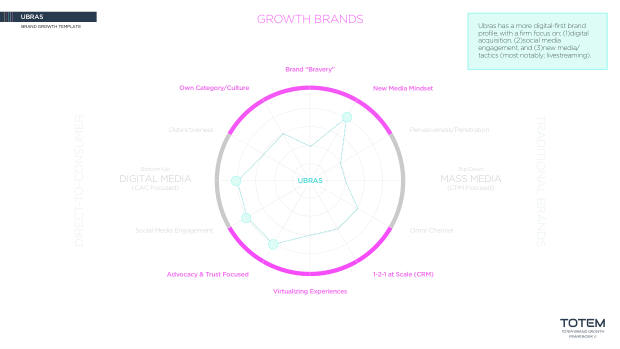
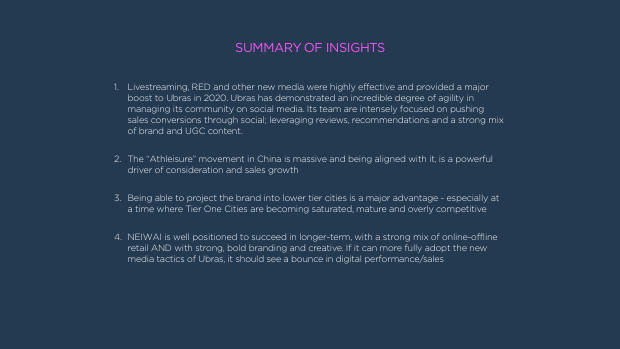
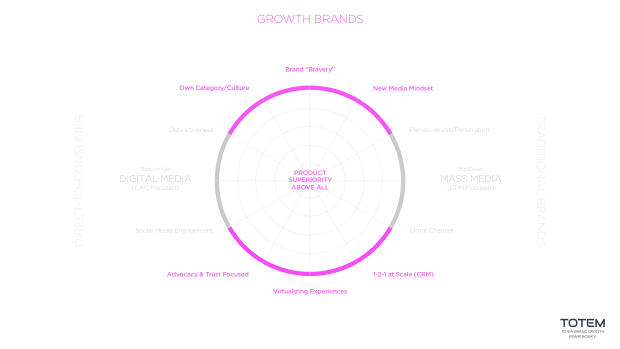
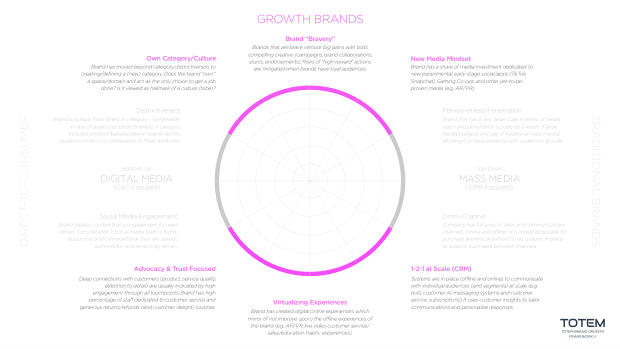
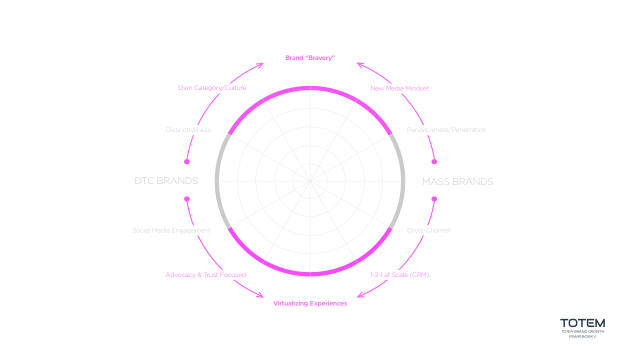
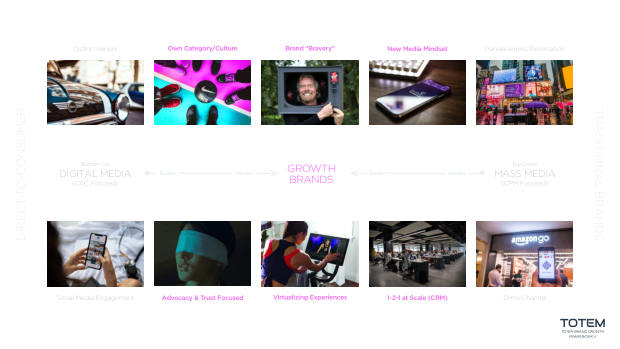
On Totem's framework NeiWai skews traditional — top-down advertising, offline retail and emotional, "brave" branding — while Ubras skews digital-first around acquisition, social engagement and new tactics, most notably livestreaming. With few offline shops, Ubras's total sales volume is likely 6–8x lower than NeiWai's in sum, even as it eclipsed NeiWai online.
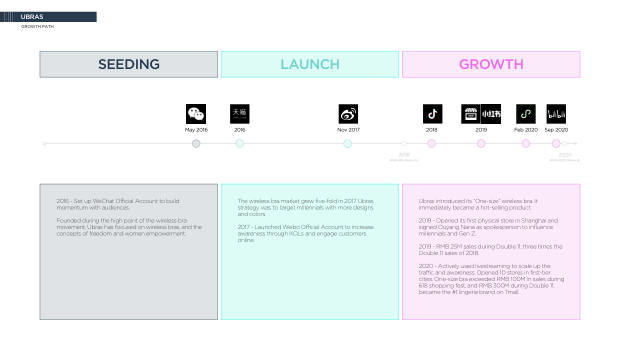
Ubras's growth turned on the "One-size" bra.
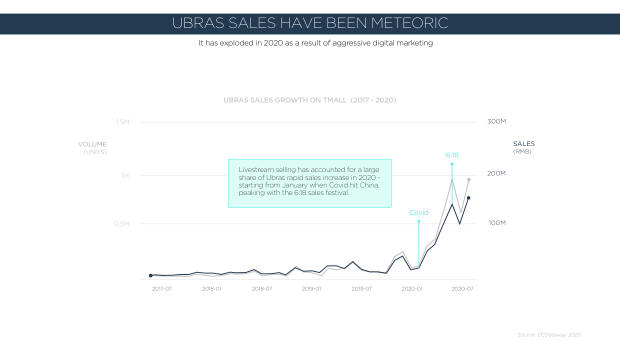
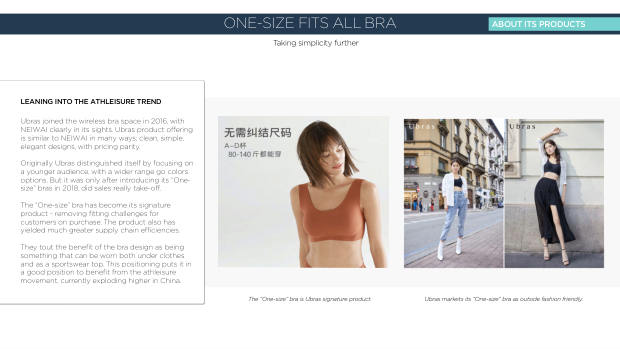
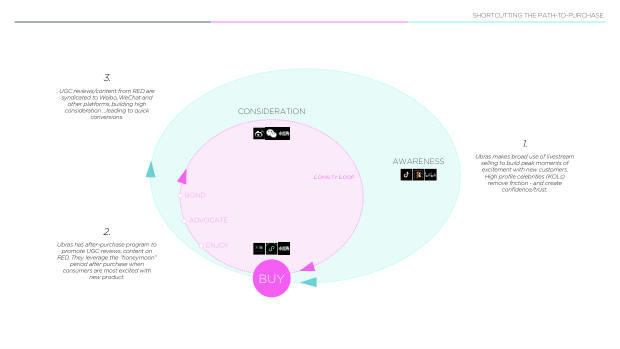
Introduced in 2018, the one-size wireless bra removed fitting friction, delivered supply-chain efficiencies, and doubled as underwear and sportswear — positioning it for China's exploding athleisure trend. Ubras's Double 11 sales hit RMB25M in 2019 (3x 2018), and the One-size bra passed RMB100M at 618 and RMB300M at Double 11 2020, making it Tmall's #1 lingerie brand.
NeiWai built the category, then a brand of "bravery."
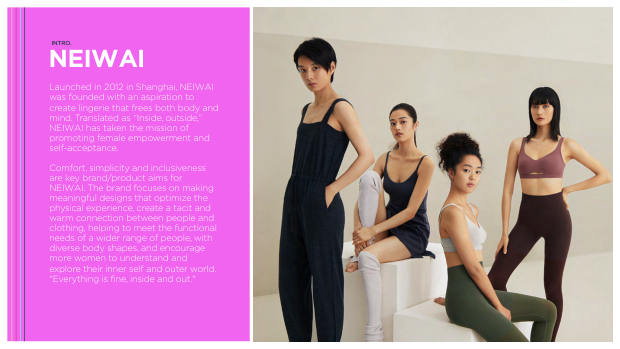
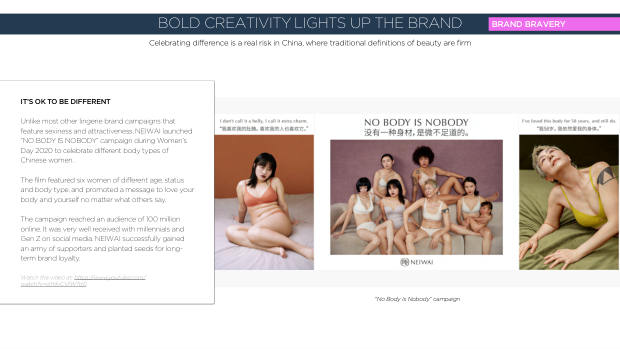
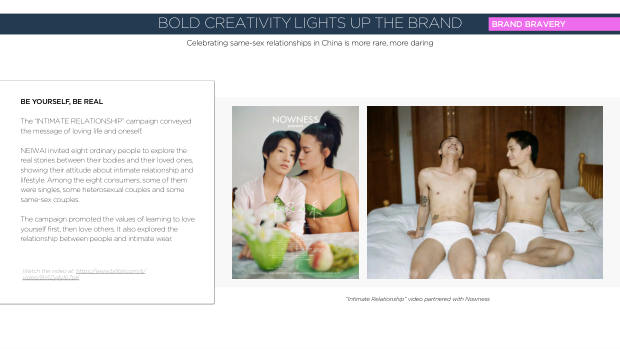
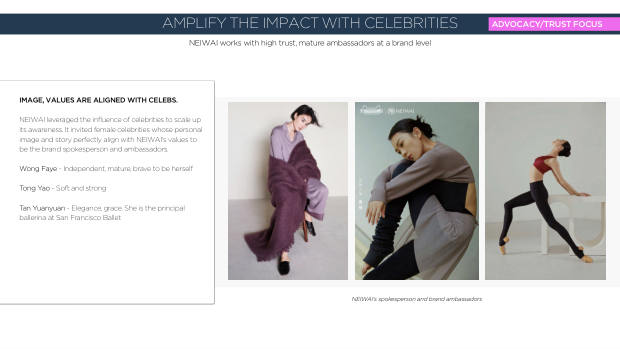
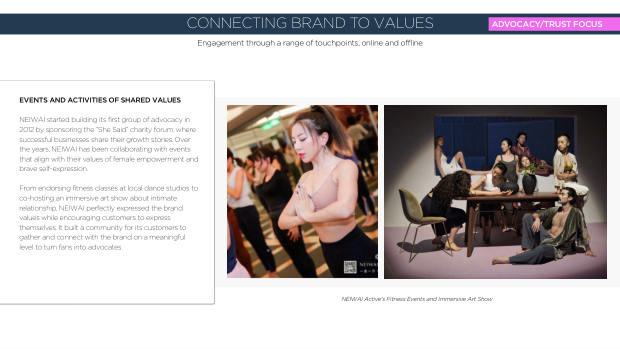
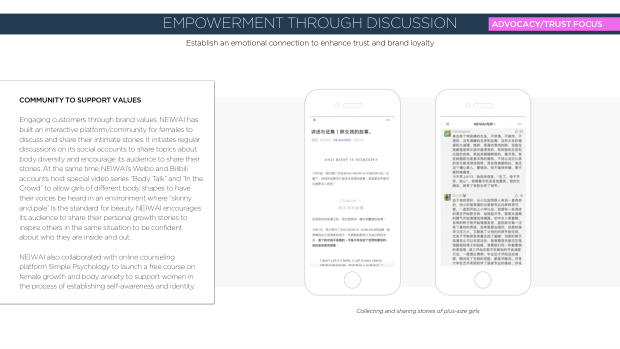
Founded in Shanghai in 2012 to make comfortable, minimalist lingerie "for pleasing oneself," NeiWai grew 400% in 2016 and reached 100,000 daily transactions on Double 11 2017. Its "No Body Is Nobody" (Women's Day 2020) and Nowness-partnered "Intimate Relationship" campaigns — the latter featuring same-sex couples, rare in China — reached 100 million online and seeded long-term loyalty.
Livestream and RED were Ubras's edge.
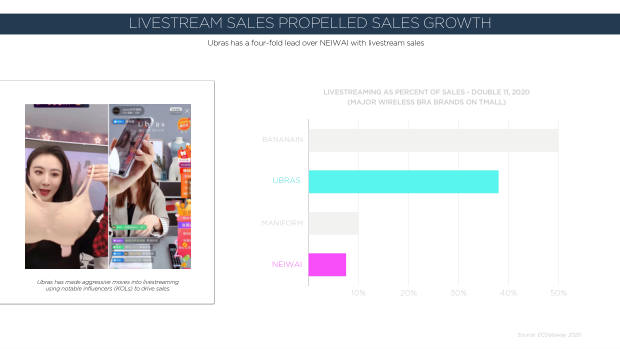
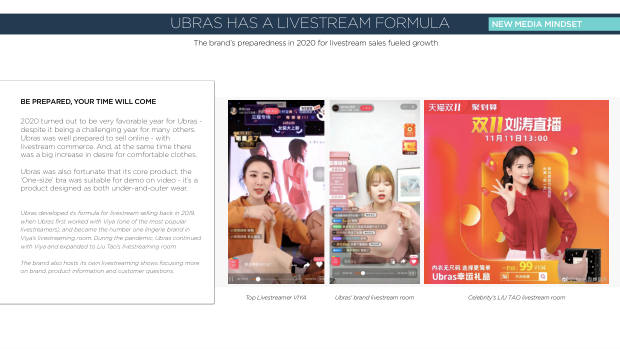
Ubras built its livestream formula in 2019 with top livestreamer Viya (becoming the #1 lingerie brand in her room) and later Liu Tao, plus its own brand livestreams. At Double 11 2020 it held roughly a four-fold lead over NeiWai in livestream's share of sales.
Ubras over-invested in younger discovery channels.
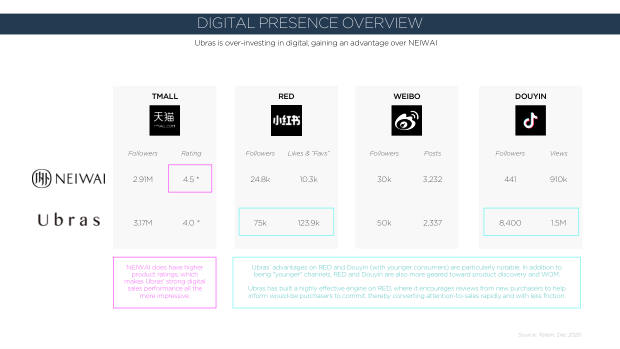
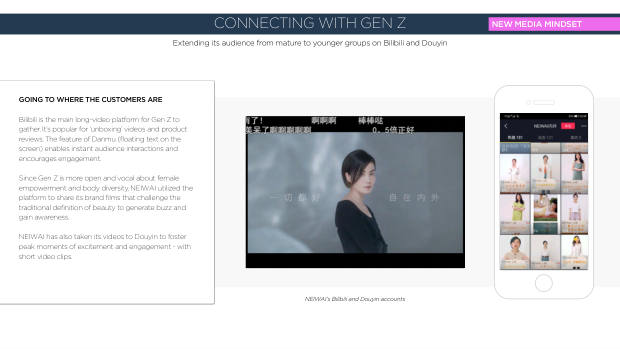
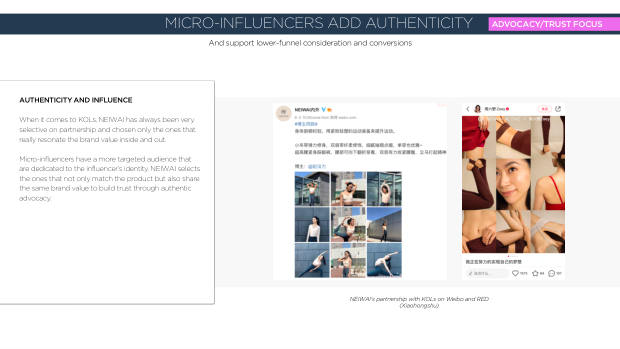
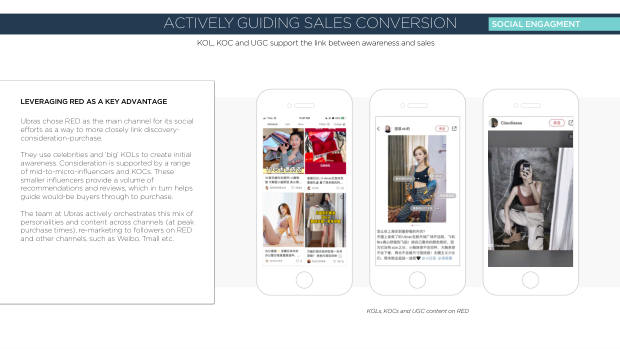
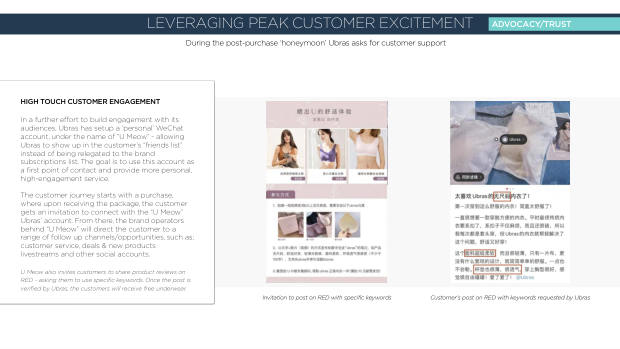
On RED it led NeiWai on followers (75k vs 24.8k) and on Douyin (50k vs 30k), channels geared to discovery and word-of-mouth. Ubras engineered a RED review engine — soliciting post-purchase reviews from new buyers to convert would-be buyers with less friction — even though NeiWai carried higher product ratings.
A relatable ambassador extended Ubras into lower-tier cities.
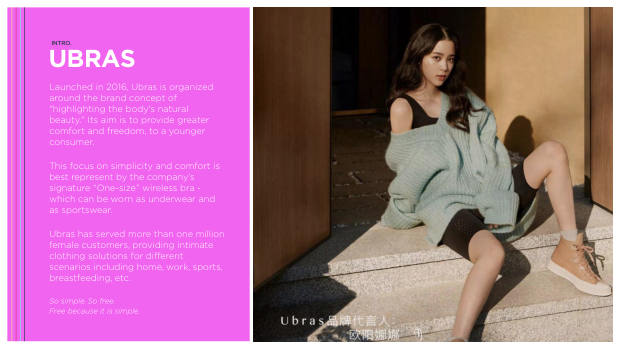
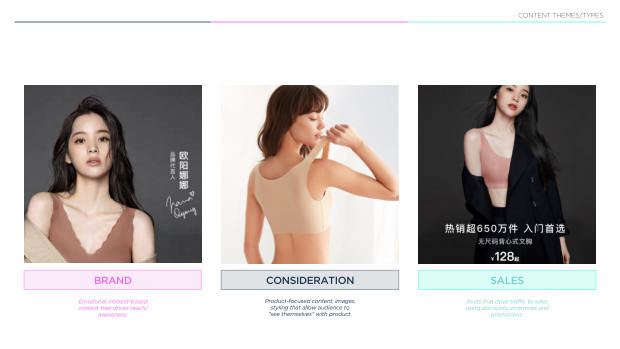
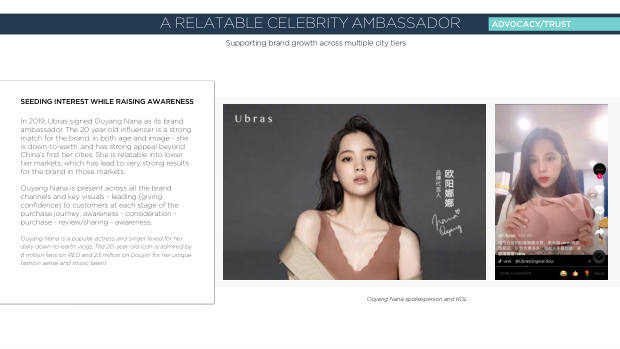
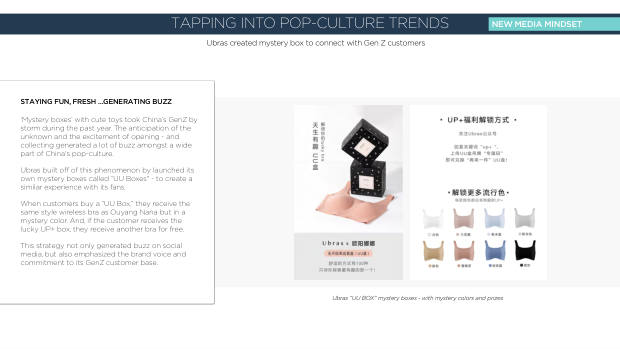
Ubras signed 20-year-old Ouyang Nana (8M RED followers, 23M on Douyin) as a down-to-earth ambassador present across every stage of the purchase journey, driving strong results beyond first-tier cities at a time when tier-one is saturating.
NeiWai's advantage is omni-channel depth and CRM.
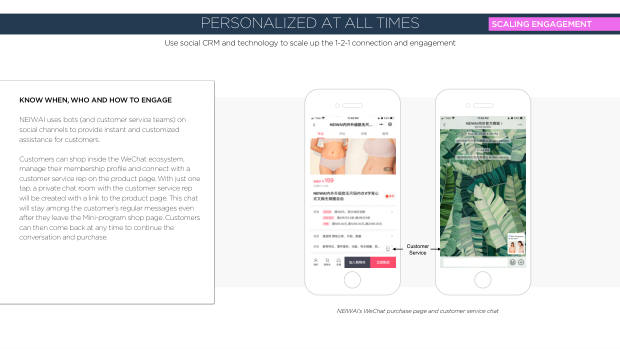
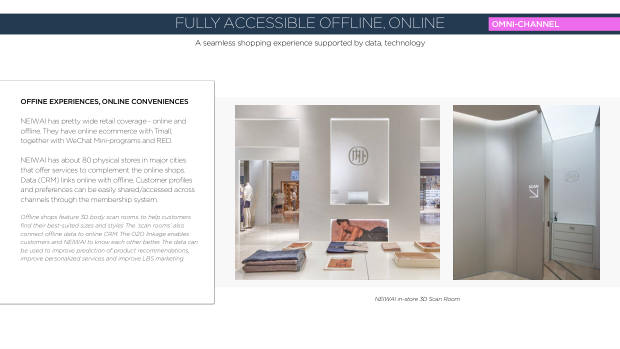
NeiWai links ~80 stores to online via a membership system, with in-store 3D body-scan rooms feeding offline data to online CRM, and WeChat Mini-Program shopping with persistent customer-service chat — a more mature 1-to-1-at-scale operation than Ubras's.
The strategic verdict: each should borrow from the other.
Ubras demonstrates the power of livestream/RED agility, athleisure alignment and lower-tier reach. But Totem judges NeiWai better positioned long-term on its online-offline mix and bold branding — and expects a digital bounce if it more fully adopts Ubras's new-media tactics.
How do NeiWai and Ubras differ?
NeiWai (2012) is the mature first-mover with ~80 shops, a more traditional top-down and offline profile, and emotionally brave branding. Ubras (2016) is the digital-first fast-follower with ~10 shops that scaled through its One-size bra, RED, Douyin and livestream.
Which brand sells more?
NeiWai is larger overall — Ubras's total sales volume is likely 6–8x lower — but Ubras eclipsed NeiWai in online sales in 2020, and its One-size bra hit RMB300M at Double 11 to become Tmall's #1 lingerie brand.
What drove Ubras's 2020 surge?
Preparedness for livestream selling (with Viya and Liu Tao), the demo-friendly One-size bra, alignment with the athleisure boom, a relatable ambassador in Ouyang Nana, and a RED review engine that converts attention to sales quickly.
What is NeiWai's strategic strength?
A genuine category-creation story, high product ratings, bold campaigns like "No Body Is Nobody" (100M reach), and a deep omni-channel/CRM operation linking ~80 stores, 3D scan rooms and WeChat to online data.
What is the wider context for these brands?
A surge of local Chinese DTC/DNVBs — 357 growth brands among Double 11 2020 top sellers versus nine in 2019 — while only 8% of North American DTC brands have entered China, amid a 2020 shift toward localisation and lower-tier growth.
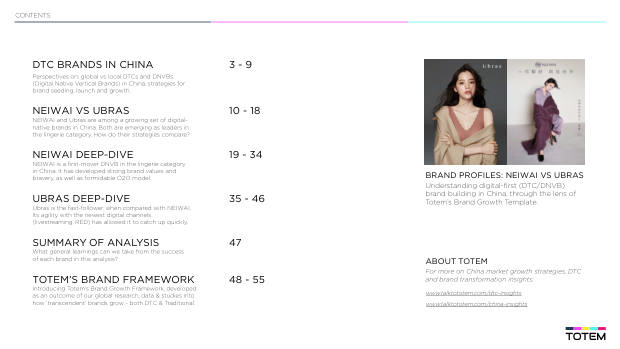
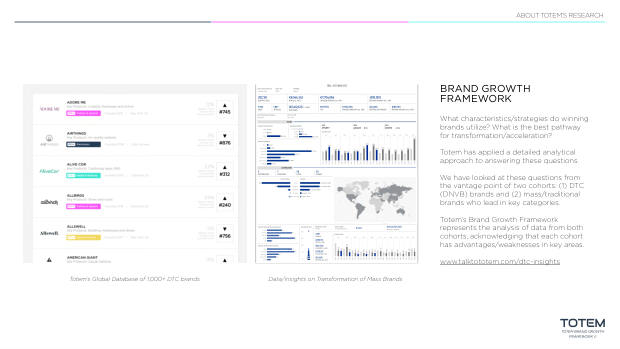
A comparative brand profile applying Totem's Brand Growth Framework — derived from its global database of 1,000+ DTC brands and analysis of Chinese DNVBs — to NeiWai and Ubras across positioning, channels, content and growth path. Sales and digital-presence figures are drawn from ECDataway (2020) and Totem's own channel audit (Dec 2020), alongside each brand's funding and store-expansion history.
Get the full report
Leave your details — we'll email you the PDF and give you the download straight away.