Marketing Through a Recession: positioning, share of voice and the winning formula by brand type
Going into the pandemic many expected a recession that never arrived — instead physical-product demand was pulled forward in a boom. With re-opening, that demand is unwinding, shifting toward services, entertainment and travel, and offline retail has clawed share back from online. A recession is now looming across China and multiple markets, and this report is a strategic playbook for marketing through it.
Totem structures the downturn into three stages — a demand down-shift with marginal players dropping out; a weak, uncertain middle with pockets of growth; and a slow, patchy recovery — each with distinct budget and messaging moves. The core argument is that pricing should be the last lever, not the first: messaging and positioning that keep a category a priority in the consumer's "spending portfolio" should precede any discount.
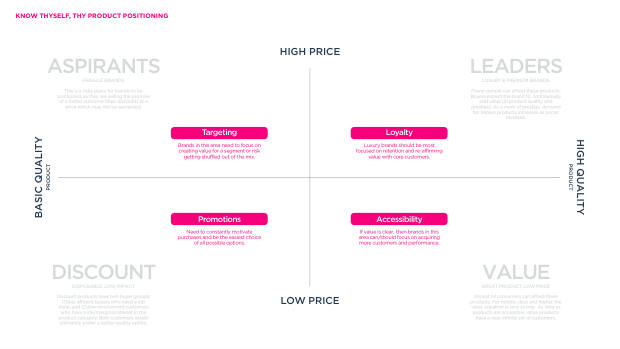
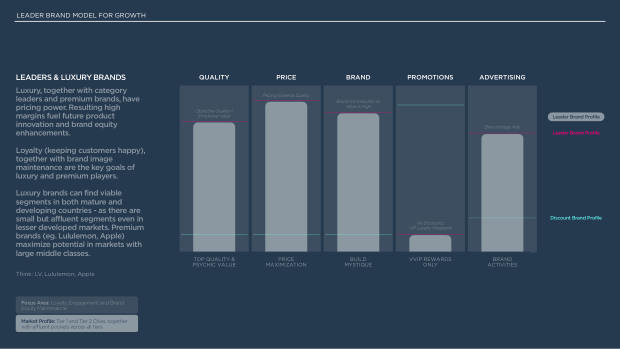
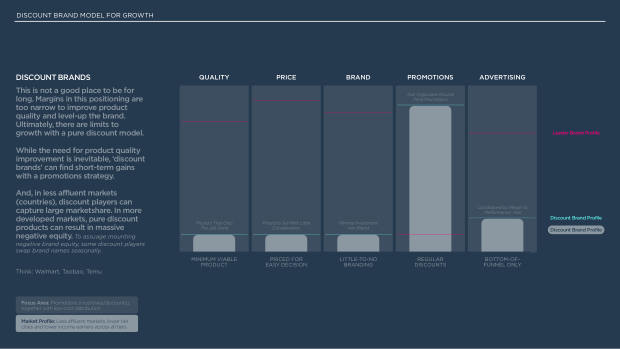
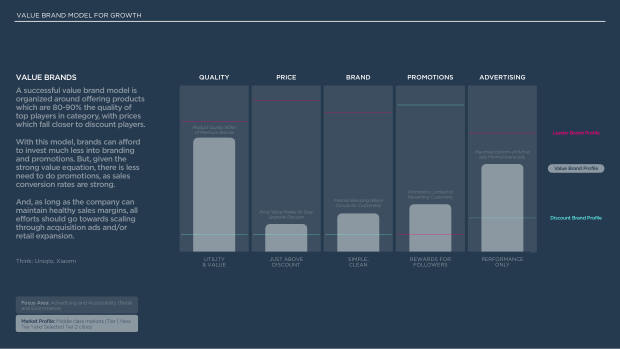
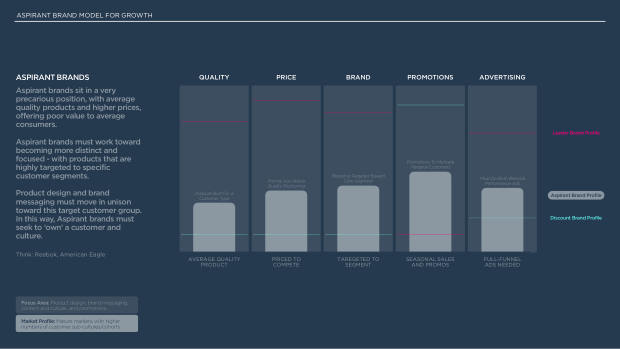
Growth strategy is then differentiated by brand profile. Totem maps four positions on a quality-versus-price matrix — Leader/Luxury, Value, Discount and Aspirant — each with its own winning formula, and applies market-fit logic (which brand types suit which China city tiers and which Asian markets). It closes on the evidence base for maintaining spend: share of voice leads share of market, and excess share of voice is easier to buy in a downturn.
Treat the downturn in three stages.
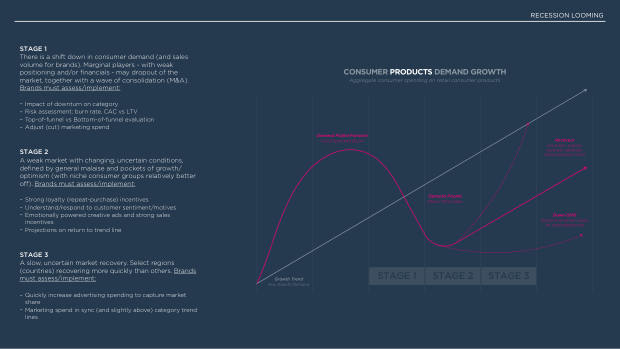
Stage 1 (demand down-shift): assess category impact, burn rate and CAC-vs-LTV, and cut spend. Stage 2 (weak, uncertain market): build loyalty and repeat-purchase incentives, read customer sentiment, run emotionally powered creative with strong sales incentives. Stage 3 (slow recovery): quickly increase spend to capture share, keeping marketing slightly above category trend lines.
Positioning before pricing.
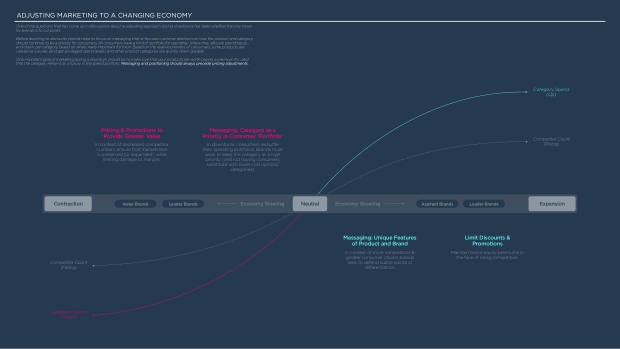
Consumers reshuffle a "spending portfolio" in downturns, down-grading some categories to luxuries and privileging others. The first job of marketing is to keep your category a priority and your product worth a premium; discounting should follow only after messaging has done its work.
Match tactics to the economic cycle.
When the economy slows and competitor count rises, defend points of differentiation and limit discounts to protect equity premiums. When it grows and competitors fall away, use pricing and promotions to preserve or expand share while limiting margin damage.
Four brand profiles, four winning formulas.
Leaders and luxury (LV, Lululemon, Apple) focus on loyalty, brand image and price maximisation, funded by pricing power. Value brands (Uniqlo, Xiaomi) deliver 80–90% of premium quality near discount prices and scale through advertising and accessibility. Discount brands (Walmart, Taobao, Temu) compete on promotions and low-cost distribution but hit growth limits. Aspirant brands (Reebok, American Eagle) sit in a precarious spot and must get more distinct and segment-focused.
Pick markets by profile fit.
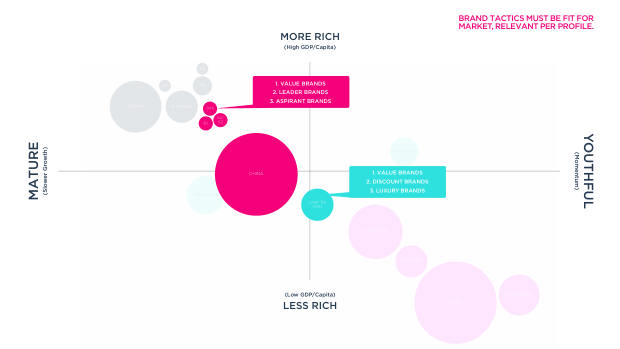
There is no one-size-fits-all China approach: value and leader brands suit tier-1 and new-tier-1 cities; discount and value brands suit lower-tier cities; luxury and aspirant profiles fit the most affluent, mature pockets. The same fit logic extends across Asian markets by GDP-per-capita and growth stage.
Design offers around three consumer mindsets.
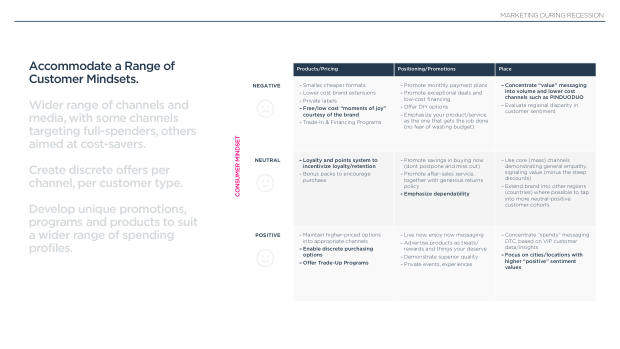
Accommodate negative, neutral and positive spenders concurrently — smaller/cheaper formats, trade-in and financing for cautious buyers; loyalty points and dependability messaging for the neutral middle; premium options and "live now" messaging for confident spenders — with discrete offers per channel and customer type.
Circular and community programmes protect LTV.
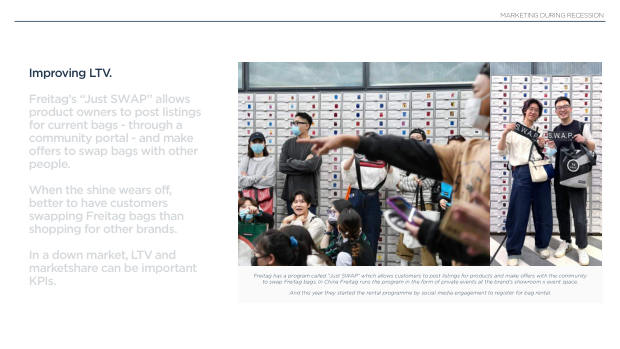
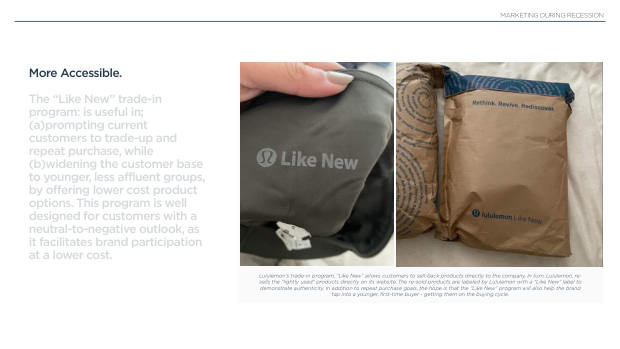
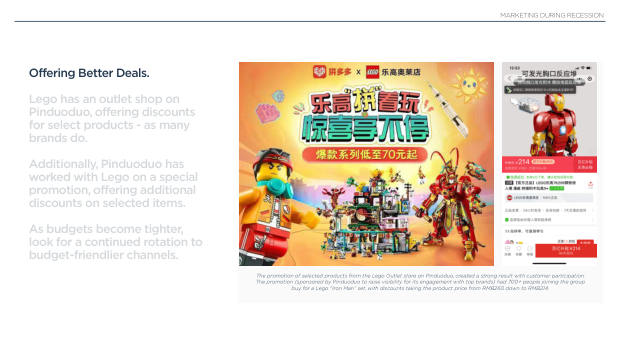
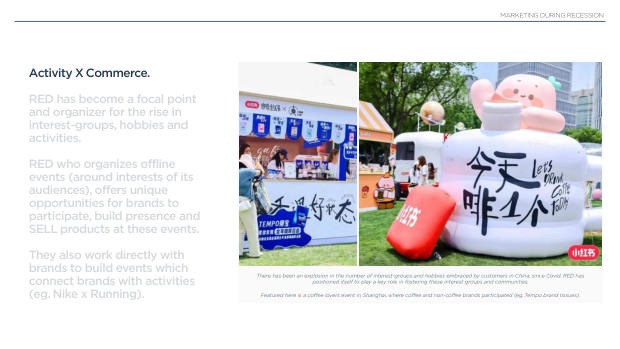
Freitag's "Just SWAP" keeps owners trading bags within the brand rather than shopping rivals; Lululemon's "Like New" trade-in prompts repeat purchase while pulling in younger, first-time buyers; Lego's Pinduoduo promotion (RMB260 down to RMB214) drew 700+ group-buy participants; RED organises interest-group offline events that connect brands to activities and sales.
Excess share of voice is easier to win in a recession.
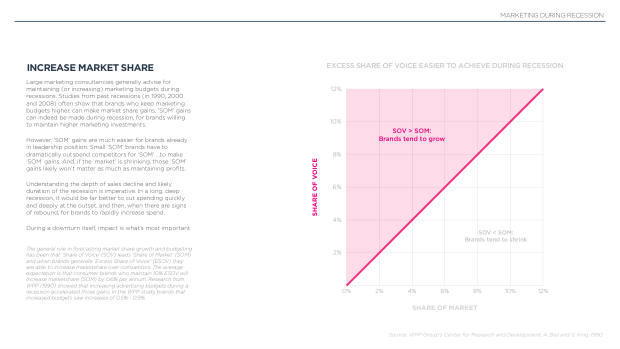
As a rule, share of voice leads share of market; a brand sustaining 10% ESOV gains roughly 0.6% share per year, and WPP's 1990 research found brands that raised budgets in recession gained 0.5–0.9%. But ESOV gains come far easier to incumbents — small brands must dramatically outspend — and in a shrinking market, protecting profit can matter more than chasing share.

What is the report's single most important argument?
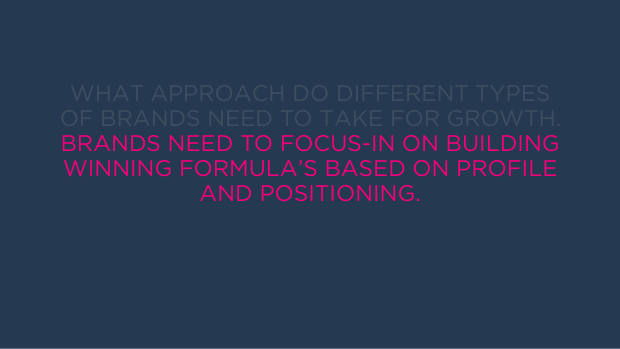
That positioning and messaging should precede pricing. Before cutting price, brands should re-focus consumers on why the product and category deserve a premium and a priority slot in their spending.
What are the four brand profiles?
Leader/Luxury, Value, Discount and Aspirant — plotted on a quality-versus-price matrix, each with a distinct growth formula across price, brand, promotions and advertising.
Should brands cut or maintain marketing spend in a downturn?
It depends on depth and duration. Maintaining or raising spend can win share (10% ESOV ≈ 0.6% annual gain), but that's far easier for leaders; in a long, deep recession it can be better to cut fast and early, then ramp spend sharply at the first signs of rebound.
How should offers be structured for cautious consumers?
Around three mindsets simultaneously — negative, neutral and positive — with discrete channel- and customer-specific offers, from smaller formats and financing to loyalty rewards to premium "you deserve it" messaging.
Does the framework apply beyond China?
Yes. Brand-profile fit is mapped across China's city tiers and across Asian markets by wealth and growth stage, so the same positioning logic guides market selection regionally.
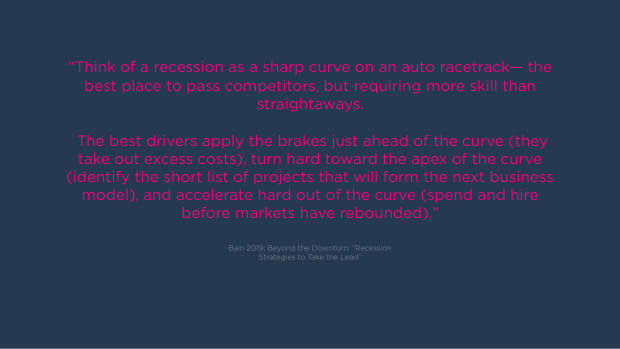
A strategy report synthesising Totem's brand-growth frameworks with external research on recession marketing — including Bain's 2019 "Beyond the Downturn" and WPP's 1990 share-of-voice studies across the 1990, 2000 and 2008 downturns — illustrated with brand cases (Freitag, Lululemon, Lego on Pinduoduo, RED). It draws on Totem's global DTC database and its work on brand strategy, market entry and category design across Asia, China and globally.
Get the full report
Leave your details — we'll email you the PDF and give you the download straight away.