Influencer Marketing in the Philippines 2025: a socially driven, Facebook-led market
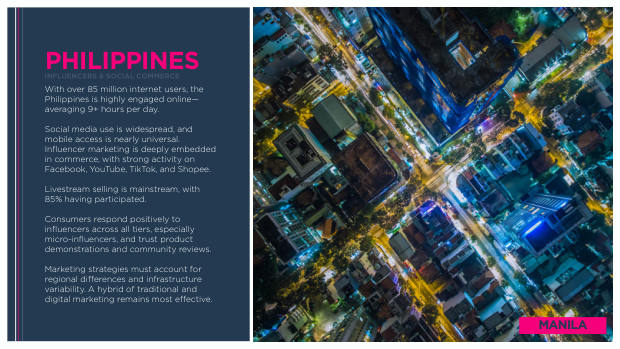
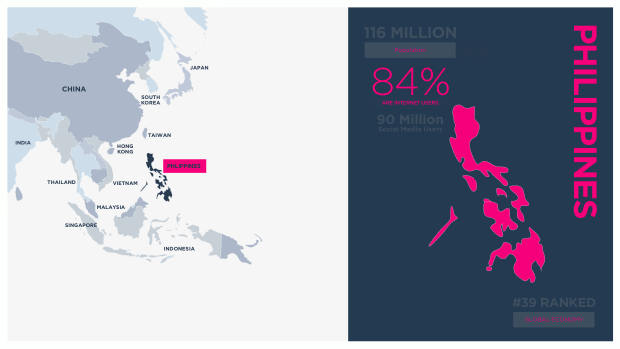
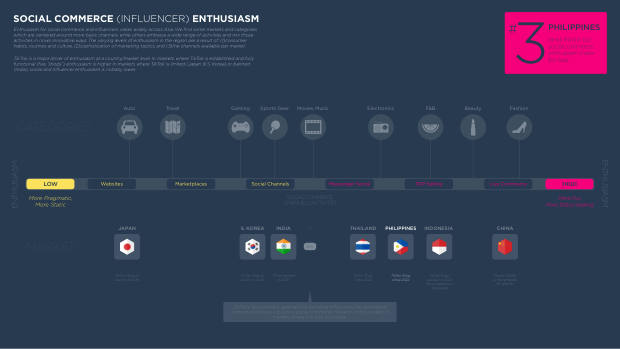
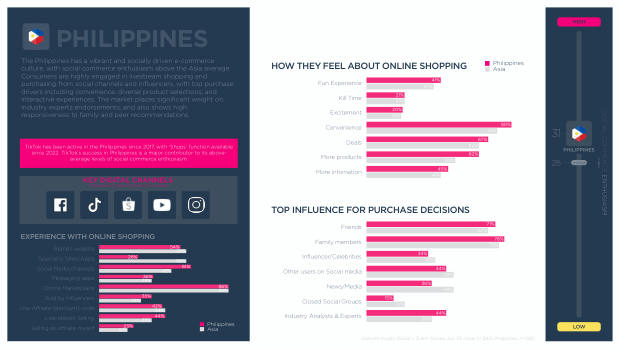
The Philippines ranks third of seven markets in Totem's social commerce enthusiasm index, scoring 31 against a regional average of 28. With over 85 million internet users and more than nine hours of daily online activity, it is one of Asia's most engaged and socially driven ecommerce cultures.
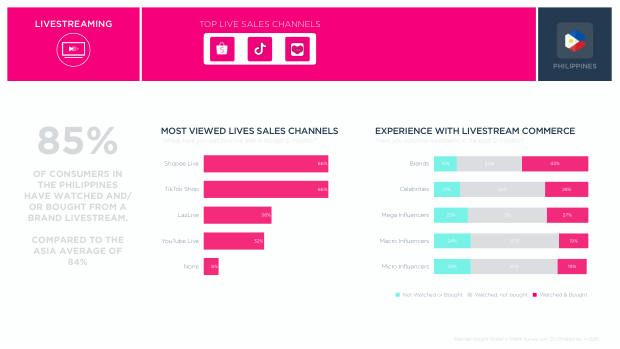
Influencer marketing is deeply embedded in commerce, with strong activity on Facebook, YouTube, TikTok and Shopee. Livestream selling is mainstream — 85% of consumers have participated, above the Asia average of 84% — and consumers respond positively to influencers across all tiers, especially micro-influencers, trusting product demonstrations and community reviews. The market places notable weight on industry-expert endorsements alongside family and peer recommendations.
This mini-report draws on the Philippines cut of Totem's 2025 Asia influencer survey — 526 consumers and 12 Philippines brand managers — to detail the channel mix, influencer roles and the transaction barriers that persist.
One of Asia's most socially driven ecommerce markets.
An enthusiasm index of 31, above the regional average, is underpinned by very high daily online time and heavy engagement with livestream shopping and purchases from social channels and influencers.
Positive across all influencer tiers, strongest on conversion.
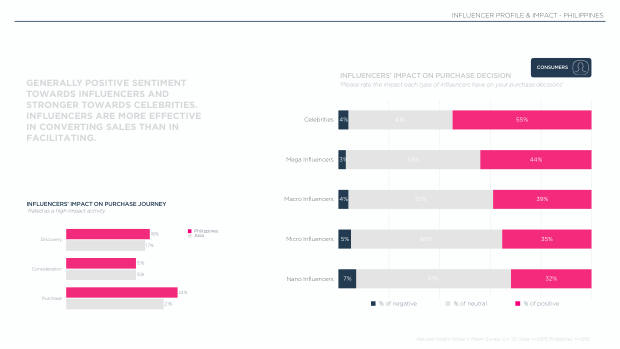
Sentiment toward influencers is broadly positive — and stronger toward celebrities — with influencers rated more effective at converting sales than at facilitating earlier stages (24% high-impact at discovery versus 21% Asia-wide).
Facebook leads content consumption; Instagram leads brand activity.
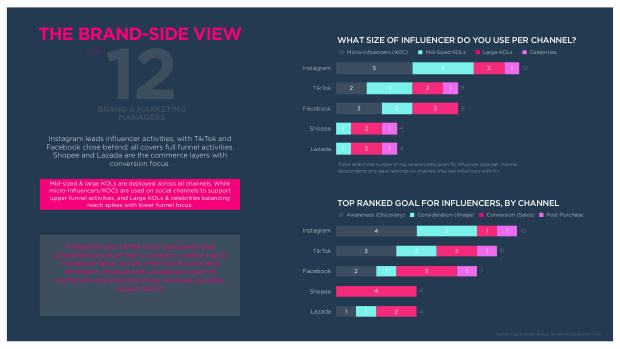
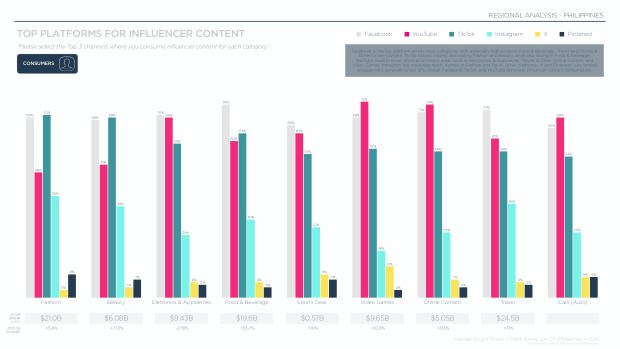
For consumers, Facebook is the top platform across most categories, with TikTok and YouTube close behind. On the brand side, Instagram leads influencer activity, with TikTok and Facebook covering the full funnel and Shopee and Lazada focused on conversion.
Industry experts carry unusual weight.
The market places significant weight on industry-expert endorsements alongside strong responsiveness to family and peer recommendations — a distinctive blend of authority and social proof.
Trust drives sales; checkout friction blocks them.
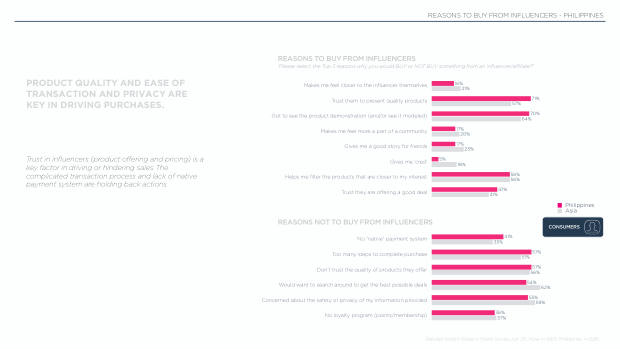
Trust in influencers' product selection and pricing is a key driver, while a complicated transaction process and the lack of a native payment system are the main factors holding purchases back.
A hybrid of traditional and digital works best.
With regional differences and variable infrastructure, the report finds a combination of traditional and digital marketing remains most effective.
Where does the Philippines rank on social commerce enthusiasm?
Third of seven markets, with an index score of 31 against a regional average of 28 — one of Asia's most socially driven markets.
How common is livestream shopping?
Mainstream: 85% of consumers have watched or bought from a brand livestream, above the Asia average of 84%, with Shopee Live and TikTok Shop the leading channels at 66% each.
How do Filipinos view influencers?
Broadly positive across all tiers and stronger toward celebrities, with influencers rated most effective at converting sales.
Which platforms dominate?
Facebook leads consumer content consumption, followed by TikTok and YouTube; on the brand side Instagram leads activity, with Shopee and Lazada handling conversion.
What blocks purchases?
Complicated checkout and the absence of a native payment system are the main barriers, even where trust in the influencer is high.
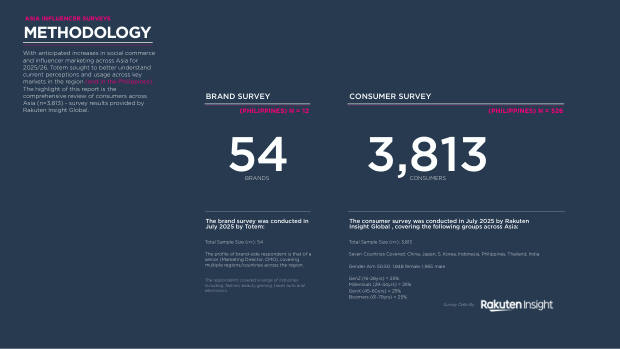
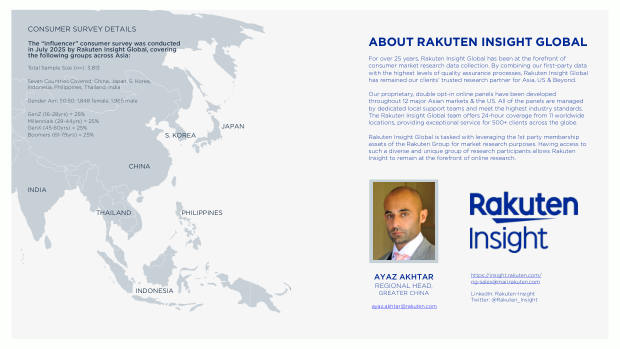
This mini-report is the Philippines cut of Totem's 2025 "Influencer Marketing in Asia" study. The Philippines consumer sample is 526 respondents, drawn from a seven-market survey of 3,813 consumers conducted in July 2025 by Rakuten Insight Global (balanced by gender and across GenZ, Millennial, GenX and Boomer cohorts). It is complemented by Totem's brand-side survey, including 12 Philippines-based brand and marketing managers.
Get the full report
Leave your details — we'll email you the PDF and give you the download straight away.