Asia · Survey & report · 2025

Influencer Marketing in Asia 2025: the region leads social commerce, but under-invests in influencers

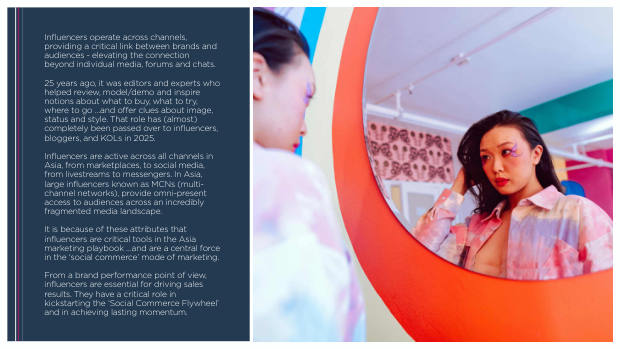
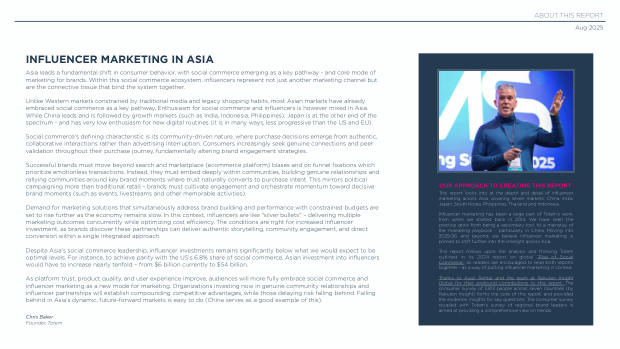
Asia has already moved to social commerce as a core mode of marketing, and within that system influencers are the connective tissue — linking channels, stories and products across an otherwise fragmented media landscape. Enthusiasm is uneven: China leads, followed by growth markets such as Indonesia, the Philippines, Thailand and India, while Japan and South Korea sit at the low end, in some respects less progressive than the US and EU.

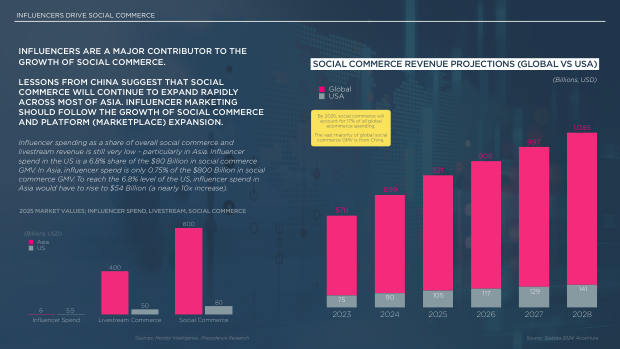
Despite that leadership, influencer investment remains well below what the volume of social commerce would imply. Influencer spend in the US equals 6.8% of an $80 billion social commerce market; in Asia it is only 0.75% of an $800 billion market. To reach US parity, Asian influencer spend would need to rise from roughly $6 billion to $54 billion — close to a tenfold increase.

With budgets constrained and the economy slow, brands increasingly treat influencers as "silver bullets" — a single resource that combines audience, content creation, consideration and conversion. Totem's survey of 3,813 consumers (fielded with Rakuten Insight Global) and 54 senior brand leaders maps where that shift is furthest advanced and where the gap between consumer behaviour and brand spending is widest.

3,813
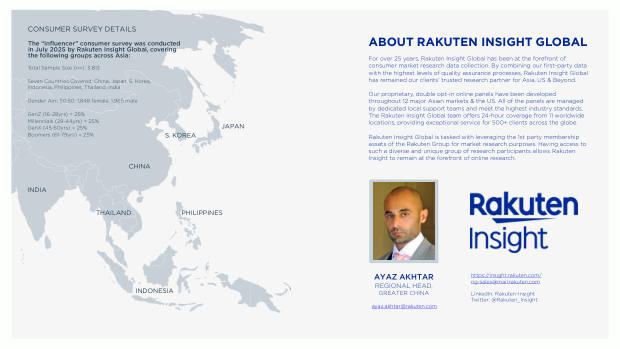
consumers surveyed across seven Asian markets (Rakuten Insight Global, July 2025)
0.75%
influencer share of Asia's ~$800B social commerce GMV, versus 6.8% in the US
$54B
implied Asian influencer spend at US parity, up from ~$6B today (near-10x)
84%
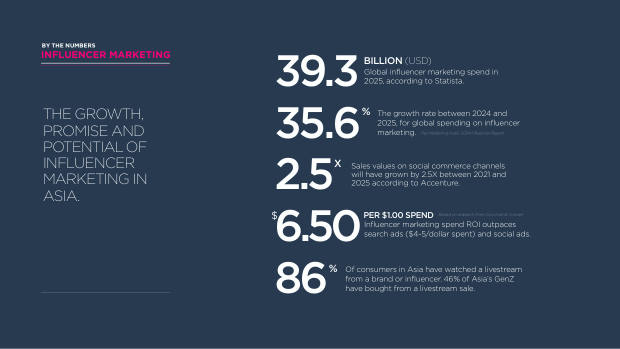
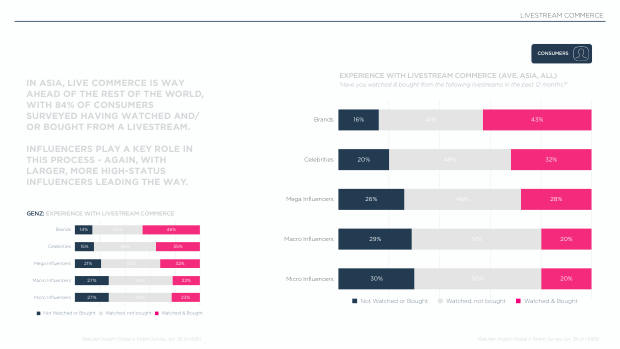
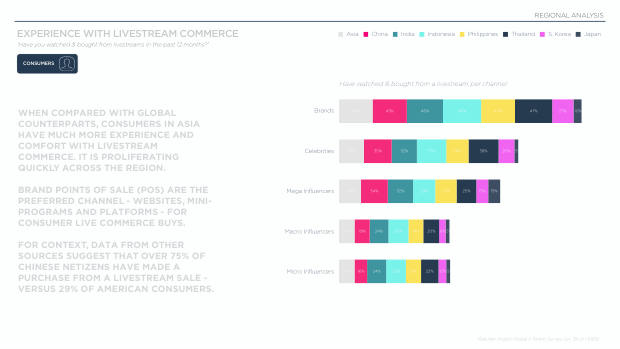
of Asian consumers have watched and/or bought from a livestream
74%
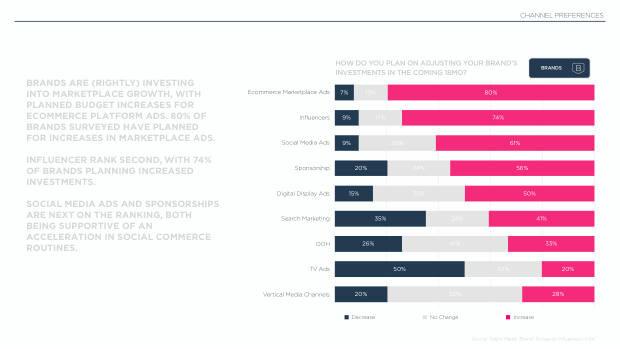
of surveyed brands plan to increase influencer investment (second only to marketplace ads at 80%)
Key findings

Asia leads social commerce but starves it of influencer budget.

Social commerce GMV in Asia is roughly ten times the US ($800B vs $80B), yet influencer spend is a fraction of the US share — 0.75% against 6.8%. The report frames this as the region's largest unexploited efficiency, not a reason for caution.

Enthusiasm splits sharply by market.

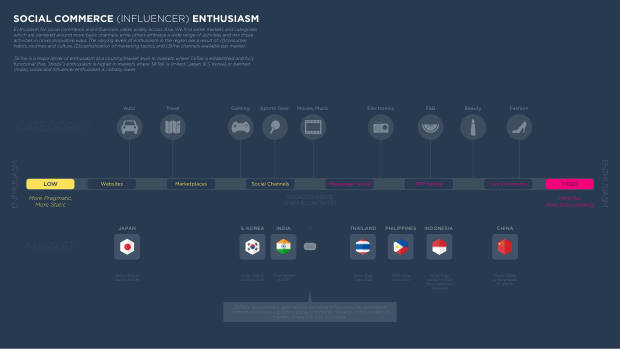
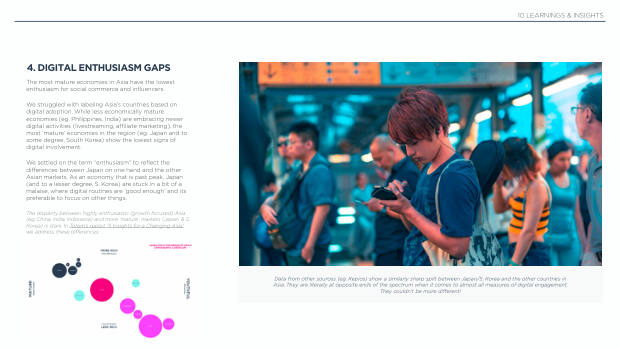
Totem's enthusiasm index ranks China first, then Indonesia, the Philippines, Thailand, India, South Korea and Japan last. TikTok is the single largest driver: where it is fully functional (with "Shops"), enthusiasm indexes higher; where it is limited (Japan, Korea) or banned (India), it is notably lower.

Marketplaces convert; influencers accelerate.

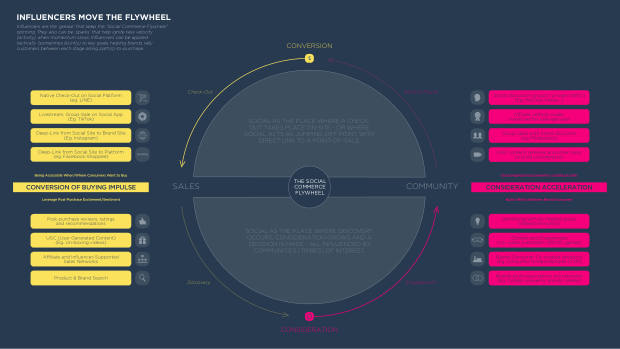
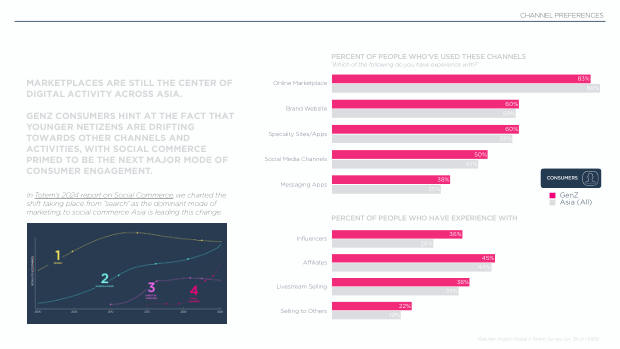
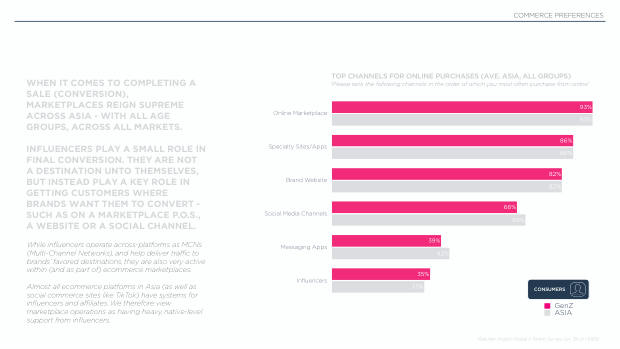
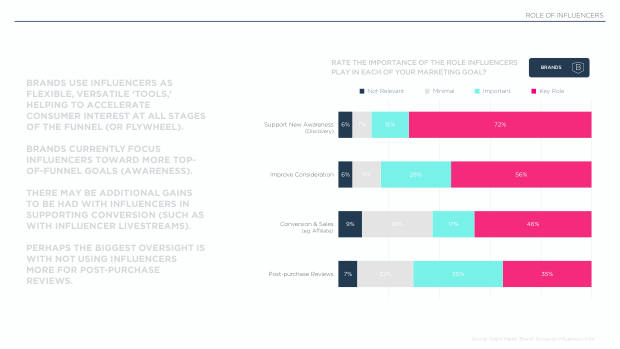
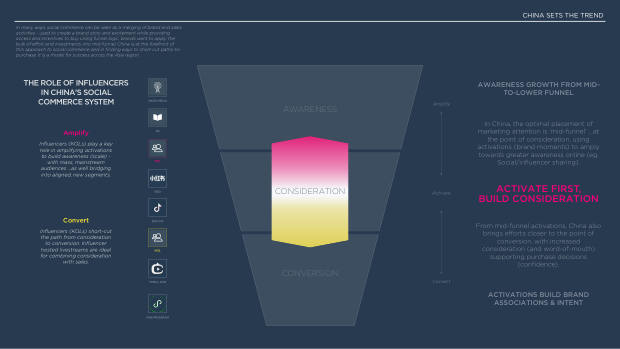
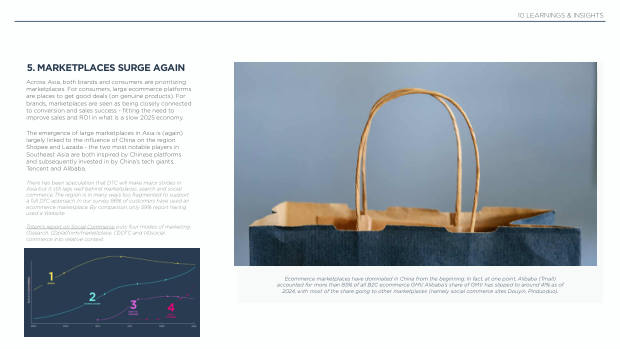
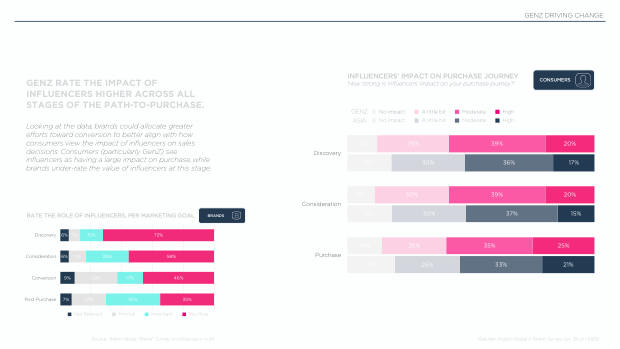
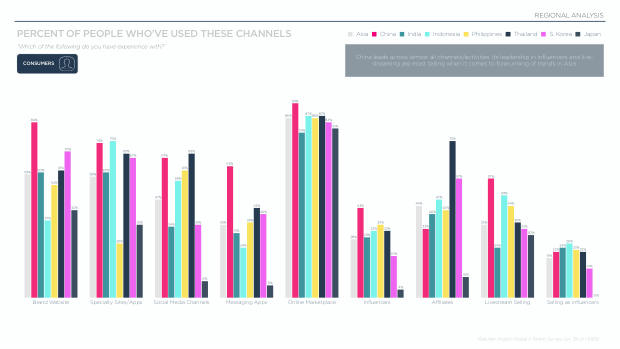
86% of consumers have used an online marketplace versus 59% a brand website, and 80% of brands plan to raise marketplace-ad spend. Influencers rarely close the sale themselves — they move customers toward the point of conversion, playing a top-of-funnel role brands rate most important for awareness (72%) over post-purchase (35%).

Status scales in favour of larger influencers.

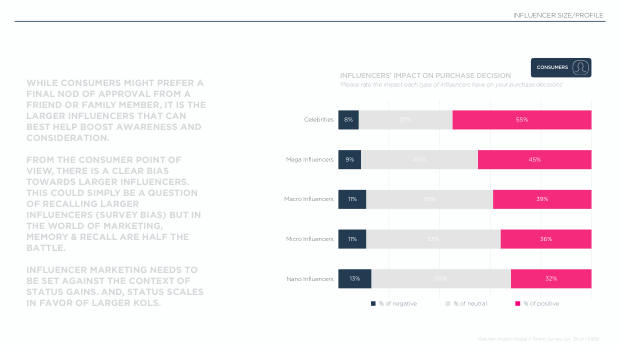
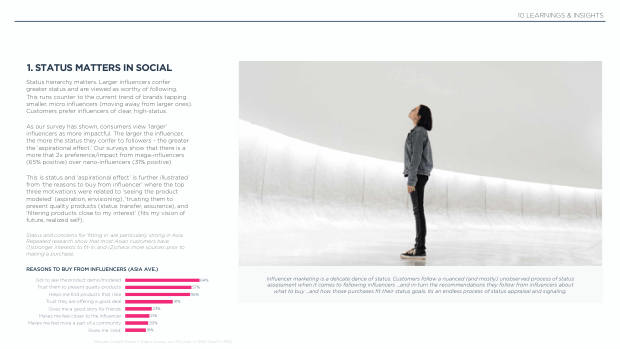
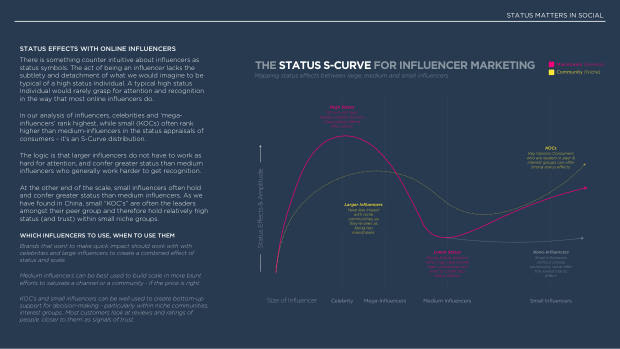
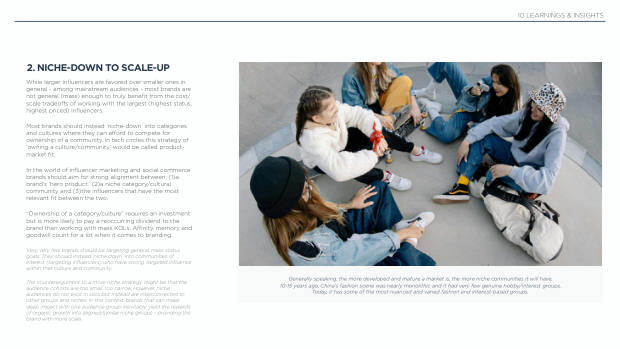
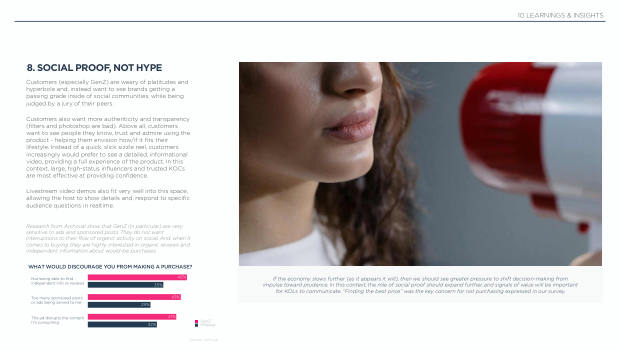
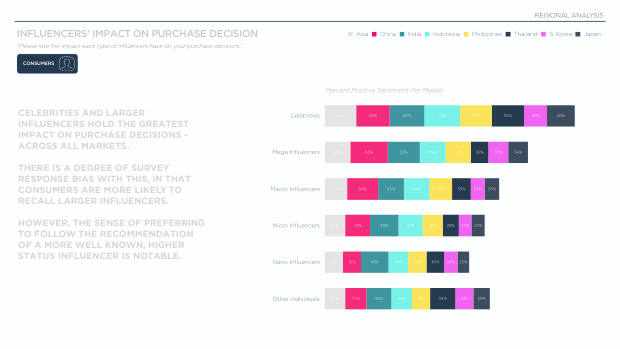
Consumers rate mega-influencers roughly twice as impactful as nano-influencers (65% positive vs 31%). This runs against the industry drift toward micro-creators; the report argues brands should "niche down" to communities they can own rather than chase mass reach.

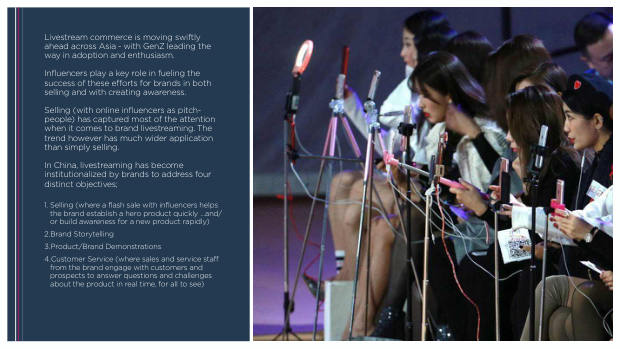
Livestream commerce is mainstream — and ahead of the West.

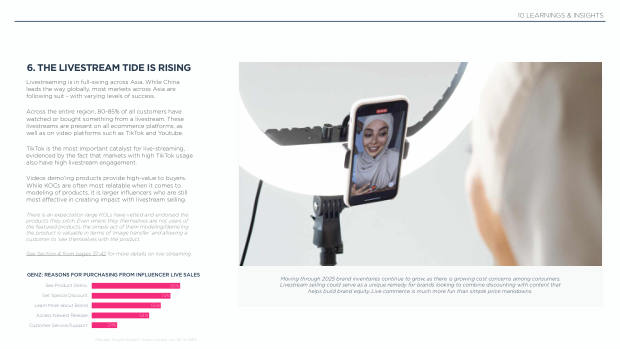
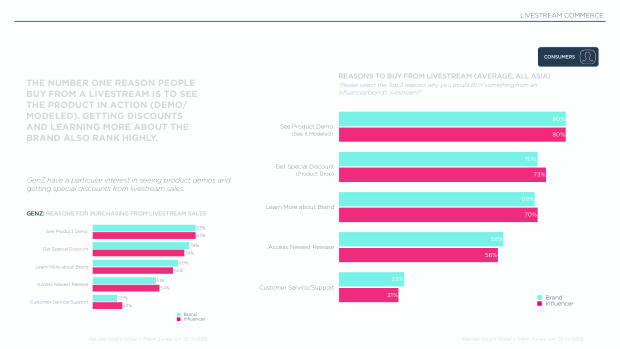
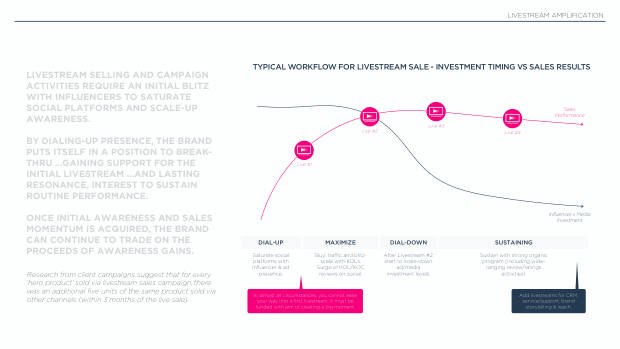
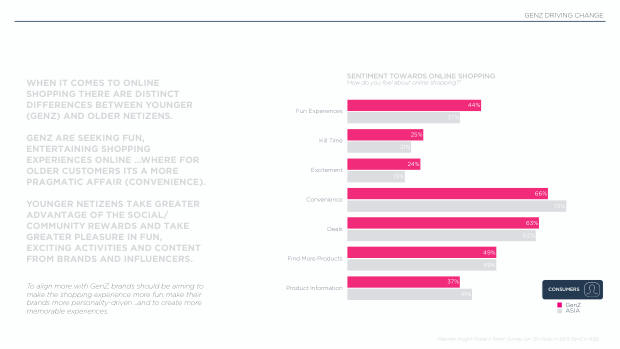
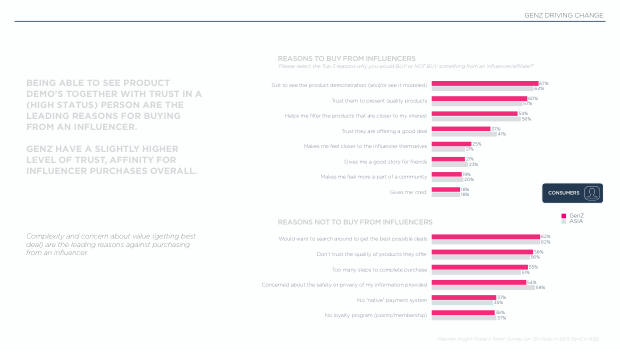
84% of Asian consumers have watched or bought from a livestream, and 46% of GenZ have bought from one. Other data cited puts Chinese livestream buyers above 75% of netizens versus 29% of Americans. Seeing the product demonstrated is the number-one reason to buy (83% of GenZ live-buyers).

China sets the template the rest of Asia is following.

China led the next-closest market by eight percentage points on experience with influencers and livestreaming. The report argues Asia (ex-Japan and Korea) is trending toward China's ecosystem rather than the US's, with TikTok acting as a ready-made package of the China model.

Affiliate economics decide category winners.

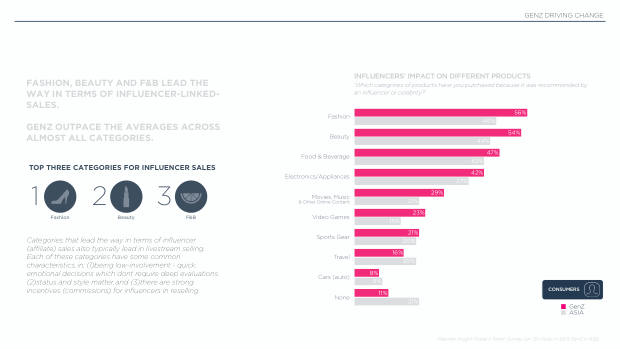
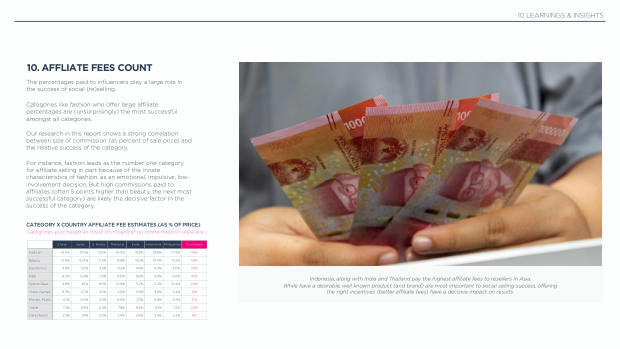
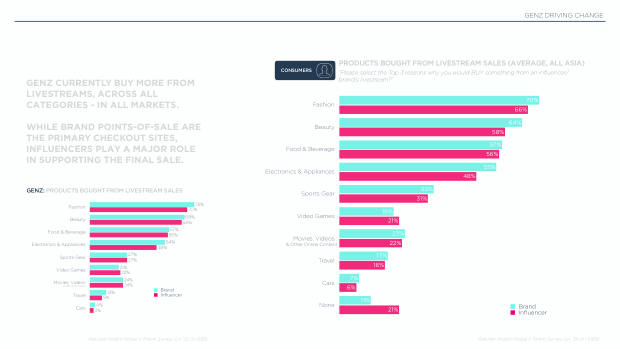
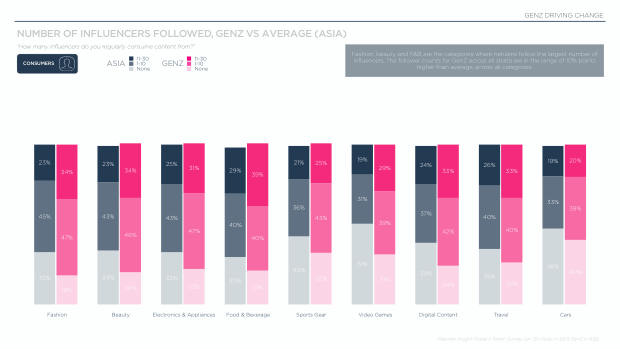
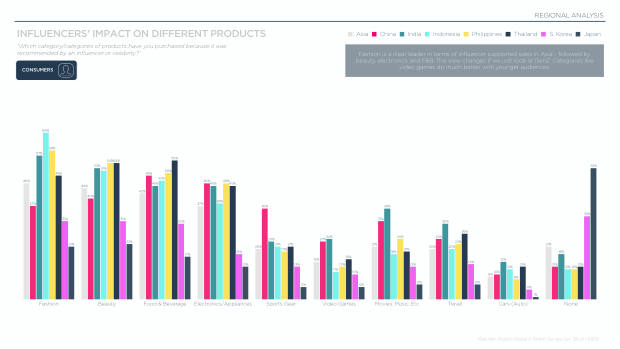
Fashion leads influencer/affiliate selling (46% of consumers bought on a recommendation) partly on innate impulse characteristics, but also because it pays the highest commissions — often five points above beauty, the next category. Indonesia, India and Thailand pay the highest affiliate fees in the region.
Inside the report
Influencer Marketing in Asia 2025: the region leads social commerce, but under-invests in influencers — page 1Influencer Marketing in Asia 2025: the region leads social commerce, but under-invests in influencers — page 2Influencer Marketing in Asia 2025: the region leads social commerce, but under-invests in influencers — page 3Influencer Marketing in Asia 2025: the region leads social commerce, but under-invests in influencers — page 4Influencer Marketing in Asia 2025: the region leads social commerce, but under-invests in influencers — page 5Influencer Marketing in Asia 2025: the region leads social commerce, but under-invests in influencers — page 6Influencer Marketing in Asia 2025: the region leads social commerce, but under-invests in influencers — page 7Influencer Marketing in Asia 2025: the region leads social commerce, but under-invests in influencers — page 8Influencer Marketing in Asia 2025: the region leads social commerce, but under-invests in influencers — page 9Influencer Marketing in Asia 2025: the region leads social commerce, but under-invests in influencers — page 10Influencer Marketing in Asia 2025: the region leads social commerce, but under-invests in influencers — page 11Influencer Marketing in Asia 2025: the region leads social commerce, but under-invests in influencers — page 12Influencer Marketing in Asia 2025: the region leads social commerce, but under-invests in influencers — page 13Influencer Marketing in Asia 2025: the region leads social commerce, but under-invests in influencers — page 14Influencer Marketing in Asia 2025: the region leads social commerce, but under-invests in influencers — page 15Influencer Marketing in Asia 2025: the region leads social commerce, but under-invests in influencers — page 16Influencer Marketing in Asia 2025: the region leads social commerce, but under-invests in influencers — page 17Influencer Marketing in Asia 2025: the region leads social commerce, but under-invests in influencers — page 18Influencer Marketing in Asia 2025: the region leads social commerce, but under-invests in influencers — page 19Influencer Marketing in Asia 2025: the region leads social commerce, but under-invests in influencers — page 20Influencer Marketing in Asia 2025: the region leads social commerce, but under-invests in influencers — page 21Influencer Marketing in Asia 2025: the region leads social commerce, but under-invests in influencers — page 22Influencer Marketing in Asia 2025: the region leads social commerce, but under-invests in influencers — page 23Influencer Marketing in Asia 2025: the region leads social commerce, but under-invests in influencers — page 24Influencer Marketing in Asia 2025: the region leads social commerce, but under-invests in influencers — page 25Influencer Marketing in Asia 2025: the region leads social commerce, but under-invests in influencers — page 26Influencer Marketing in Asia 2025: the region leads social commerce, but under-invests in influencers — page 27Influencer Marketing in Asia 2025: the region leads social commerce, but under-invests in influencers — page 28Influencer Marketing in Asia 2025: the region leads social commerce, but under-invests in influencers — page 29Influencer Marketing in Asia 2025: the region leads social commerce, but under-invests in influencers — page 30Influencer Marketing in Asia 2025: the region leads social commerce, but under-invests in influencers — page 31Influencer Marketing in Asia 2025: the region leads social commerce, but under-invests in influencers — page 32Influencer Marketing in Asia 2025: the region leads social commerce, but under-invests in influencers — page 33Influencer Marketing in Asia 2025: the region leads social commerce, but under-invests in influencers — page 34Influencer Marketing in Asia 2025: the region leads social commerce, but under-invests in influencers — page 35Influencer Marketing in Asia 2025: the region leads social commerce, but under-invests in influencers — page 36Influencer Marketing in Asia 2025: the region leads social commerce, but under-invests in influencers — page 37Influencer Marketing in Asia 2025: the region leads social commerce, but under-invests in influencers — page 38Influencer Marketing in Asia 2025: the region leads social commerce, but under-invests in influencers — page 39Influencer Marketing in Asia 2025: the region leads social commerce, but under-invests in influencers — page 40Influencer Marketing in Asia 2025: the region leads social commerce, but under-invests in influencers — page 41Influencer Marketing in Asia 2025: the region leads social commerce, but under-invests in influencers — page 42Influencer Marketing in Asia 2025: the region leads social commerce, but under-invests in influencers — page 43Influencer Marketing in Asia 2025: the region leads social commerce, but under-invests in influencers — page 44Influencer Marketing in Asia 2025: the region leads social commerce, but under-invests in influencers — page 45Influencer Marketing in Asia 2025: the region leads social commerce, but under-invests in influencers — page 46Influencer Marketing in Asia 2025: the region leads social commerce, but under-invests in influencers — page 47Influencer Marketing in Asia 2025: the region leads social commerce, but under-invests in influencers — page 48Influencer Marketing in Asia 2025: the region leads social commerce, but under-invests in influencers — page 49Influencer Marketing in Asia 2025: the region leads social commerce, but under-invests in influencers — page 50Influencer Marketing in Asia 2025: the region leads social commerce, but under-invests in influencers — page 51Influencer Marketing in Asia 2025: the region leads social commerce, but under-invests in influencers — page 52Influencer Marketing in Asia 2025: the region leads social commerce, but under-invests in influencers — page 53Influencer Marketing in Asia 2025: the region leads social commerce, but under-invests in influencers — page 54Influencer Marketing in Asia 2025: the region leads social commerce, but under-invests in influencers — page 55Influencer Marketing in Asia 2025: the region leads social commerce, but under-invests in influencers — page 56Influencer Marketing in Asia 2025: the region leads social commerce, but under-invests in influencers — page 57Influencer Marketing in Asia 2025: the region leads social commerce, but under-invests in influencers — page 58Influencer Marketing in Asia 2025: the region leads social commerce, but under-invests in influencers — page 59Influencer Marketing in Asia 2025: the region leads social commerce, but under-invests in influencers — page 60Influencer Marketing in Asia 2025: the region leads social commerce, but under-invests in influencers — page 61Influencer Marketing in Asia 2025: the region leads social commerce, but under-invests in influencers — page 62Influencer Marketing in Asia 2025: the region leads social commerce, but under-invests in influencers — page 63Influencer Marketing in Asia 2025: the region leads social commerce, but under-invests in influencers — page 64Influencer Marketing in Asia 2025: the region leads social commerce, but under-invests in influencers — page 65Influencer Marketing in Asia 2025: the region leads social commerce, but under-invests in influencers — page 66Influencer Marketing in Asia 2025: the region leads social commerce, but under-invests in influencers — page 67Influencer Marketing in Asia 2025: the region leads social commerce, but under-invests in influencers — page 68
Questions this report answers

How under-invested is influencer marketing in Asia?

Sharply. Influencer spend is 0.75% of Asia's ~$800B social commerce GMV, versus 6.8% in the US. Reaching US parity implies roughly $54B of Asian influencer spend, up from about $6B — close to tenfold.
Which Asian markets are most enthusiastic about social commerce?

Totem's index ranks China first, then Indonesia, the Philippines, Thailand and India. South Korea and Japan rank lowest, with Japan showing the region's highest resistance and scepticism.

Do influencers actually drive sales?

Indirectly. Marketplaces dominate final conversion (86% of consumers use them), while influencers accelerate discovery and consideration and move buyers toward the point of sale. Brands rate influencers most important for awareness.

How large is livestream commerce in Asia?

84% of consumers have watched or bought from a livestream and 46% of GenZ have purchased from one — well ahead of the West, where cited data puts US livestream buyers near 29%.

Who produced the report and how big is the sample?

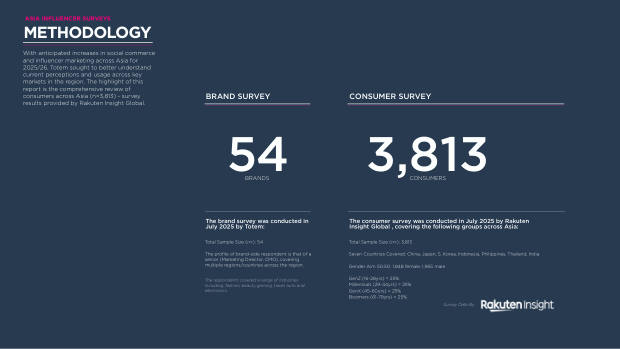
Totem, drawing on a consumer survey of 3,813 people across seven markets by Rakuten Insight Global (July 2025) plus Totem's own survey of 54 senior regional brand leaders.

Methodology

The report covers seven Asian markets — China, India, Japan, South Korea, the Philippines, Thailand and Indonesia. Its core evidence is a consumer survey of 3,813 people conducted in July 2025 by Rakuten Insight Global, balanced roughly 50:50 by gender and split evenly across GenZ, Millennial, GenX and Boomer cohorts. This is paired with a Totem survey of 54 senior brand-side respondents (Marketing Directors and CMOs) across fashion, beauty, gaming, travel, auto and electronics. The report builds on Totem's 2024 analysis "The Rise of Social Commerce" and is intended to be read alongside it. --- *Note: some external market figures (Statista, Accenture, Mordor Intelligence, Precedence Research) are cited by the report and attributed to those sources in the copy above.*

Media coverage
Free report

Get the full report

Leave your details and we'll send the PDF to your inbox.

Your details go to Totem, never shared. Unsubscribe anytime.
← All reports