Influencer Marketing in Japan 2025: Asia's most cautious social commerce market
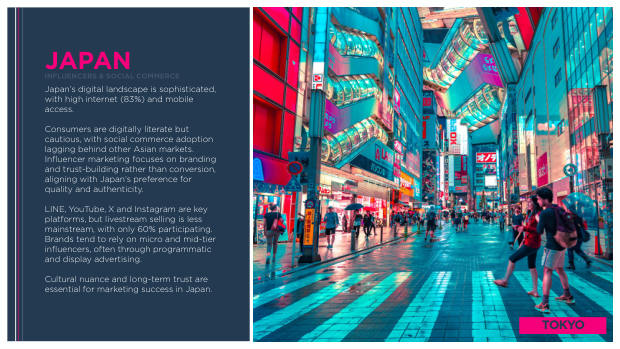
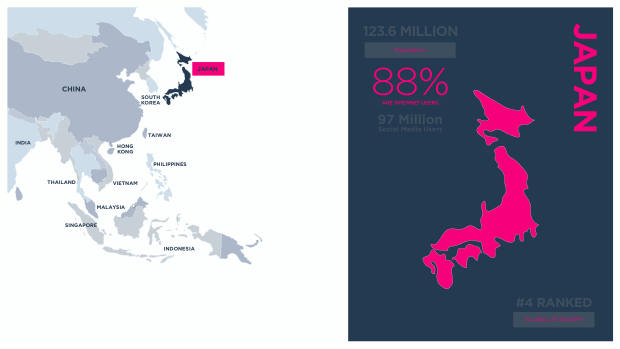
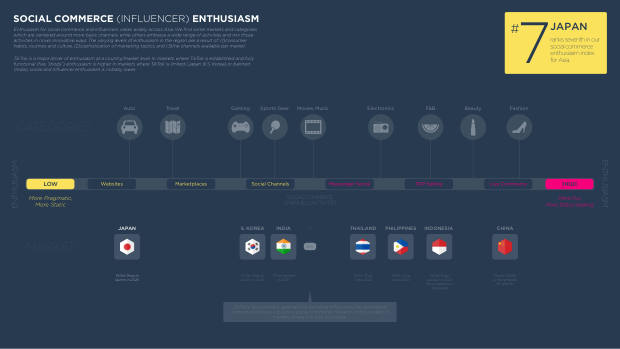
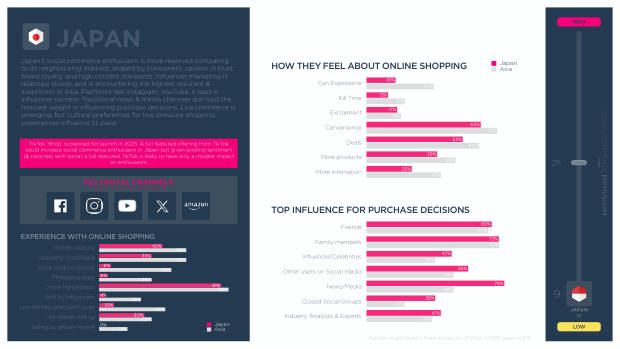
Japan sits at the bottom of Totem's social commerce enthusiasm index for Asia, scoring 9 against a regional average of 28. The digital landscape is sophisticated — 83% internet penetration and near-universal mobile access — but consumers are cautious, and social commerce adoption lags the rest of the region.
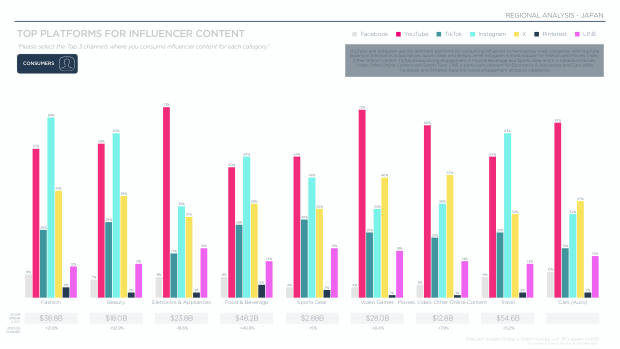
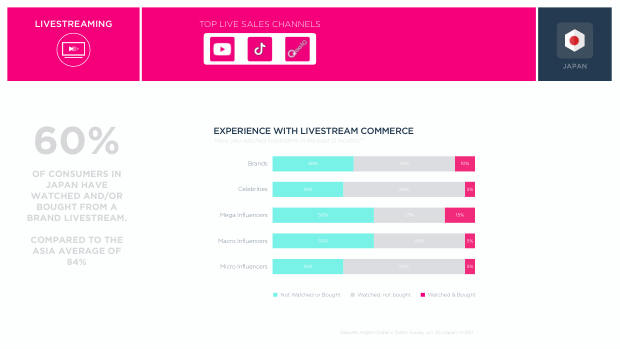
Influencer marketing here is oriented toward branding and trust-building rather than conversion, matching Japan's preference for quality and authenticity. LINE, YouTube, X and Instagram are the key platforms, but livestream selling remains niche: only 60% of consumers have watched or bought from a brand livestream, versus 84% across Asia. Traditional news and media still carry the heaviest weight in purchase decisions.
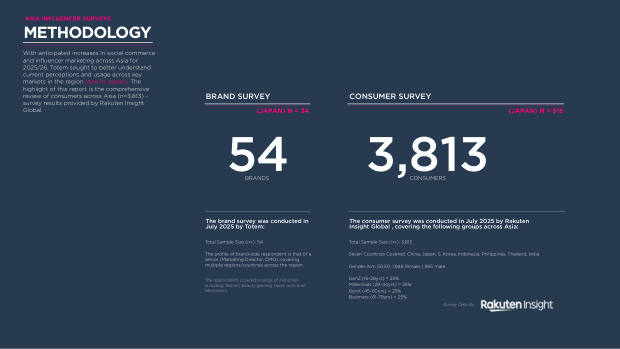
This mini-report draws on the Japan cut of Totem's 2025 Asia influencer survey — 515 consumers and 34 Japan brand managers — to detail why influencers face the region's strongest scepticism and where the modest openings lie.
Japan is Asia's least enthusiastic social commerce market.
Its index score of 9 is the lowest in the region and far below the 28 average. As an economy past its peak, Japan sits in a digital malaise where existing routines are "good enough" and social commerce is deprioritised.
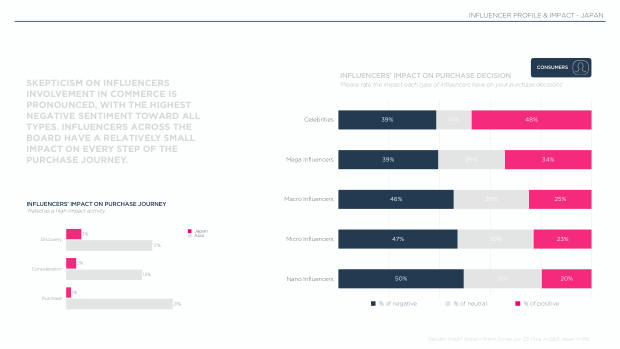
Influencers barely move the purchase journey.
Only 1–3% of consumers rate influencers as high-impact across discovery, consideration and purchase — against an Asia-wide 15–21%. Scepticism is pronounced, with the highest negative sentiment toward every influencer tier.
Trust and branding, not conversion, define the playbook.
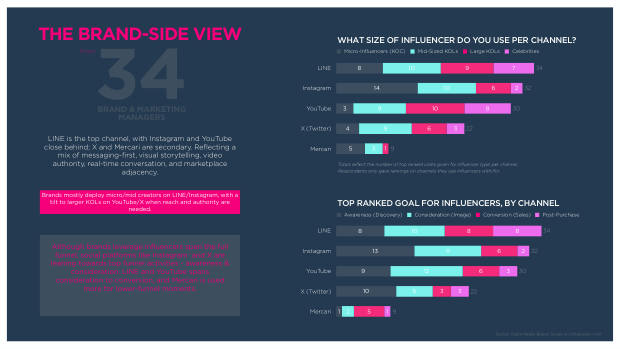
Brands use influencers to build long-term trust rather than to close sales, in line with Japan's emphasis on quality and authenticity. LINE and YouTube span consideration to conversion; Instagram and X lean top-of-funnel.
LINE anchors a messaging-first channel mix.
LINE is the top influencer channel, with Instagram and YouTube close behind and X and Mercari secondary — a mix of messaging, visual storytelling, video authority and marketplace adjacency. Brands mostly deploy micro and mid-tier creators, tilting to larger KOLs on YouTube and X for reach.
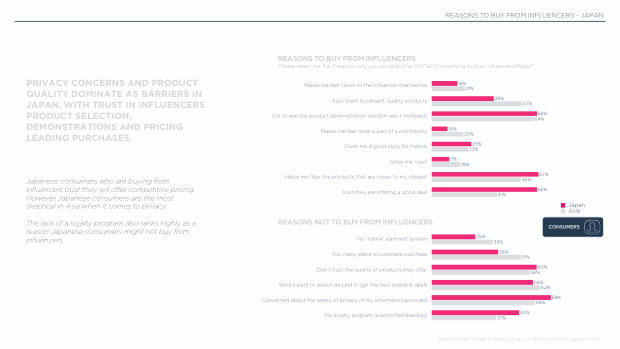
Privacy is the biggest barrier — Japan is the region's most privacy-sensitive market.
Concern over the safety and privacy of personal information is the leading reason not to buy, and the absence of a loyalty programme also ranks highly. Where consumers do buy, they trust influencers to offer competitive pricing.
A full TikTok Shop is unlikely to move the needle much.
TikTok "Shop" was slated to launch in Japan in 2025, but given entrenched sentiment and routines, the report expects only a modest lift in enthusiasm.




Where does Japan rank on social commerce enthusiasm?
Last in Asia, with an index score of 9 against a regional average of 28 — the widest gap from the leaders of any market surveyed.
How developed is livestream shopping in Japan?
Limited. Only 60% of consumers have watched or bought from a brand livestream, versus 84% across Asia, reflecting a cultural preference for low-pressure shopping.
Do influencers drive purchases in Japan?
Only marginally. Just 1–3% of consumers rate influencers as high-impact across the purchase journey, against 15–21% region-wide, and scepticism toward every influencer tier is the highest in Asia.
Which platforms matter most?
LINE leads, with Instagram and YouTube close behind and X and Mercari secondary. Instagram and X skew to awareness; LINE and YouTube extend toward conversion.
What holds Japanese consumers back?
Privacy concerns are the dominant barrier — Japan is the region's most privacy-sensitive market — alongside the frequent absence of loyalty programmes.
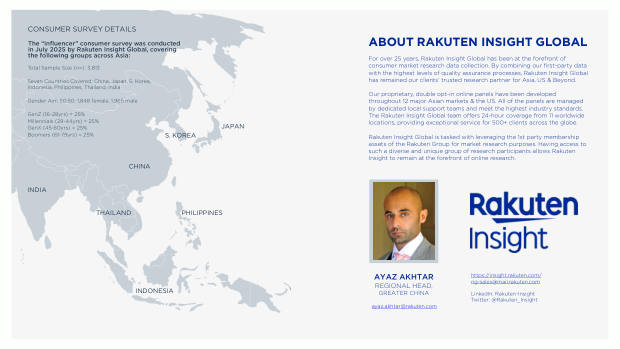
This mini-report is the Japan cut of Totem's 2025 "Influencer Marketing in Asia" study. The Japan consumer sample is 515 respondents, drawn from a seven-market survey of 3,813 consumers conducted in July 2025 by Rakuten Insight Global (balanced by gender and across GenZ, Millennial, GenX and Boomer cohorts). It is complemented by Totem's brand-side survey, including 34 Japan-based brand and marketing managers.
Get the full report
Leave your details — we'll email you the PDF and give you the download straight away.