Influencer Marketing in India 2025: a large, developing market shaped by TikTok's absence
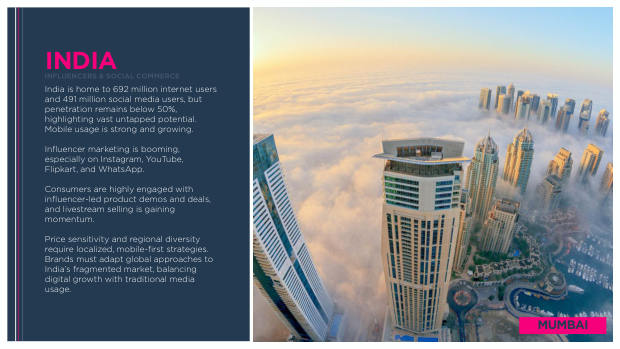
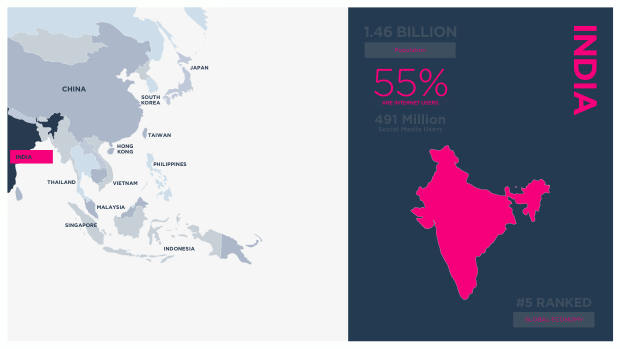
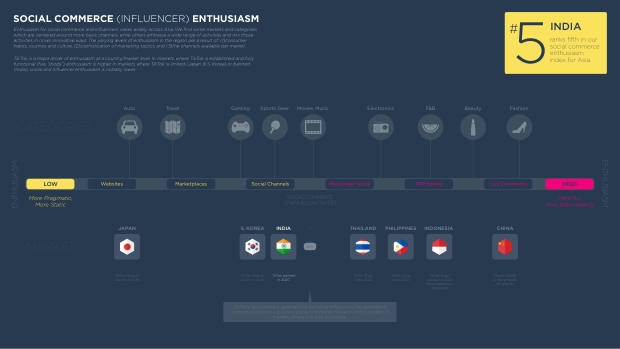
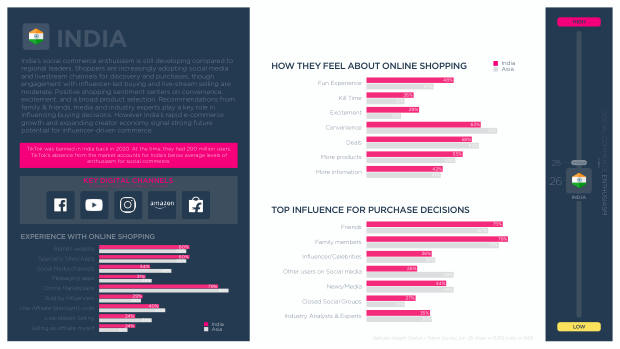
India ranks fifth of seven markets in Totem's social commerce enthusiasm index, scoring 26 against a regional average of 28. With 692 million internet users and 491 million on social media — but penetration still below 50% — it is a large, developing market with vast untapped potential and a rapidly expanding creator economy.
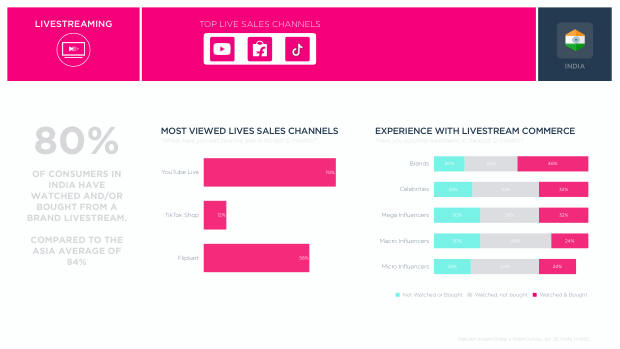
Influencer marketing is booming on Instagram, YouTube, Flipkart and WhatsApp, with consumers highly engaged in influencer-led product demos and deals and livestream selling gaining momentum. Engagement with influencer-led buying is still moderate, and family, friends, media and industry experts remain key to purchase decisions. Price sensitivity and regional diversity call for localised, mobile-first strategies.
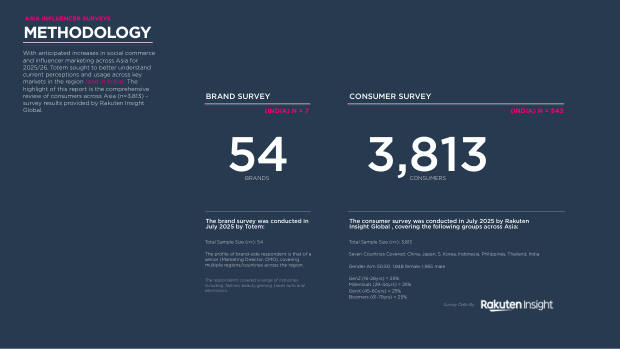
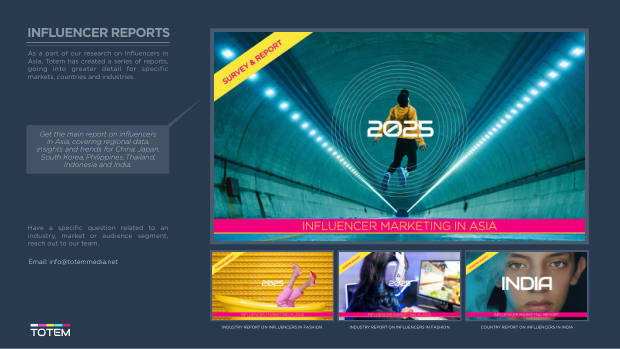
This mini-report draws on the India cut of Totem's 2025 Asia influencer survey — 543 consumers and 7 India brand managers — to detail where influence is strongest and how TikTok's absence shapes the market.
A large market still developing its social commerce appetite.
India's enthusiasm index of 26 sits just below the regional average. Shoppers are increasingly adopting social and livestream channels, but engagement with influencer-led buying and livestream selling remains moderate.
TikTok's 2020 ban holds enthusiasm below average.
TikTok had 200 million users in India when it was banned in 2020, and its absence is the report's stated reason for India's below-average social commerce enthusiasm — a structural gap the market has yet to fill.
Smaller influencers work better here than elsewhere.
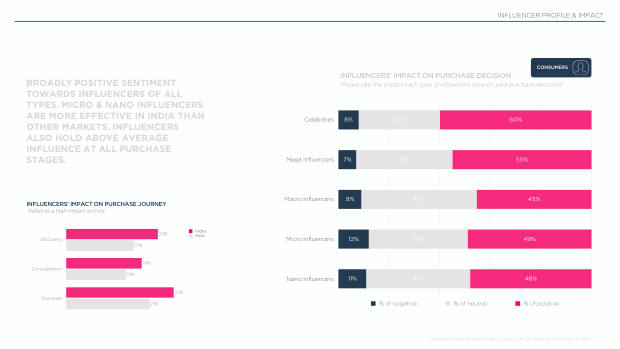
Sentiment toward all influencer tiers is broadly positive, and micro and nano-influencers are more effective in India than in other markets. Influencers also hold above-average influence at every purchase stage (27% high-impact at discovery versus 21% Asia-wide).
Aspiration and peer credibility over-index heavily.
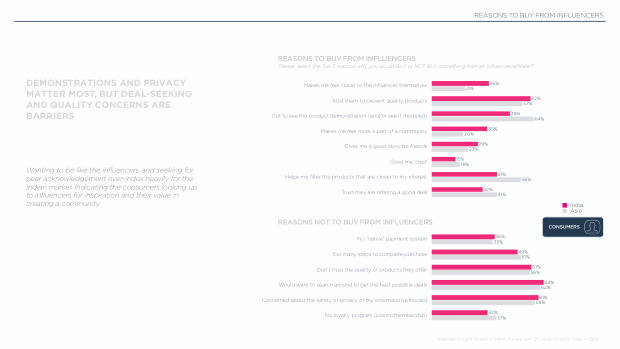
Wanting to be like the influencer and seeking peer acknowledgement rank far above the Asia average — consumers look up to influencers for inspiration and value their role in creating community.
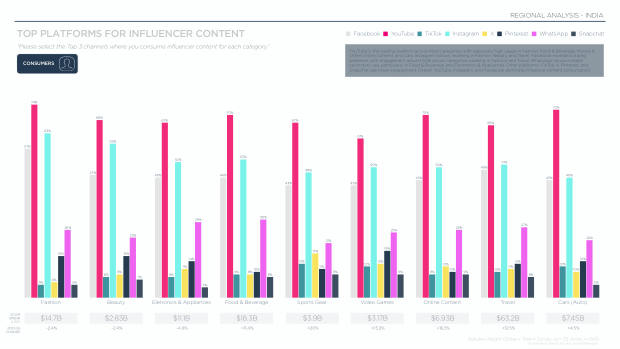
Instagram and YouTube lead, with WhatsApp and marketplaces adding reach.
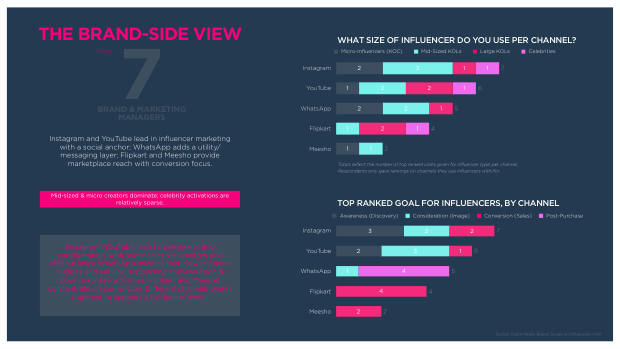
Instagram and YouTube anchor influencer marketing for awareness and consideration, WhatsApp adds a messaging/utility layer for mid- and lower-funnel nudges, and Flipkart and Meesho concentrate on conversion. Brands lean on mid-sized and micro creators; celebrity activations are sparse.
Demonstrations and privacy drive purchases; deals and quality doubts hold them back.
Product demonstrations and privacy assurances matter most in driving purchases, while deal-seeking and quality concerns are the leading barriers.

Where does India rank on social commerce enthusiasm?
Fifth of seven markets, with an index score of 26 against a regional average of 28 — a large market whose appetite is still developing.
Why is India's enthusiasm below average?
Largely because of TikTok's absence. TikTok had 200 million Indian users when it was banned in 2020, and no equivalent has filled the social commerce gap it left.
How effective are influencers in India?
Above average at every stage, and unusually, micro and nano-influencers are more effective here than in other markets, reflecting a trust in relatable, community-level creators.
Which platforms lead for influencer marketing?
Instagram and YouTube lead for awareness and consideration, WhatsApp adds messaging-led nudges, and Flipkart and Meesho drive conversion.
What drives and blocks purchases?
Product demonstrations and privacy assurances drive purchases; deal-seeking and doubts about product quality are the main barriers, alongside India's pronounced price sensitivity.
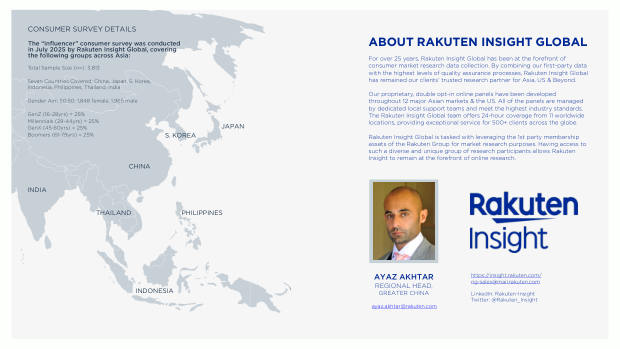
This mini-report is the India cut of Totem's 2025 "Influencer Marketing in Asia" study. The India consumer sample is 543 respondents, drawn from a seven-market survey of 3,813 consumers conducted in July 2025 by Rakuten Insight Global (balanced by gender and across GenZ, Millennial, GenX and Boomer cohorts). It is complemented by Totem's brand-side survey, including 7 India-based brand and marketing managers.
Get the full report
Leave your details — we'll email you the PDF and give you the download straight away.