Influencer Marketing in China 2025: the region's most advanced social commerce market
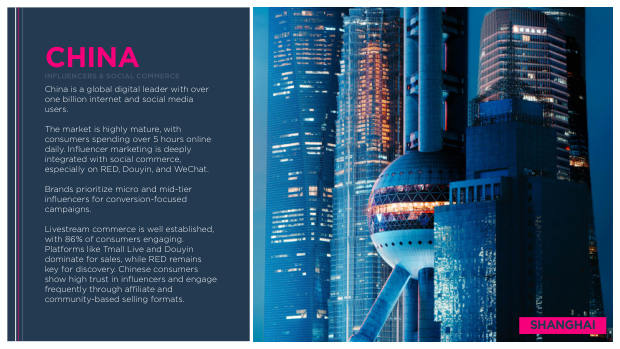
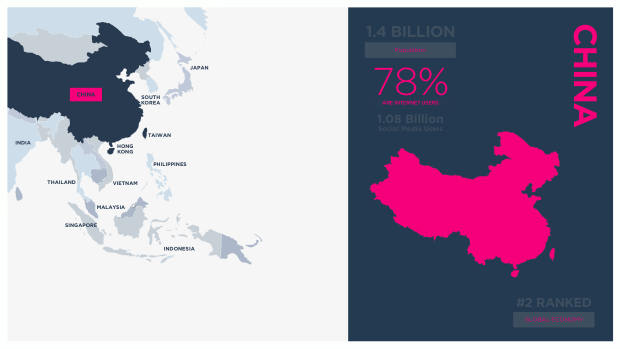
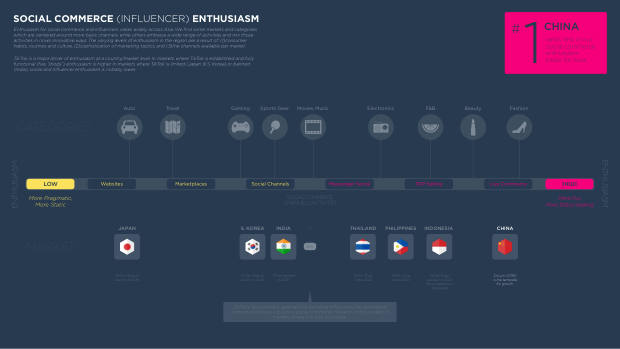
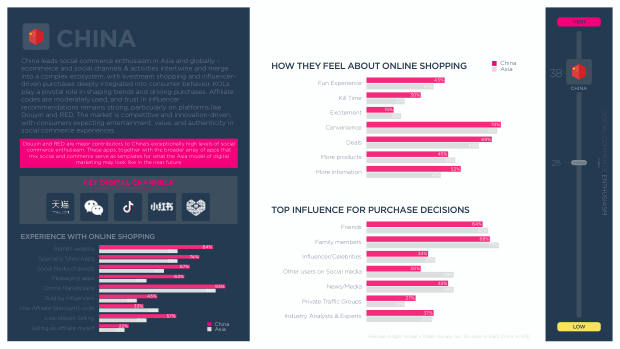
China ranks first in Totem's social commerce enthusiasm index for Asia, scoring 38 against a regional average of 28. With over one billion internet and social media users and consumers spending more than five hours online daily, influencer marketing is fully fused with commerce on RED, Douyin and WeChat.
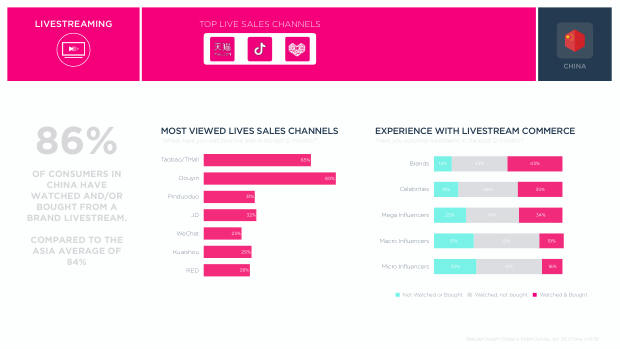
Chinese consumers are the most digitally sophisticated — and most sceptical — in the region, and they lean on influencers for consideration more than any other market. Livestream commerce is well established: 86% of consumers have watched or bought from a brand livestream, versus the Asia average of 84%. Tmall Live and Douyin dominate for sales while RED remains the key discovery channel.
This mini-report draws on the China cut of Totem's 2025 Asia influencer survey — 575 consumers and 42 China brand managers — to detail channel roles, influencer sizing and the barriers that still hold purchases back.
China leads Asia and the world on social commerce enthusiasm.
Its index score of 38 sits ten points above the regional average, reflecting an ecosystem where ecommerce and social channels merge and livestream and influencer-driven purchases are deeply embedded in everyday behaviour.
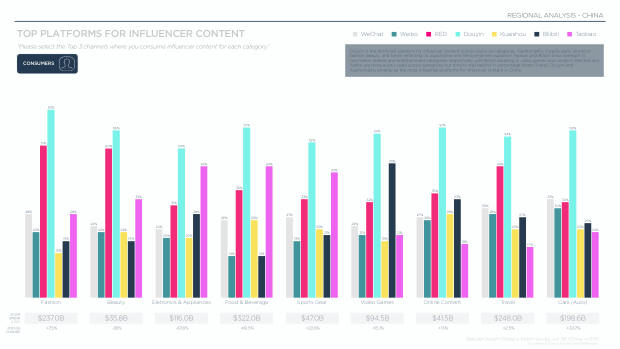
RED is the number-one influencer channel, Douyin close behind.
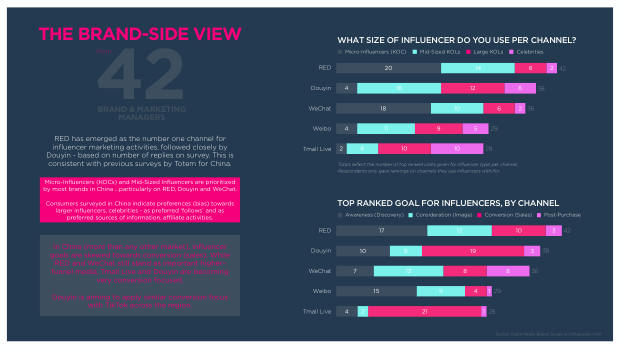
Based on survey responses, RED edges Douyin for influencer activity overall — consistent with Totem's prior China surveys. RED and WeChat anchor upper-funnel discovery and image, while Tmall Live and Douyin have become sharply conversion-focused.
Goals skew to conversion more than any other market.
Chinese brands direct influencers toward sales harder than peers elsewhere. Douyin is now exporting that conversion focus to TikTok across the region.
Brands prefer micro and mid-tier influencers; consumers prefer larger ones.
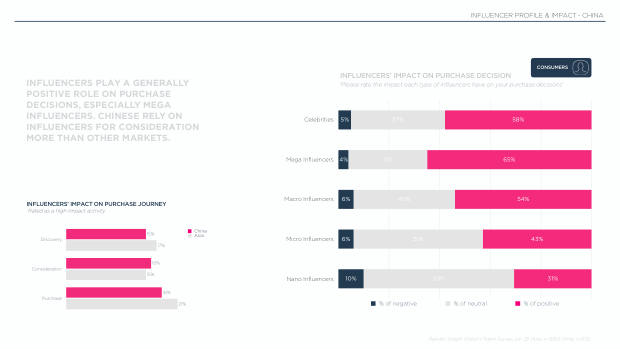
Brands prioritise KOCs and mid-sized KOLs, especially on RED, Douyin and WeChat. But consumers show a clear bias toward larger influencers and celebrities — mega-influencers draw 65% positive sentiment versus 31% for nano-influencers.
Community and storytelling matter more here than anywhere.
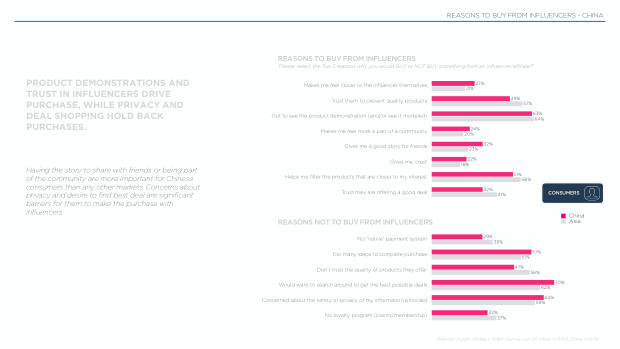
"Gives me a good story for friends" and "makes me feel part of a community" rank higher among Chinese consumers than in any other market, underlining influencers' role in social currency, not just conversion.
Privacy and deal-hunting are the main brakes on purchase.
The top barriers cited are concern over the safety/privacy of personal information (64%) and wanting to search around for the best deal (70% would want to shop around), even in this highly developed market.



Where does China rank on social commerce enthusiasm?
First in Asia, with an index score of 38 against a regional average of 28 — reflecting the region's most mature and integrated social commerce ecosystem.
How common is livestream shopping in China?
86% of consumers have watched or bought from a brand livestream, just above the Asia average of 84%. Taobao/Tmall (80% of viewers) and Douyin (65%) are the leading live-sale channels.
Which platforms lead for influencer marketing?
RED ranks first for influencer activity, followed closely by Douyin. RED and WeChat serve discovery and image; Tmall Live and Douyin drive conversion.
Do Chinese brands and consumers agree on influencer size?
No. Brands favour micro (KOC) and mid-tier influencers for conversion, while consumers lean toward larger influencers and celebrities, who draw the strongest positive sentiment (65% for mega-influencers).
What stops Chinese consumers buying from influencers?
Privacy concerns and a strong instinct to shop around for the best price are the leading barriers, despite high overall trust in influencers.
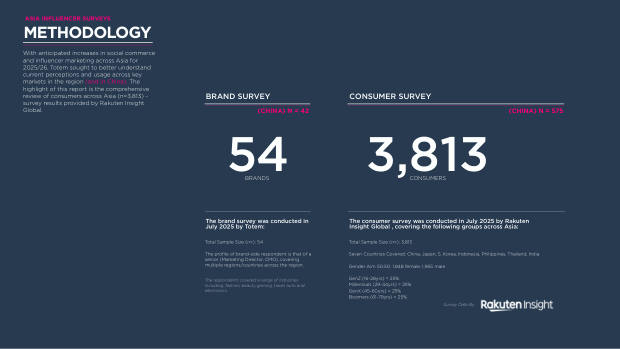
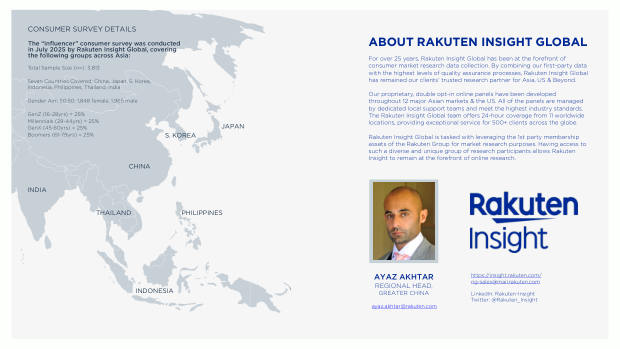
This mini-report is the China cut of Totem's 2025 "Influencer Marketing in Asia" study. The China consumer sample is 575 respondents, drawn from a seven-market survey of 3,813 consumers conducted in July 2025 by Rakuten Insight Global (balanced by gender and across GenZ, Millennial, GenX and Boomer cohorts). It is complemented by Totem's brand-side survey, including 42 China-based brand and marketing managers.
Get the full report
Leave your details — we'll email you the PDF and give you the download straight away.