Luxury hotels on social: 4,000 posts show the city beats the property
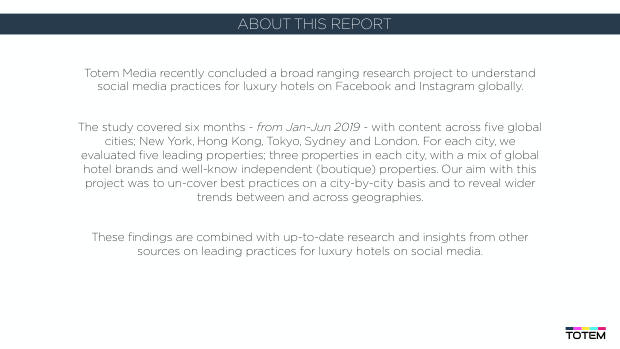
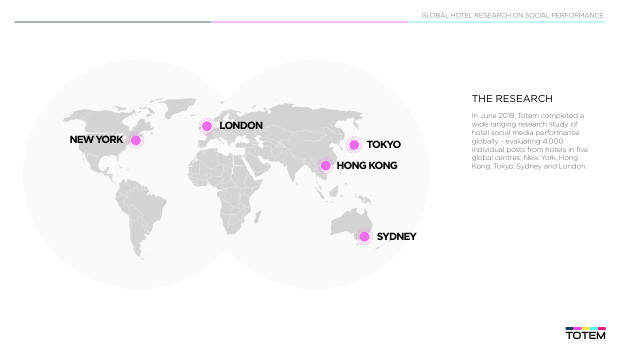
Totem Media analysed 4,000 individual social posts from leading luxury hotels across five global cities — New York, Hong Kong, Tokyo, Sydney and London — over the first half of 2019, evaluating five leading properties per city on Facebook and Instagram. The aim was to establish, city by city, what actually works on social media for luxury hotels, and to surface the wider patterns that hold across geographies.
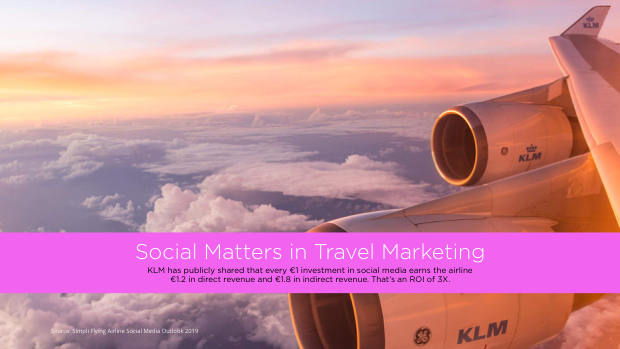
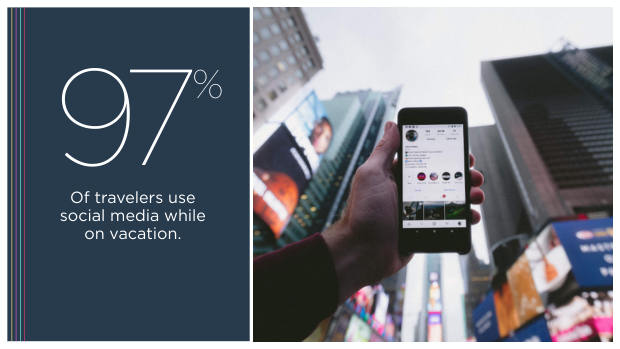
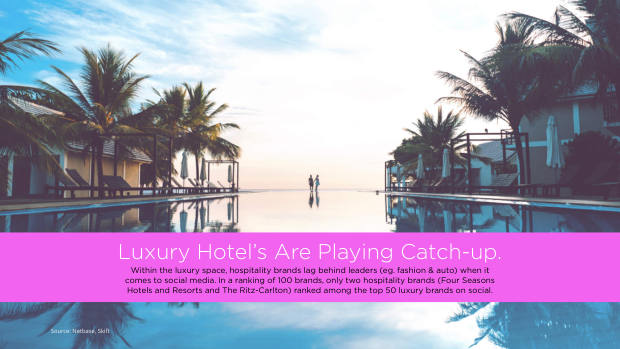
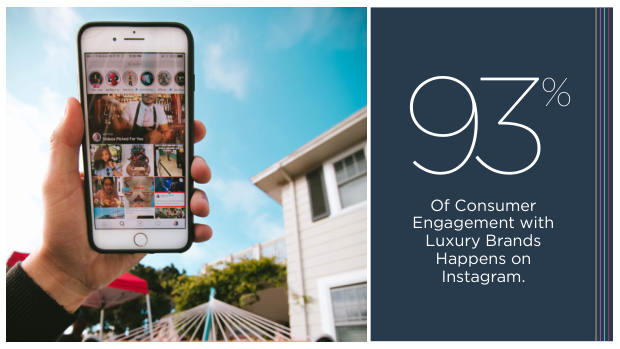
Luxury hospitality is playing catch-up. In a ranking of 100 luxury brands on social, only two hotel brands — Four Seasons and The Ritz-Carlton — made the top 50, leaving hotels behind categories like fashion and automotive. Yet the stakes are high: 97% of travellers use social media on vacation, 93% of consumer engagement with luxury brands happens on Instagram, and KLM has publicly reported a 3x return on social investment (€1.2 direct plus €1.8 indirect revenue per €1 spent).
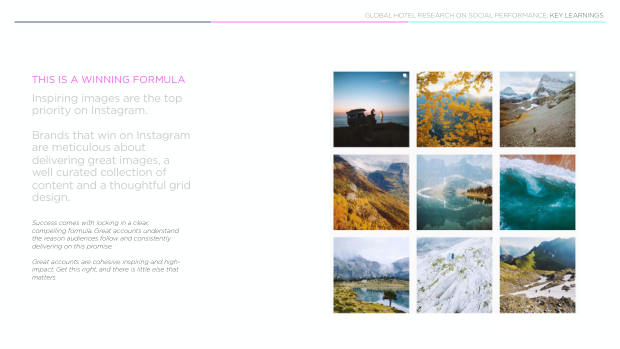
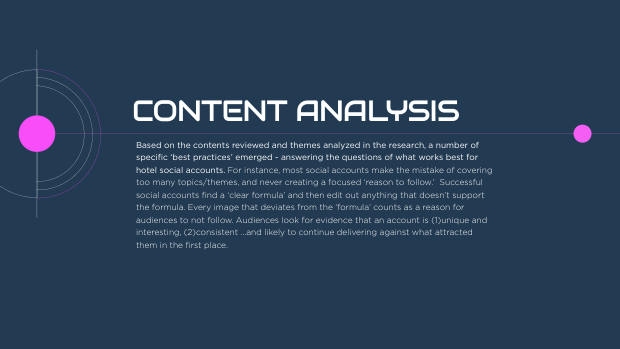
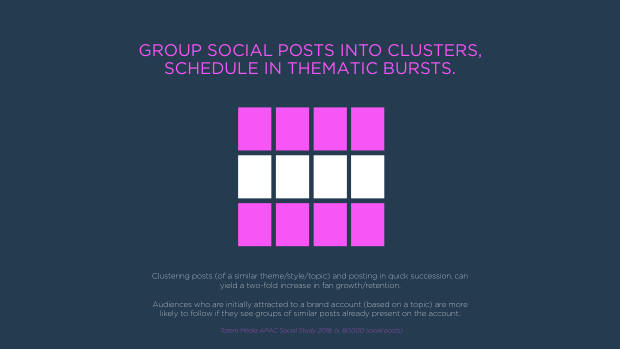
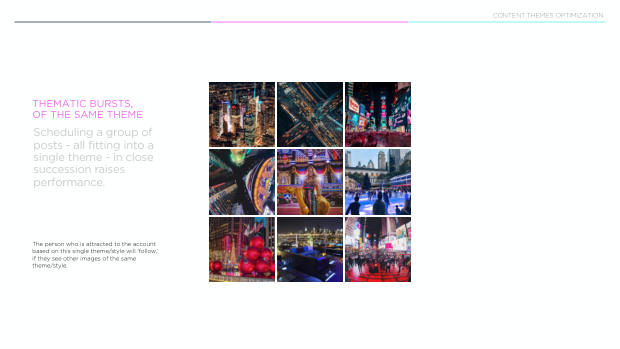
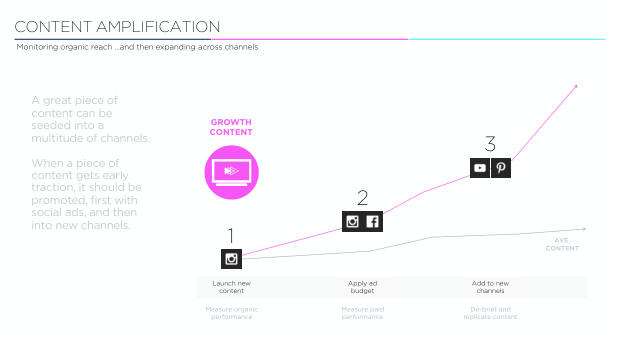
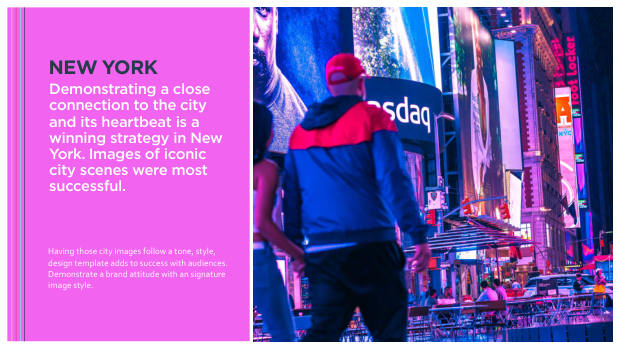
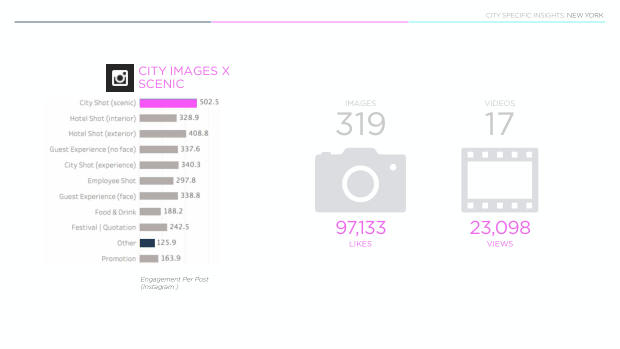
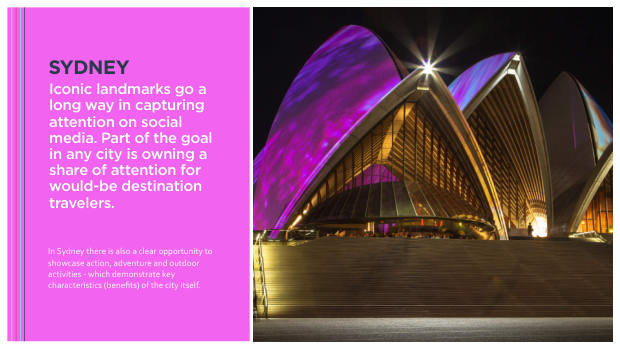
The core finding runs against instinct: images from around the city outperform images from inside the property, and the most common content type — food and drink — is among the worst-performing. Corporate, sterile images scored lowest; authentic city scenes and experiences scored highest. Winning accounts concentrate on a clear formula, cluster posts into thematic bursts, and use paid social to amplify what already resonates.
Instagram builds the brand, Facebook converts.
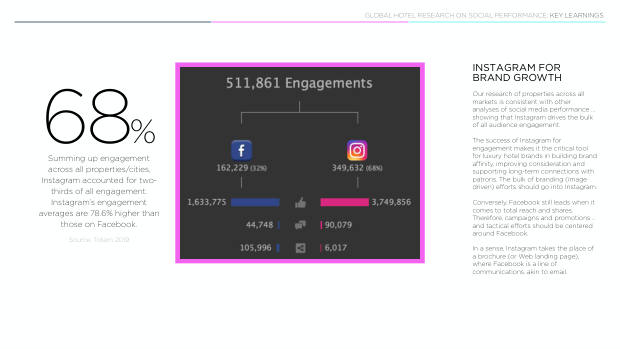
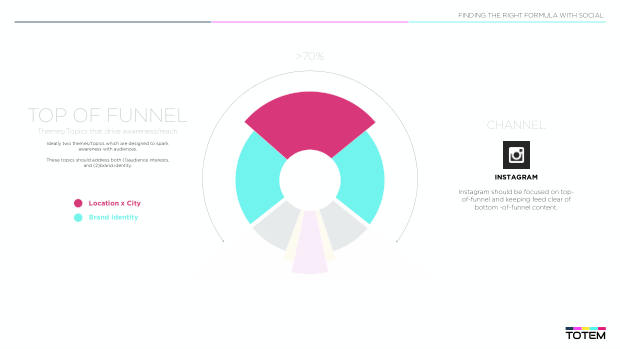
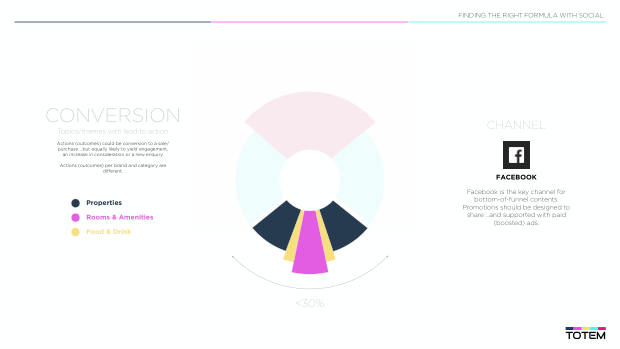
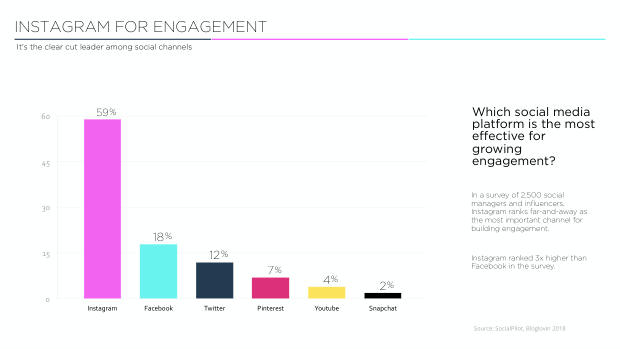
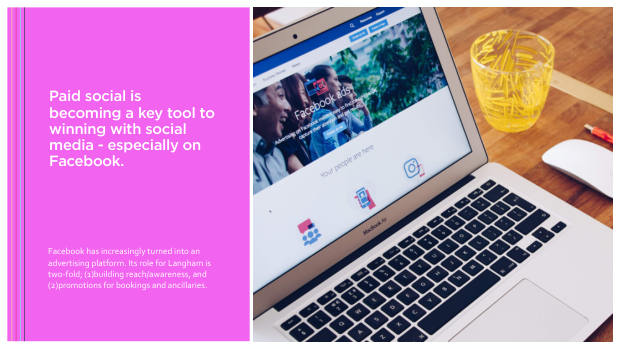
Consistent with Totem's wider research, Instagram drove roughly two-thirds of engagement and averaged 78.6% higher per-post engagement than Facebook. Instagram functions as the brochure — image-led, affinity-building, kept clear of bottom-of-funnel content — while Facebook leads on reach and shares, making it the channel for promotions and paid-supported tactical activity.
The city outperforms the property.
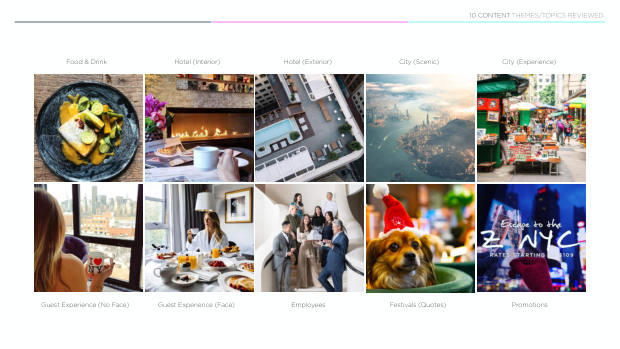
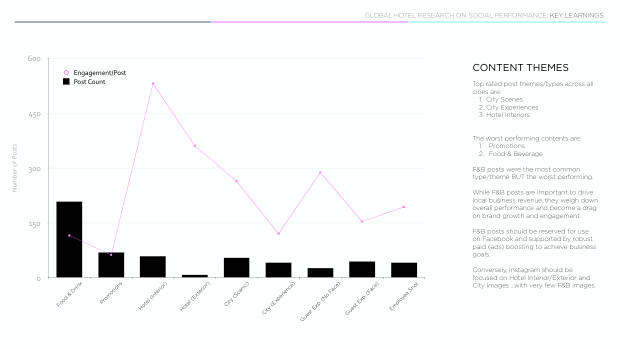
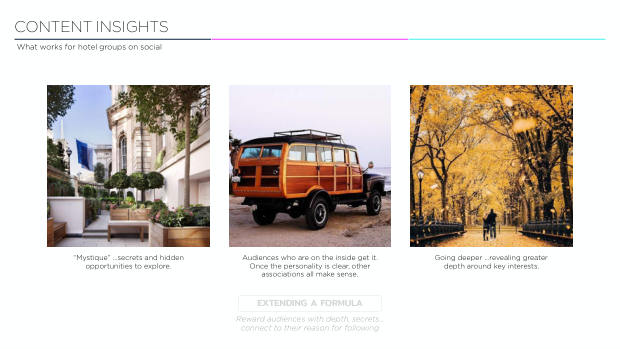
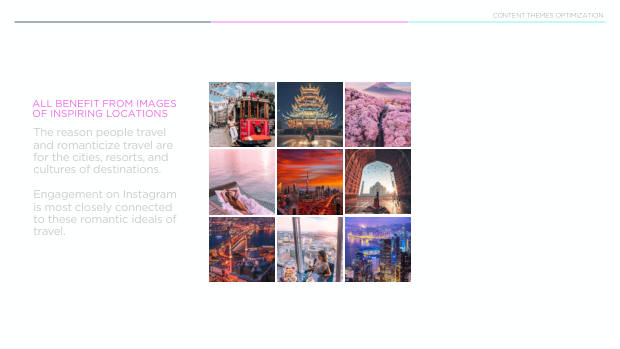
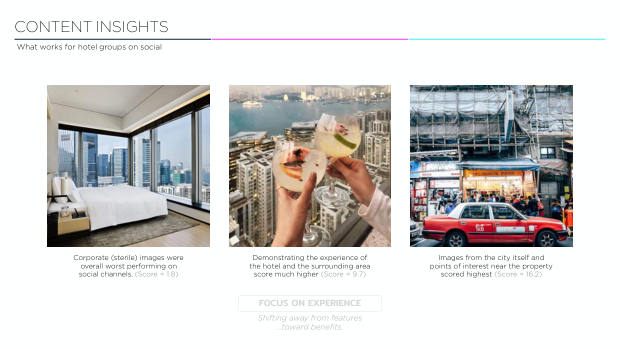
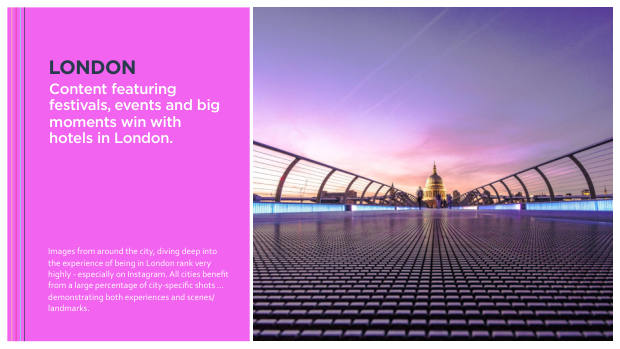
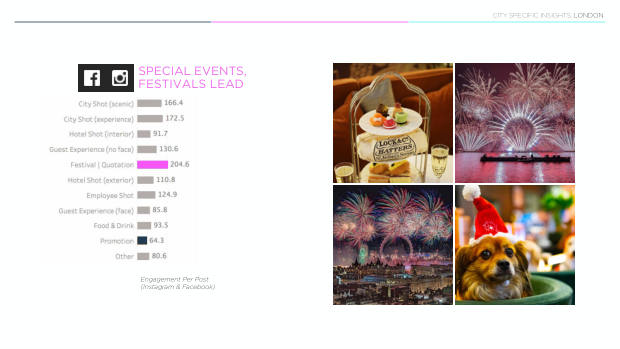
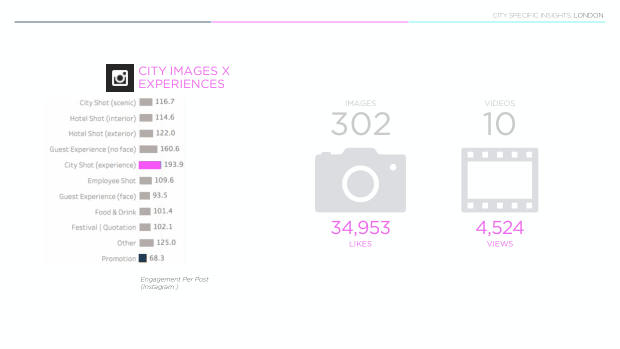
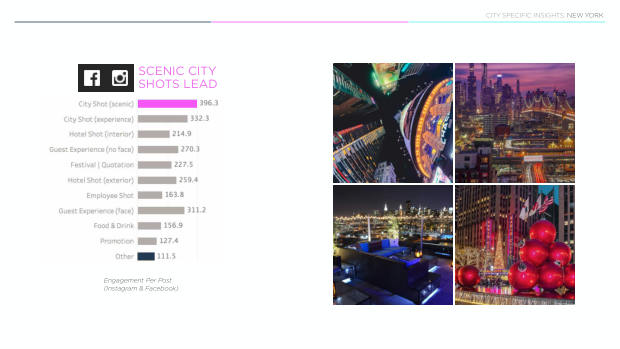
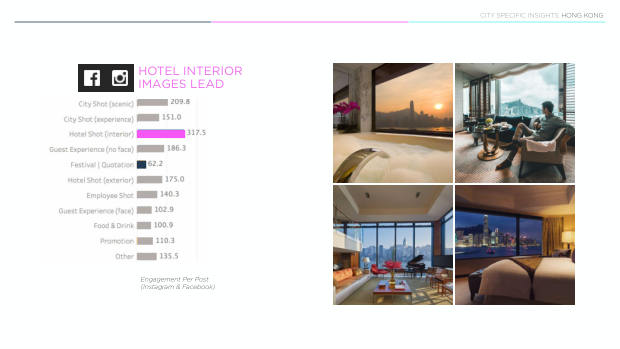
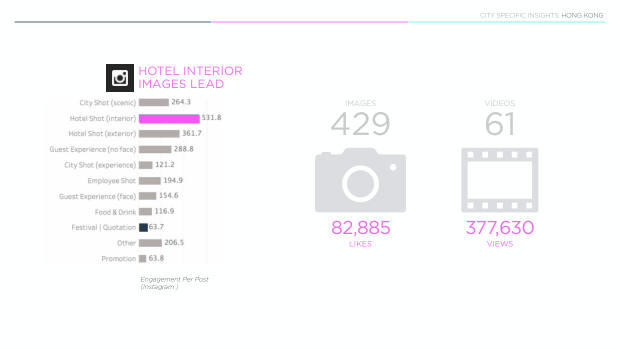
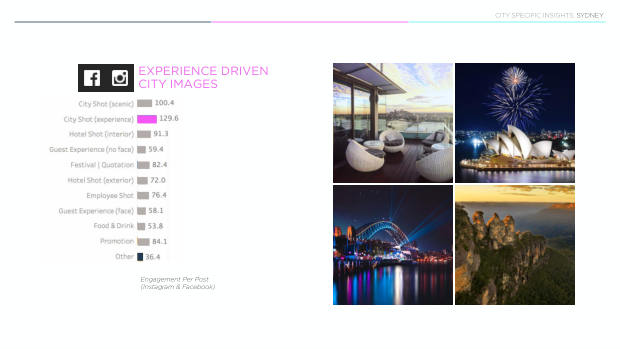
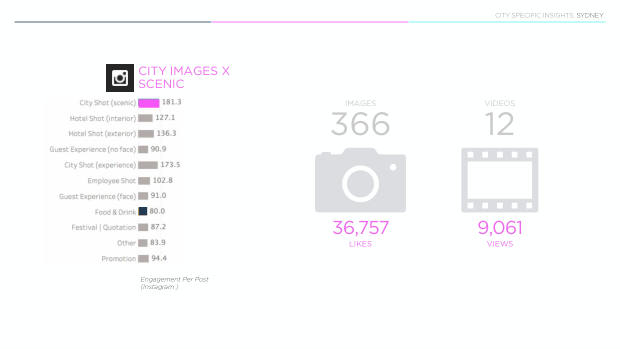
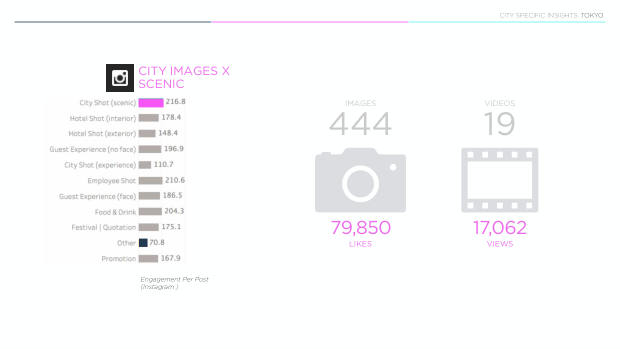
Across all cities, the top-performing themes were city scenes, city experiences and hotel interiors; the worst were promotions and food & drink. Images from outside but nearby the hotel beat interior shots on Instagram, and city-and-experience imagery scored 16.2 against 1.8 for corporate, sterile shots — the reason people romanticise travel is the destination itself.
F&B is the most common yet weakest content.
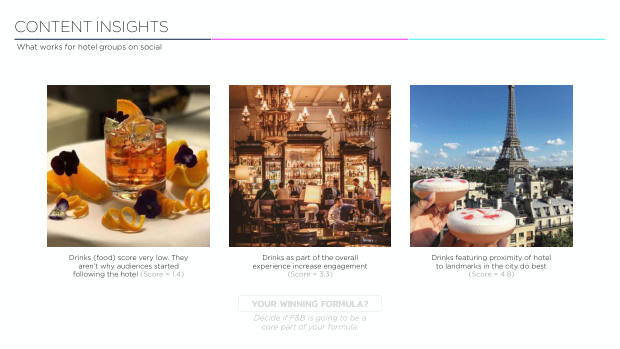
Food and beverage posts were the most frequently published theme but among the lowest-performing, dragging down overall engagement. The prescription is to reserve F&B for Facebook with robust paid boosting to hit local revenue goals, and keep Instagram focused on hotel interiors, exteriors and city imagery.
Rooms read best "lived in" and unoccupied.
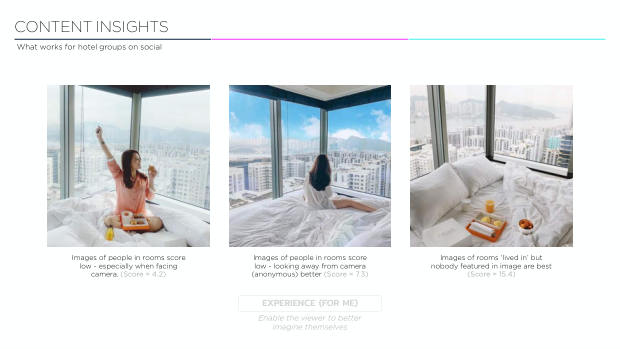
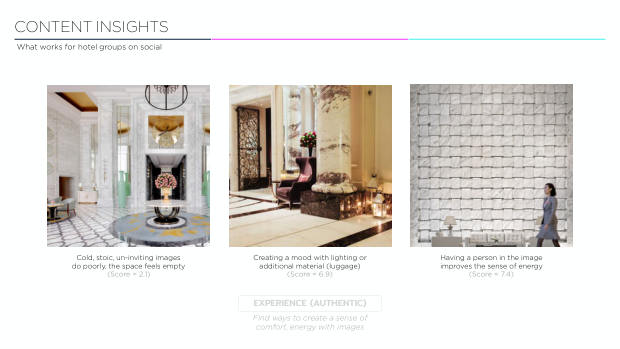
In content scoring, images of people in rooms facing the camera performed poorly (4.2), anonymous figures looking away did better (7.3), and rooms shown lived-in with nobody featured scored highest (15.4) — letting the viewer imagine themselves in the space. Mood, lighting and props outperform cold, empty interiors.
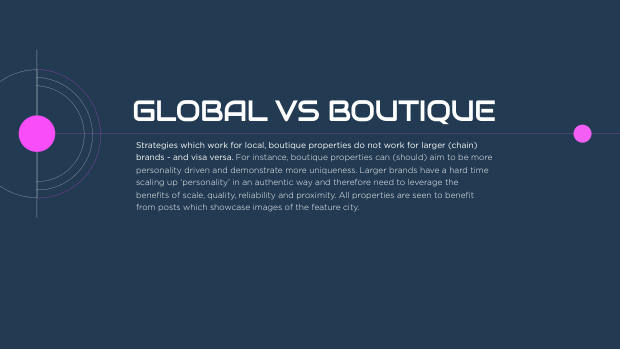
Global chains and boutiques need different strategies.
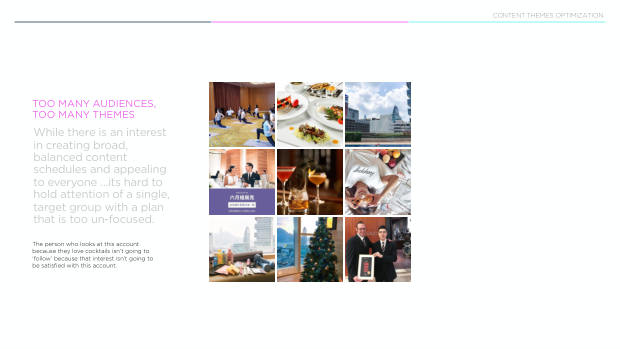
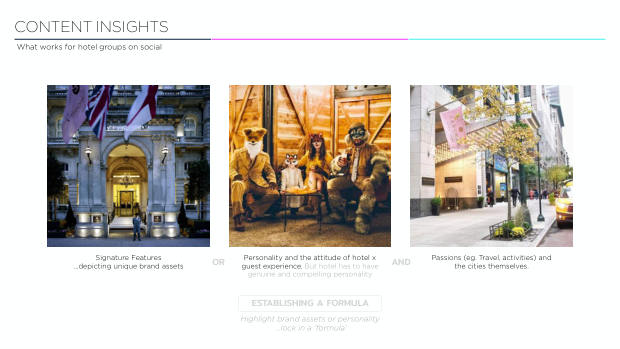
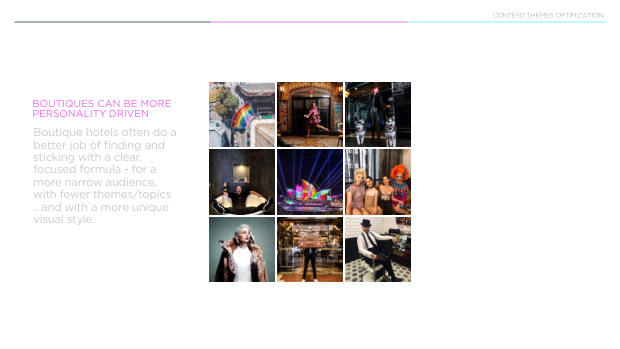
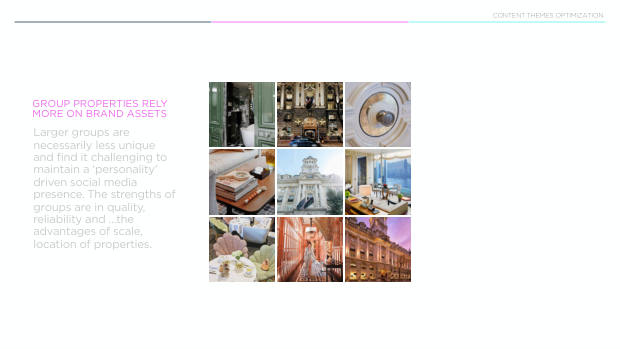
Boutique properties can and should be more personality-driven, sticking to a narrow audience with fewer themes and a distinct visual style. Larger chains struggle to scale authentic personality and are better leveraging quality, reliability, scale and property location. All property types benefit from city-feature imagery.
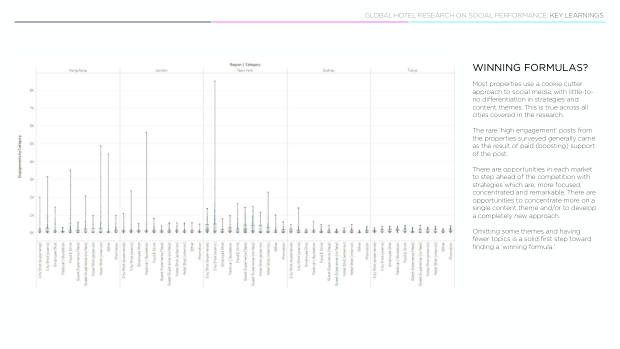
Most properties use a cookie-cutter approach.
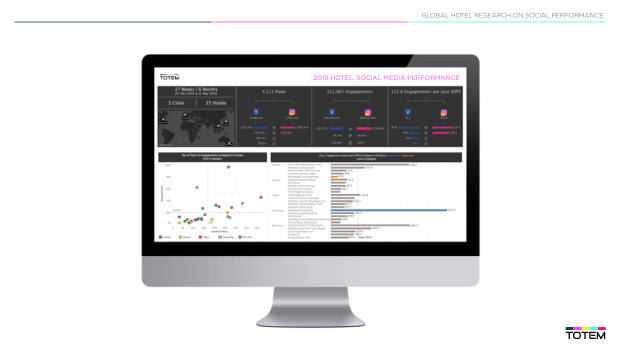
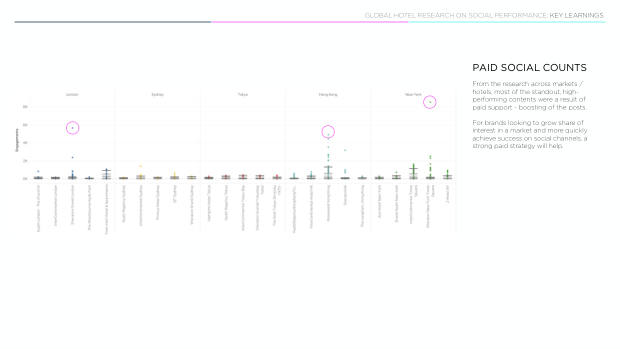
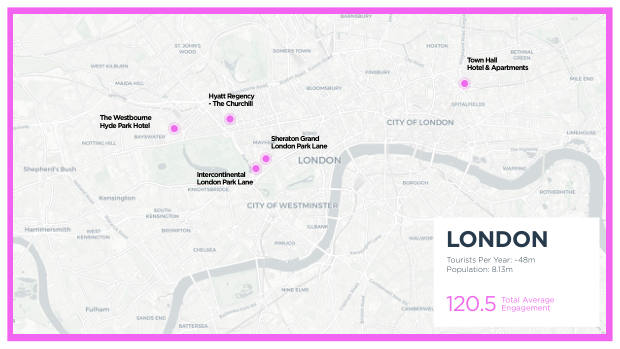
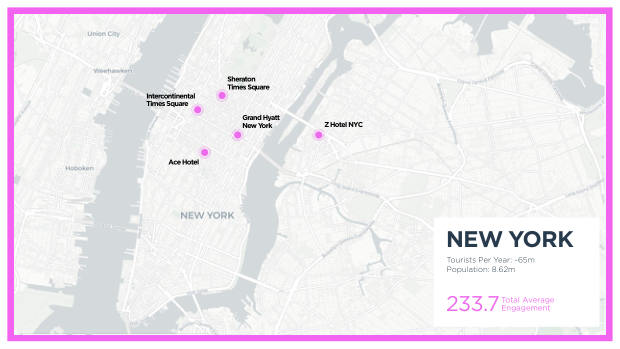
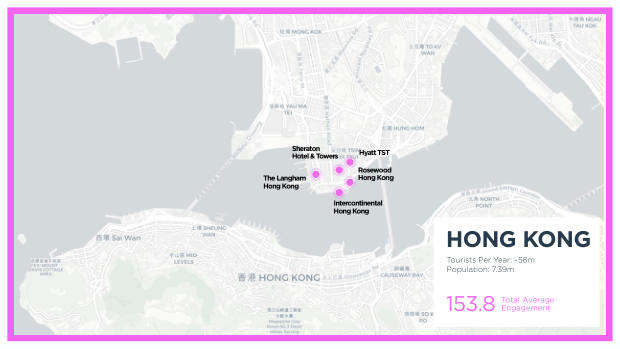
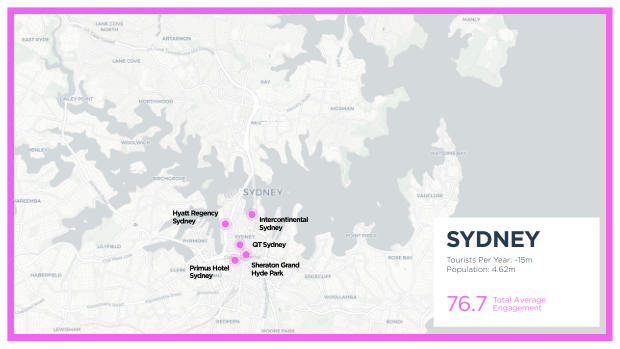
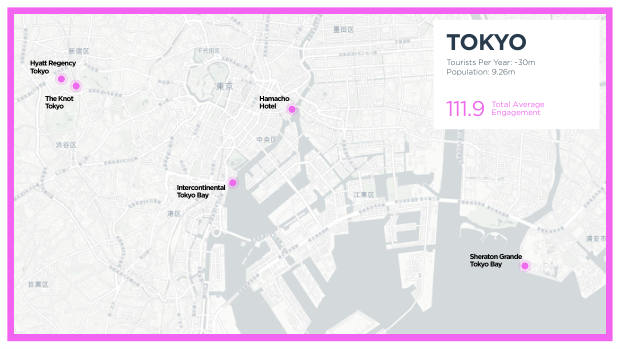
Across every city, hotels followed safe, undifferentiated calendars, and the rare high-engagement posts were generally the result of paid boosting. City-level engagement varied widely — New York averaged 233.7 per post, Hong Kong 153.8, London 120.5, Tokyo 111.9 and Sydney 76.7 — with clear openings in each market for a more focused, remarkable formula and stronger paid support.
Context and timing amplify reach.
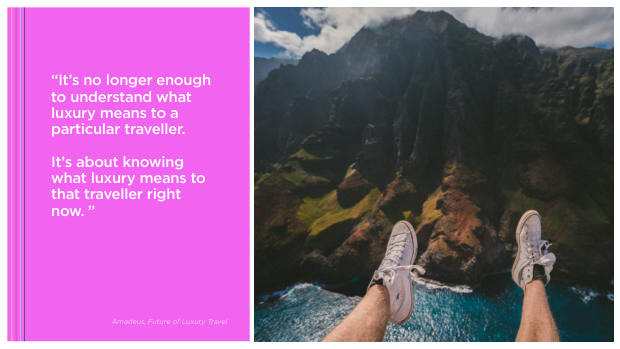
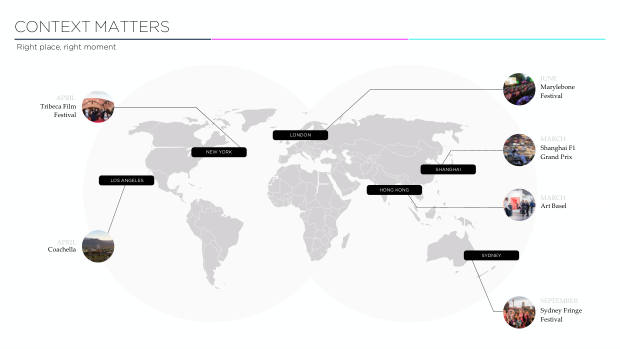
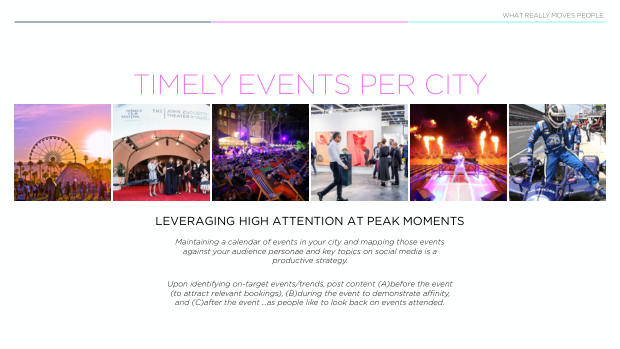
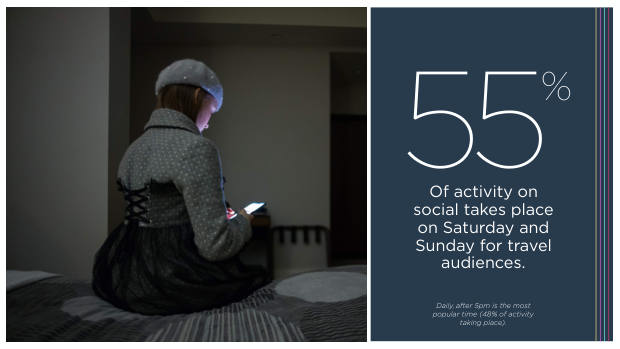
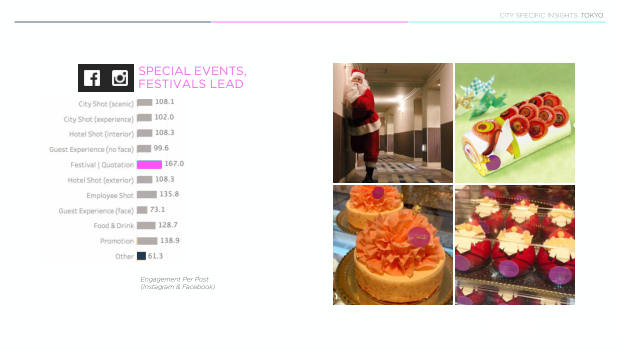
Luxury increasingly means what luxury means to a traveller right now. Mapping a calendar of city events and festivals against audience personas — and posting before, during and after on-target moments — is a productive strategy, reinforced by the finding that 55% of travel-audience social activity happens at weekends and 48% after 5pm.
Which platform should luxury hotels prioritise?
Instagram for brand-building and engagement — it drove about 68% of engagement in the study and is where 93% of luxury-brand consumer engagement happens. Facebook remains the channel for reach, promotions and paid-supported conversion.
What content performs best for hotels on social?
City scenes and experiences, followed by hotel interiors. City-and-experience imagery scored 16.2 versus 1.8 for corporate, sterile shots. Rooms shown lived-in but unoccupied outperform images of people facing the camera.
Why should food & drink posts be limited?
F&B was the most common theme but among the worst-performing, weighing down overall engagement. It is better reserved for Facebook with paid boosting, keeping Instagram focused on city and property imagery.
Do global chains and boutique hotels need different approaches?
Yes. Boutiques should lean into personality with a narrow, focused formula and distinct style; larger chains should leverage quality, reliability, scale and location. Both benefit from strong city imagery.
How large was the study?
Totem analysed 4,000 posts from five leading properties in each of five global cities — New York, Hong Kong, Tokyo, Sydney and London — on Facebook and Instagram over January-June 2019.
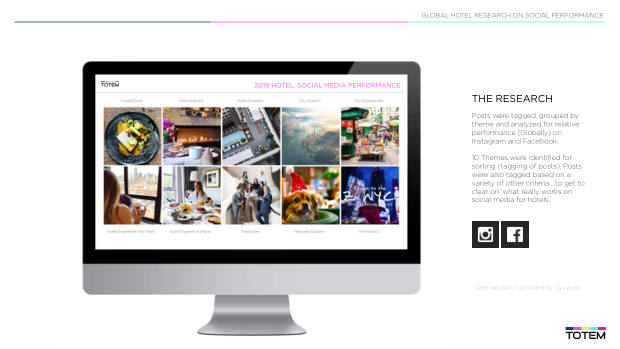
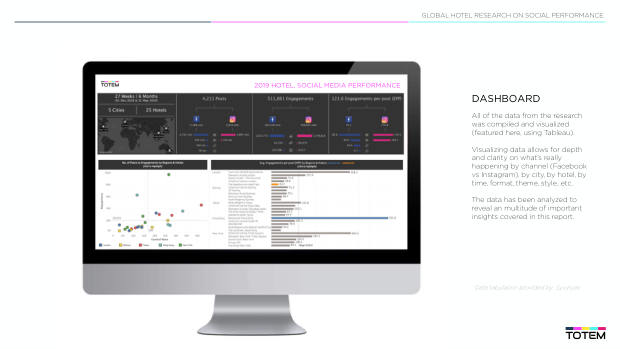
Totem Media evaluated 4,000 individual Facebook and Instagram posts from luxury hotels across five global centres — New York, Hong Kong, Tokyo, Sydney and London — over January to June 2019, covering five leading properties per city with a mix of global chains and independent boutiques. Posts were tagged and grouped into 10 content themes (including hotel interior/exterior, city scenic, city experience, guest experience, employees, promotions and food & drink) and scored for relative performance by channel, city, property, time, format and theme. Data was tabulated by Syvylyze and visualised in Tableau, supplemented by third-party sources including Digimind, Accenture/Facebook IQ and Simpli Flying.
Get the full report
Leave your details — we'll email you the PDF and give you the download straight away.