How DTC brands responded to Covid: only 22% saw sales fall while incumbents scrambled
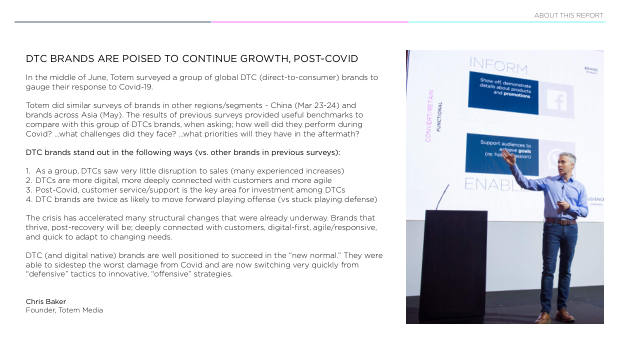
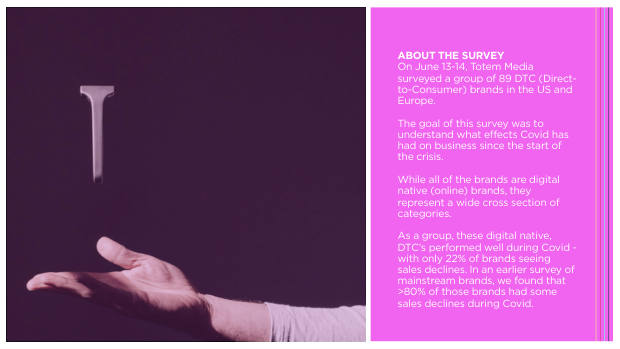
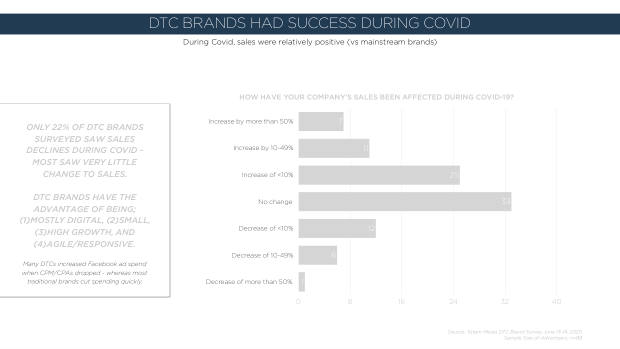
In mid-June 2020, Totem surveyed 89 direct-to-consumer brands across the US and Europe to gauge how they had weathered Covid-19, benchmarked against earlier surveys of brands in China and across Asia. The headline: as digital-native businesses, DTC brands sidestepped the worst of the disruption. Only 22% saw sales decline, against more than 80% of mainstream brands in an earlier Totem survey — many DTCs recorded demand surges rather than dips.
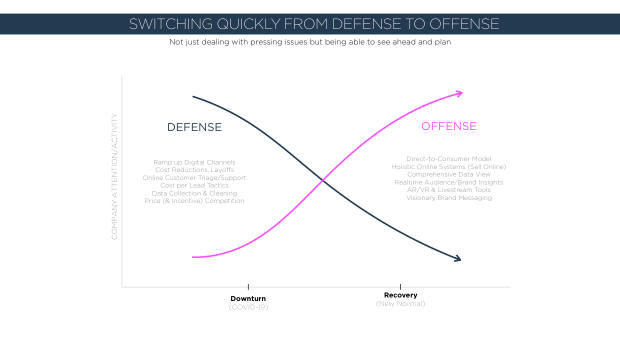
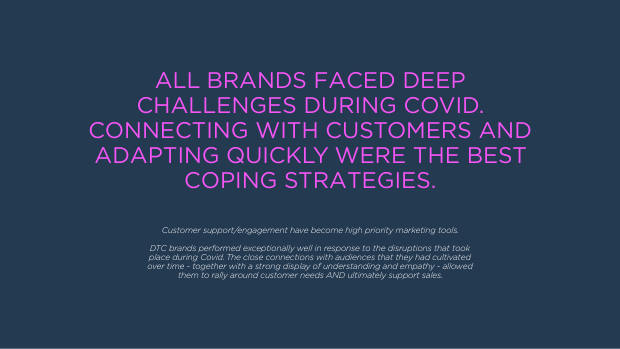
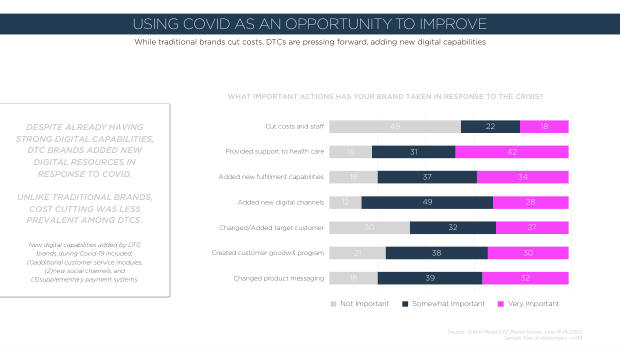
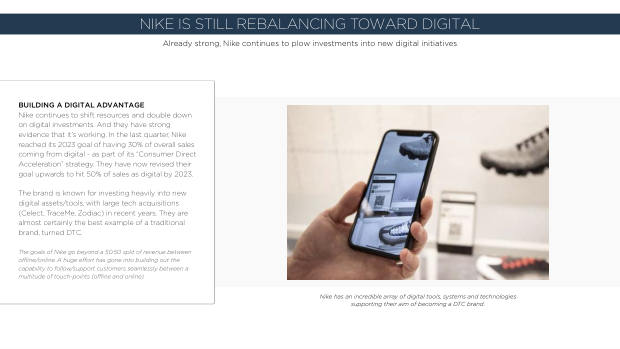
The crisis accelerated structural changes already underway. While traditional category leaders were stuck playing defense — rebalancing offline and online, reviewing portfolios, patching digital gaps — DTC brands moved quickly from defensive tactics to offensive strategy, doubling down on digital resources, deeper customer engagement and repositioning products for changed needs. On Totem's read, DTC brands were roughly twice as likely to be playing offense.
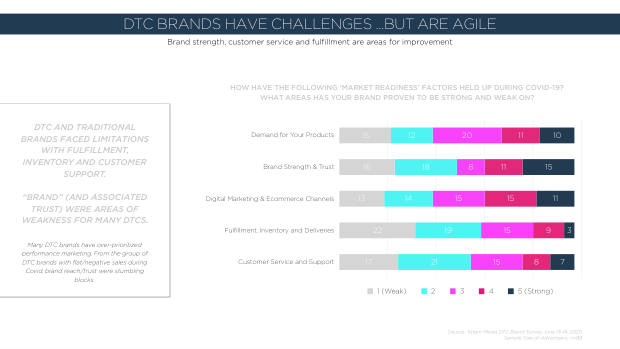
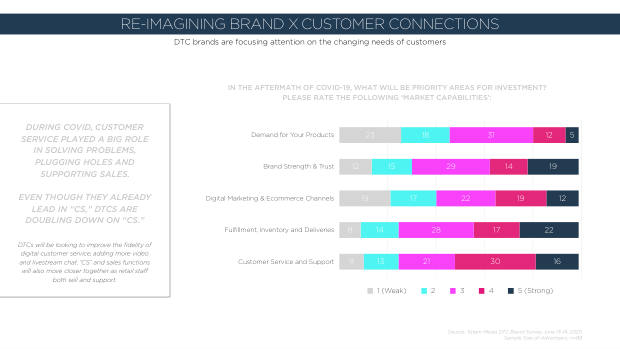
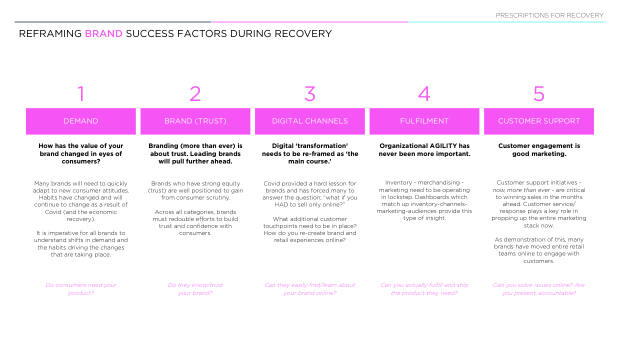
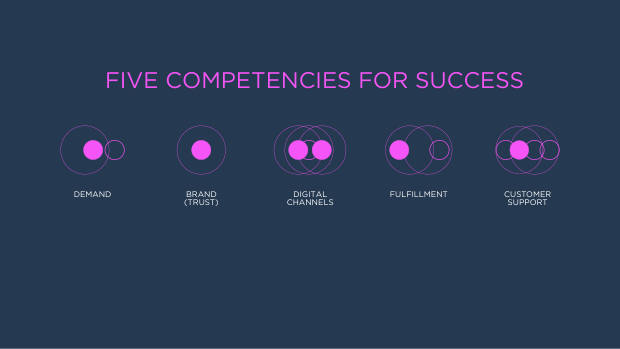
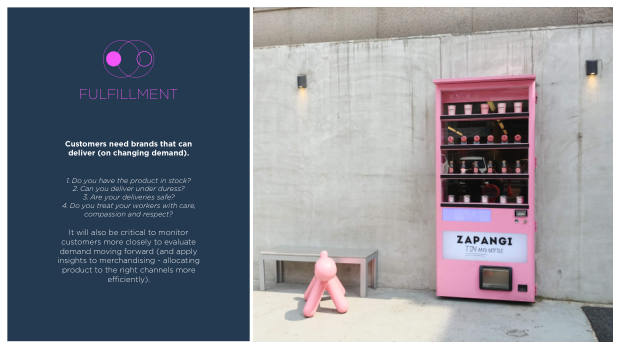
The report identifies five competencies that separated winners from strugglers: demand, brand trust, digital channels, fulfilment, and customer support. The best brands had all five working in unison; a breakdown in any single one produced poor results. Customer service, in particular, moved from a peripheral function to a front-line branding and sales tool.
DTC brands largely held their sales.
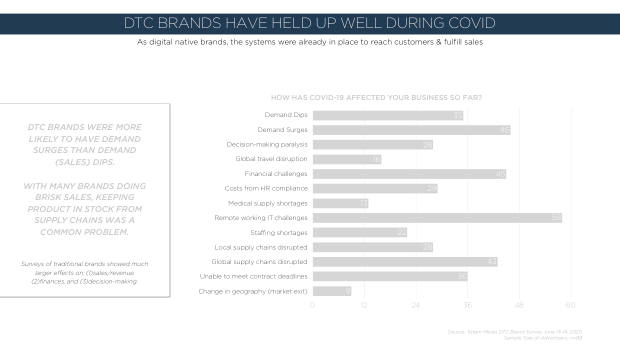
Only 22% of surveyed DTCs saw declines, and many reported demand surges — a sharp contrast to the 80%+ of mainstream brands hit in an earlier survey. The advantages were structural: mostly digital, small, high-growth and agile, with systems already in place to reach customers and fulfil online. Several DTCs increased Facebook ad spend as CPM/CPA costs dropped, while traditional brands cut budgets fast.
Offense beat defense.
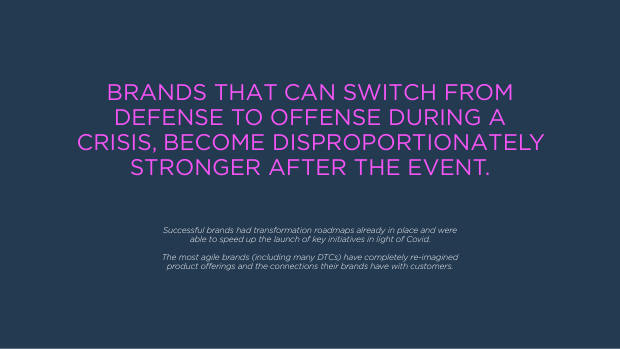
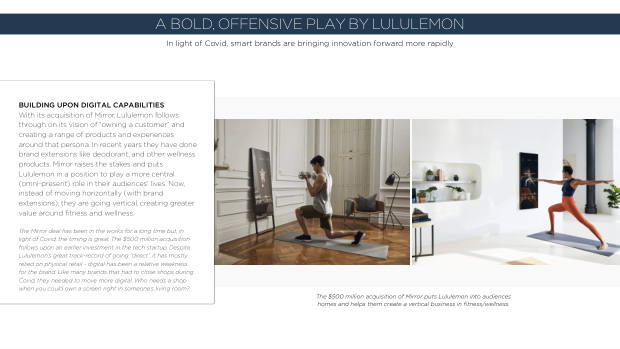
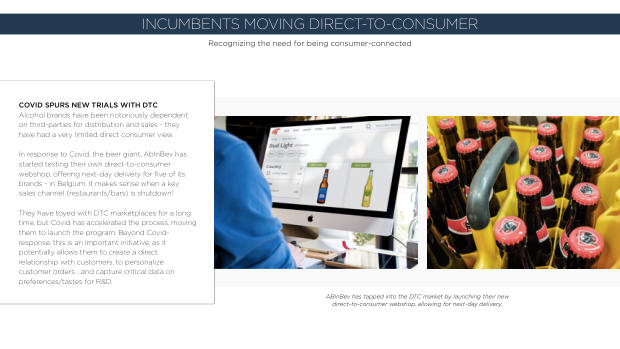
Brands able to switch from defensive triage to offensive strategy during the crisis positioned themselves to emerge disproportionately stronger. Lululemon's $500 million acquisition of Mirror exemplified the move — going vertical into fitness and wellness rather than horizontal with brand extensions — turning a relative digital weakness into an in-home platform.
Customer support became a branding tool.
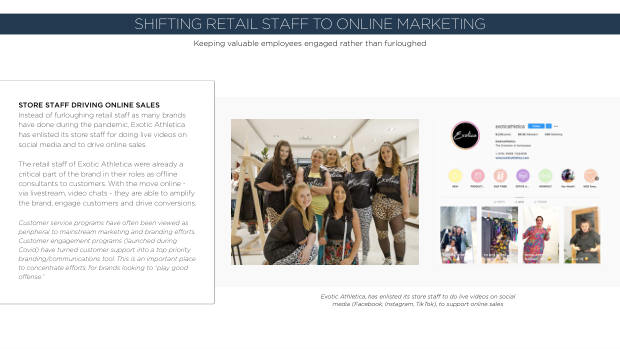
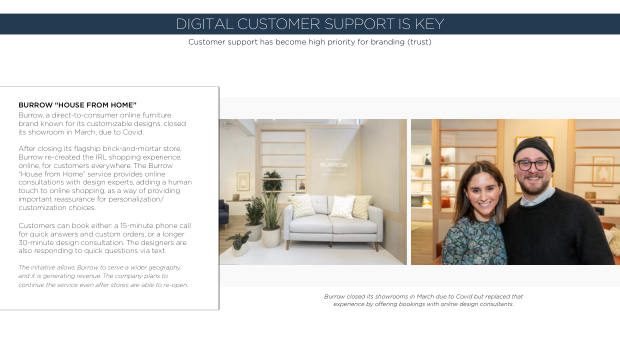
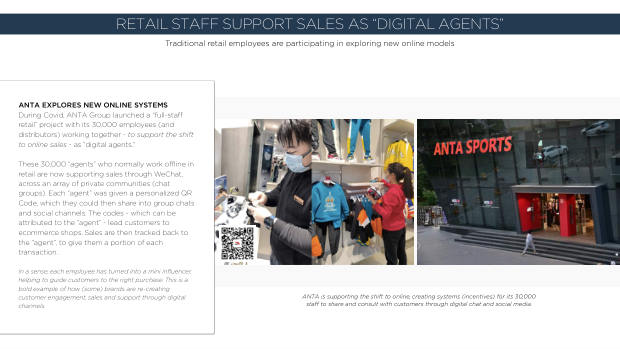
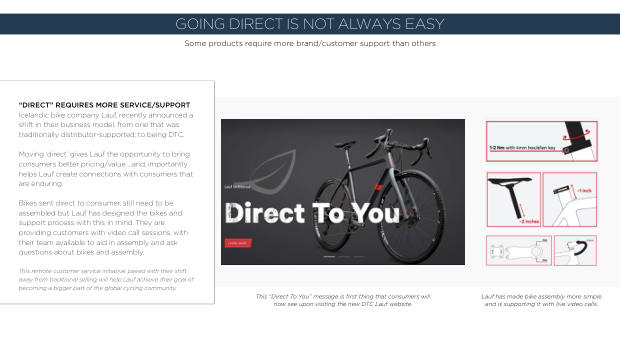
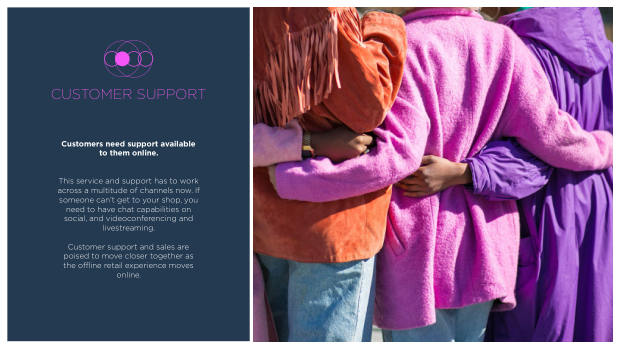
Support and engagement, long treated as peripheral to marketing, became a top investment priority. Burrow replaced its closed showroom with "House from Home" video consultations; Exotic Athletica put store staff on livestreams rather than furloughing them; ANTA mobilised 30,000 retail employees as WeChat "digital agents," each with a personalised QR code that tracked and rewarded attributable sales.
Brand trust was the common weak point.
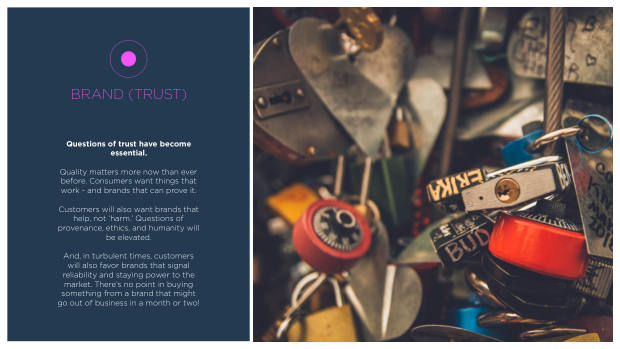
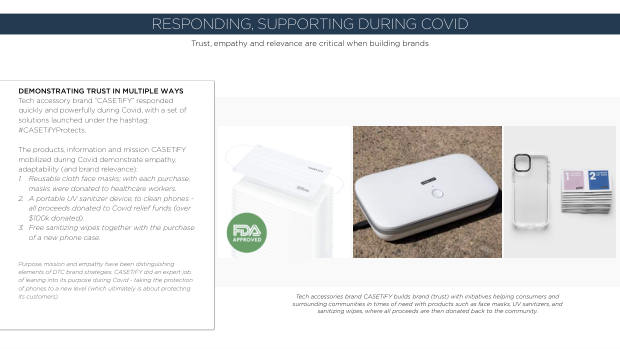
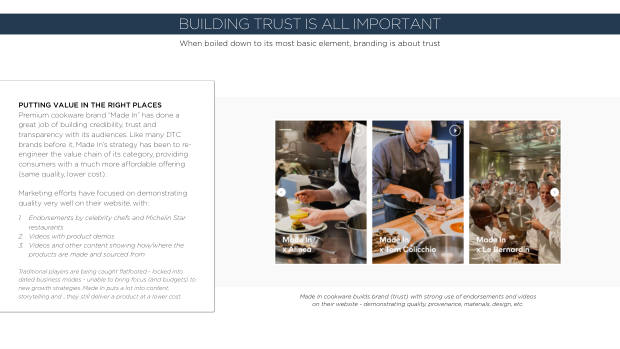
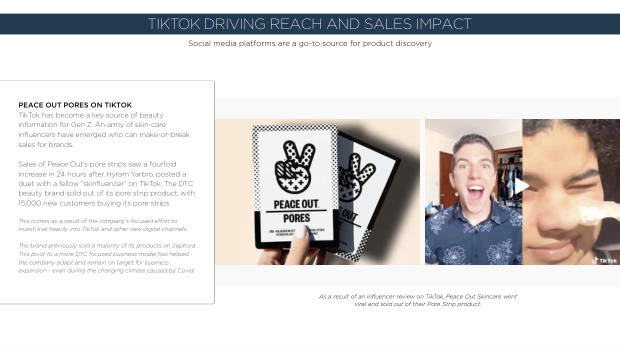
Among DTCs with flat or negative sales, brand reach and trust were the recurring stumbling blocks — a consequence of over-prioritising performance marketing. The report positions trust, provenance and reliability as elevated purchase criteria in turbulent times, with brands like Made In and CASETiFY (which donated over $100k in Covid relief) building equity through content, endorsements and mission.
International reach retracted.
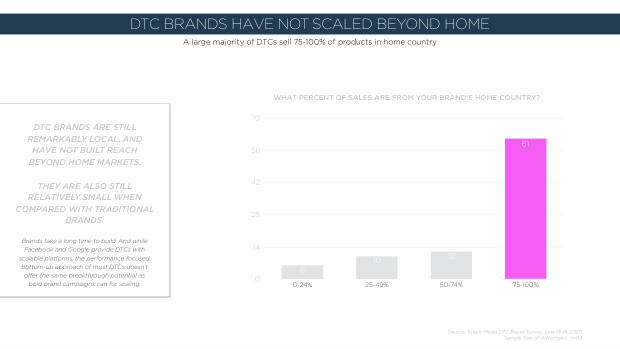
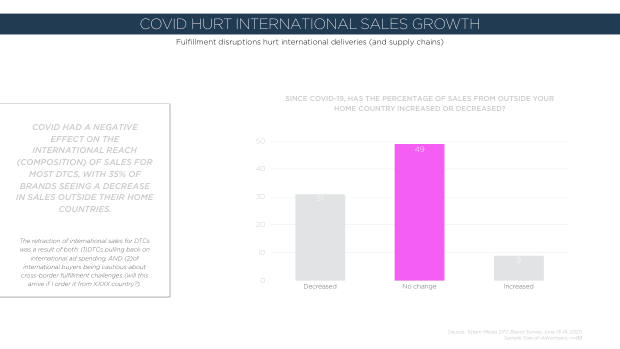
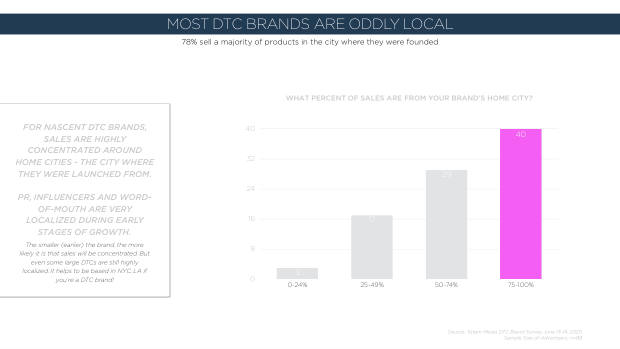
Covid hurt cross-border sales for most DTCs: 35% saw sales outside their home country fall, driven by pulled international ad spend and buyer caution about cross-border fulfilment. The brands were already strikingly local — 78% sold a majority of products in the city where they were founded — underlining how little most had scaled geographically.
Amazon was avoided but valuable.
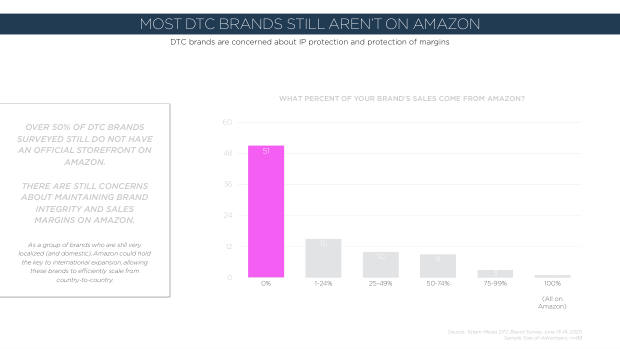
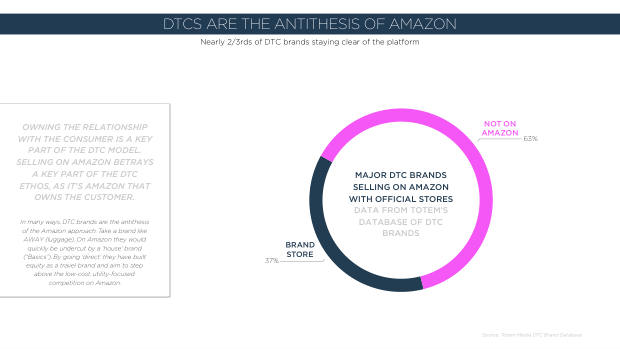
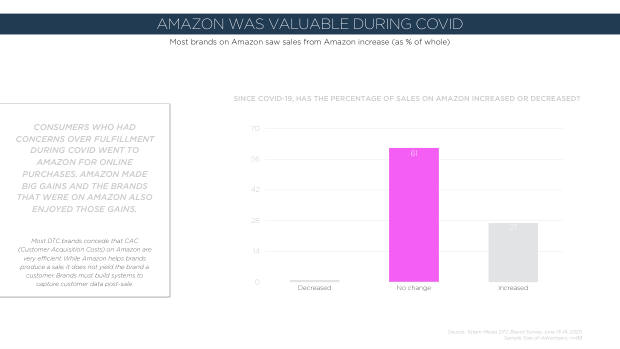
Over half of surveyed DTCs still had no official Amazon storefront (Totem's database put 63% off the platform), citing brand integrity and margin concerns. Yet brands that were on Amazon saw those sales grow as fulfilment-anxious consumers shifted to it — highlighting Amazon's efficiency for conversion, if not for owning the customer relationship.
Channel habits stayed narrow.
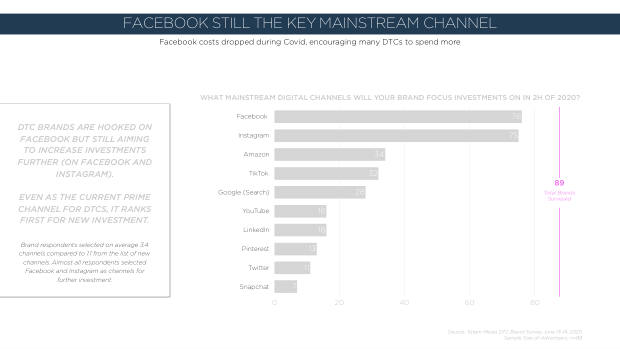
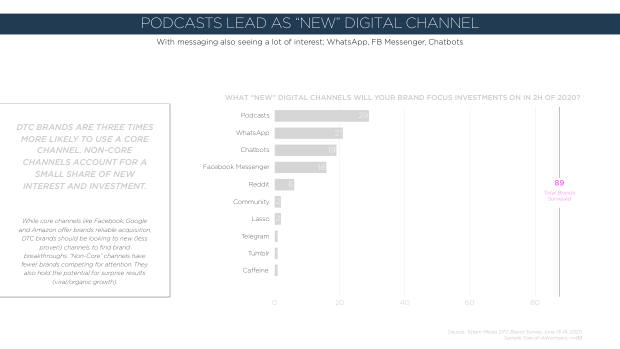
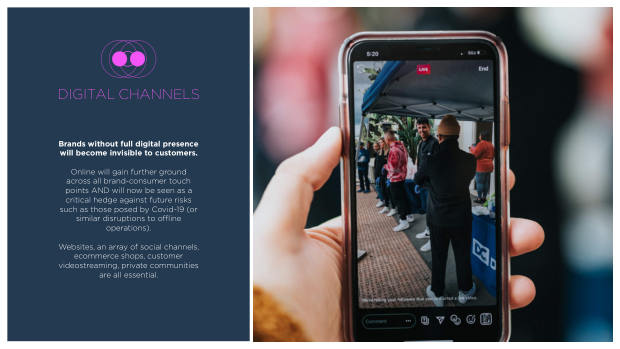
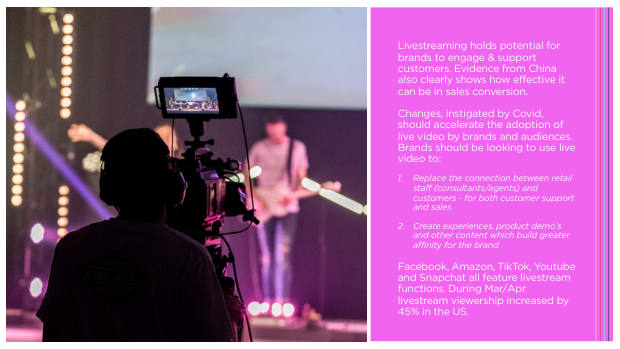
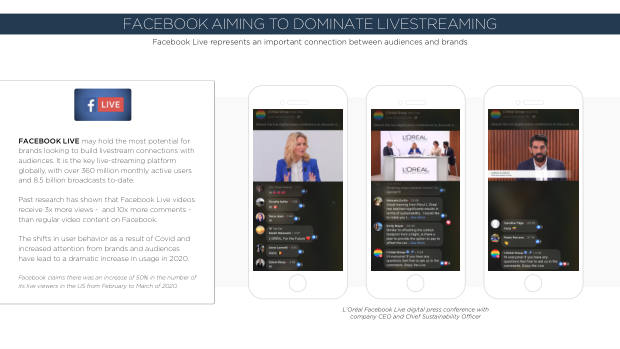
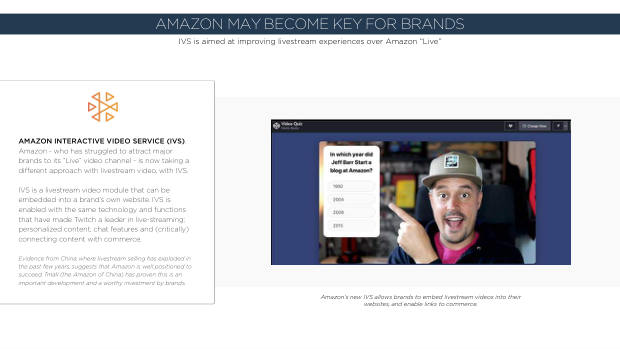
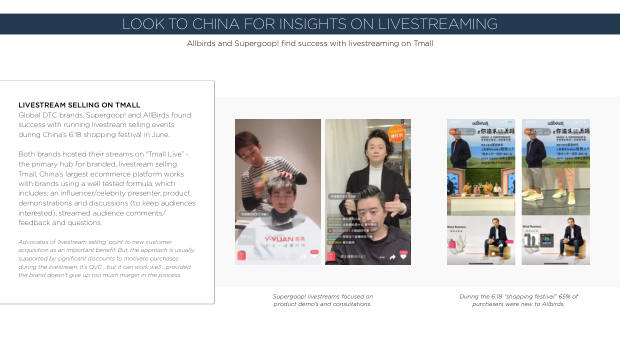
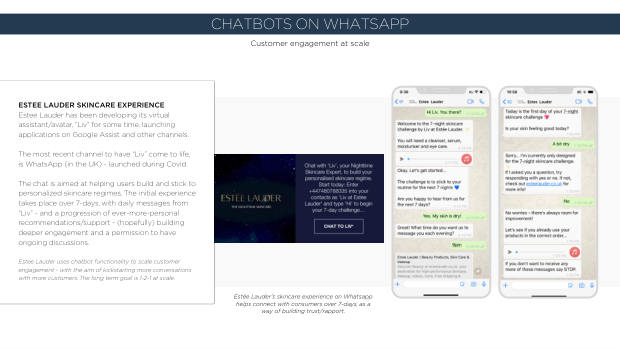
Facebook and Instagram ranked first for new investment even as the incumbent channels, with brands selecting on average 3.4 core channels versus just 1.1 new ones. Podcasts and messaging (WhatsApp, Facebook Messenger, chatbots) led interest in newer channels, and livestreaming gained ground — US livestream viewership rose 45% in March/April, with Facebook Live reporting a 50% jump in US viewers from February to March.







How badly were DTC brands hit by Covid?
Lightly, relative to the market. Only 22% of the 89 surveyed DTC brands saw sales declines, versus more than 80% of mainstream brands in an earlier Totem survey; many DTCs saw demand surge instead.
Why did DTC brands cope better?
They were digital-native, small, high-growth and agile, with ecommerce and customer systems already in place. That let them shift quickly from defensive cost-cutting to offensive strategy while traditional brands were still fixing structural gaps.
What did DTC brands invest in during the crisis?
Customer service and support above all — reframed as a branding and sales tool — alongside new digital channels, additional payment options and livestreaming. Examples include Burrow's video consultations and ANTA's 30,000 staff selling via WeChat.
Where were DTC brands weakest?
Brand strength and trust, fulfilment and international reach. Brands with flat or negative sales tended to have over-invested in performance marketing at the expense of brand; 35% also saw international sales fall.
Who was surveyed and when?
Senior brand and marketing staff at 89 digital-native DTC brands across the US and Europe, spanning a wide cross-section of categories, on June 13-14, 2020.
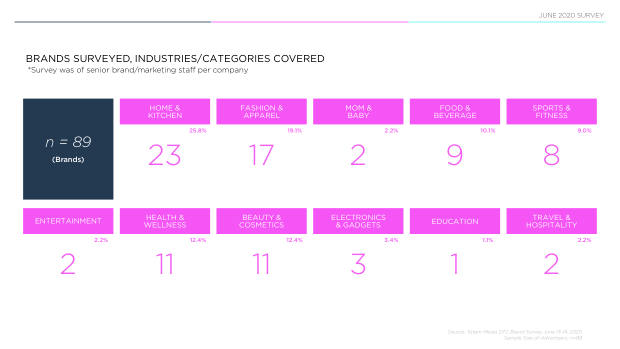
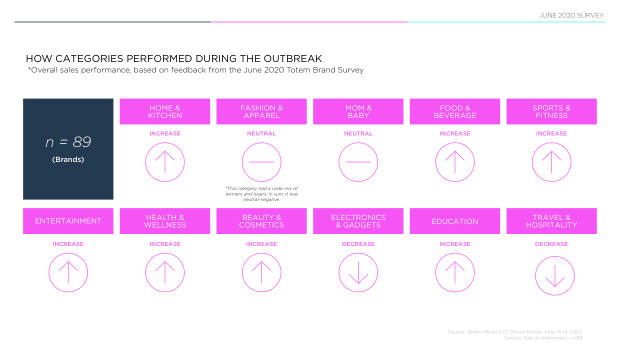
Totem Media surveyed 89 digital-native DTC brands in the US and Europe on June 13-14, 2020, polling senior brand and marketing staff across categories including home & kitchen, health & wellness, fashion & apparel, beauty, food & beverage, sports & fitness and others. The survey measured Covid's effect on sales, operations and priorities, and was benchmarked against earlier Totem surveys of brands in China (March) and across Asia (May), plus follow-up interviews and Totem's proprietary DTC brand database. The findings are structured around five recovery competencies: demand, brand trust, digital channels, fulfilment and customer support.
Get the full report
Leave your details — we'll email you the PDF and give you the download straight away.