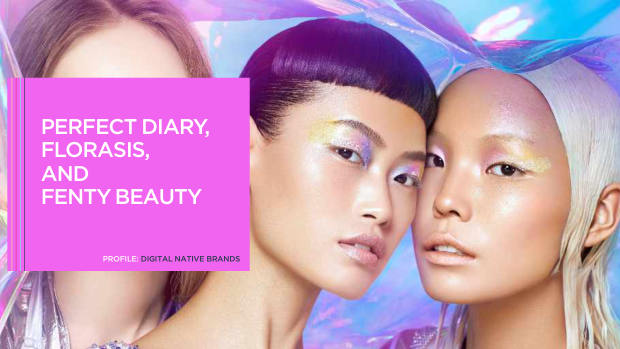
DTC Beauty in China: Perfect Diary, Florasis and Fenty Beauty compared
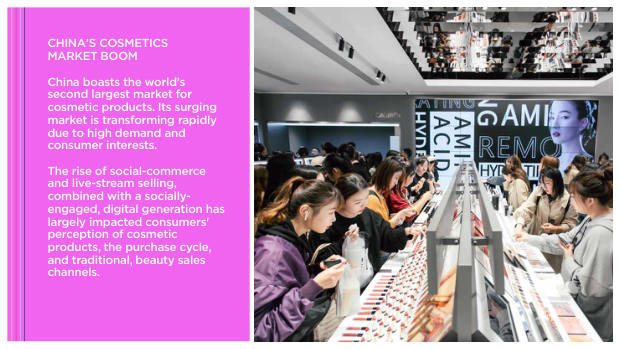
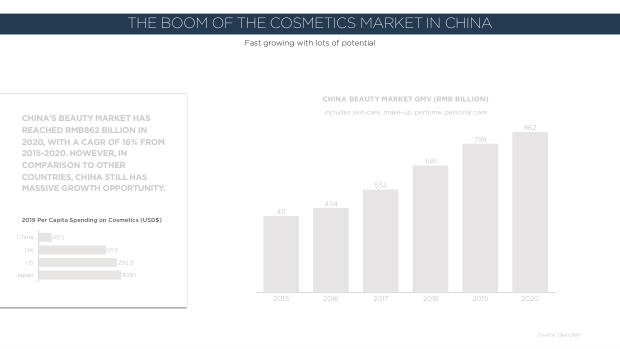
All marketing in China is digital-first, and beauty is where that shows most clearly. China's beauty market GMV reached RMB862bn in 2020, a 16% CAGR from 2015 — yet on a per-capita basis (US$49.5 in 2019) it remained far behind the US (US$308.1), leaving substantial headroom. The disruptive DTC tactics used to win share in the West have become the staple playbook for winning in China's predominantly digital ecosystem, and a new generation of "C-Beauty" brands has out-innovated many global incumbents.
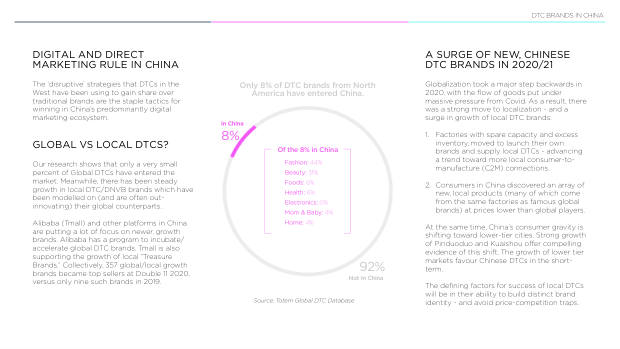
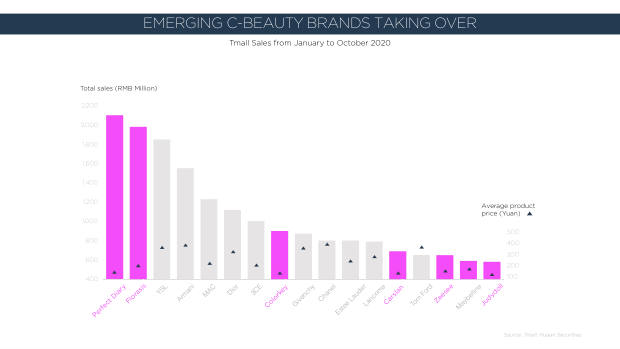
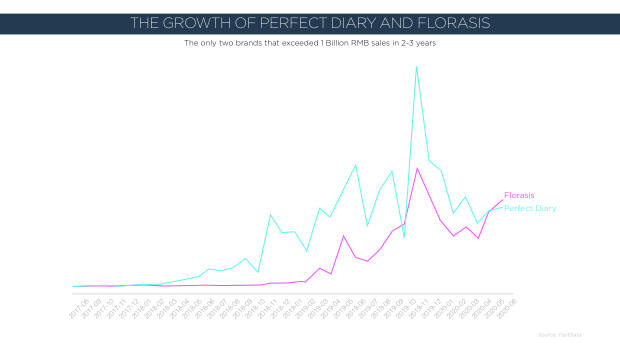
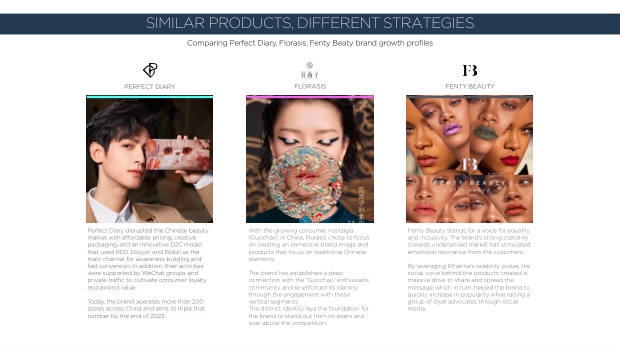
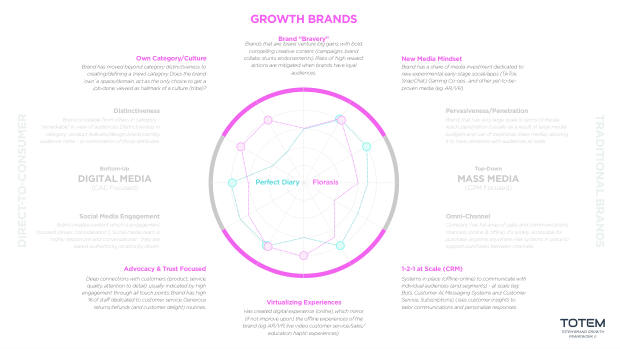
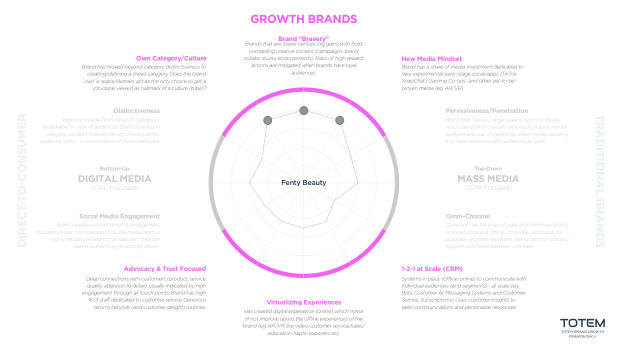
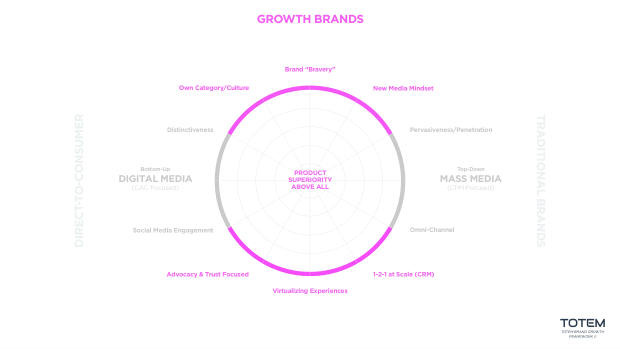
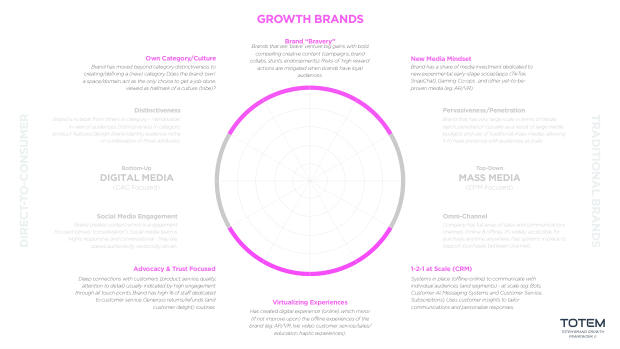
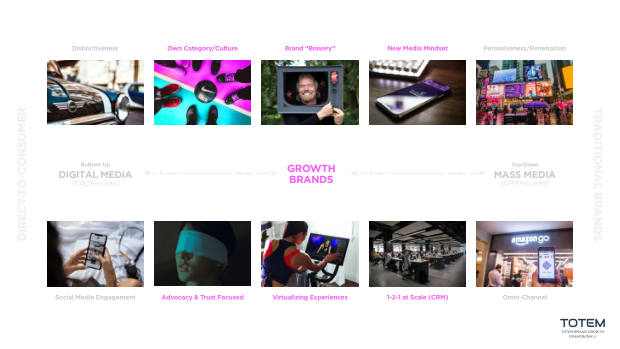
This report, the second in Totem's series on digital-native (DTC/DNVB) brands in China, examines three cases side by side against Totem's Brand Growth Framework: Perfect Diary and Florasis, two domestic brands that each exceeded RMB1bn in sales within two to three years, and Fenty Beauty, a foreign brand entering at the peak of C-beauty's local momentum. Only 8% of North American DTC brands had entered China at all, while local brands surged — 357 global and local growth brands became top sellers at Double 11 2020, versus just nine in 2019.
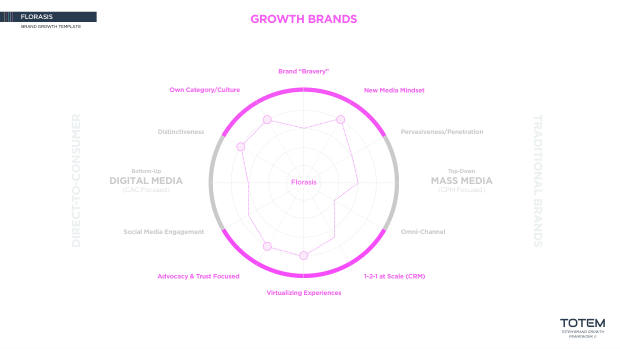
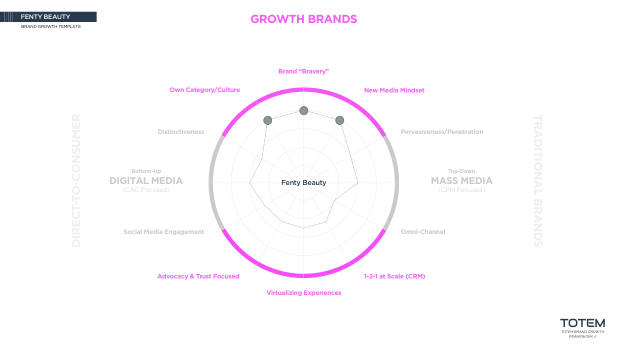
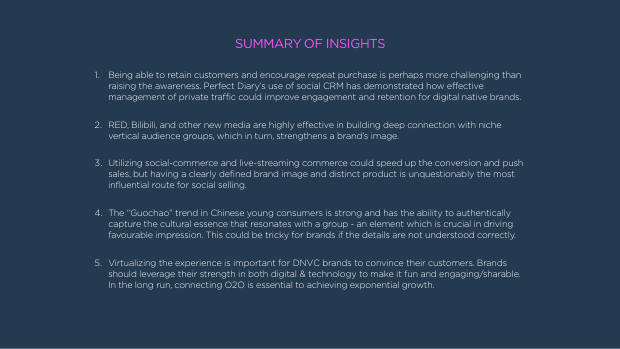
The strategic takeaway is that a clearly defined, distinct brand image matters more than social-selling mechanics. Perfect Diary won on new-media aggression and CRM, Florasis on Guochao-driven distinctiveness, and Fenty on inclusivity and disciplined outside-in seeding. Across all three, retention and O2O integration proved harder than raising awareness.
A booming market and the rise of C-Beauty.
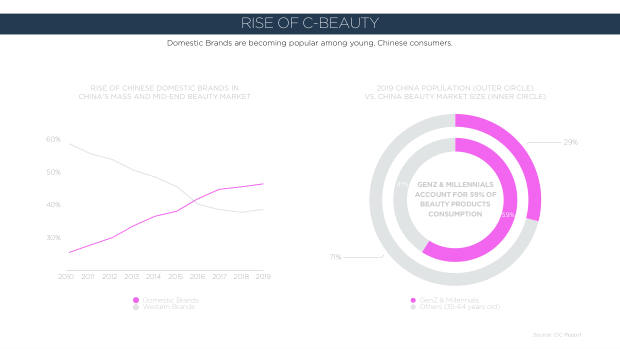
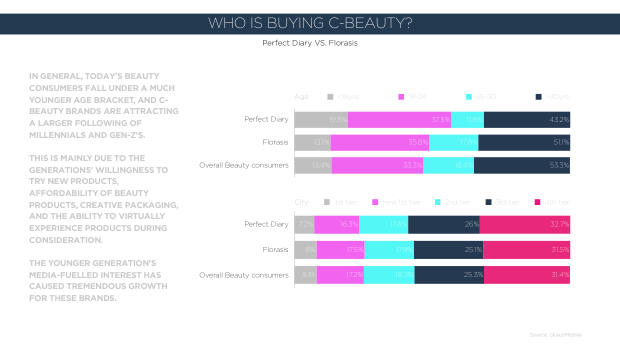
China's RMB862bn beauty market grew at a 16% CAGR from 2015 to 2020, with Gen Z and Millennials accounting for 59% of consumption. Domestic brands surged in the mass and mid-market: 357 global and local growth brands became Double 11 top sellers in 2020 against only nine in 2019, aided by Covid-driven localisation and C2M factory-to-brand supply.
Global DTCs are largely absent — and China is now costlier to grow.
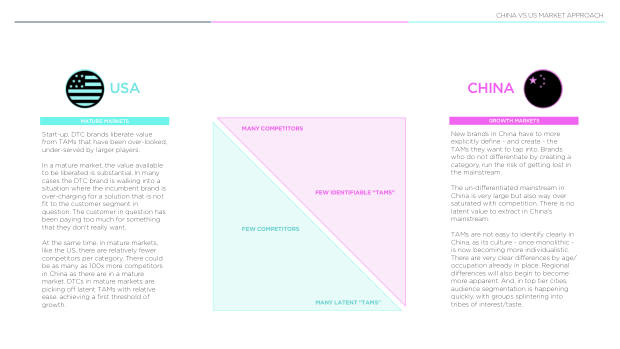
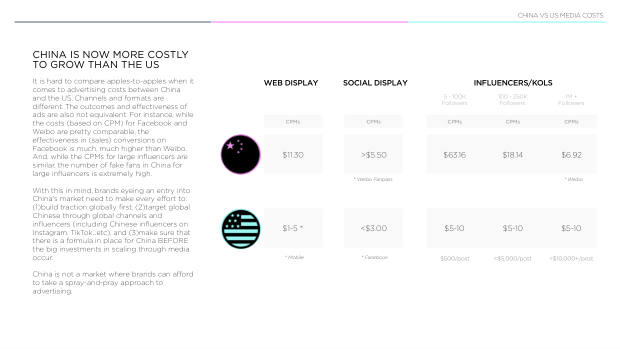
Only 8% of North American DTC brands had entered China (of those, 44% fashion and 31% beauty). Totem cautioned that China can carry up to 100x more competitors per category than a mature market, with high rates of fake influencer followers, and urged brands to build traction globally and prove a formula before scaling media spend.
Perfect Diary — betting on new media.
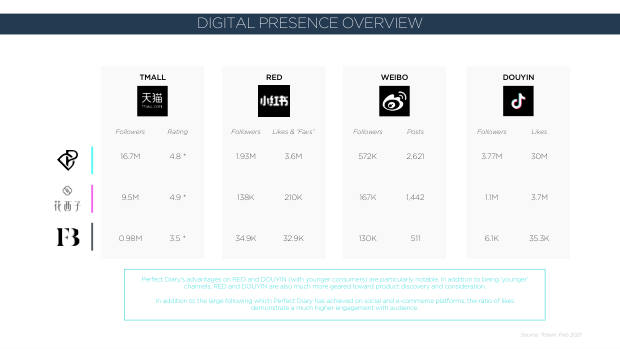
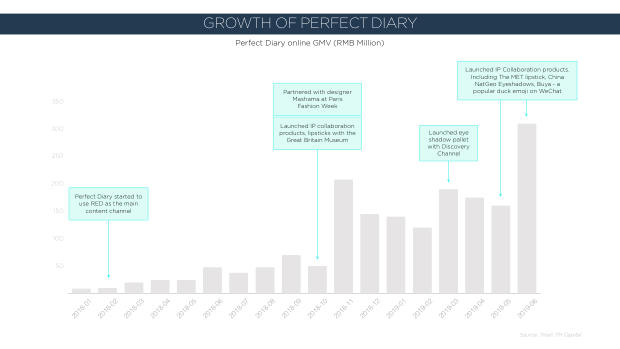
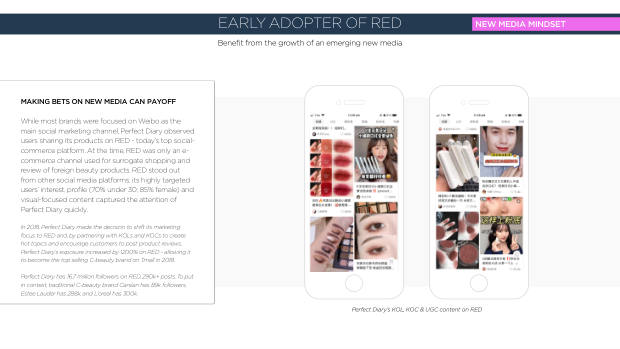
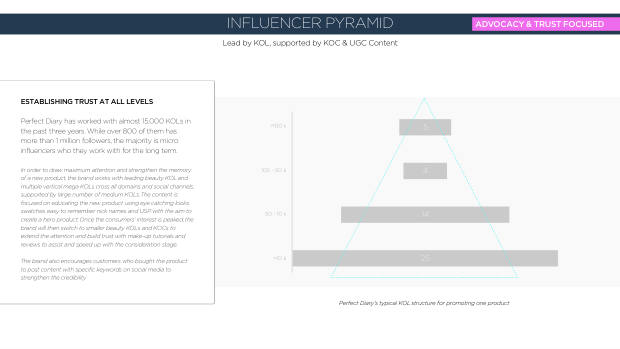
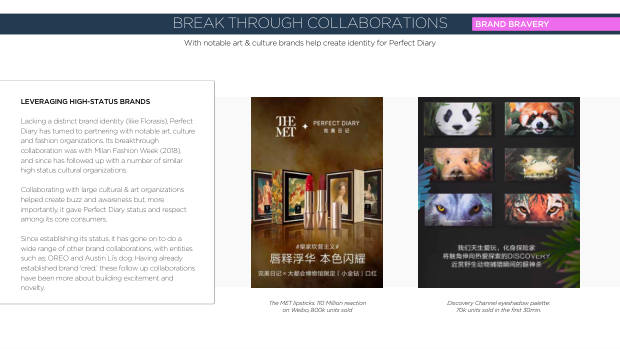
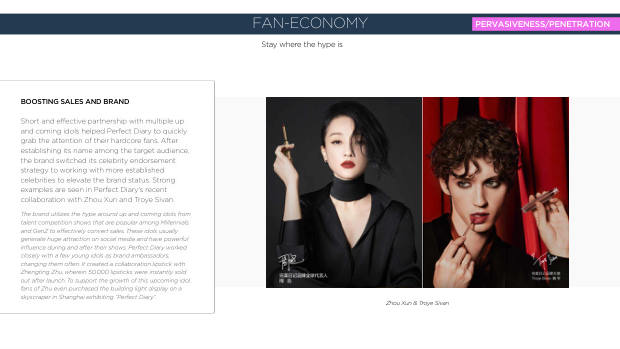
While rivals focused on Weibo, Perfect Diary shifted to RED in 2018 and grew its exposure there by 1,200%, becoming the top-selling C-beauty brand on Tmall. It had worked with roughly 15,000 KOLs in three years (800+ with over 1m followers) and held 16.7m RED followers. Its MET lipstick collaboration drew 110m reactions on Weibo and sold 800k units.
Perfect Diary — private traffic and CRM at scale.
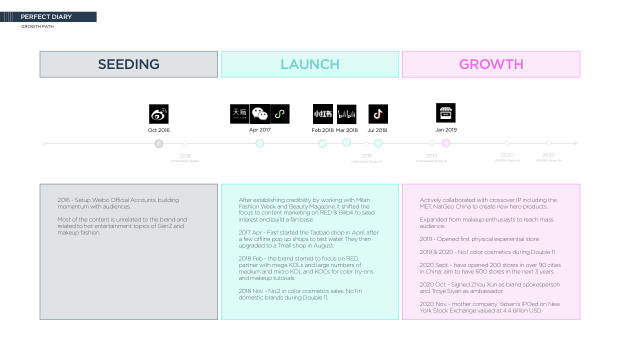
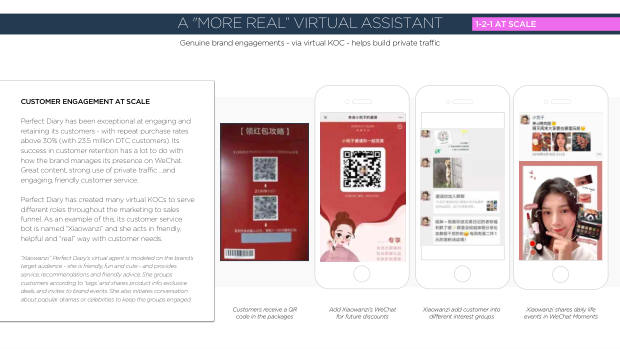
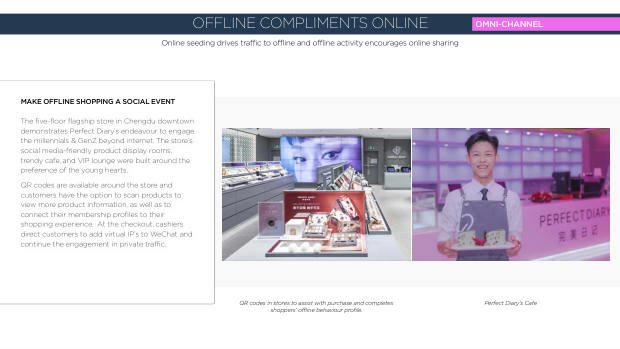
Using virtual KOC "Xiaowanzi" to manage WeChat private traffic, the brand achieved repeat purchase rates above 30% across 23.5m DTC customers. It operated more than 200 stores in over 90 cities by September 2020 (targeting 600), and parent company Yatsen IPO'd on the NYSE in November 2020 at a US$4.4bn valuation.
Florasis — distinctiveness through Guochao.
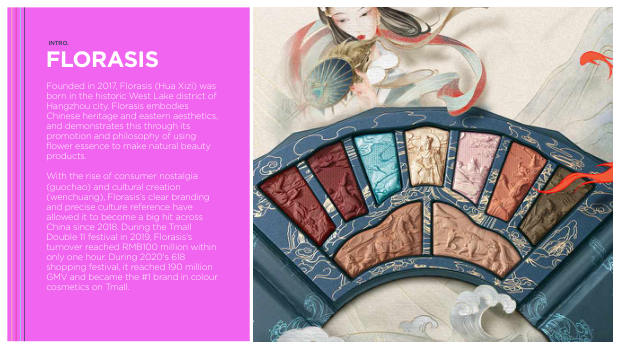
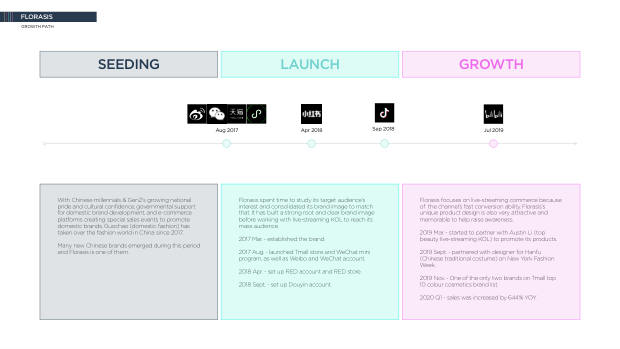
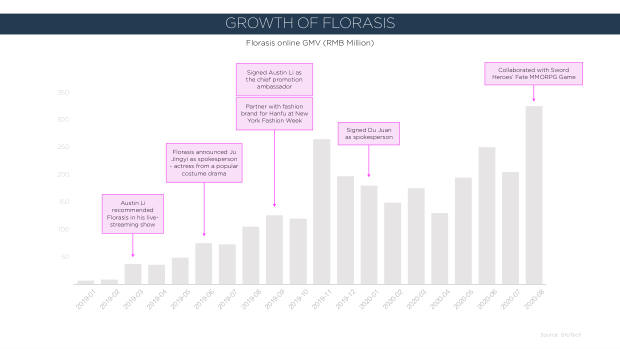
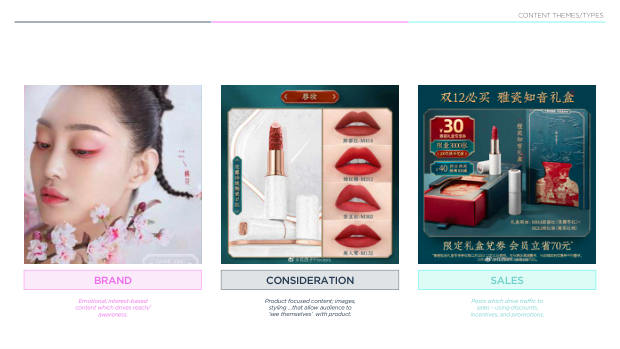
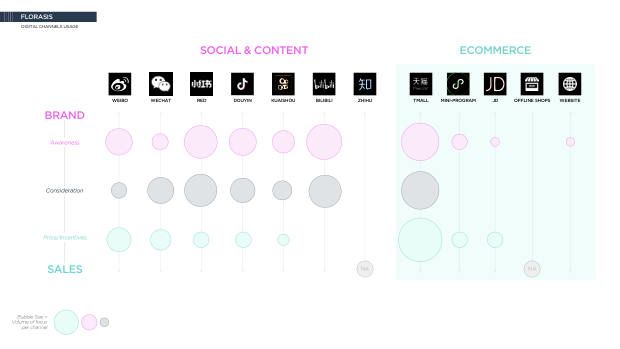
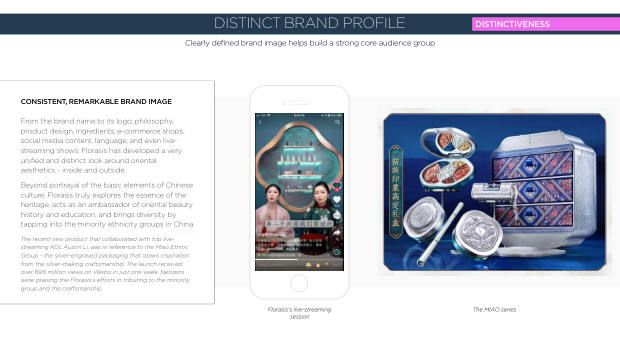
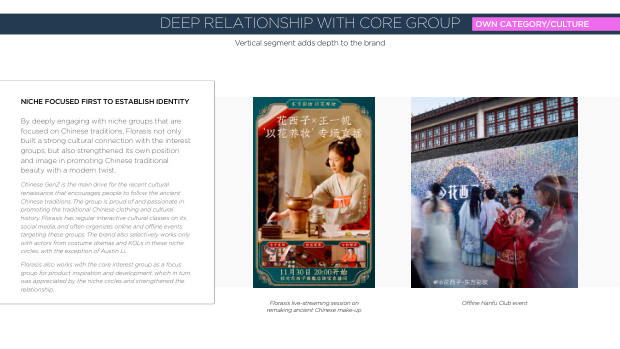
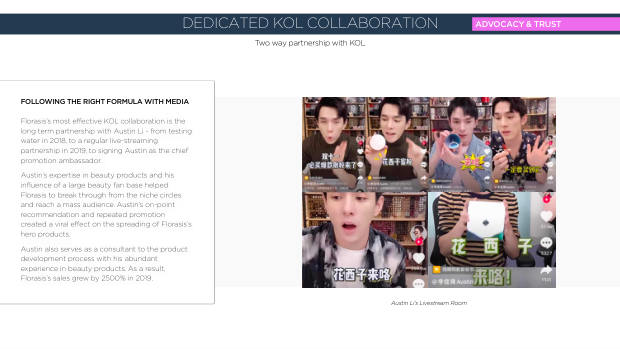
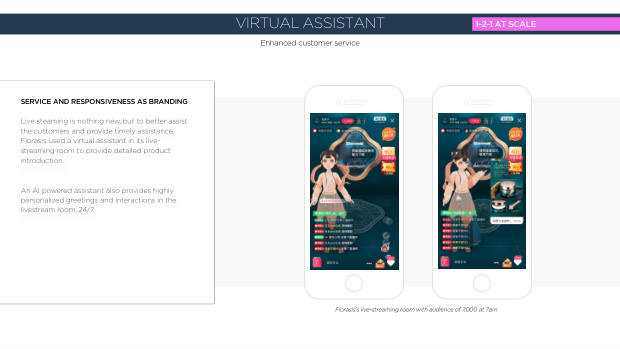
Florasis built a unified oriental-aesthetic identity and deep ties to heritage-focused niche communities before scaling via livestream commerce. Its Double 11 2019 turnover hit RMB100m within one hour; sales grew 2,500% in 2019 and 644% year-on-year in Q1 2020. Its Miao-series collaboration with Austin Li drew 69.6m Weibo views in a week.
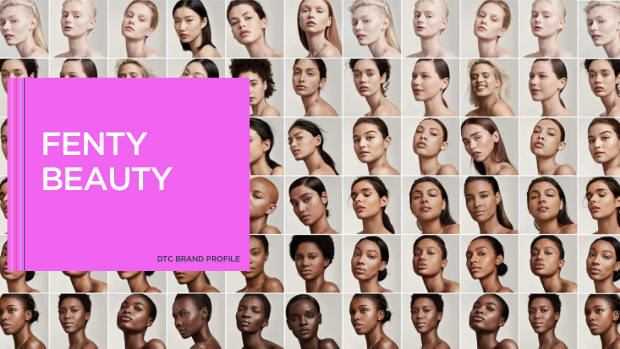
Fenty Beauty — seeding from the outside in.
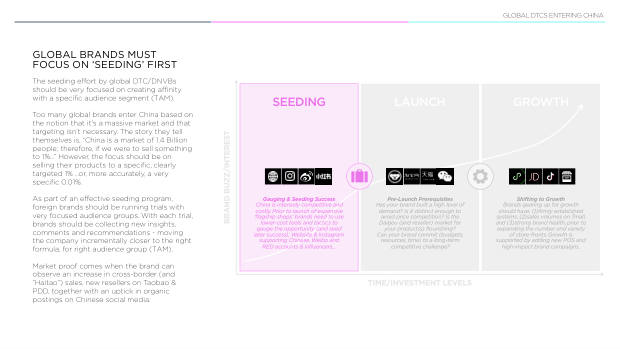
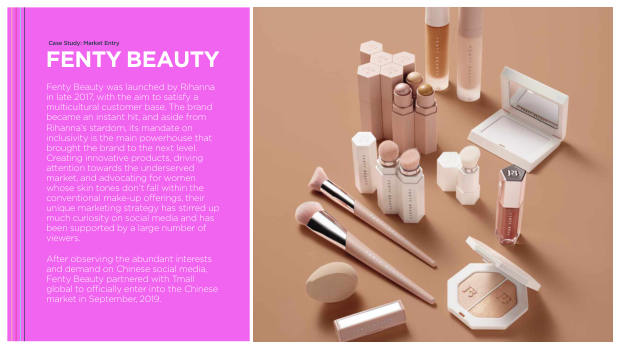
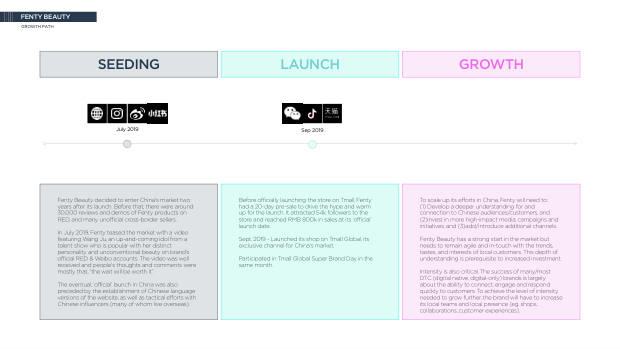
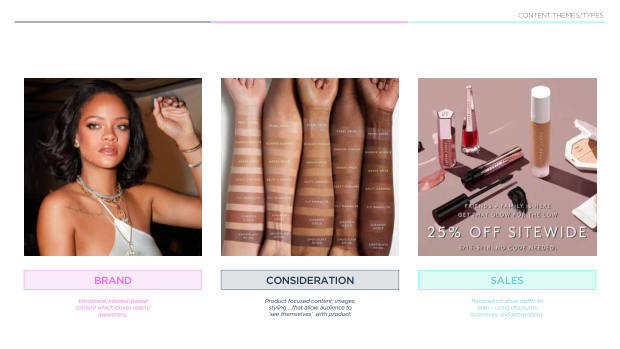
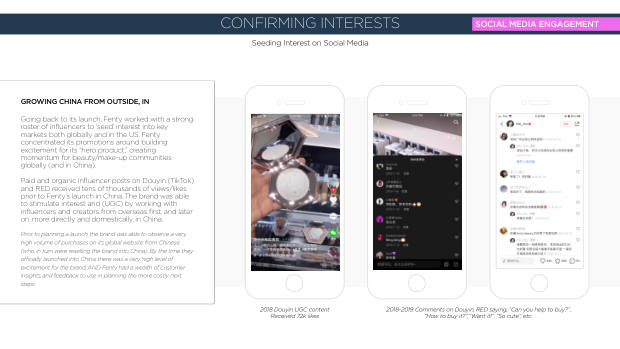
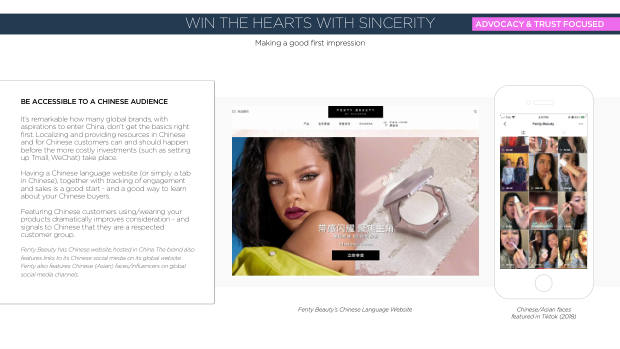
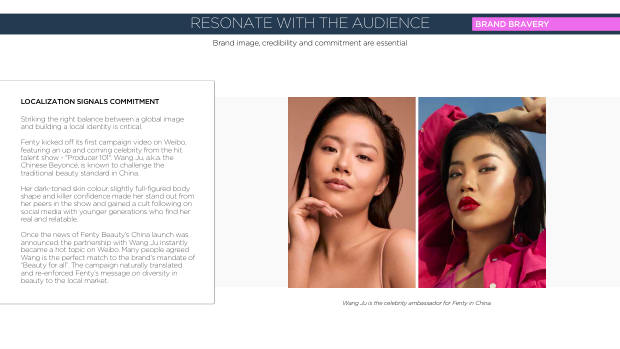
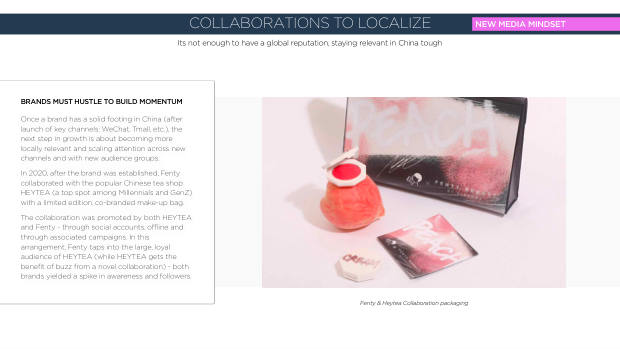
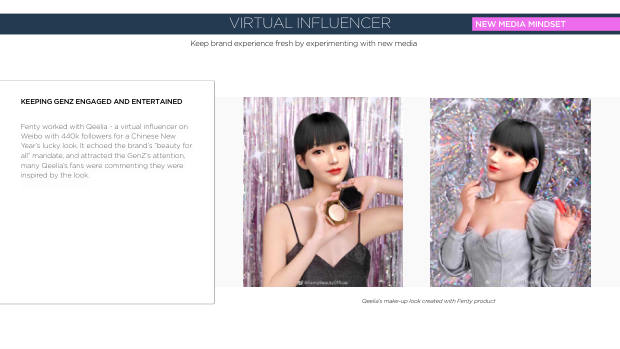
Fenty entered China via Tmall Global in September 2019, two years after its global launch, having first observed roughly 30,000 product reviews on RED and heavy cross-border reselling. A 20-day pre-sale drew 54k store followers and RMB800k in launch-day sales, with local ambassador Wang Ju reinforcing its "beauty for all" message. As a foreign brand it remained a half-step behind domestic rivals on local intensity.
The framework verdict.
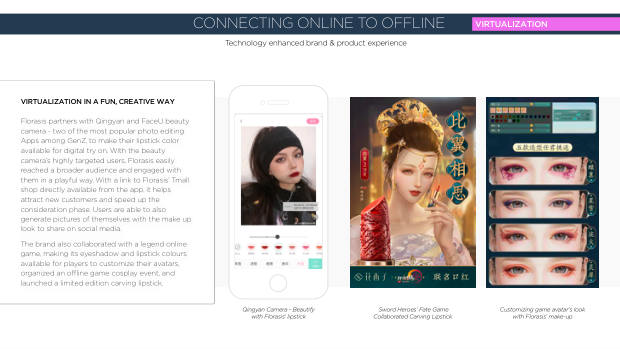
Across the three, Totem concluded that livestream and social commerce accelerate conversion but a clearly defined brand image and distinct product are the most influential route to social selling. Retention and repeat purchase — where Perfect Diary's social CRM excelled — proved harder than awareness, and connecting online to offline is essential for exponential growth.
How big is China's beauty market?
It reached RMB862bn in GMV in 2020, growing at a 16% CAGR since 2015, though per-capita spending (US$49.5 in 2019) remained well below the US, UK and Japan — signalling continued room to grow.
Why did Perfect Diary grow so fast?
An early, aggressive bet on RED (exposure up 1,200% in 2018), a pyramid of roughly 15,000 KOLs, high-status collaborations like the MET, and WeChat-based private-traffic CRM that lifted repeat purchase above 30% across 23.5m customers.
What made Florasis distinct?
A consistent, Guochao-led oriental-aesthetic identity and deep engagement with heritage niche communities, then livestream scale via Austin Li. Sales grew 2,500% in 2019 and 644% year-on-year in Q1 2020.
How did Fenty Beauty approach China differently?
From the outside in — seeding interest through overseas and Chinese influencers on RED and Douyin before an official September 2019 Tmall Global launch, localising with a Chinese-language site and ambassador Wang Ju.
What is the report's core lesson for DTC brands?
A distinct, clearly defined brand image beats social-selling tactics alone. Awareness is the easier part; retention, private-traffic CRM and O2O integration are what sustain growth.
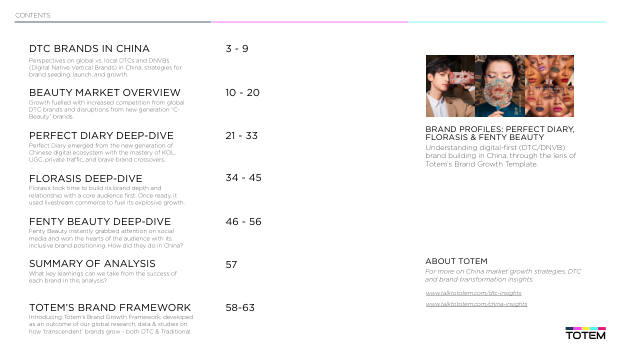
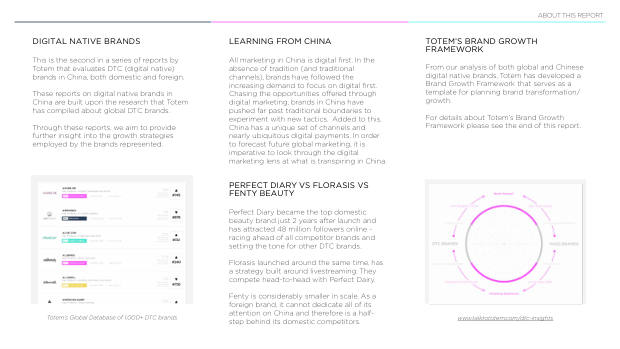
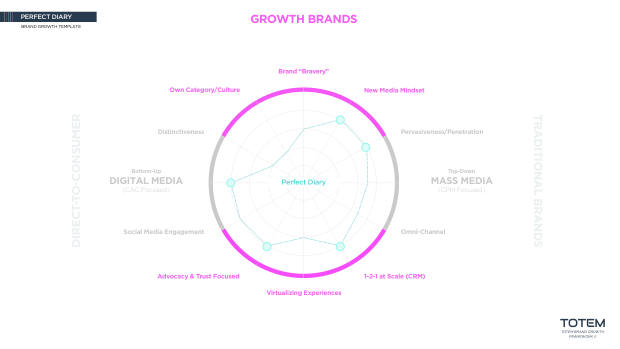
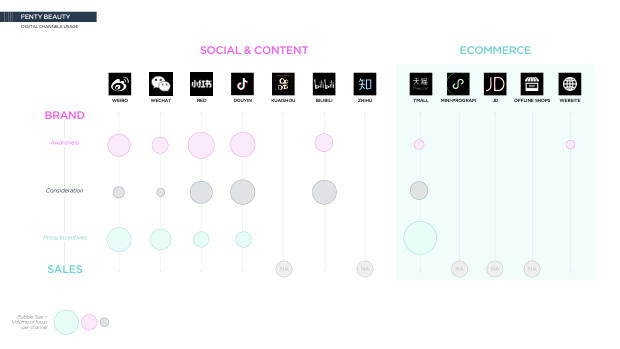
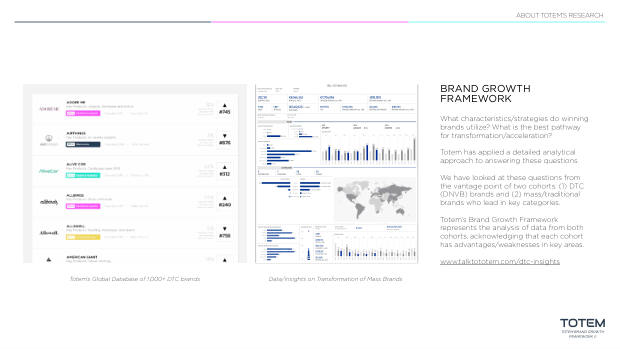
The second report in Totem's series evaluating digital-native (DTC/DNVB) brands in China, both domestic and foreign, built on Totem's global database of 1,000+ DTC brands. It profiles Perfect Diary, Florasis and Fenty Beauty side by side and maps each against Totem's Brand Growth Framework across dimensions from distinctiveness to CRM at scale. Digital-presence figures were compiled by Totem in February 2021, with market and sales data drawn from Qianzhan, CIC, QuestMobile, YipitData, TH Capital and Tmall/Huaan Securities.
Get the full report
Leave your details — we'll email you the PDF and give you the download straight away.