Digital China 2019: rising costs, a global marketing challenge, and the social-commerce inflection
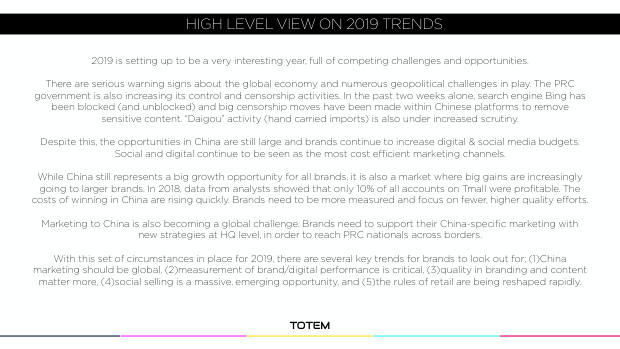
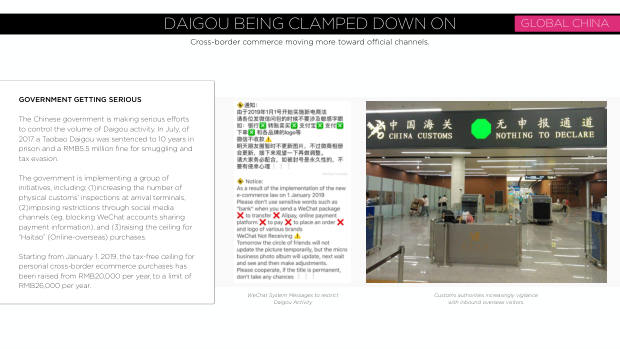
2019 opens on competing forces. There are warning signs about the global economy and rising PRC censorship — Bing was briefly blocked and daigou activity is under scrutiny — yet the opportunity remains large and brands keep raising digital and social budgets. The catch is that gains increasingly accrue to larger brands: in 2018, analysts found only 10% of Tmall accounts were profitable. The cost of winning in China is climbing, and brands need fewer, higher-quality efforts.
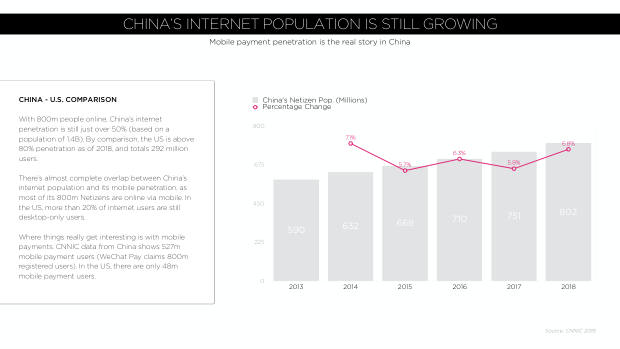
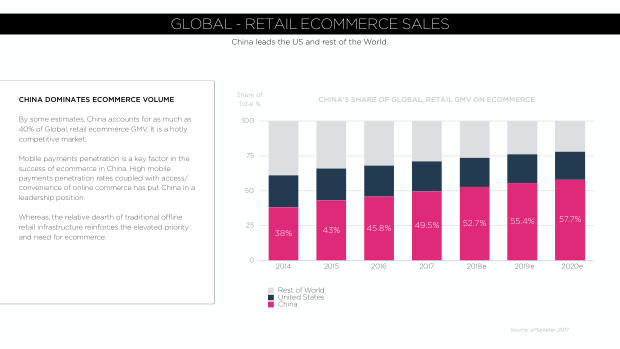
China's internet population reached 802 million, still only just over 50% penetration against a 1.4 billion population, and almost entirely mobile. The defining gap versus the US is payments: China has 527 million mobile-payment users (WeChat Pay claims 800 million registered) against just 48 million in the US. That payments infrastructure underwrites an ecommerce market that, by some estimates, accounts for as much as 40% of global retail ecommerce GMV.
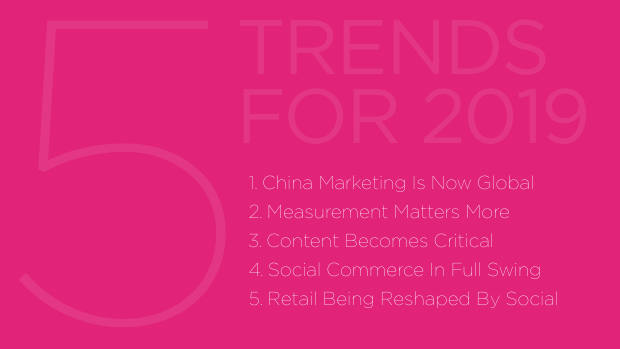
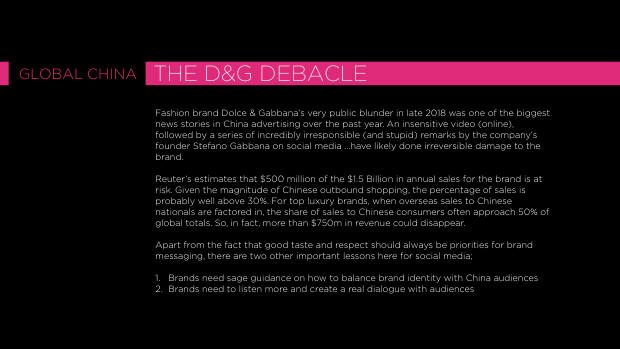
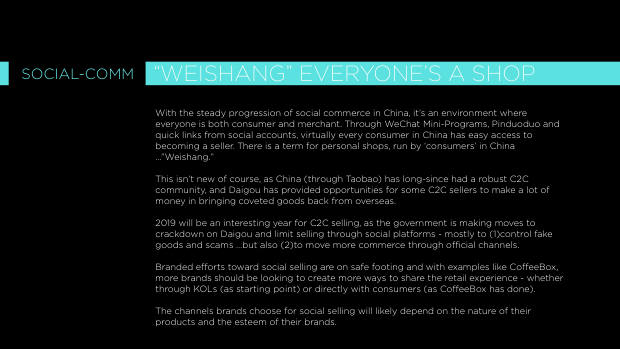
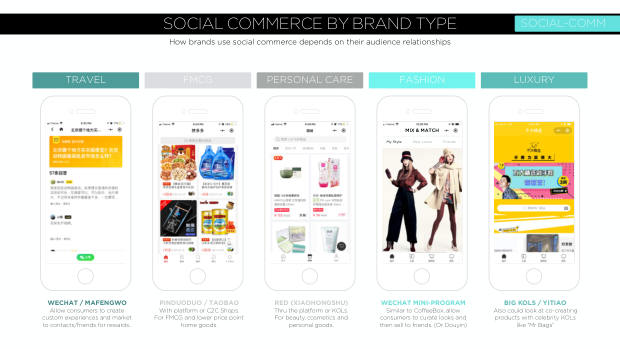
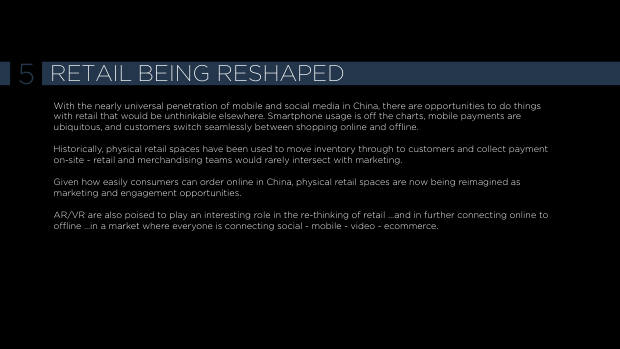
Totem frames five trends for the year: China marketing is now a global challenge, measurement matters more, content quality matters more, social commerce is entering full swing, and retail is being reshaped by social. Marketing to Chinese nationals now has to be coordinated at HQ level and across borders — the D&G blunder of late 2018, which put an estimated portion of $1.5bn in annual sales at risk, is the cautionary tale.
Budgets keep rising despite slowdown fears.
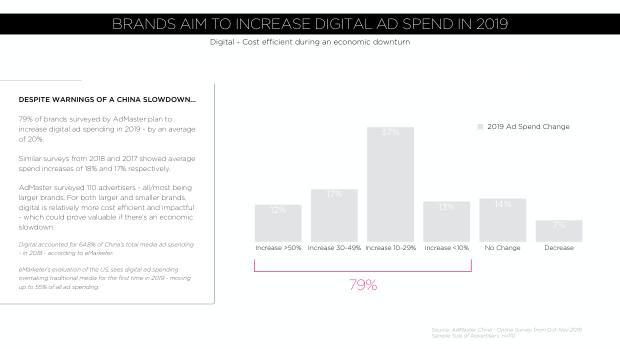
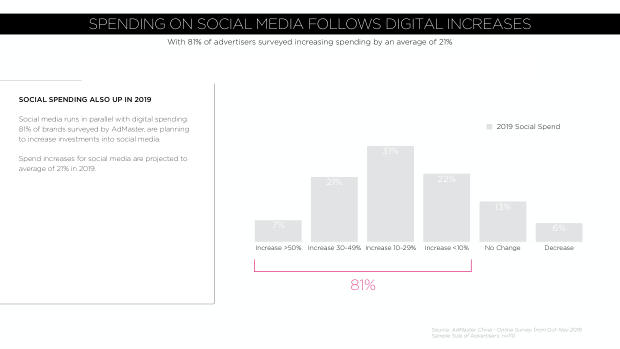
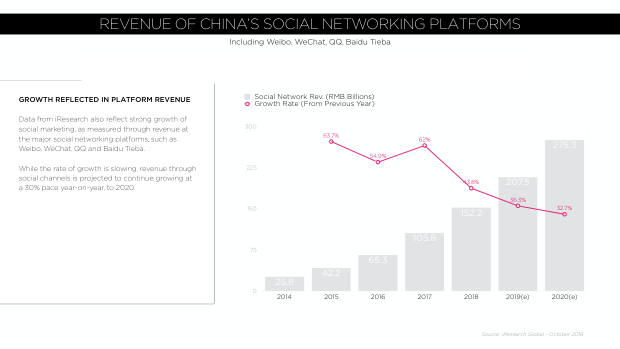
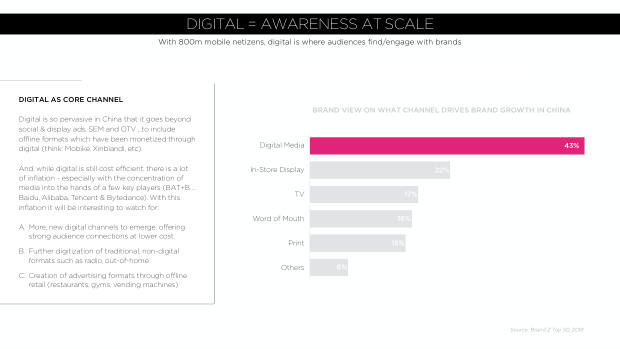
79% of brands surveyed by AdMaster planned to lift digital ad spend in 2019 (average +20%), and 81% planned to raise social spend (average +21%). Digital already accounted for 64.8% of China's total media ad spend in 2018, and social-network platform revenue was projected to keep growing near 30% year-on-year to 2020.
Mobile attention is shifting from social to video.
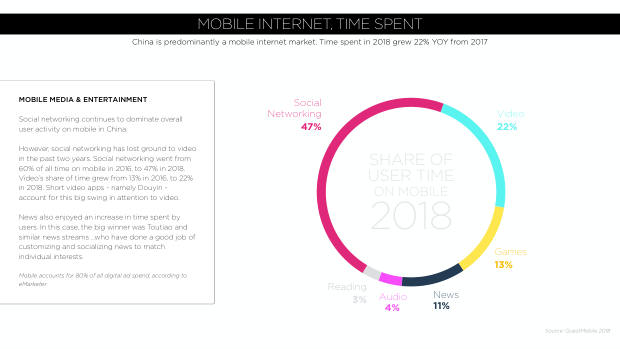
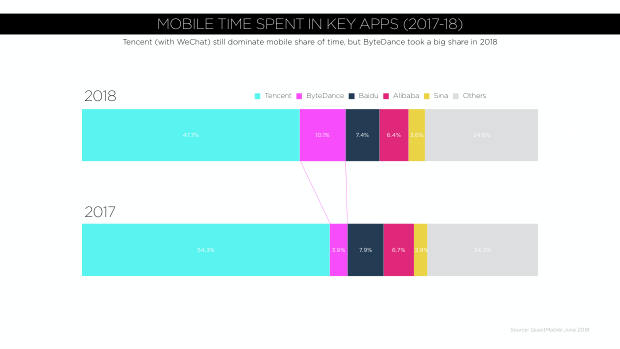
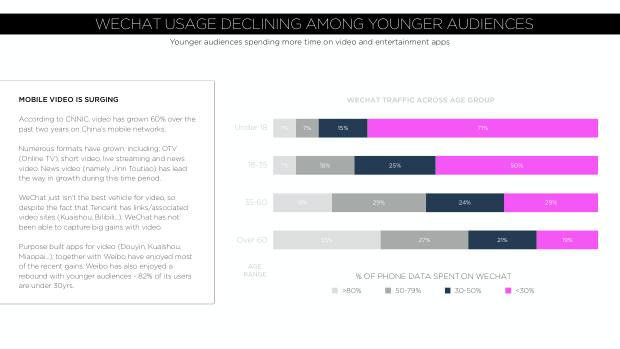
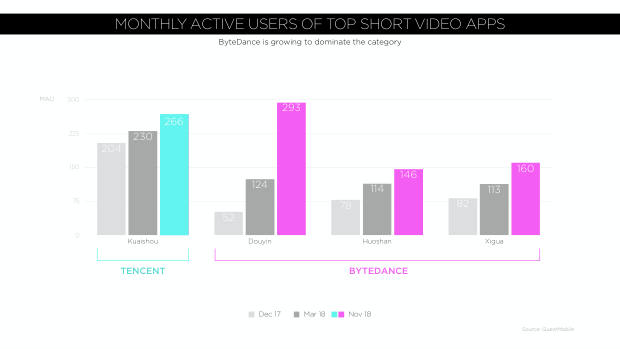
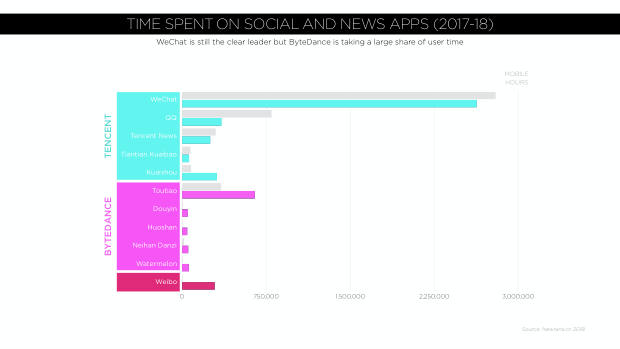
Social networking fell from 60% of mobile time in 2016 to 47% in 2018, while video rose from 13% to 22% — a swing driven by short-video apps, chiefly Douyin. WeChat still leads mobile time, but ByteDance took a large share in 2018 and WeChat usage skews away from younger audiences.
The costs of the incumbent ecommerce platforms are biting.
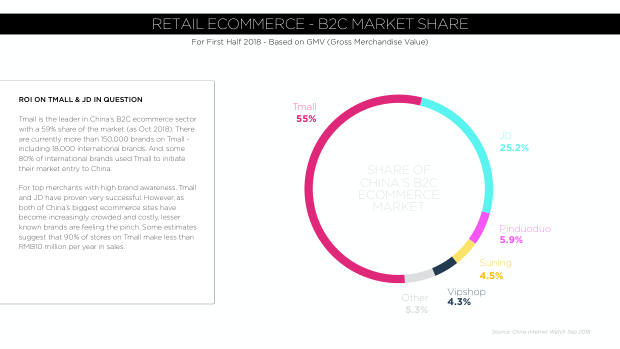
Tmall holds roughly 55–59% of B2C ecommerce, but as Tmall and JD.com grow crowded and costly, some estimates put 90% of Tmall stores below RMB10m in annual sales. Next-wave players are filling the gap.
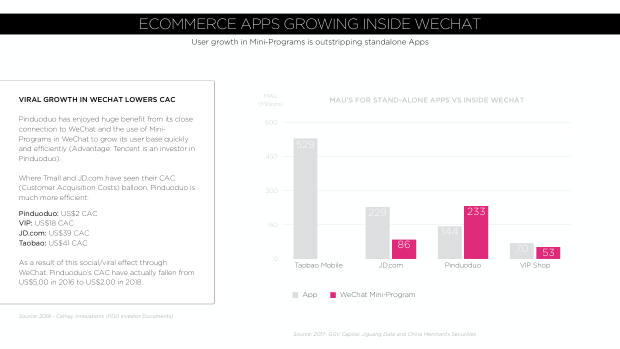
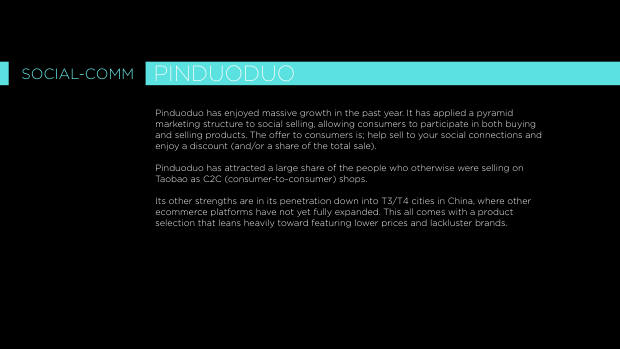
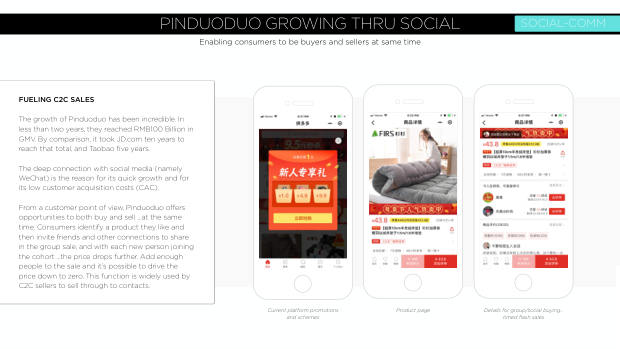
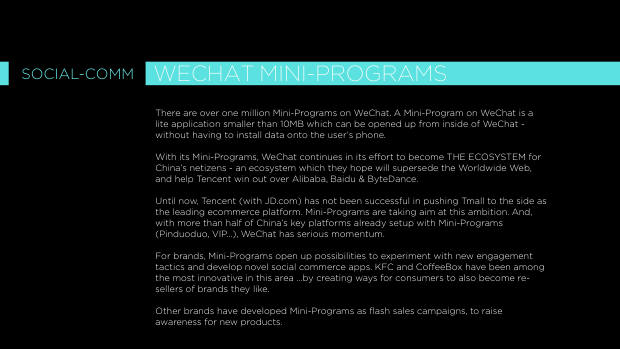
Pinduoduo's WeChat-fuelled model resets acquisition economics.
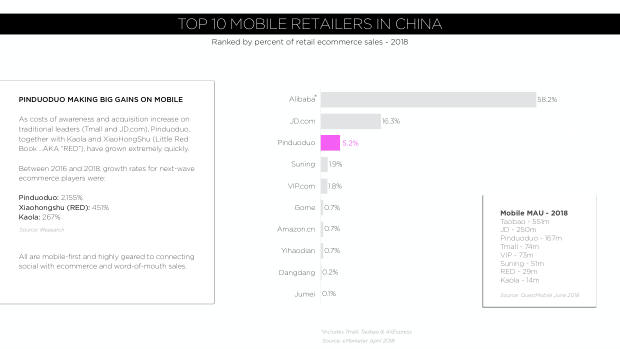
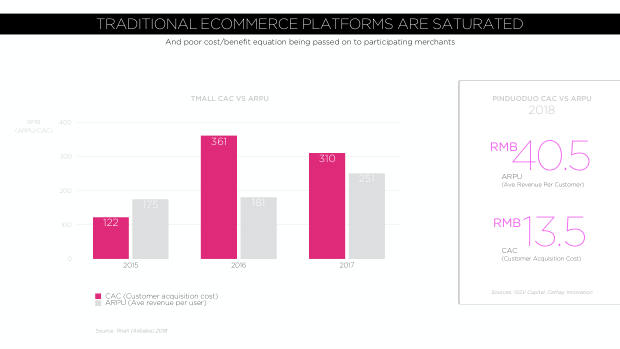
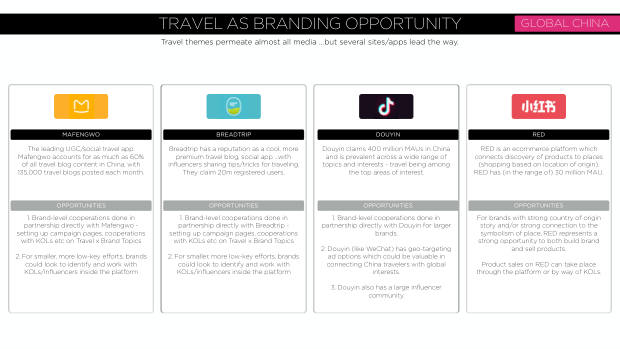
Between 2016 and 2018, Pinduoduo grew 2,155%, RED 451% and Kaola 267%. Pinduoduo's viral growth through WeChat Mini-Programs cut its CAC from US$5 (2016) to US$2 (2018) — against roughly US$39 for JD.com and US$41 for Taobao.
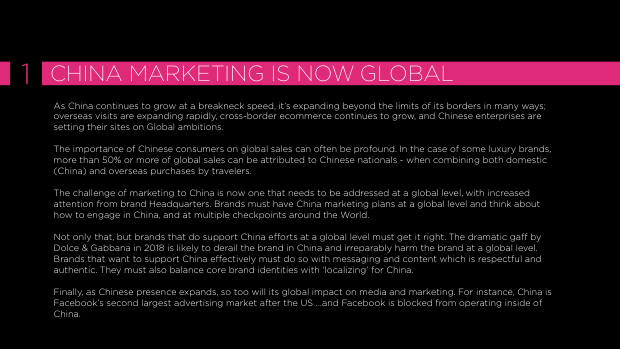
China marketing has become a cross-border problem.
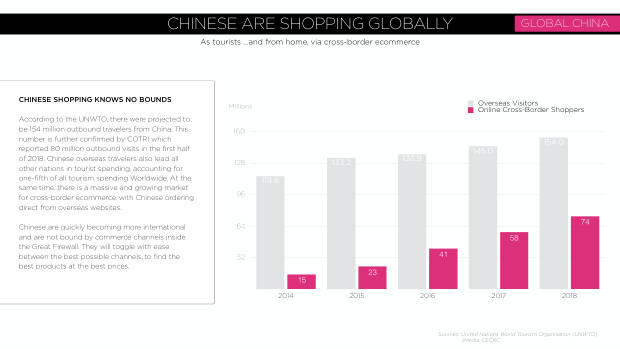
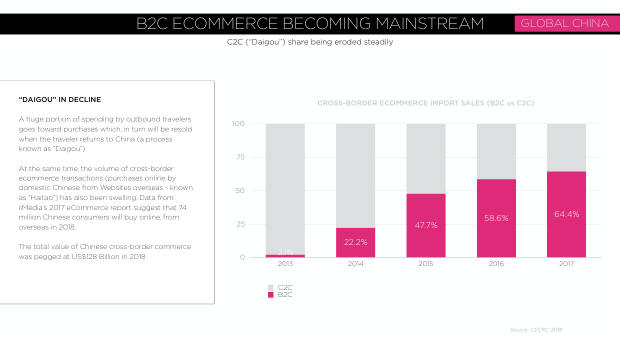
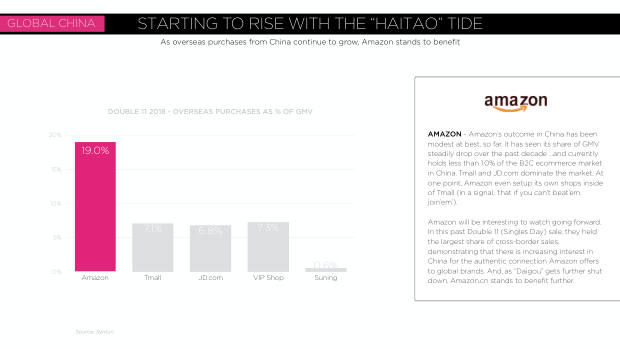
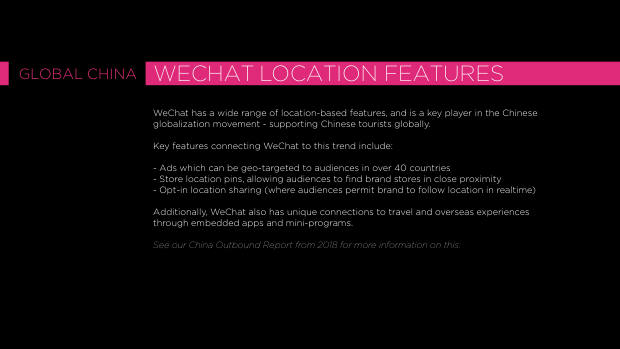
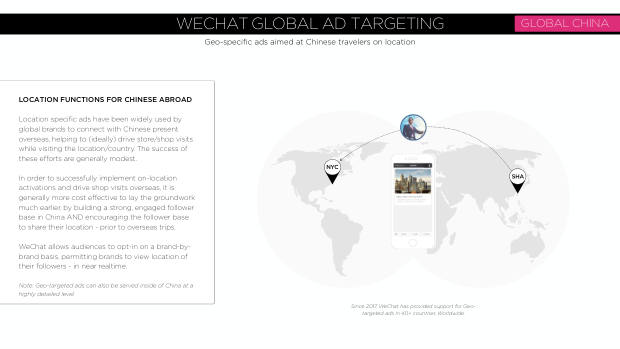
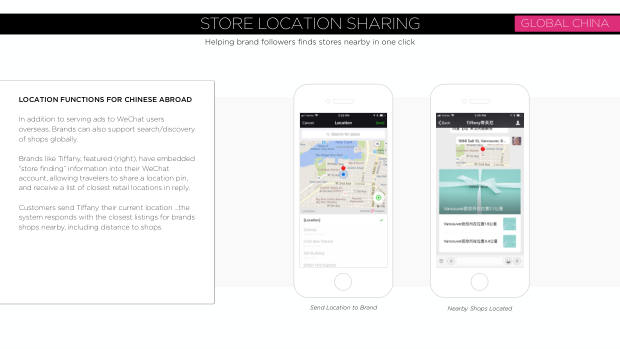
With 154 million outbound travellers in 2018 and US$128bn in cross-border commerce, Chinese consumers must be reached at home and abroad. For some luxury brands, Chinese nationals account for 50%+ of global sales once travel purchases are counted.
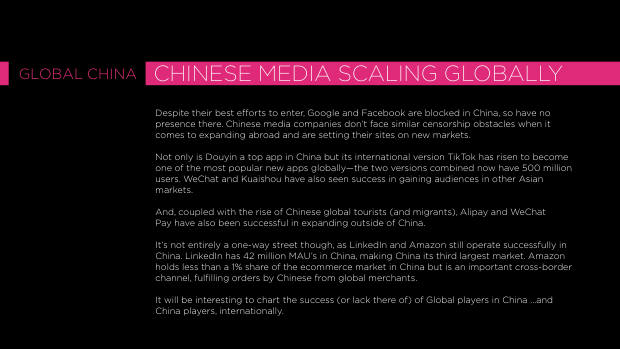
Chinese platforms are scaling out as Western ones stay blocked.
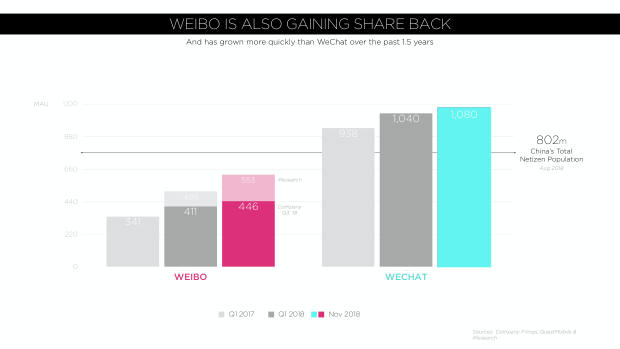
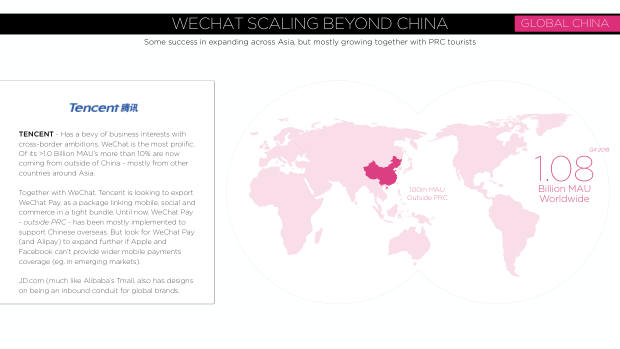
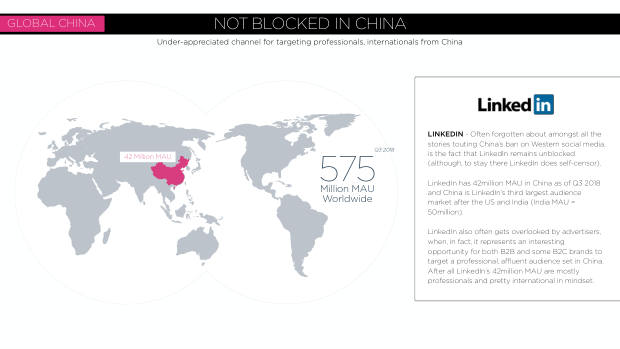
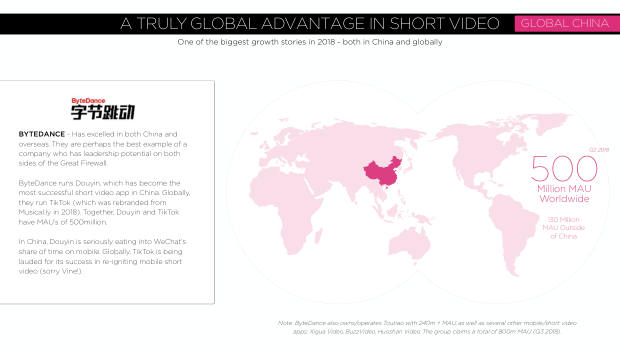
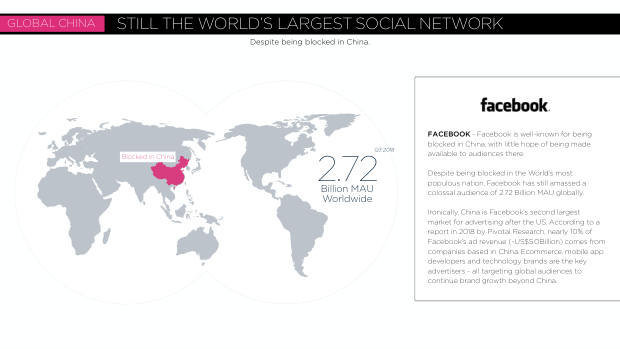
WeChat passed 1.08bn MAU with about 100m outside China; Douyin and TikTok together reached 500m MAU. Ironically, China is Facebook's second-largest ad market (roughly 10% of ad revenue, ~US$5bn) despite Facebook being blocked, and LinkedIn — unblocked — has 42m MAU in China, its third-largest market.
Values and ethics now move Chinese consumers.
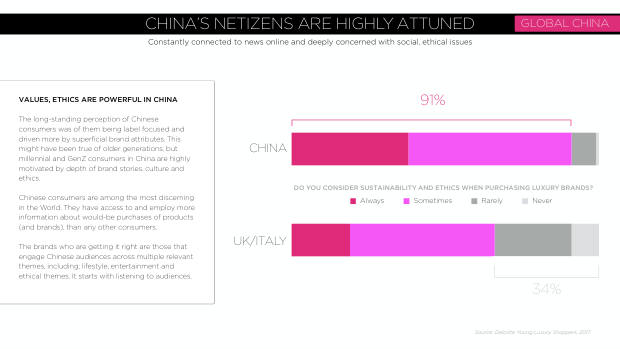
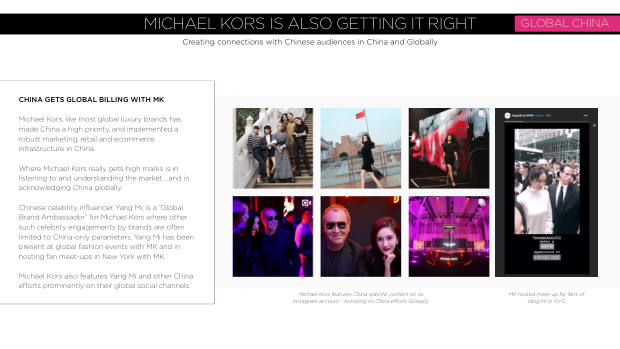
In Deloitte data, 91% of Chinese luxury shoppers said they consider sustainability and ethics, versus 34% in the UK/Italy. The D&G debacle showed the downside; Louis Vuitton and Michael Kors are cited as brands that listened, localised and gave China global billing.
Measurement moves from vanity to necessity.
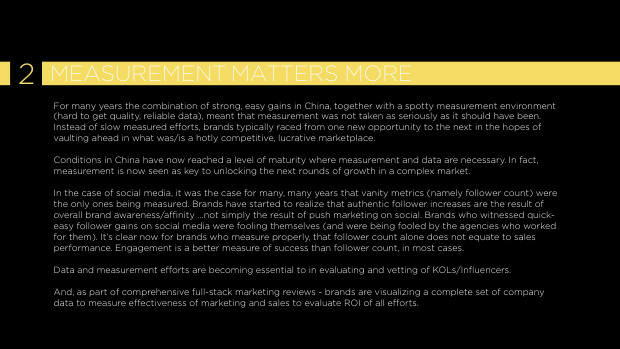
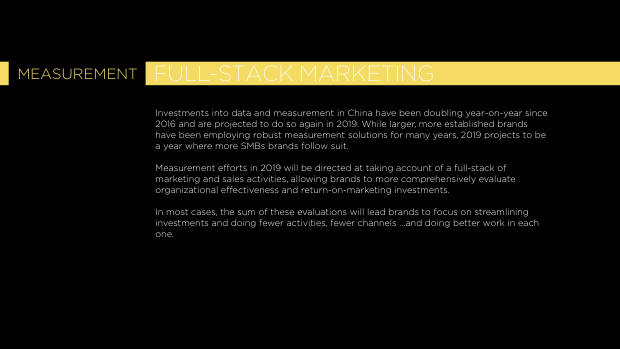
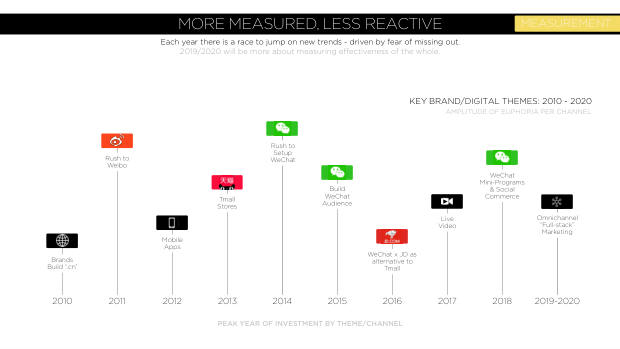
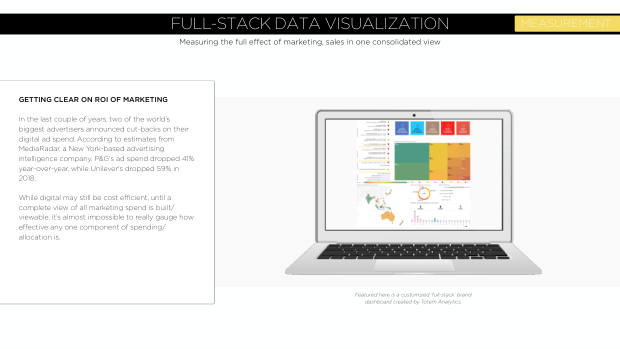
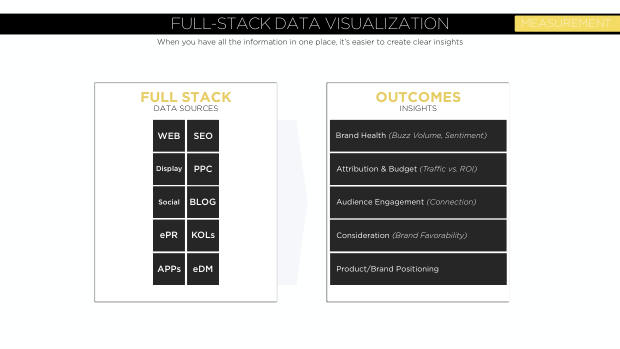
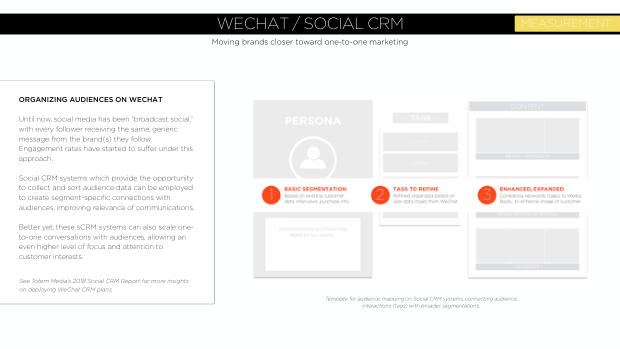
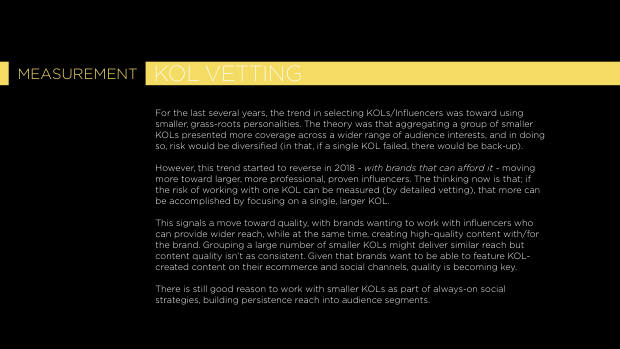
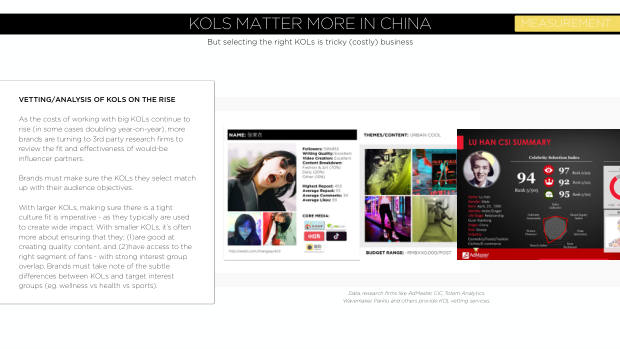
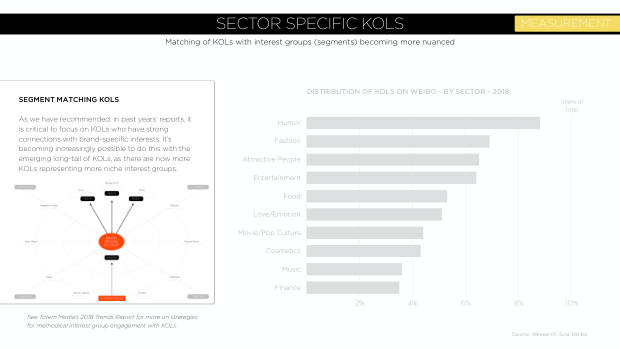
With easy gains gone, brands are shifting from follower-count vanity metrics toward engagement and full-stack measurement, and using data to vet KOLs and evaluate ROI across the funnel.



















How big is China's digital audience in 2019?
About 802 million netizens, just over 50% penetration, overwhelmingly mobile — with 527 million mobile-payment users against 48 million in the US.
Are brands spending more despite economic warnings?
Yes. 79% planned to raise digital budgets (~20%) and 81% to raise social budgets (~21%), because digital and social remain the most cost-efficient channels in a possible downturn.
Why is Pinduoduo significant?
Its close ties to WeChat and use of Mini-Programs drove 2,155% growth (2016–2018) and cut CAC to US$2, far below the US$39–41 of Tmall/JD-era platforms — a template for social-plus-viral ecommerce.
What does "China marketing is now global" mean?
Chinese consumers shop across borders as travellers and via cross-border ecommerce, so brands must coordinate China strategy at HQ level and at multiple global touchpoints, not just inside the Great Firewall.
What lesson did the D&G incident teach?
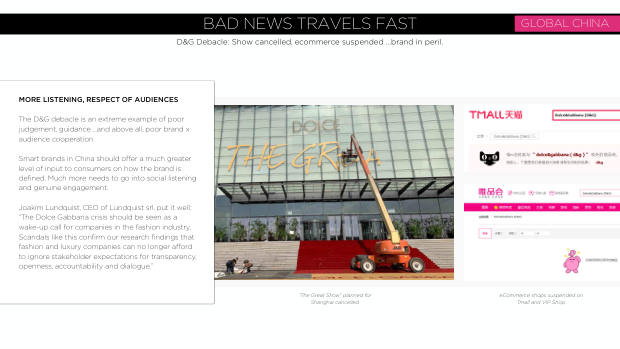
That brand identity must be balanced with respect and genuine dialogue for Chinese audiences; a single misstep put a large share of a $1.5bn annual sales base at risk across China and globally.
Totem's 2019 review of the marketing, media and social landscape in China, synthesising third-party data — including CNNIC, AdMaster's survey of 110 advertisers, iResearch, QuestMobile, eMarketer and Newrank — with Totem's own analysis. It links macro and platform shifts to five actionable trends for brands: global China marketing, measurement, content, social commerce and social-reshaped retail.
Get the full report
Leave your details — we'll email you the PDF and give you the download straight away.