China Springs Back From Covid-19: what a re-surveyed set of brands reveals about recovery
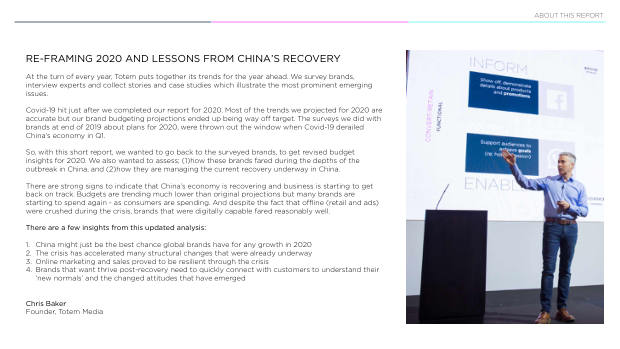
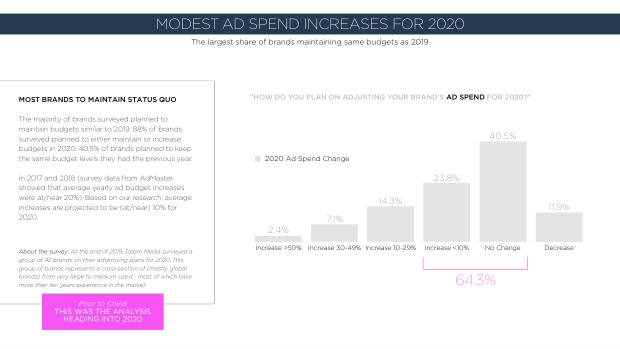
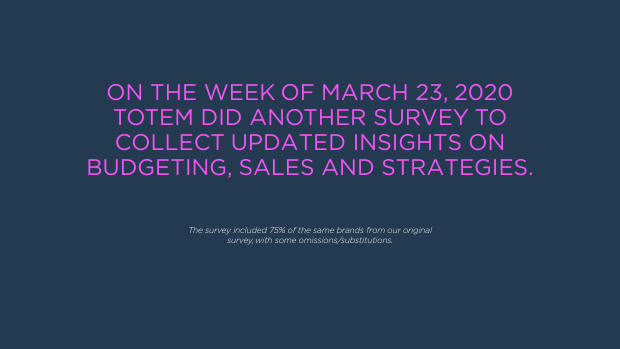
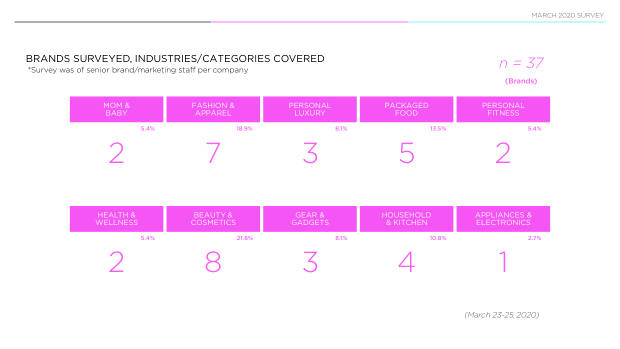
After Covid-19 derailed China's economy in Q1 2020 — invalidating the budget projections in Totem's 2020 report — Totem went back to the same set of brands to capture revised numbers. It re-surveyed 37 brands (75% of the original group) in the week of 23 March 2020 on how they fared at the depth of the outbreak and how they were managing the recovery.
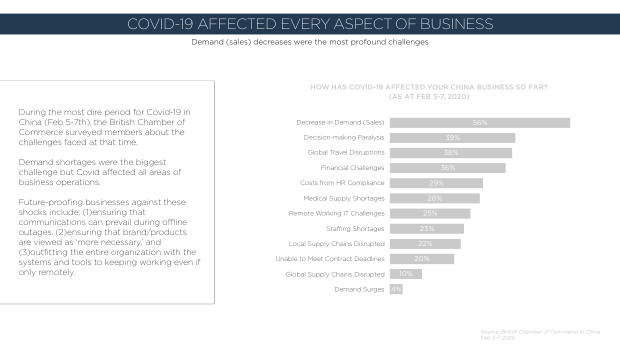
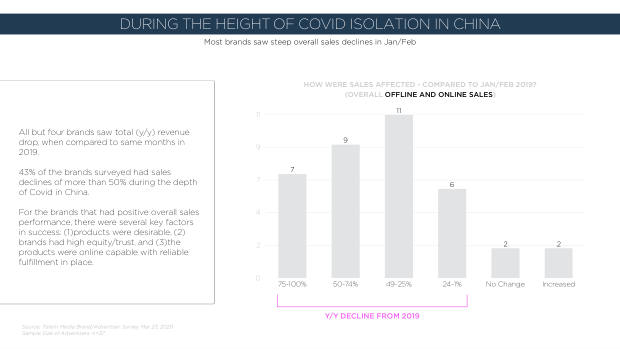
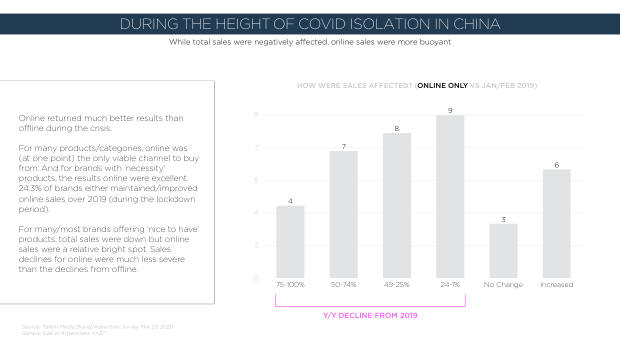
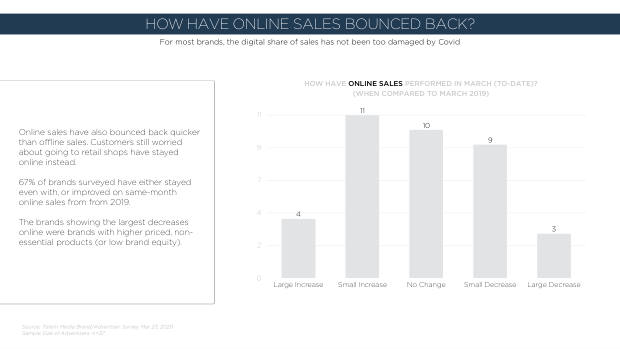
The picture is a sharp shock followed by a digitally-led rebound. Demand collapse was the dominant challenge (the British Chamber found 56% of members citing decreased demand at the Feb 5–7 low point), and 43% of surveyed brands saw sales fall more than 50%. But online proved resilient: 24.3% of brands held or grew online sales versus 2019 during lockdown, and 67% had matched or beaten prior-year online sales by March.
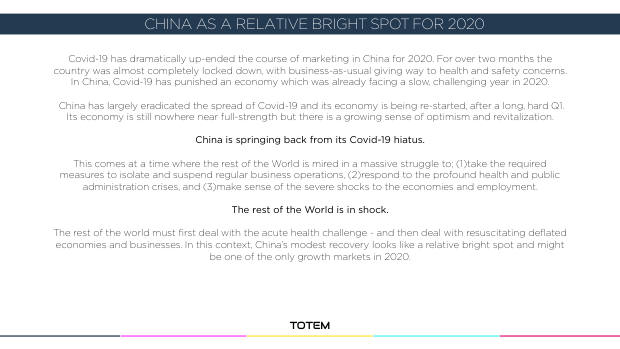
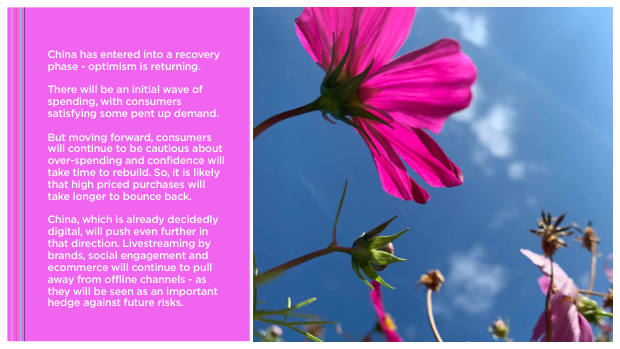
With much of the rest of the world still in shock, the report frames China as a relative bright spot — potentially one of the only growth markets for global brands in 2020 — and argues Covid accelerated structural shifts already underway toward digital, ecommerce, livestreaming and customer empathy.
Demand collapse was the defining shock.
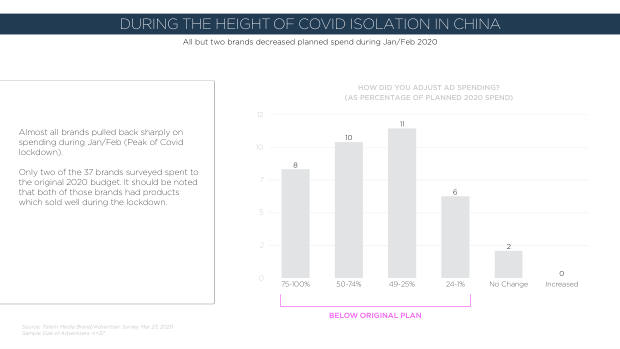
At the Feb 5–7 low point, the British Chamber of Commerce found 56% of members citing decreased demand as their biggest challenge — well ahead of travel disruption (39%), supply-chain (36%) and staffing issues. Only two of the 37 surveyed brands spent to their original 2020 budget during Jan/Feb, and both sold products that did well in lockdown.
Online was the relative bright spot.
While total sales dropped for all but four brands, online declines were far milder than offline. 24.3% of brands maintained or improved online sales during lockdown, and by March 67% had matched or beaten March-2019 online sales — the biggest online losers were higher-priced, non-essential or low-equity products.
Brand equity determined resilience.
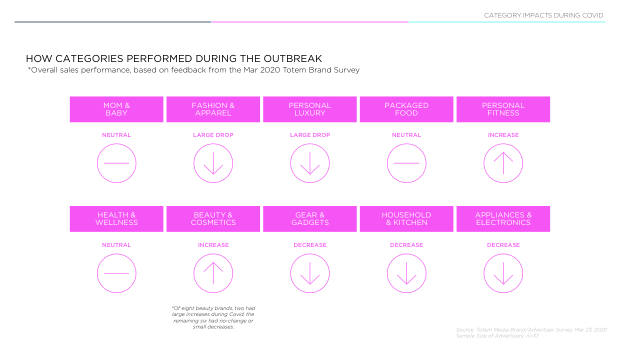
Brands that posted positive sales shared three traits: desirable products, high trust/equity, and online capability with reliable fulfilment. Beauty split sharply — of eight beauty brands, two saw large increases while six were flat-to-down — underlining equity as the dividing line.
Covid accelerated structural change toward digital.
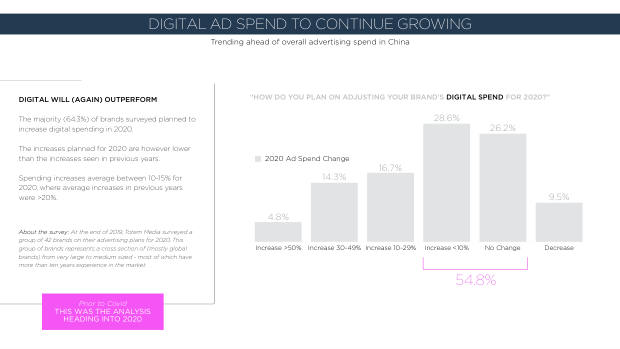
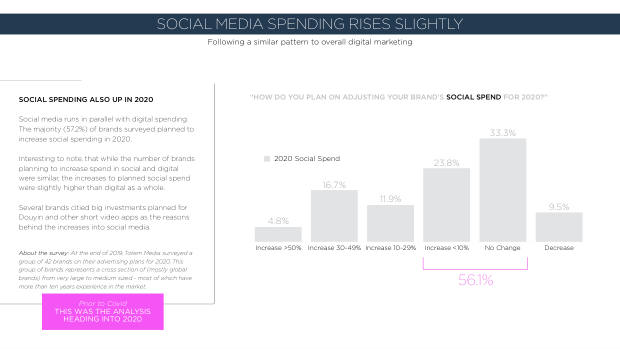
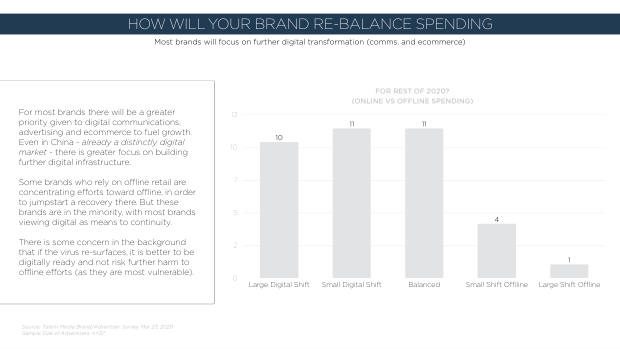
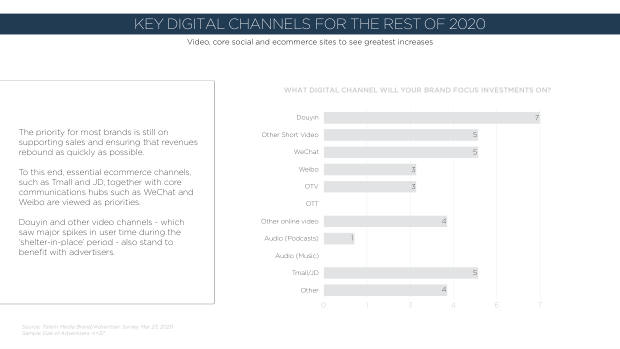
Most brands planned to tilt further toward digital for the rest of 2020, treating online as a hedge against future offline disruption. Douyin and other video channels — which spiked during shelter-in-place — plus essential ecommerce (Tmall, JD) and comms hubs (WeChat, Weibo) were the priority channels.
New consumer behaviours took hold.
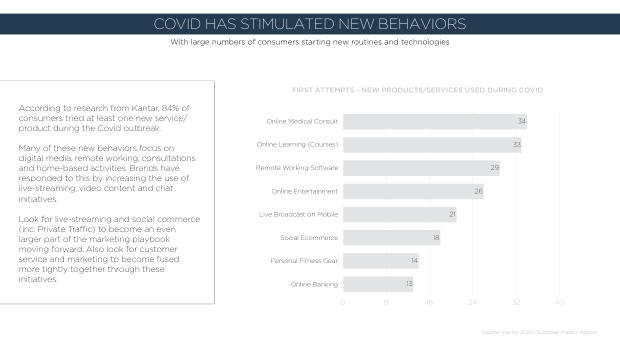
Per Kantar, 84% of consumers tried at least one new service or product during the outbreak — online medical consults, remote-working software, online learning, social ecommerce and live broadcast. Totem expects livestreaming and social commerce (including private traffic) to become a larger, permanent part of the playbook, with service and marketing fusing.
Recovery is more than cost-cutting.
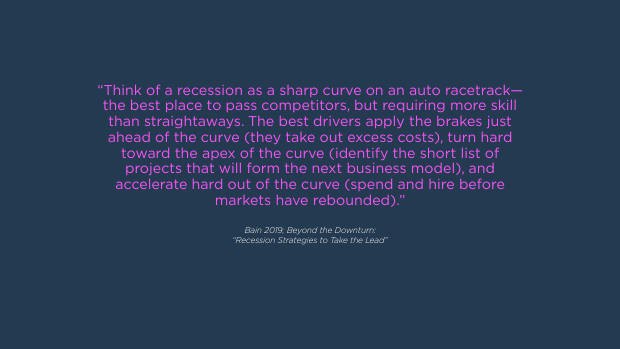
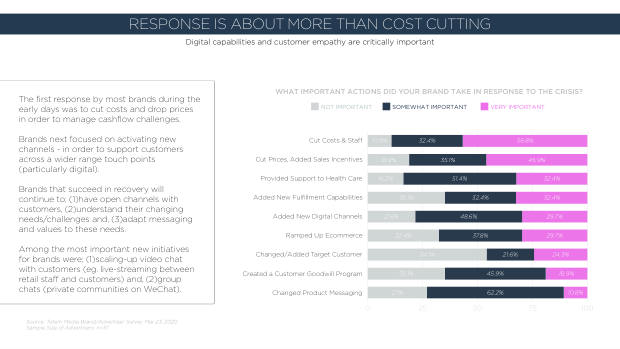
Brands' first move was cutting costs and prices for cashflow, but Totem — echoing Bain's "recession as a racetrack curve" — argues the winners then activate new channels, keep channels open to read changing customer needs, and adapt messaging and values. Scaling up video chat and private WeChat communities ranked among the most important new initiatives.
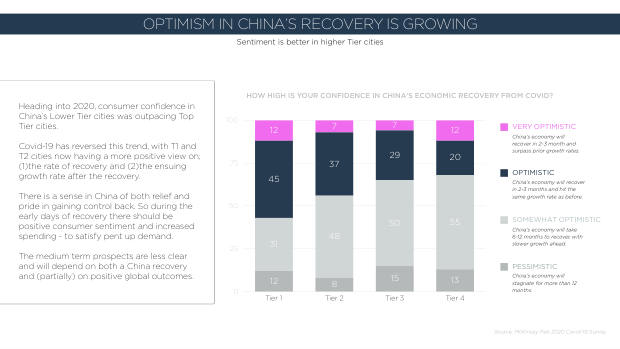
Recovery sentiment favoured higher-tier cities.
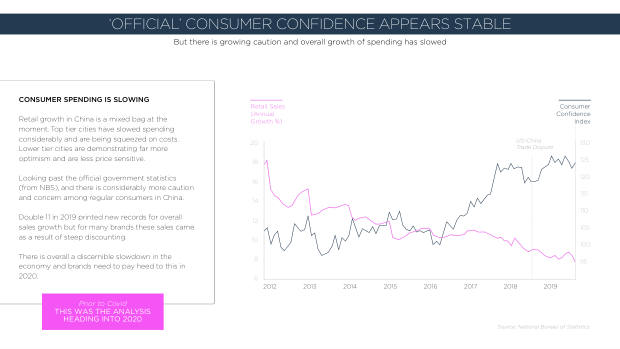
McKinsey data showed T1 and T2 cities more optimistic about the pace of recovery than lower tiers — reversing the pre-Covid pattern where lower-tier confidence led — with an initial wave of pent-up demand expected but higher-priced purchases slower to return.
A prescriptive, category-specific playbook for the rebound.
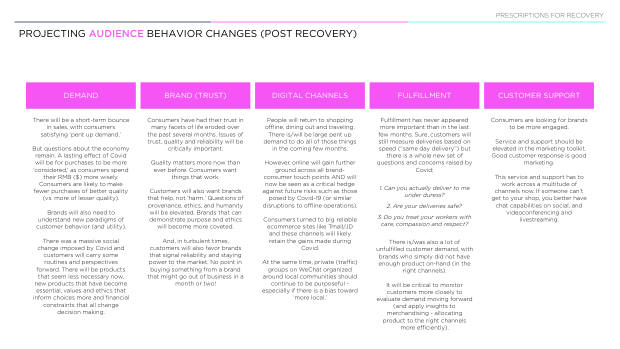
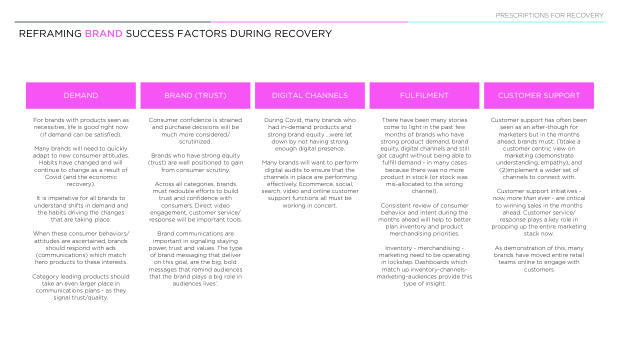
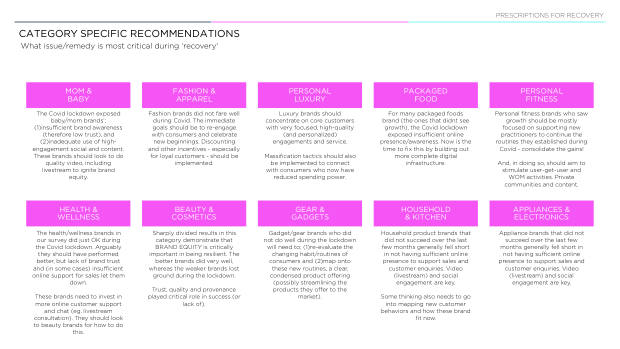
Totem lays out recovery moves across demand, brand trust, digital channels, fulfilment and customer support, then tailors them by category — e.g. mom & baby and packaged food need to fix thin online presence with livestream, luxury should concentrate on core customers, and fitness brands that grew should consolidate new habits via private communities.

How does this report relate to Totem's 2020 annual report?
It's a follow-up. Covid hit just after the annual report shipped, invalidating its budget projections, so Totem re-surveyed the same brands to capture revised budgets and real-world outcomes during the outbreak and early recovery.
How badly were sales hit?
All but four of 37 brands saw year-on-year revenue fall, and 43% had declines of more than 50% at the depth of the crisis. Only two brands spent to their original 2020 budget during the Jan/Feb peak of lockdown.
Why did online hold up better?
For many categories online was, at points, the only viable channel. Declines online were far milder than offline; 24.3% of brands held or grew online sales during lockdown and 67% matched or beat prior-year online sales by March.
What separated the winners from the losers?
Desirable products, strong brand equity/trust, and reliable online fulfilment. Categories and brands lacking online presence or trust — fashion, weaker beauty, some health/wellness — were exposed.
Why is China framed as a bright spot?
Because it had largely contained the outbreak and restarted its economy while the rest of the world was still in shock — making it potentially one of the only markets where global brands could achieve any growth in 2020.
Based on a Totem brand/advertiser survey of 37 senior brand and marketing staff (23–25 March 2020), drawn from 75% of the 42-brand panel used in Totem's 2020 annual report, covering budget adjustments, sales impacts (offline and online), channel re-balancing and recovery actions. Contextualised with third-party data from the British Chamber of Commerce, McKinsey, Publicis, Kantar and Bain (credited per page).
Get the full report
Leave your details — we'll email you the PDF and give you the download straight away.