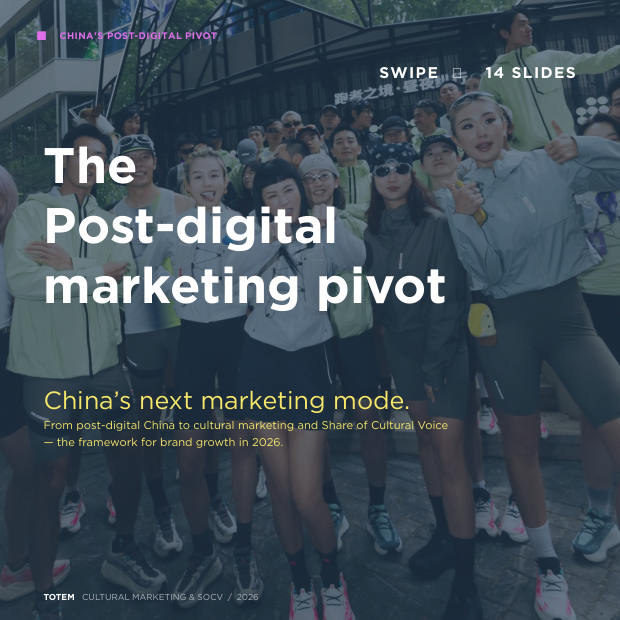
China's Post-Digital Pivot: China's next marketing mode
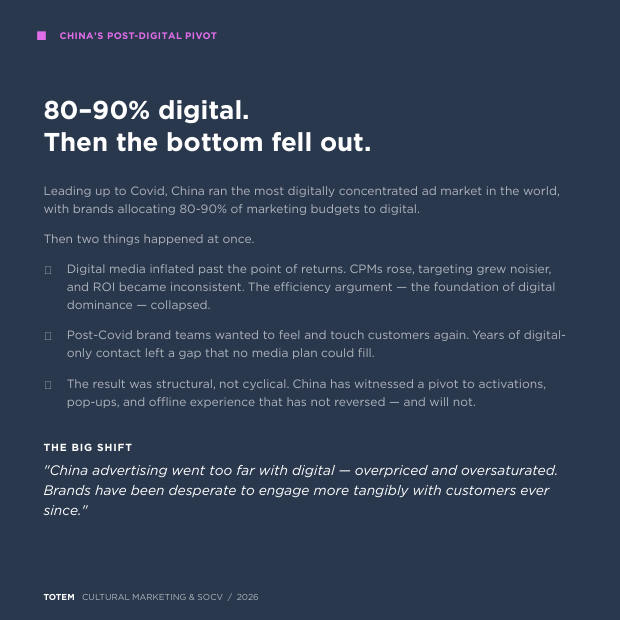
Leading up to Covid, China ran the most digitally concentrated ad market in the world — brands put 80–90% of marketing budgets into digital. Then the bottom fell out. CPMs inflated past the point of returns, targeting grew noisier, ROI turned inconsistent, and post-Covid brand teams wanted to feel and touch customers again. The result was structural, not cyclical.
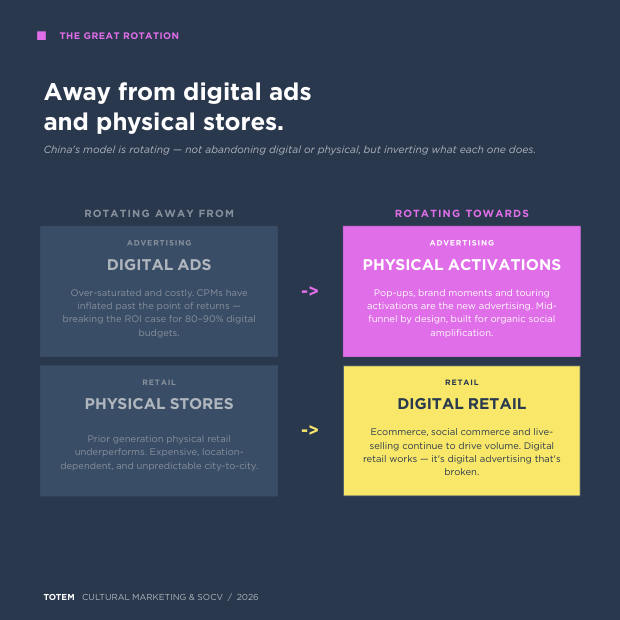
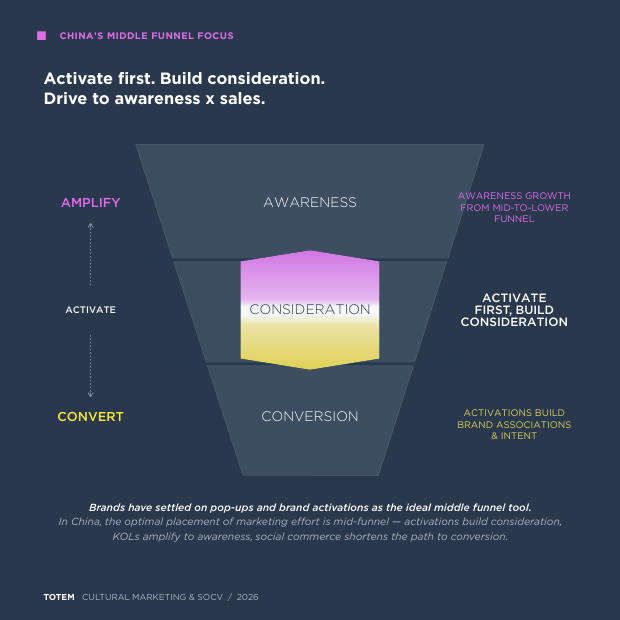
The model is rotating — not abandoning digital or physical, but inverting what each one does. Activations are the new advertising; digital is the new retail. Pop-ups and touring brand moments now do the mid-funnel work of building consideration, while KOLs amplify to awareness and social commerce shortens the path to conversion.
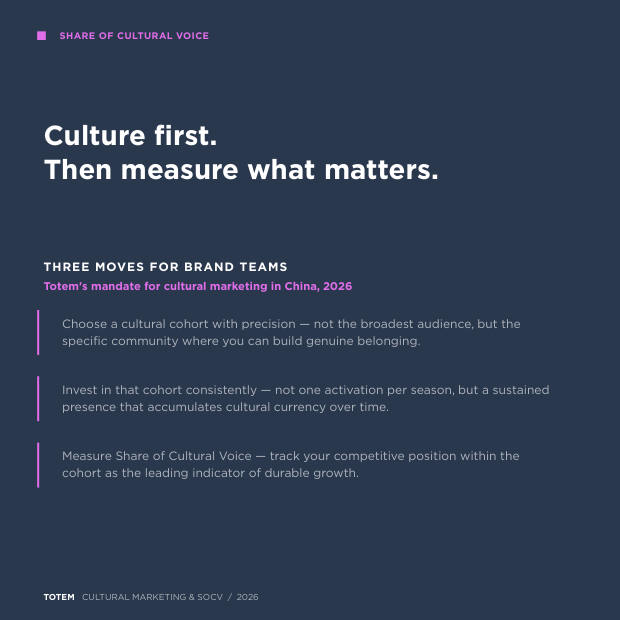
But an activation is not the same as cultural marketing. Purchased cultural voice — paid KOLs, sponsored moments — fades the moment the spend stops. The brands that win choose a cultural cohort with precision, invest in it consistently, and measure their position through Share of Cultural Voice (SOCV).
The great rotation
China's model is rotating — not abandoning digital or physical, but inverting what each does. Advertising shifts from digital ads to physical activations; retail shifts from stores to digital. Pop-ups, brand moments and touring activations are the new advertising — mid-funnel by design and built for organic social amplification.
A middle-funnel game
The optimal placement of marketing effort in China is now mid-funnel: activations build consideration, KOLs amplify to awareness, and social commerce shortens the path to conversion. Brands activate first, then build consideration — rather than buying awareness at the top.
The remedy is cultural marketing
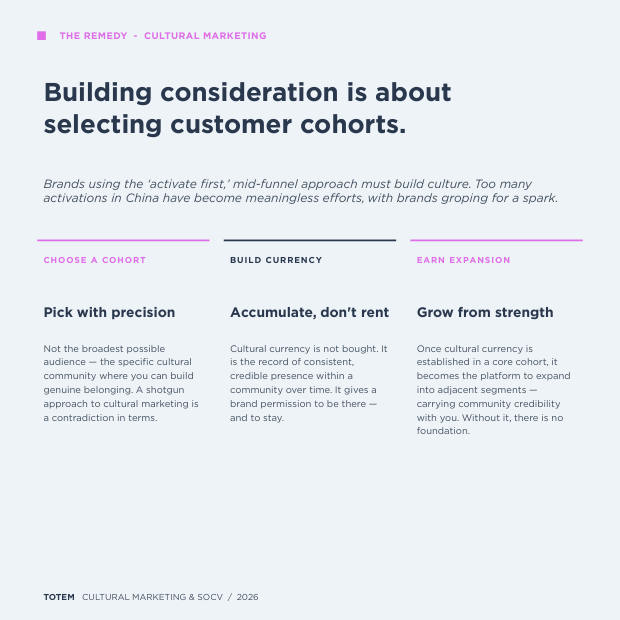
Too many activations have become meaningless efforts, with brands groping for a spark. The fix is to choose a cohort with precision — the specific cultural community where you can build genuine belonging — and to build currency, accumulating cultural ownership rather than renting it.
The risk: tactics vs. strategy
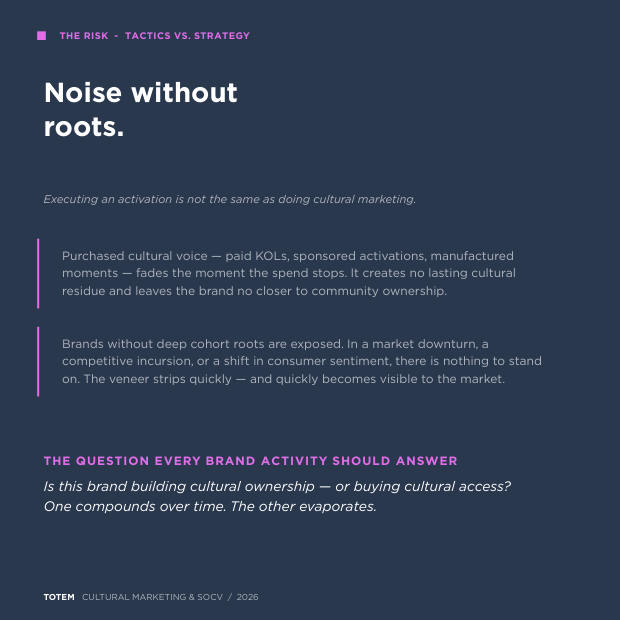
Executing an activation is not the same as doing cultural marketing. Purchased cultural voice fades the moment the spend stops, leaving no cultural residue. Brands without deep cohort roots are exposed — in a downturn or a competitive incursion, there is nothing to stand on.
Experience over product
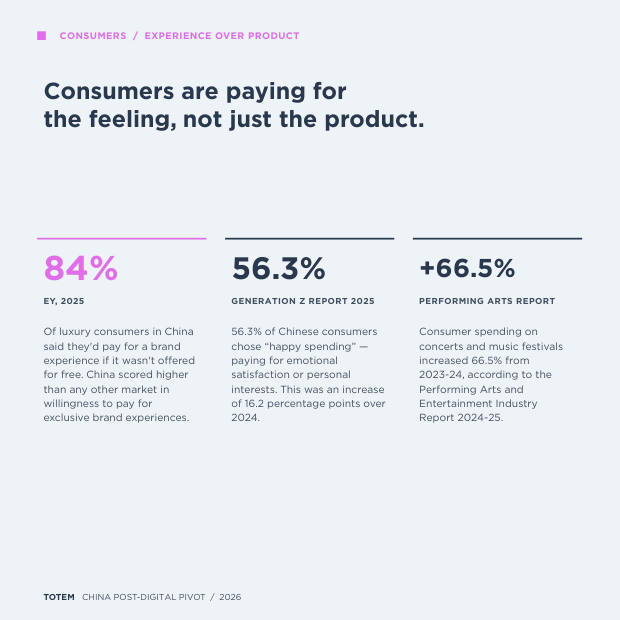
Consumers are paying for the feeling, not just the product. 84% of China's luxury consumers would pay for a brand experience, and 'happy spending' on emotional satisfaction jumped 16.2 points year on year — the clearest signal that experience now carries the brand.
Nested communities and the anchor niche
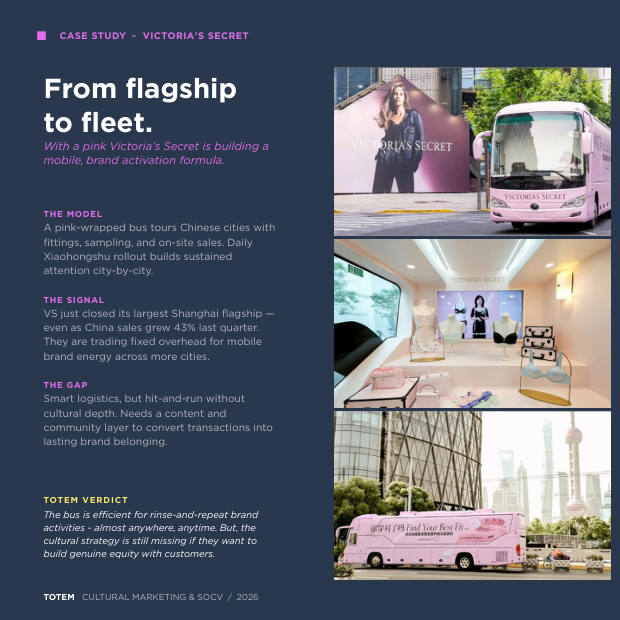
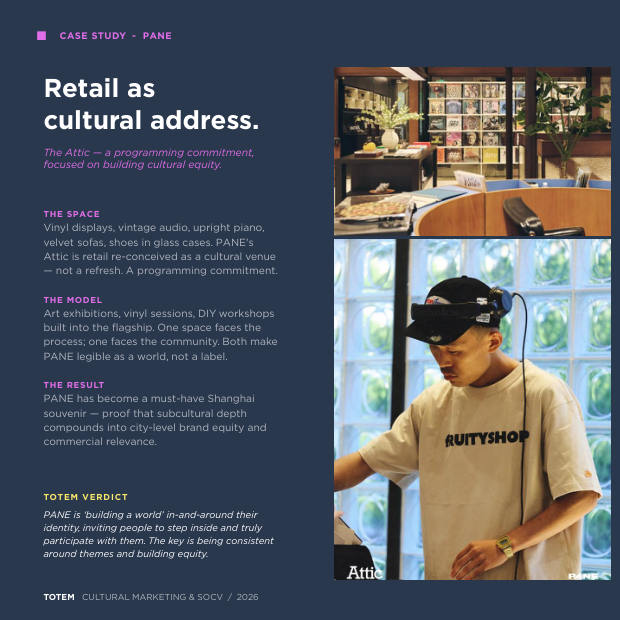
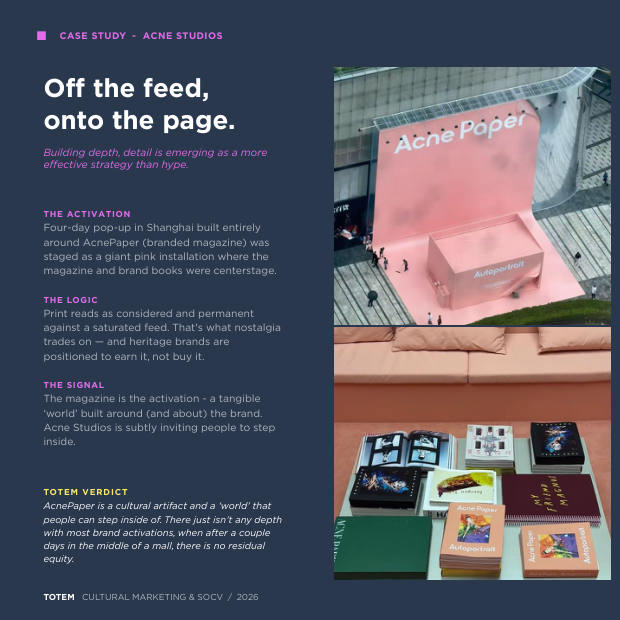
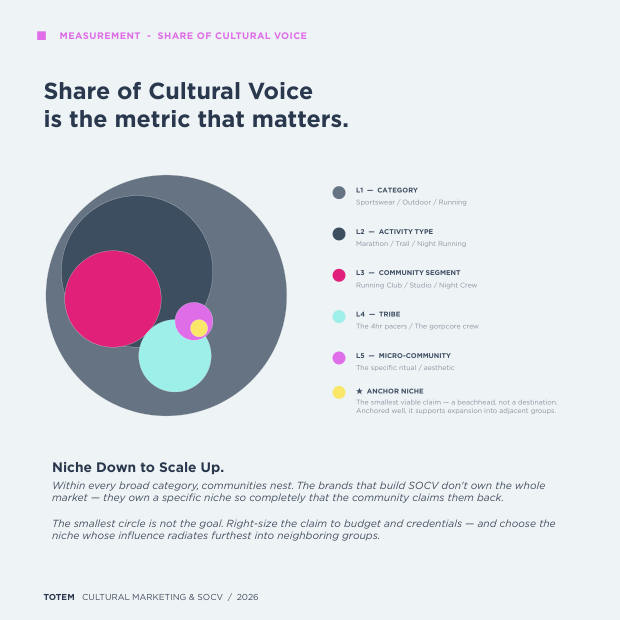
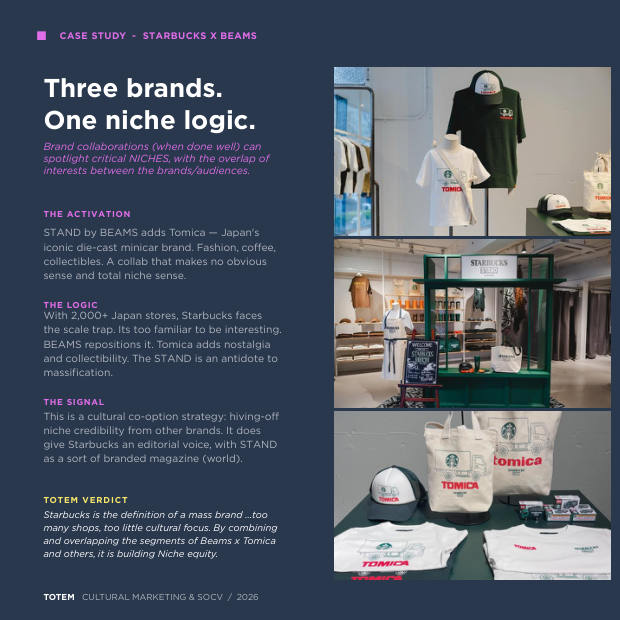
Within every broad category, communities nest — from category to activity type to community segment to tribe to micro-community. The brands that build SOCV don't own the whole market; they own a specific niche so completely that the community claims them back. Field examples run from Victoria's Secret and PANE to Acne Studios and Starbucks × BEAMS.
What is the 'post-digital pivot'?
China ran 80–90% of ad budgets through digital before Covid. As CPMs inflated and ROI collapsed — and brand teams sought physical contact again — spend rotated structurally toward activations. Activations are the new advertising; digital is the new retail.
Why are pop-ups 'the new advertising'?
Pop-ups, brand moments and touring activations are mid-funnel by design — they build consideration and are built for organic social amplification, while KOLs push to awareness and social commerce converts.
What separates real cultural marketing from a one-off activation?
Purchased cultural voice — paid KOLs, sponsored moments — fades when the spend stops. Real cultural marketing chooses a specific cohort, invests consistently, and accumulates ownership the community claims back.
How does SOCV fit in?
Share of Cultural Voice measures a brand's competitive position within its chosen cohort — the leading indicator for whether cultural investment is compounding into owned ground rather than evaporating.
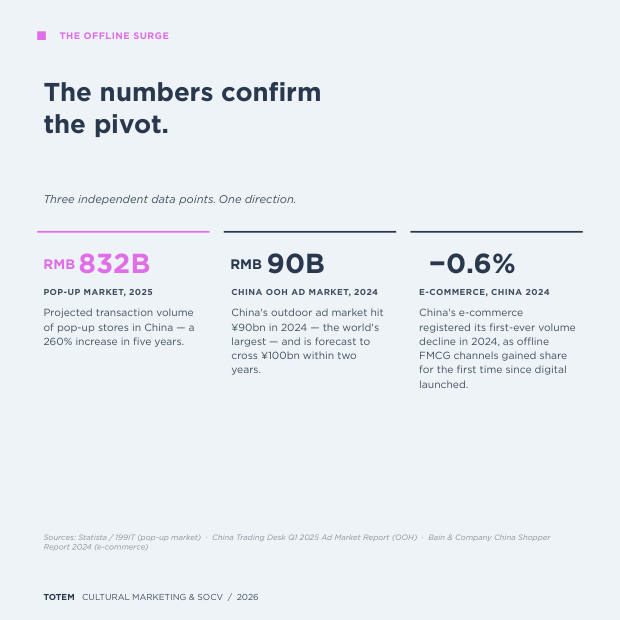
A 14-slide Totem snapshot drawing on China market data (pop-up, OOH and e-commerce figures from Statista/199IT, China Trading Desk Q1 2025 and Bain & Company), consumer research (EY 2025; Generation Z Report 2025), and Totem's field analysis of 2025–26 brand activations including Victoria's Secret, PANE, Acne Studios and Starbucks × BEAMS.
Get the full report
Leave your details — we'll email you the PDF and give you the download straight away.