China Outbound Marketing 2018: 154 million travellers, a mobile-first journey, and shopping as the main event
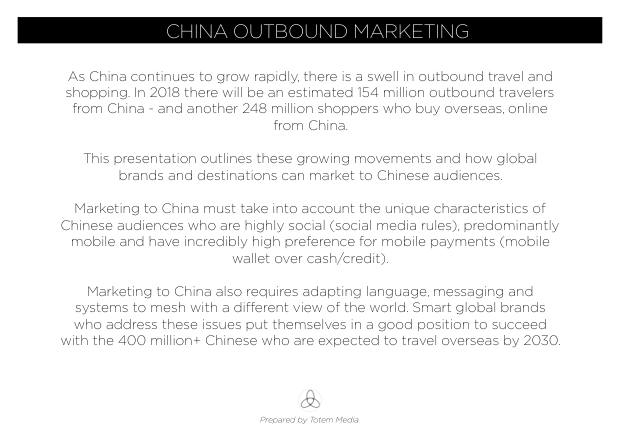
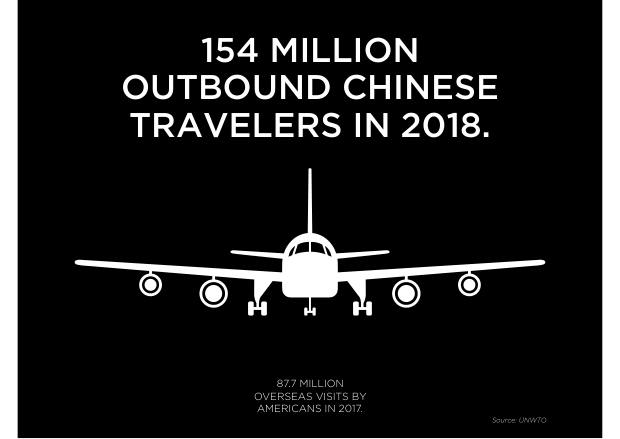
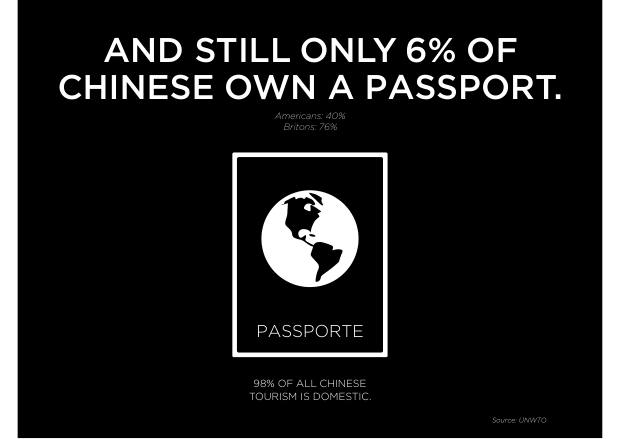
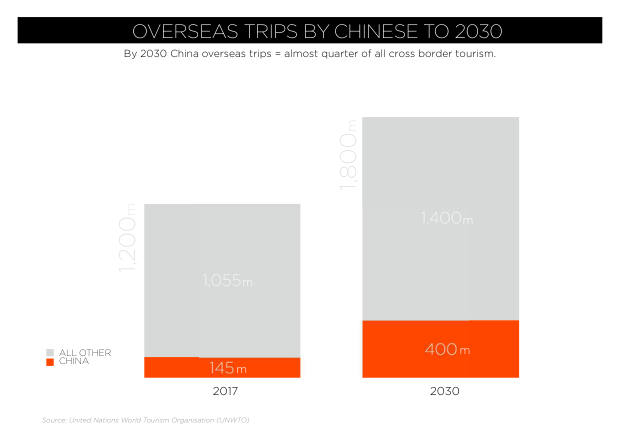
China's outbound movement is large and early-stage at once. An estimated 154 million outbound travellers in 2018, plus roughly 248 million shoppers buying overseas online from home, mark a fast-growing audience — yet only 6% of Chinese hold a passport (versus 40% of Americans and 76% of Britons) and 98% of Chinese tourism is still domestic. The runway is long: China's overseas trips are projected to exceed 400 million by 2030, approaching a quarter of all cross-border tourism.
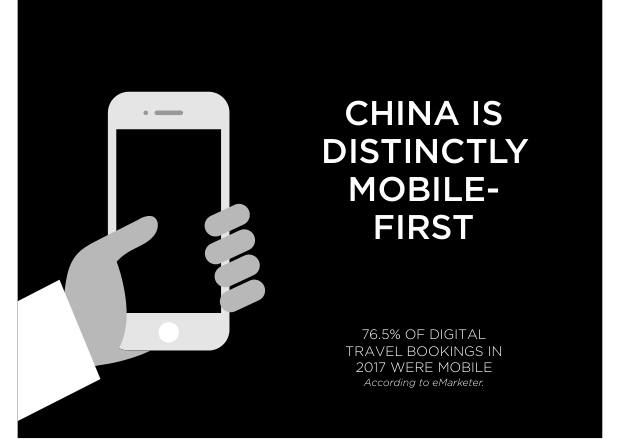
The audience is distinctly mobile, social and payment-driven. In 2017, 76.5% of digital travel bookings were mobile; by 2021, 79% of Chinese are expected to pay by mobile against just 23% of Americans. Reaching them means adapting language, content and payment systems — Alipay and WeChat Pay are effectively table stakes — and meeting them across a long, social-shaped journey from dreaming to advocacy.
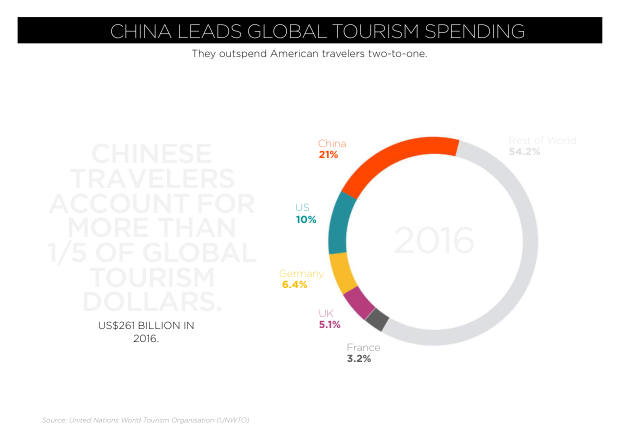
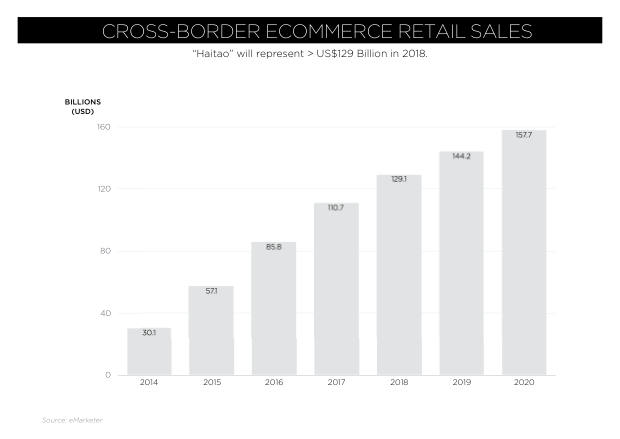
Spending is the headline for brands. Chinese travellers account for more than one-fifth (21%) of global tourism spending — US$261bn in 2016 — and outspend American travellers roughly two-to-one, with shopping the primary activity, especially across Asia. That interest continues after the trip through "Haitao" cross-border ecommerce, worth an estimated US$110bn in 2017 and over US$129bn in 2018.
A vast market off a low base.
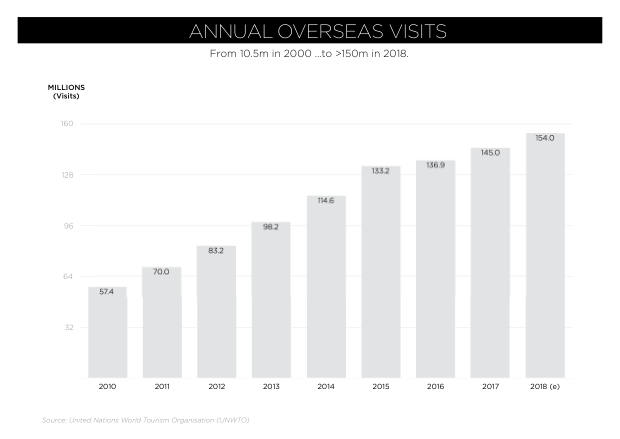
154 million travelled outbound in 2018, up from 10.5 million in 2000, yet only 6% of Chinese hold a passport and 98% of tourism stays domestic — implying years of structural growth toward 400 million-plus overseas trips by 2030.
Asia and short-haul lead the destination mix.
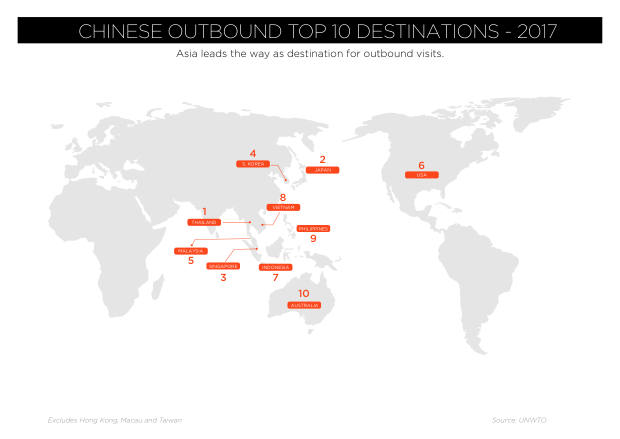
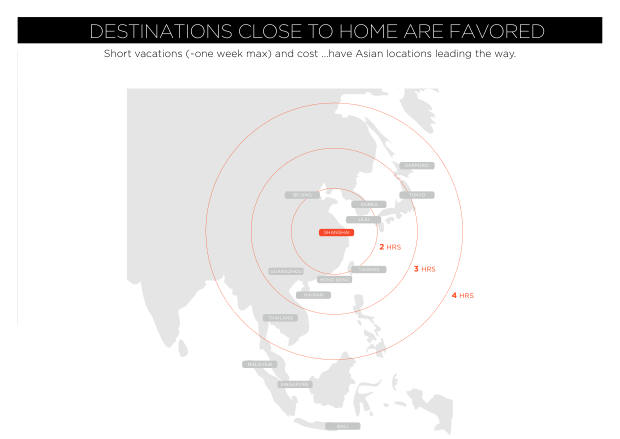
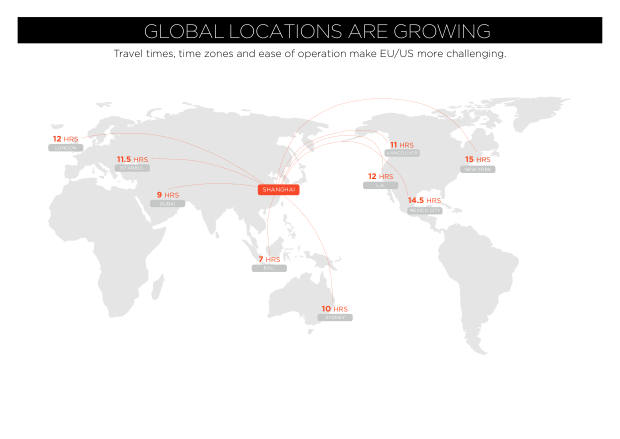
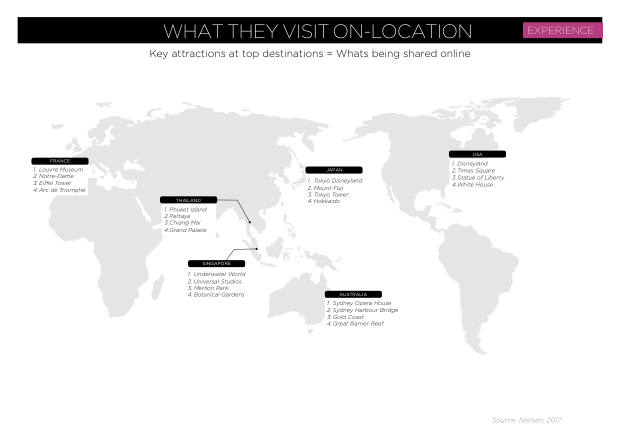
South Korea, Japan and Thailand top 2017 outbound destinations; short vacations of about a week and cost make nearby Asian locations dominant, while long-haul Europe and the US grow more slowly against travel-time and operational friction.
Chinese travellers are the world's biggest spenders.
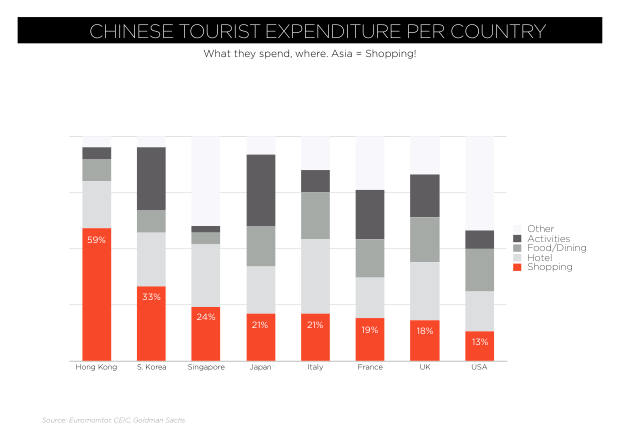
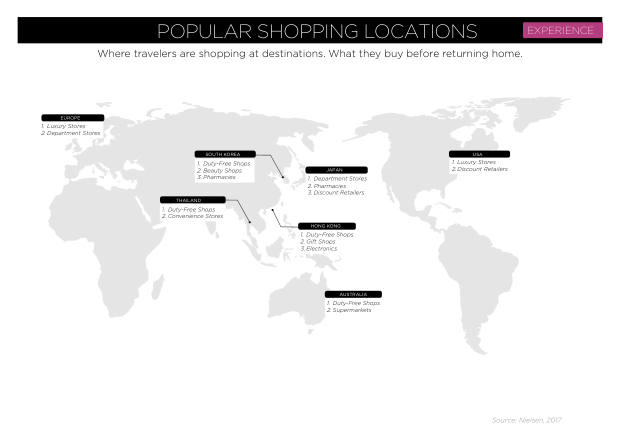
They account for 21% of global tourism dollars (US$261bn in 2016) and outspend Americans two-to-one, with shopping the main activity — up to 59% of expenditure in Hong Kong and around a third in South Korea.
The journey is mobile-first and payment-led.
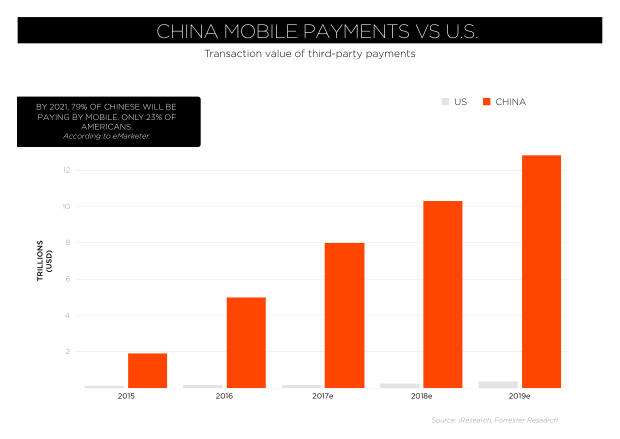
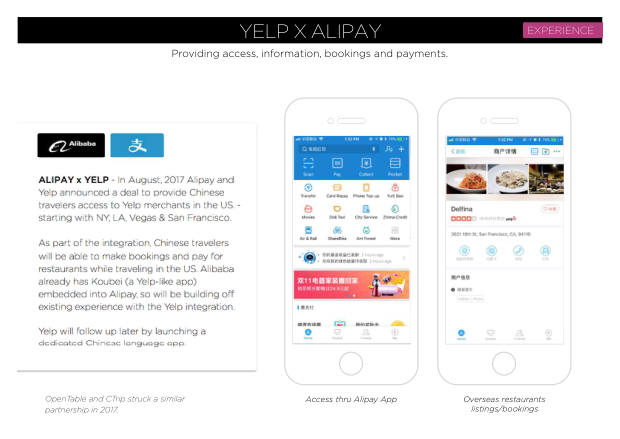
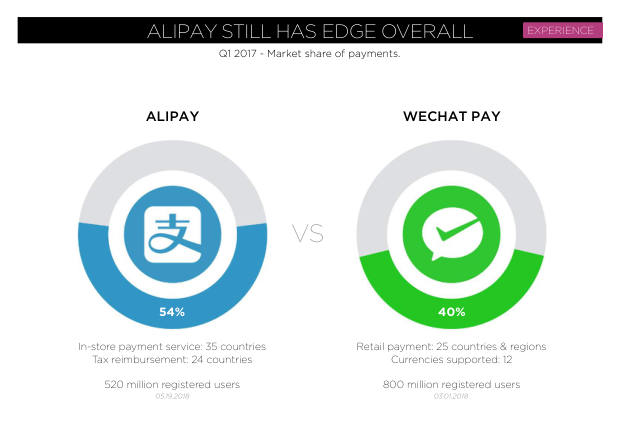
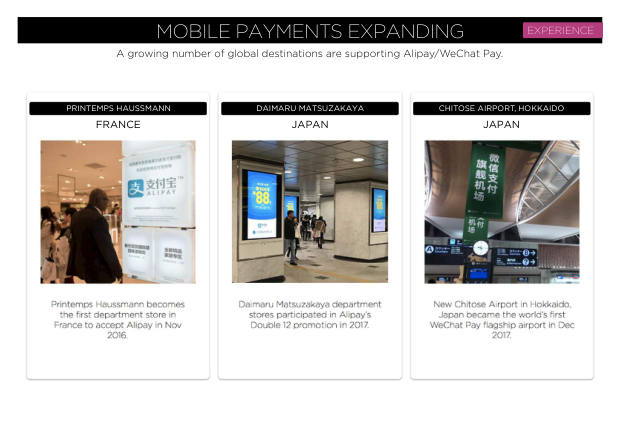
76.5% of 2017 digital travel bookings were mobile; by 2021 an estimated 79% of Chinese will pay by mobile versus 23% of Americans. Payments are consistently rated travellers' number-one overseas pain point, making Alipay (54% share, Q1 2017) and WeChat Pay (40%) essential for "China-ready" merchants.
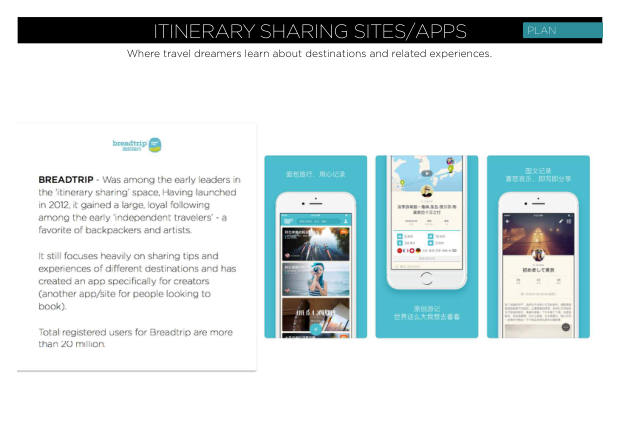
Discovery is social, and itinerary-sharing is huge.
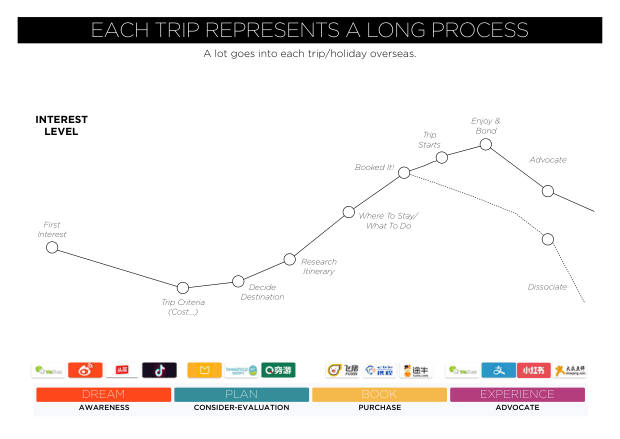
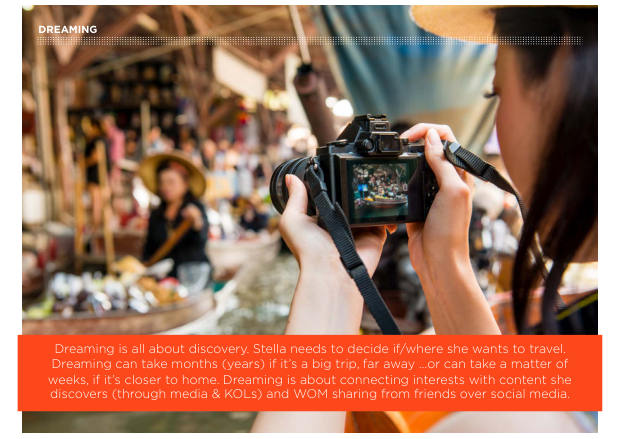
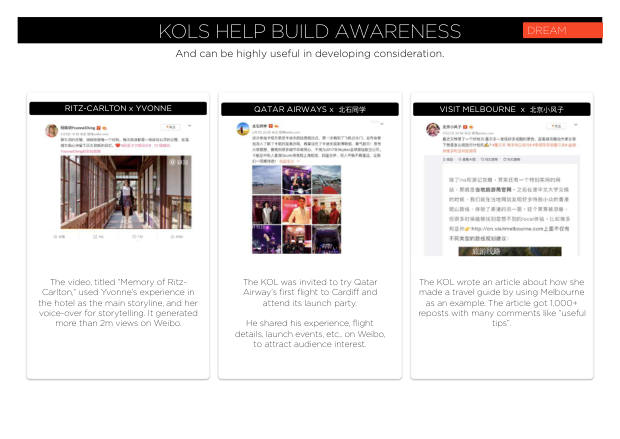
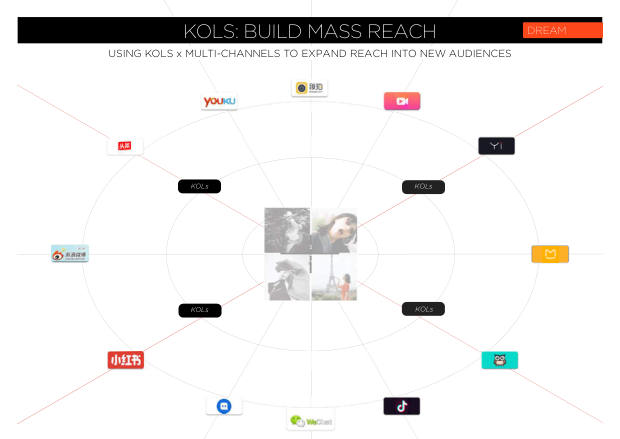
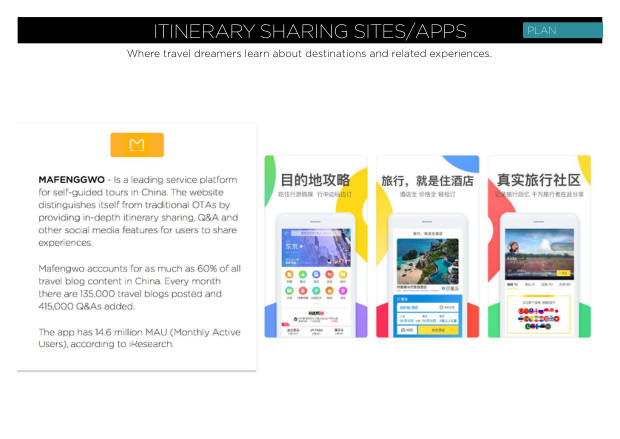
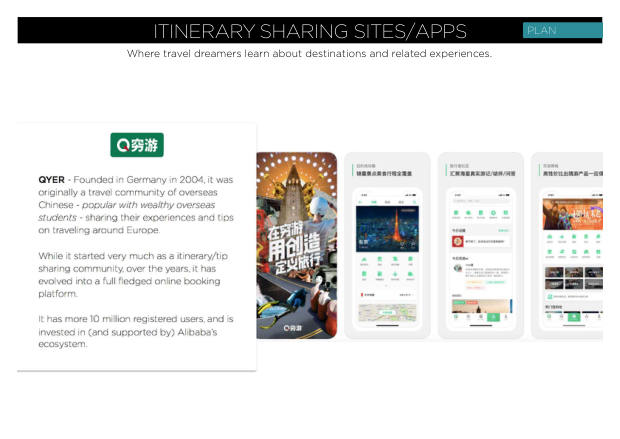
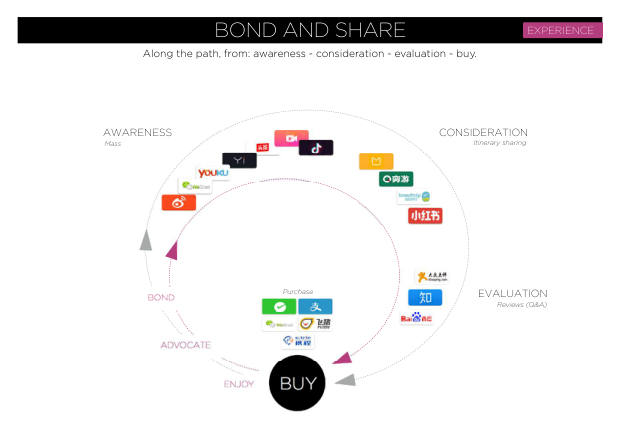
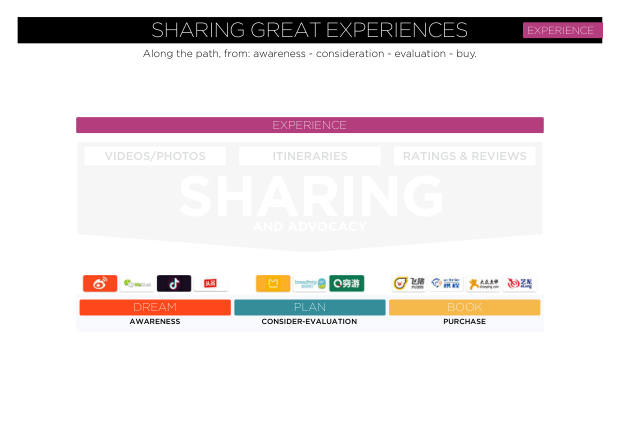
Totem maps a Dream-Plan-Book-Experience-Advocate journey anchored in social. Mafengwo alone accounts for as much as 60% of China's travel-blog content — 135,000 blogs a month and 14.6m MAU — while KOLs on Weibo and video channels seed awareness and consideration.
Content must be genuinely China-ready, not superficial.
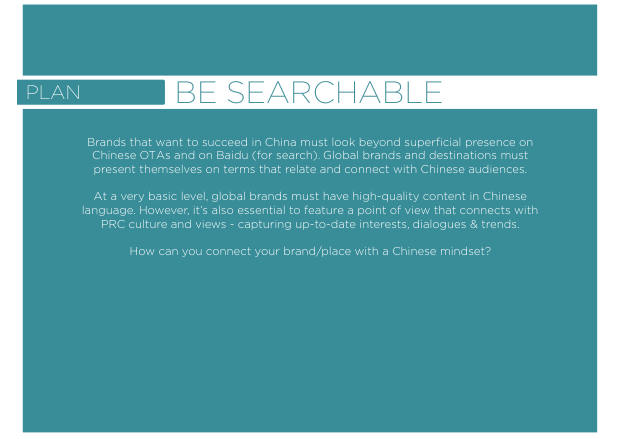
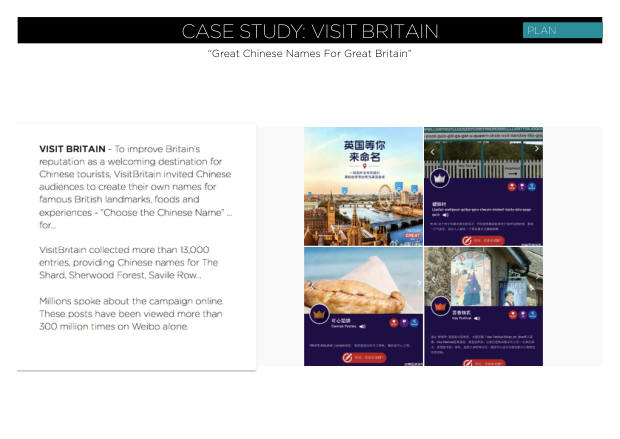
Brands need high-quality Chinese-language content that connects with PRC culture. VisitBritain's "Great Chinese Names for Great Britain" drew more than 13,000 entries and over 300 million views on Weibo — an example of participation over translation.
WeChat runs end-to-end, especially on the ground.
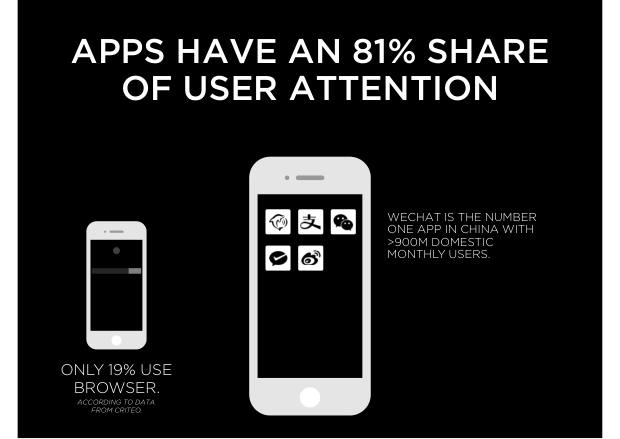
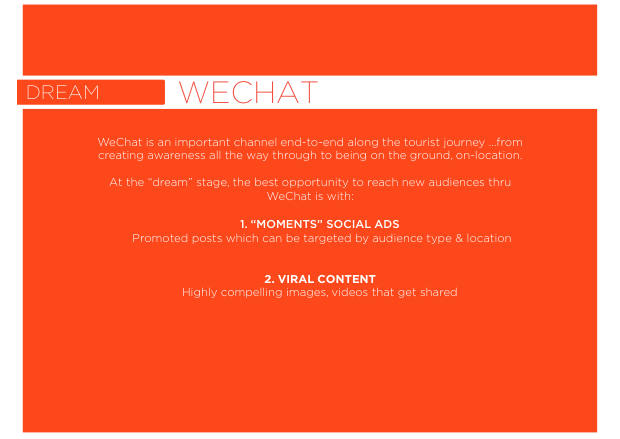
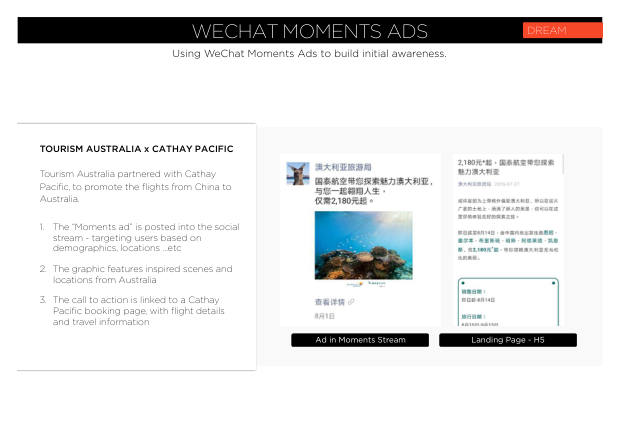
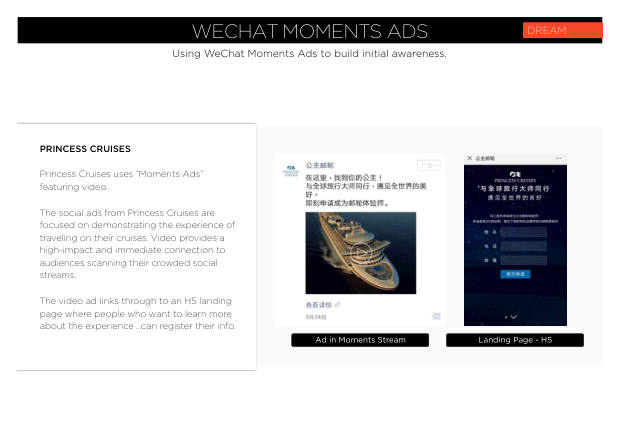
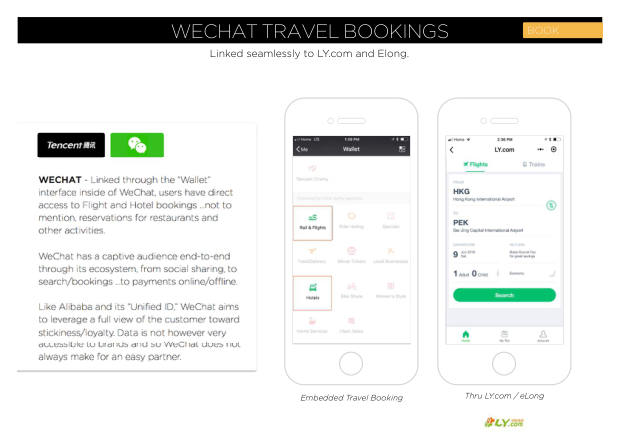
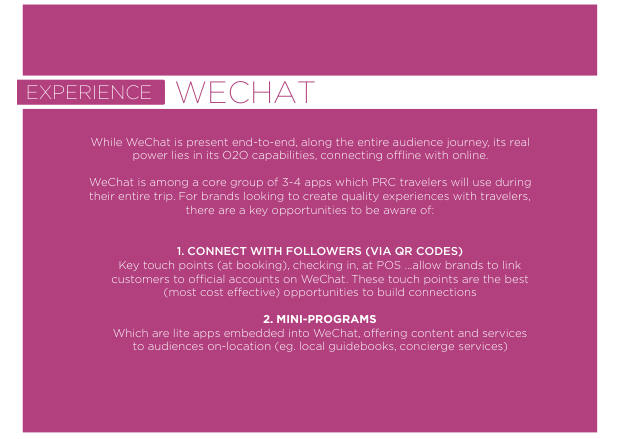
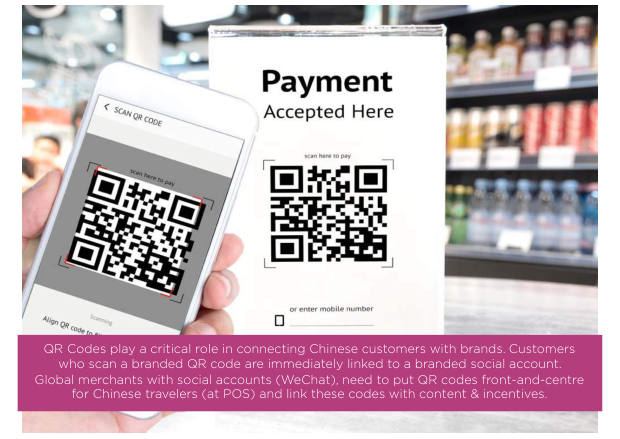
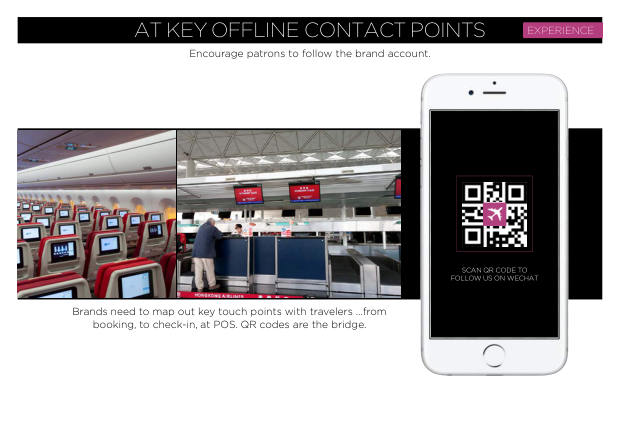
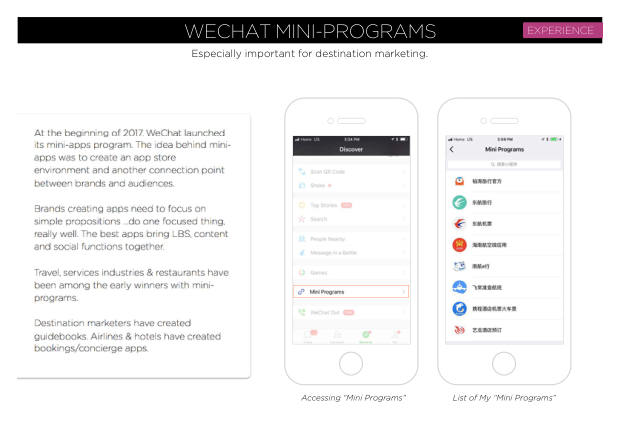
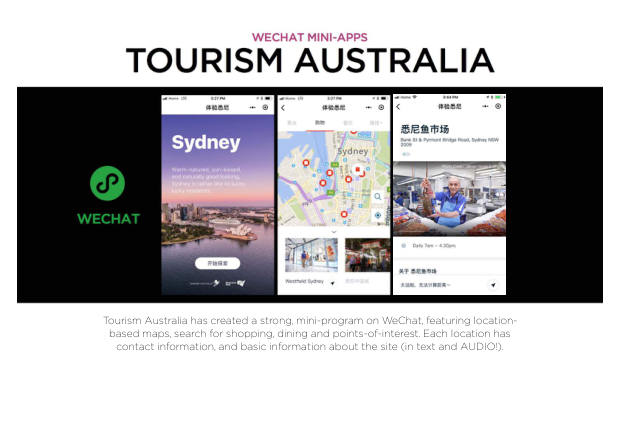
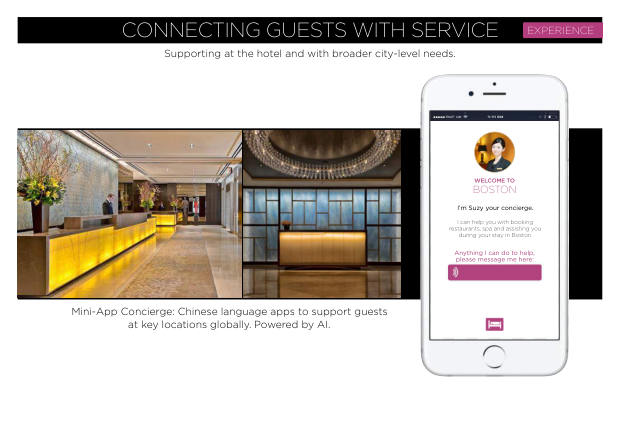
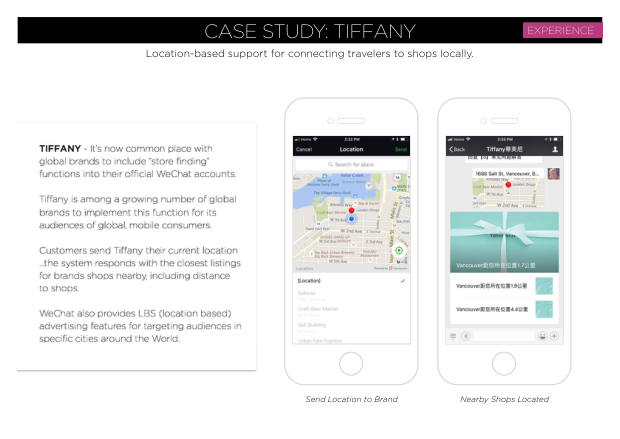
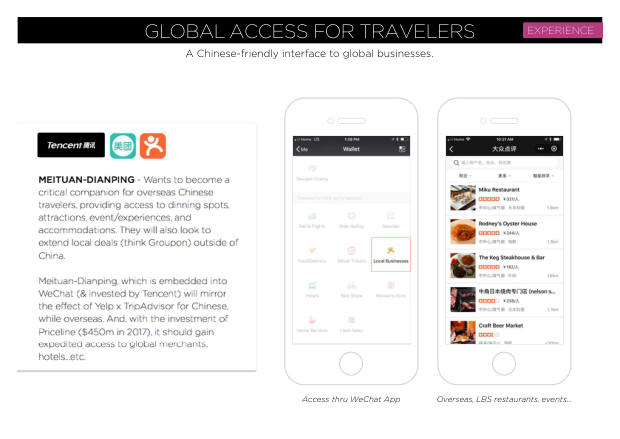
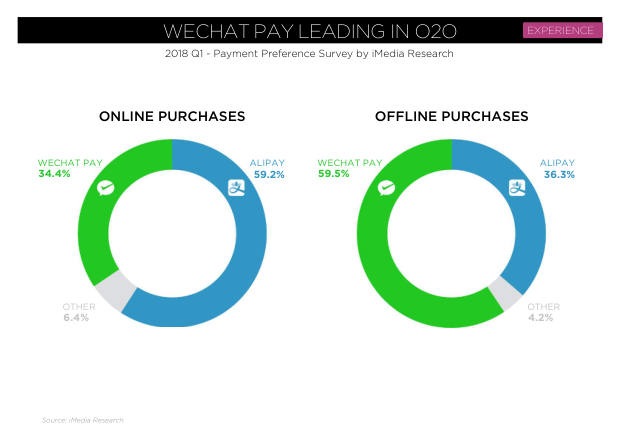
From Moments ads at the dream stage to Mini-Programs, QR-code follows and location-based services on location, WeChat is one of a core group of 3–4 apps travellers use throughout a trip, strongest in connecting offline to online (O2O).
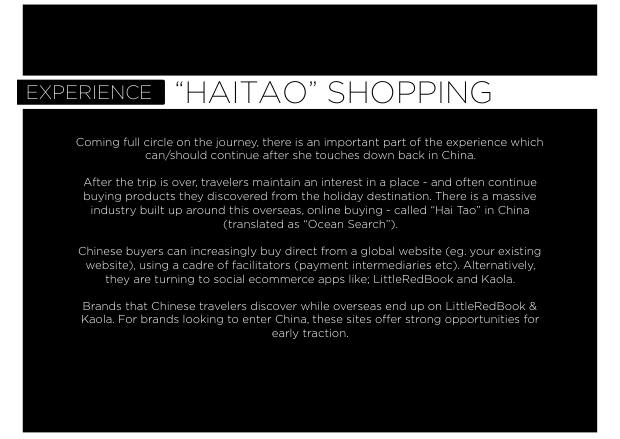
The trip doesn't end at home — Haitao continues the sale.
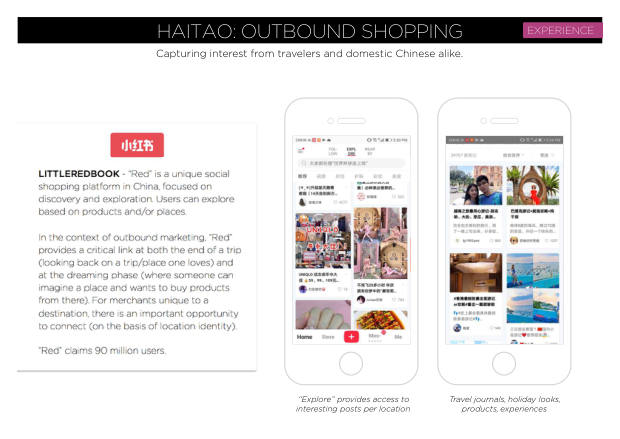
Post-trip, travellers keep buying discovered brands via cross-border ecommerce (an estimated US$129bn in 2018) and social-shopping apps; RED ("LittleRedBook," ~90m users) and Kaola are the key discovery-to-purchase links back home.






















How many Chinese travel overseas, and how much room is left to grow?
An estimated 154 million in 2018, but with only 6% holding passports and 98% of tourism domestic, outbound trips are projected to exceed 400 million by 2030.
How much do Chinese travellers spend?
They account for 21% of global tourism spending (US$261bn in 2016) and outspend American travellers roughly two-to-one, with shopping the primary activity.
Why do payments matter so much?
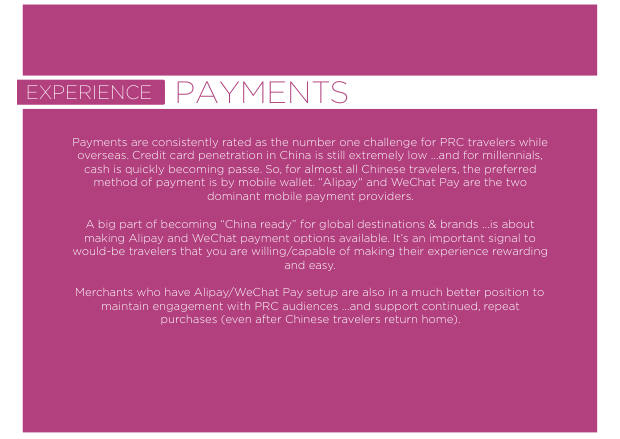
Payments are travellers' top overseas frustration; by 2021 an estimated 79% of Chinese will pay by mobile. Supporting Alipay and WeChat Pay signals a merchant is China-ready and sustains engagement after the trip.
Which channels drive the travel journey?
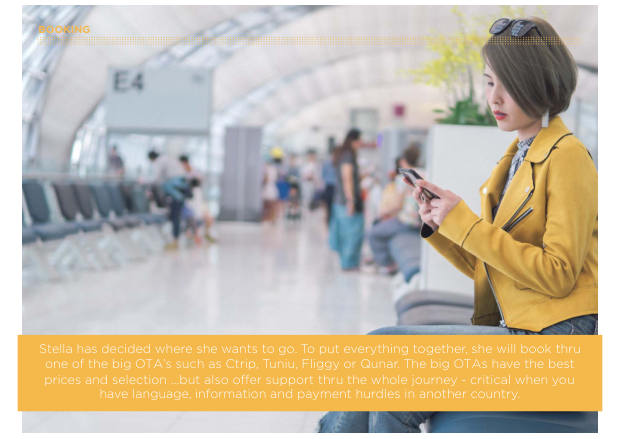
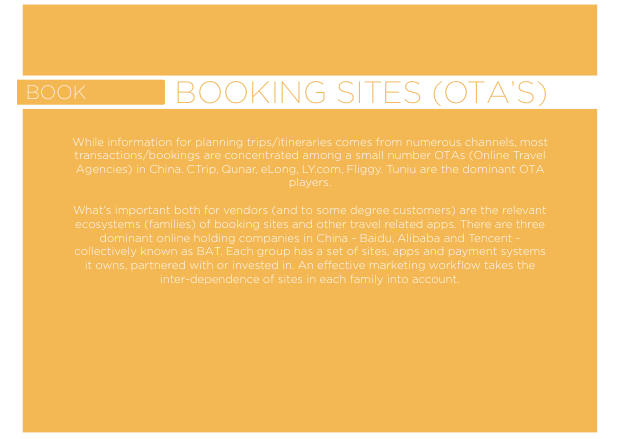
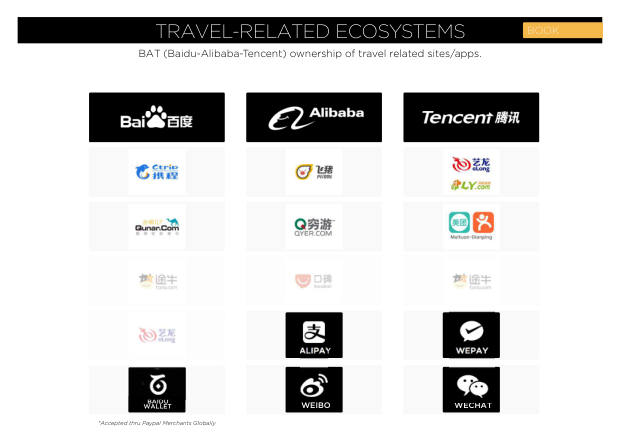
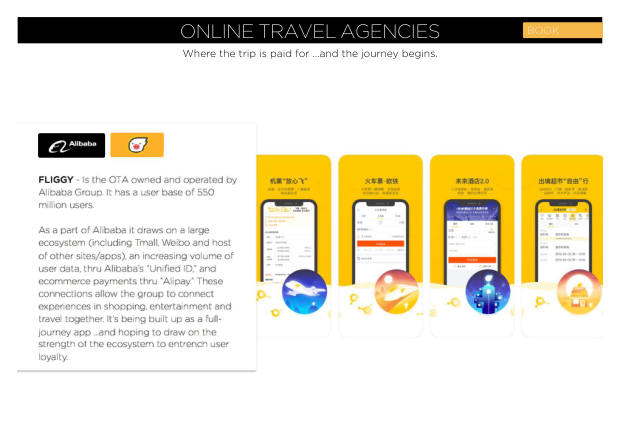
Social discovery via KOLs, Weibo and itinerary apps like Mafengwo (up to 60% of travel-blog content), booking through OTAs such as Ctrip and Fliggy, and WeChat as an end-to-end companion, especially for on-location O2O.
What is Haitao?
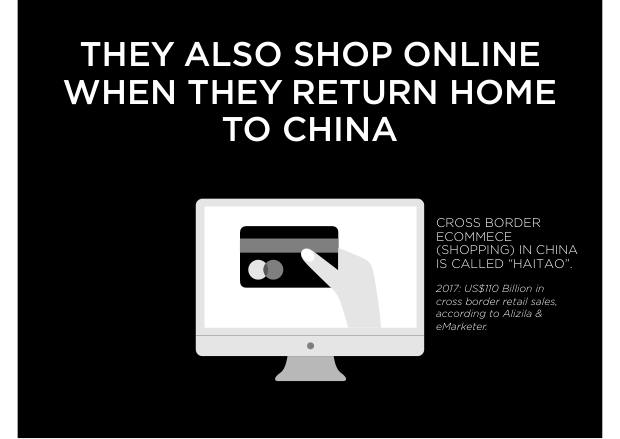
Cross-border ecommerce — Chinese buying from overseas online after returning home, estimated at US$110bn in 2017 and over US$129bn in 2018 — often through social-shopping apps like RED and Kaola.
Totem's guide to marketing to outbound Chinese travellers and cross-border shoppers, structured around a five-stage traveller journey (Dream, Plan, Book, Experience, Advocate) illustrated with brand and destination case studies. It draws on third-party data including the UNWTO, eMarketer, iResearch, Nielsen, Euromonitor and iMedia Research, alongside Totem's own analysis of the channels, apps and payment systems that reach Chinese audiences at home and abroad.
Get the full report
Leave your details — we'll email you the PDF and give you the download straight away.