2026 China Marketing & Media Trends: an era of endurance, and a K-shaped recovery
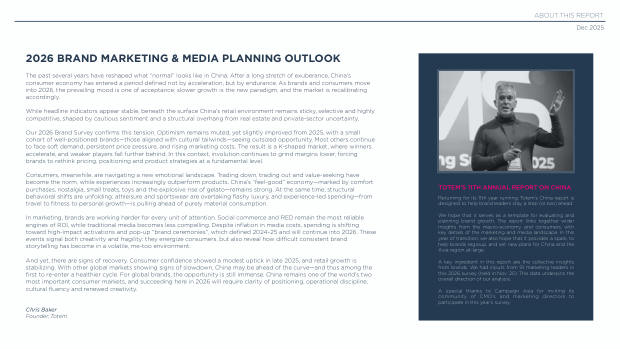
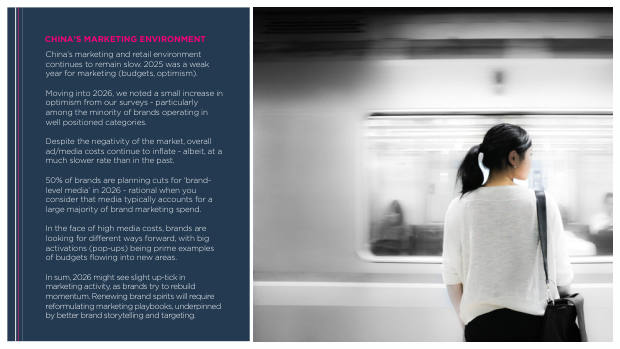
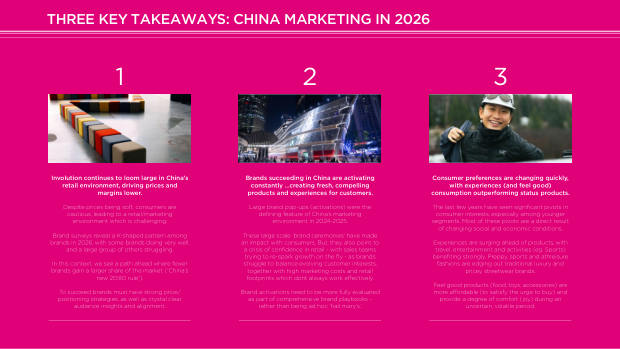
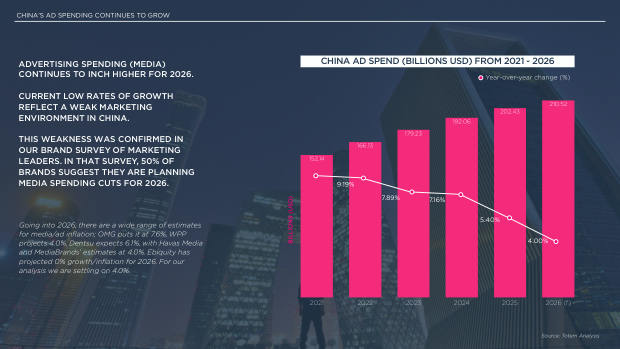
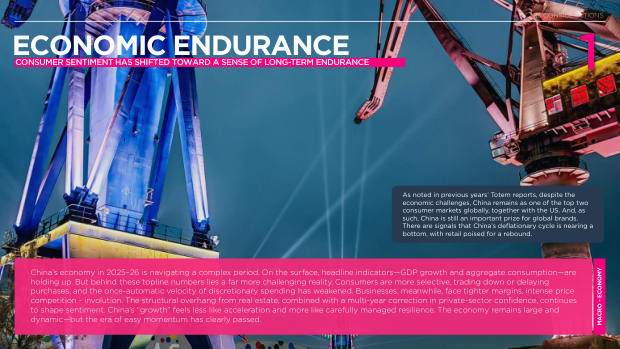
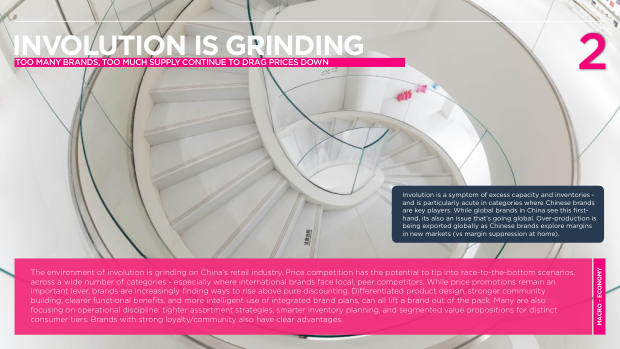
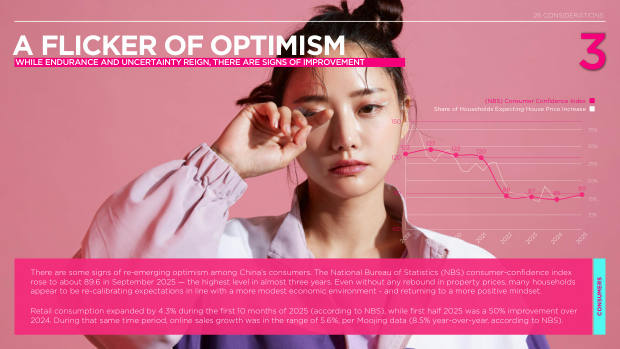
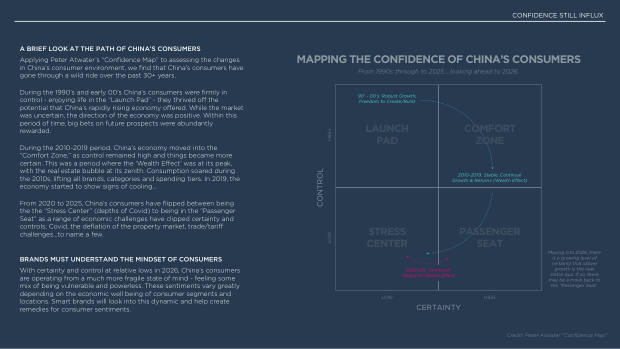
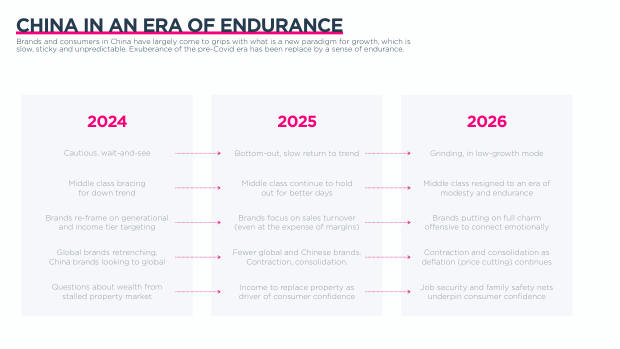
China's consumer economy has moved from acceleration to endurance. Headline indicators look stable — retail consumption rose 4.3% over the first ten months of 2025 and the NBS consumer-confidence index recovered to about 89.6 in September 2025, its highest in nearly three years — but beneath the surface the retail environment remains sticky, selective and intensely competitive. Involution continues to grind margins lower, forcing brands to rethink pricing, positioning and product at a structural level.
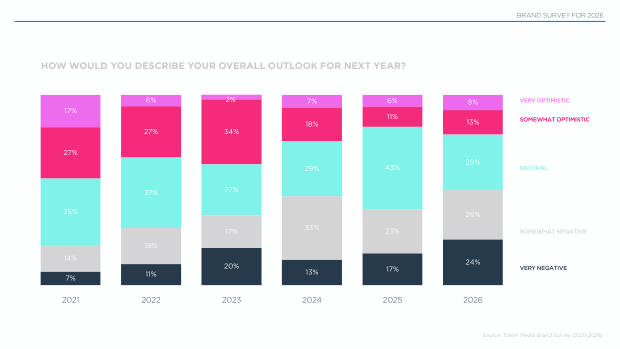
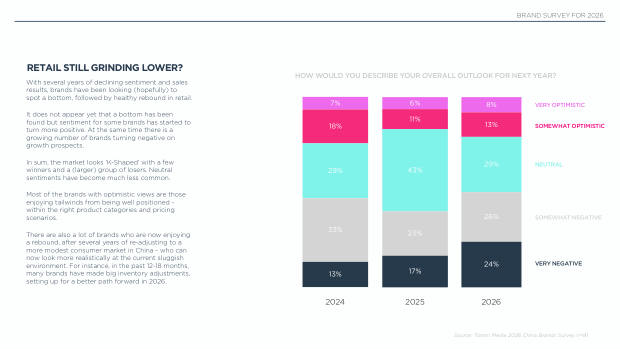
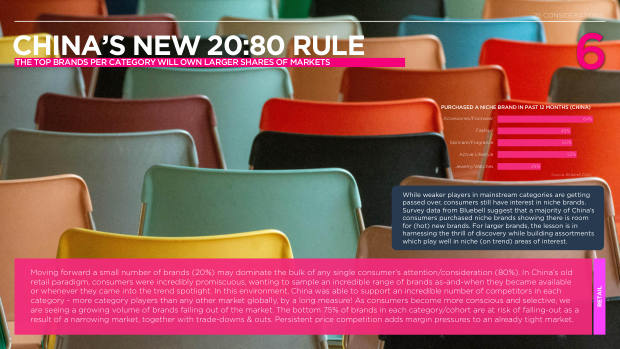
Totem's 2026 Brand Survey records optimism that is still muted but marginally improved on 2025: 21% of marketing leaders are optimistic about the year ahead against 50% negative. The result is a K-shaped market in which a well-positioned minority — brands aligned with cultural tailwinds such as athleisure — accelerate, while the larger group contends with soft demand, persistent price pressure and rising marketing costs. Totem frames this as "China's new 20:80 rule," in which a smaller number of brands command the bulk of each category.
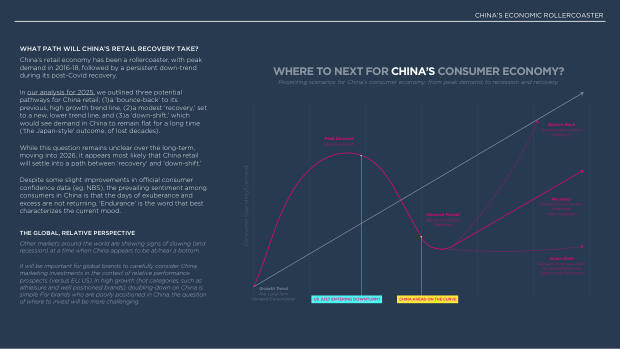
With other major economies slowing, China may be ahead of the curve and among the first to re-enter a healthier cycle. For global brands the market remains one of the world's two most important, but succeeding in 2026 will require clearer positioning, operational discipline, cultural fluency and renewed creativity rather than a wait-and-see posture.
Sentiment lifts off a low base, but stays negative.
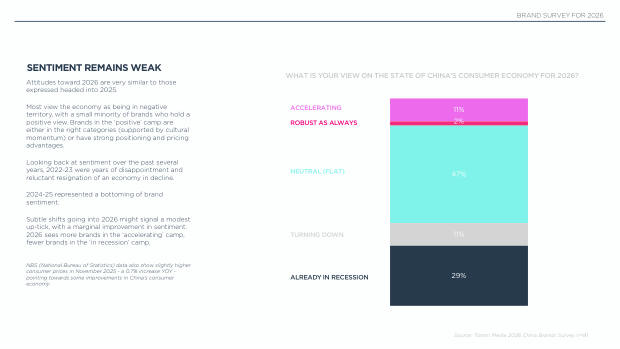
Optimism improved slightly from 2025, yet only 21% of leaders are positive on 2026 against 50% negative. On the consumer economy, 47% see it as flat, 29% already in recession and just 11% accelerating — a marginal, not decisive, turn.
A K-shaped market and the "new 20:80 rule."
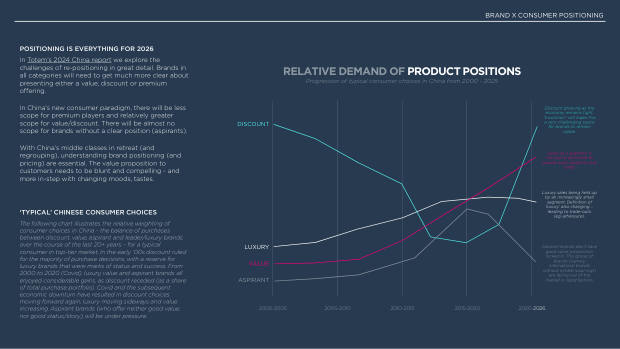
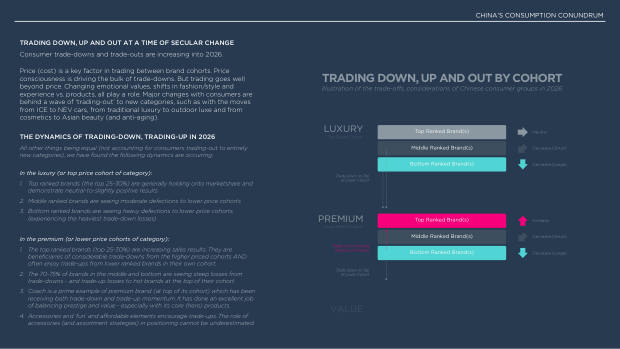
Neutral sentiment has thinned out, leaving a small cohort of winners and a larger group falling behind. Totem argues the bottom ~75% of brands in each category are at risk of being squeezed out as consumers narrow their consideration sets.
Brand awareness overtakes sales for the first time in years.
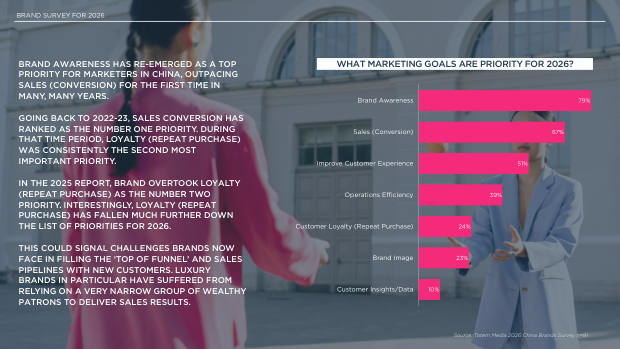
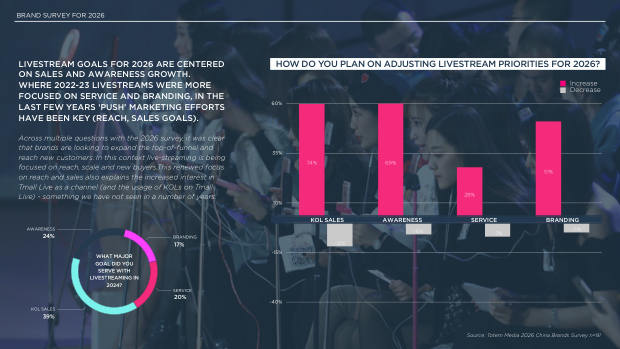
Awareness ranked as the top 2026 priority at 79%, ahead of sales conversion at 67% — a reversal after several years in which conversion led. Customer loyalty fell sharply down the list, pointing to difficulty refilling the top of the funnel.
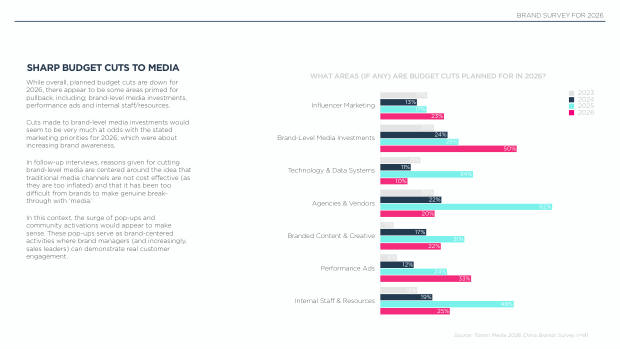
Media cuts sit awkwardly beside the awareness push.
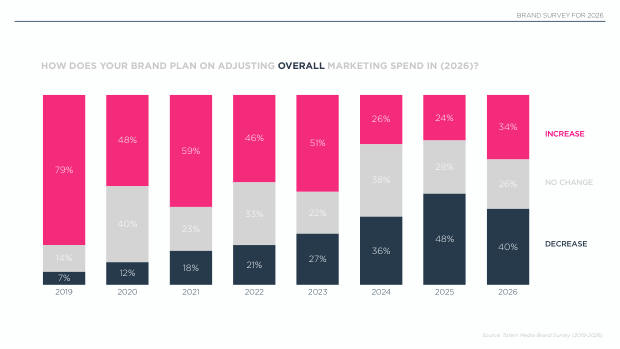
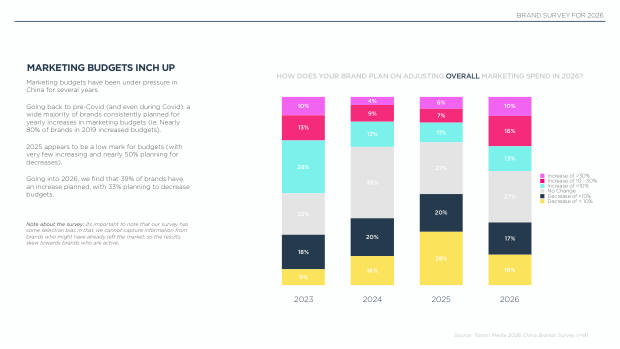
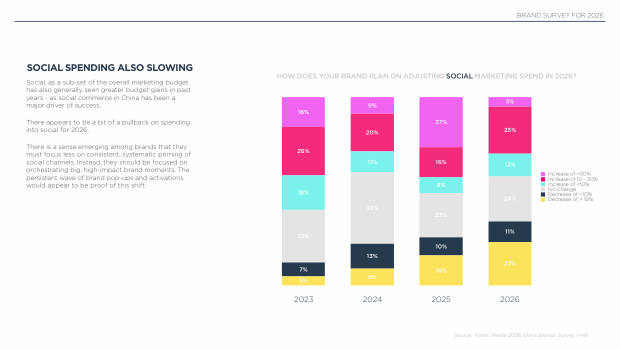
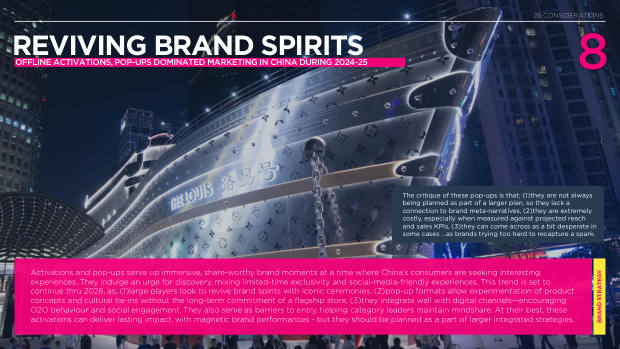
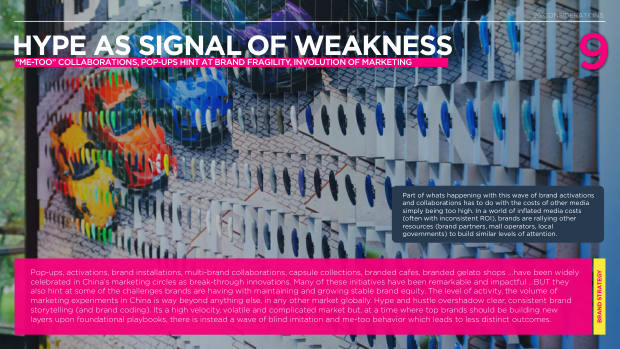
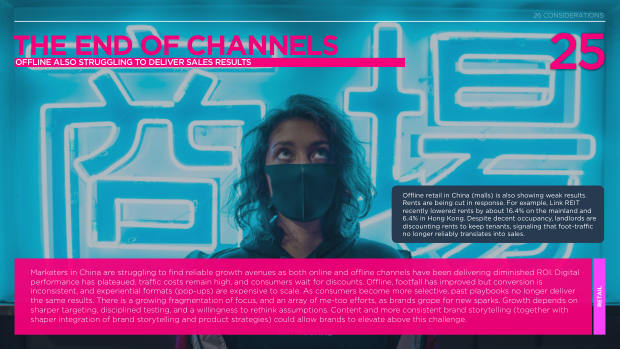
Half of brands plan to cut brand-level media in 2026, citing inflated, low-cost-effectiveness traditional channels. Budgets are shifting toward high-impact activations and pop-up "brand ceremonies" — which Totem reads as both a sign of creativity and of fragility in consistent brand storytelling.
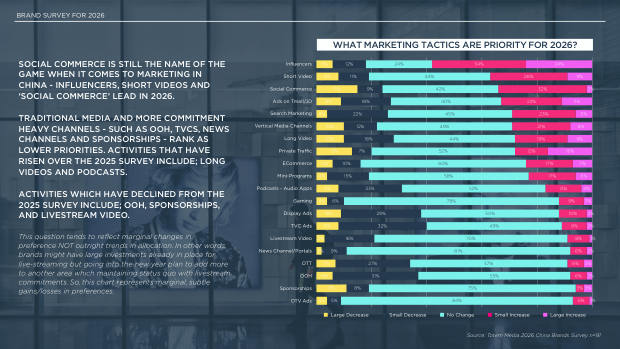
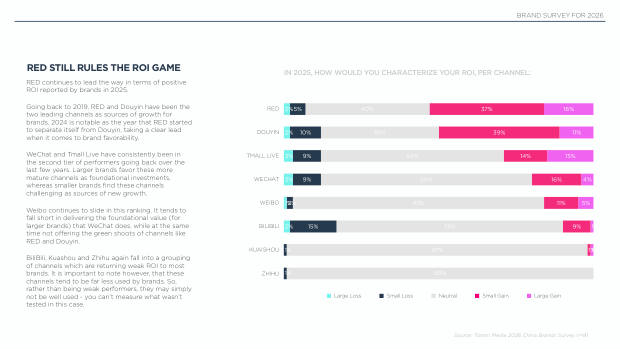
Social commerce still carries digital; RED leads on ROI.
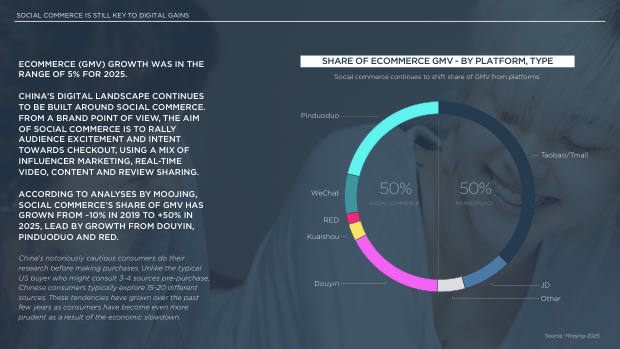
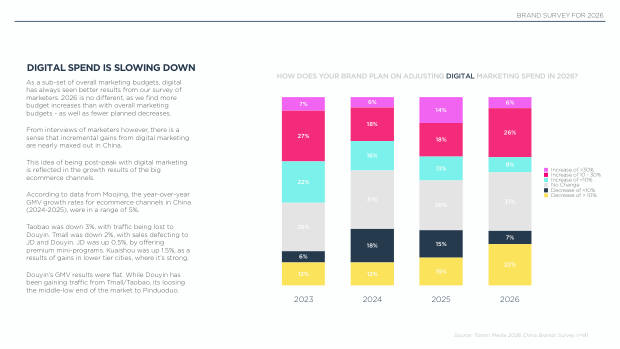
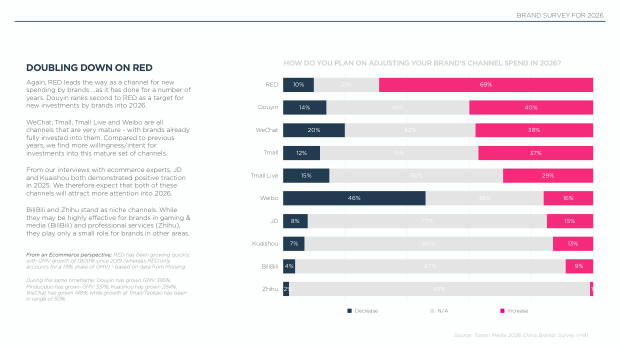
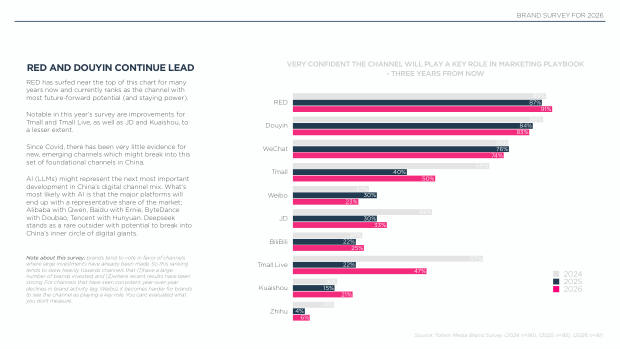
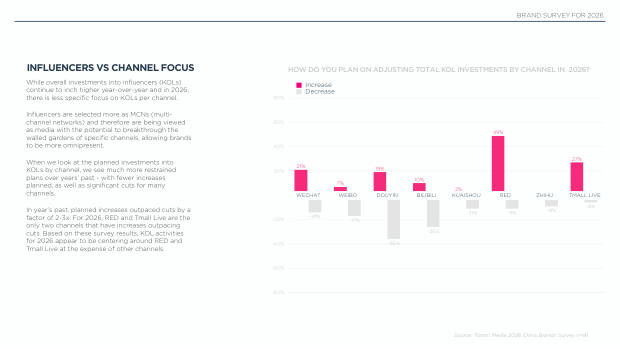
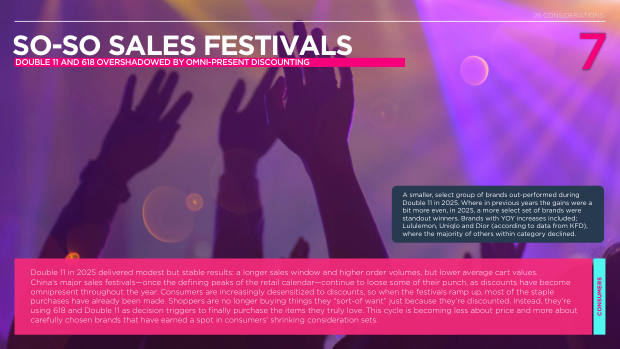
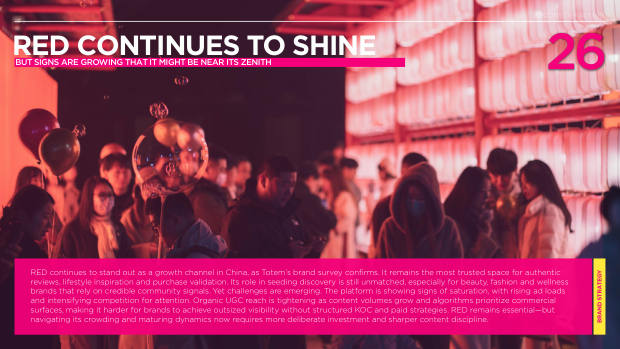
Social commerce now accounts for more than 50% of ecommerce GMV, up from roughly 10% in 2019, led by Douyin, Pinduoduo and RED. Ecommerce GMV growth was around 5% in 2025. RED again reported the strongest positive ROI of any channel and is the top target for new channel and KOL spend, though the report flags growing saturation.
Athleisure is displacing flashy luxury.
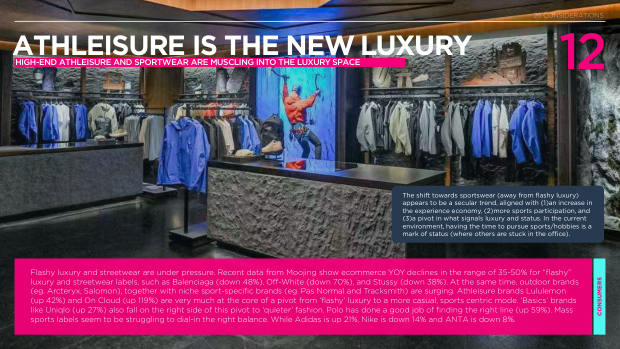
Ecommerce data show sharp declines for "flashy" labels — Balenciaga down 48%, Off-White down 70%, Stussy down 38% — while Lululemon rose 42%, On Cloud 119%, Polo 59% and Uniqlo 27%. Mass sportswear is mixed: Adidas up 21%, Nike down 14%, ANTA down 8%.
Experiences and "feel-good" spending outpace products.
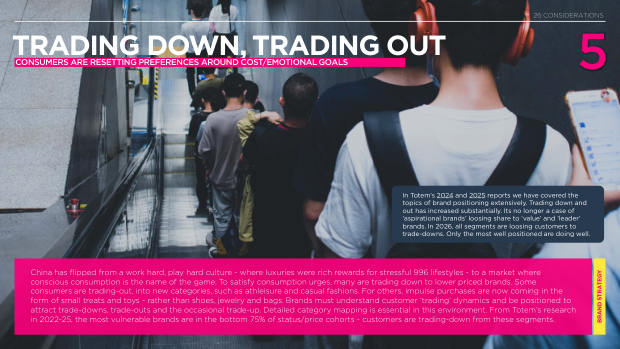
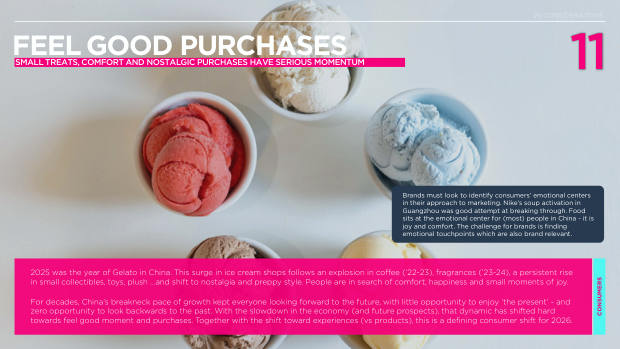
Value-seeking, trading down and trading out are now the norm. One cited survey found 56.3% of consumers chose "happy spending" in 2025, up 16.2 points on 2024, while travel, fitness and small treats — 2025 was "the year of gelato" — pull ahead of status products.
Diversification away from China has largely run its course.
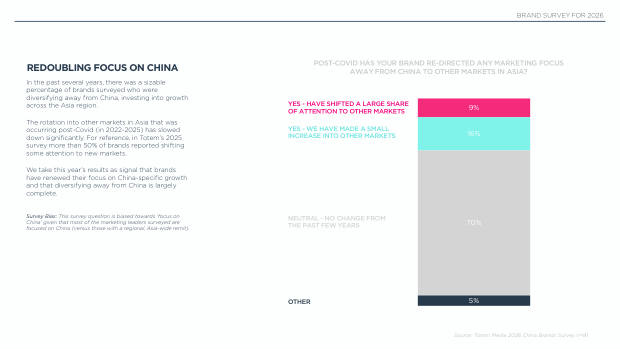
70% of brands report no change in their China focus and only 9% shifted a large share of attention elsewhere, against more than 50% signalling some shift in the 2025 survey — a renewed concentration on China-specific growth.
What is the marketing outlook for China in 2026?
Cautiously improved but still negative. 21% of surveyed leaders are optimistic against 50% negative, with a small, well-positioned minority seeing outsized opportunity in a K-shaped market.
What is the "new 20:80 rule"?
Totem's shorthand for a narrowing market in which a small share of brands command most of consumers' attention and spend, leaving the bottom ~75% of each category exposed to trade-downs and price competition.
Why are brands cutting media while prioritising awareness?
Half of brands view traditional media as too inflated and hard to break through on, and are redirecting budgets into pop-ups and activations — even as brand awareness returns as the top stated goal at 79%.
Which channels are working?
Social commerce, now over 50% of GMV, remains the engine, with RED reporting the strongest ROI and drawing the most planned new investment; ecommerce GMV grew only around 5% in 2025.
Who produces the report and how large is the sample?
Totem's 11th annual China report, built on a survey of 91 China marketing leaders conducted in November 2025 with Campaign Asia, linking macro and consumer shifts to the marketing and media landscape.
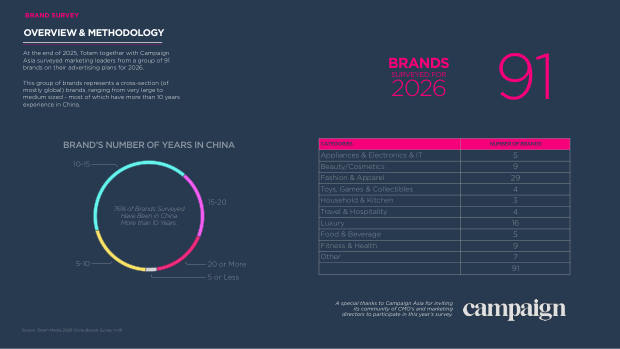
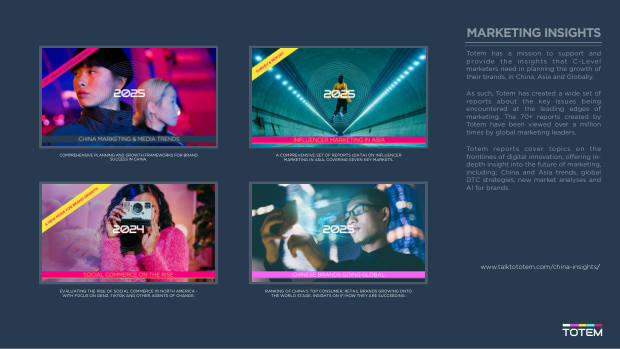
Totem's 11th consecutive annual China report, designed to help brand leaders stay a step ahead. It links macro-economic and consumer shifts to the detail of China's marketing and media landscape, anchored by a survey of 91 China marketing leaders conducted in November 2025 in partnership with Campaign Asia. The surveyed group is a cross-section of mostly global brands, from very large to medium-sized, 76% of which have more than ten years' experience in China.
Get the full report
Leave your details — we'll email you the PDF and give you the download straight away.