2024 China Marketing & Media Trends: marketing an inflection point into deflation
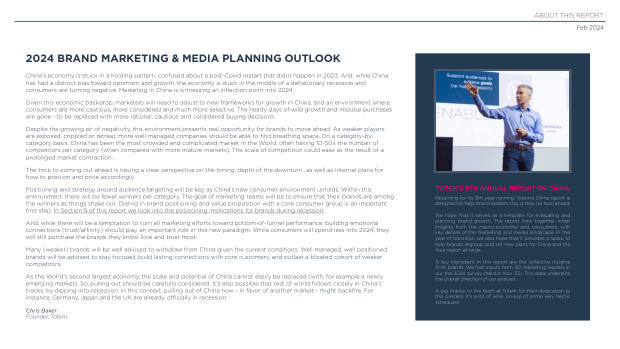
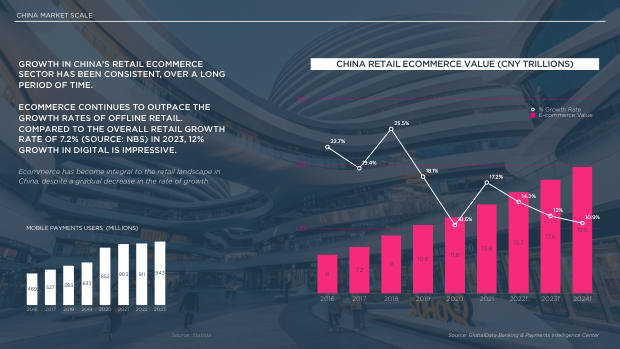
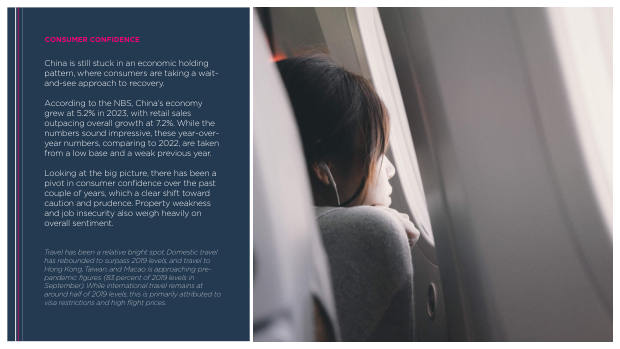
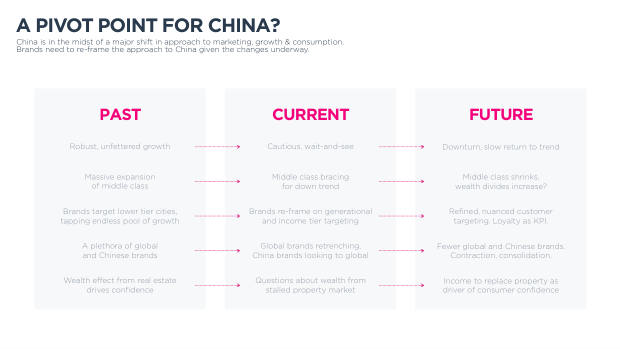
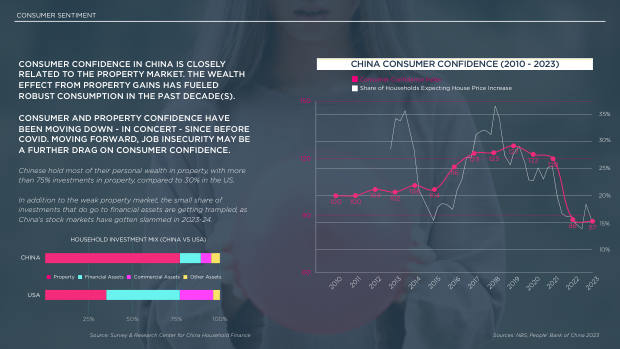
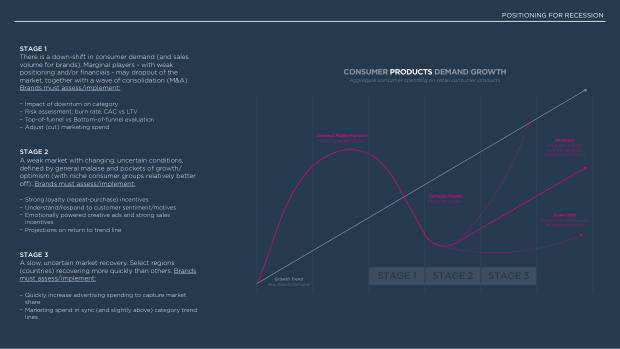
China's post-Covid restart did not arrive in 2023, and the economy has settled into a deflationary recession as consumers turn cautious and negative. Official 2023 figures looked steady — GDP grew 5.2% and retail sales 7.2% — but from a weak base. Marketing in China is at an inflection point, with the heady era of impulse buying giving way to rational, considered, value-led decisions.
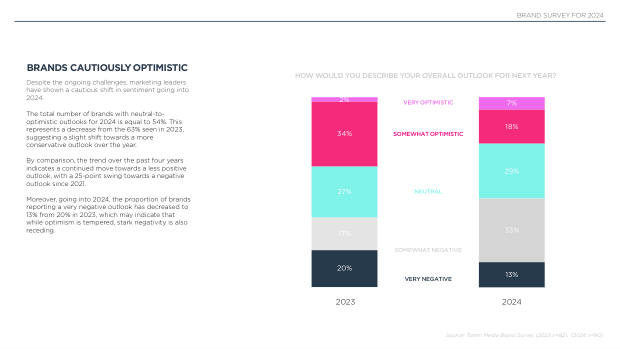
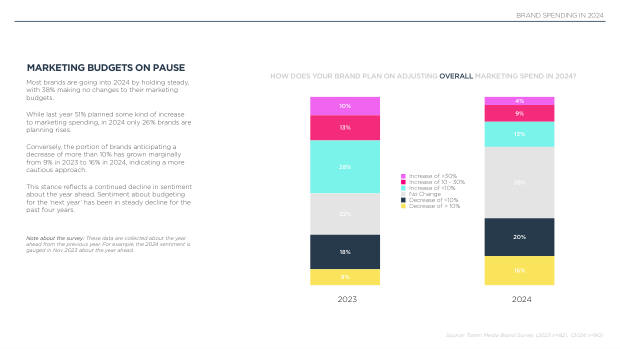
Totem's survey of 90 marketing leaders records a steady erosion of sentiment: neutral-to-optimistic outlooks for 2024 fell to 54% from 63% a year earlier, and only 26% of brands planned to raise marketing budgets, down from 51% for 2023. Efficiency, quality and impact — not reach — are the stated priorities. As weaker players retreat, better-managed brands can find breathing space in what has long been the world's most crowded market, often carrying 10–50x the competitors per category of a mature market.
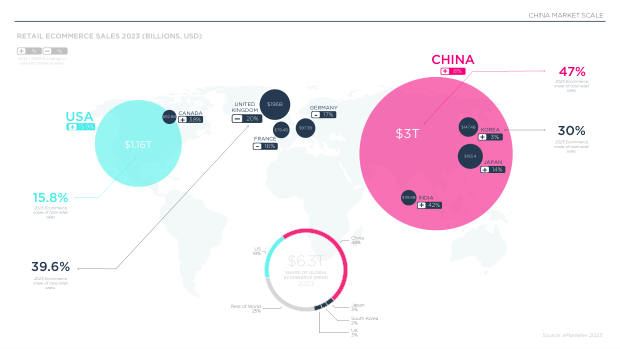
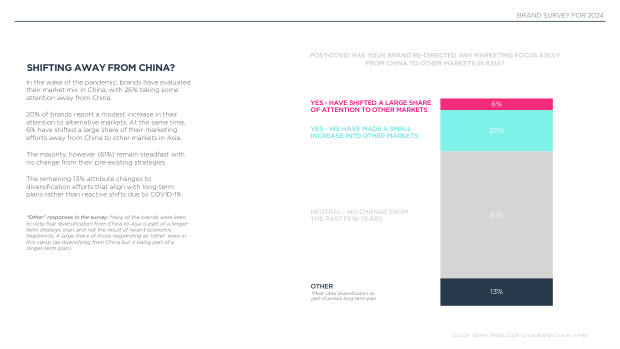
China remains the world's second-largest economy and its scale is not easily replaced, so retreat should be weighed carefully — particularly as developed markets such as Germany, Japan and the UK entered recession themselves. The report frames 2024 as a year to reposition around a core audience and outlast a bloated field, not to abandon the market.
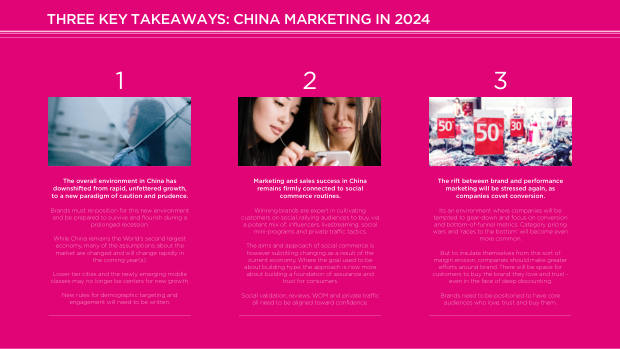
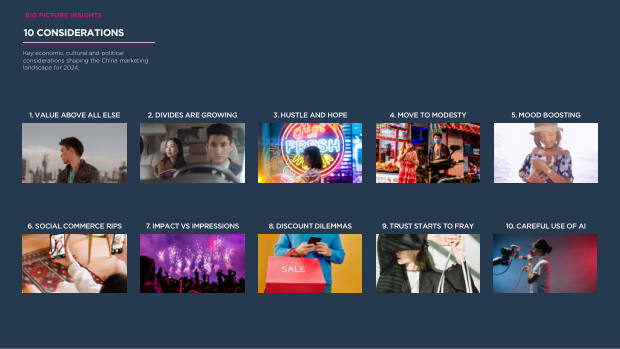
Value moves above all else.
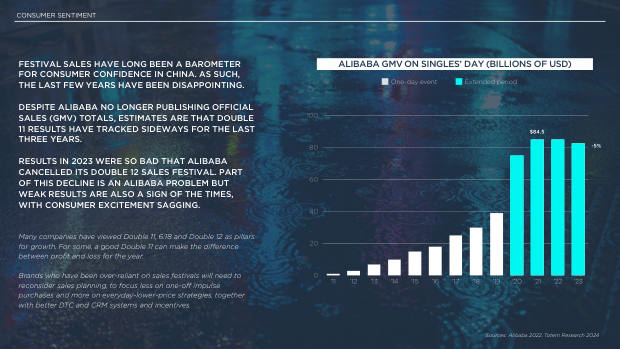
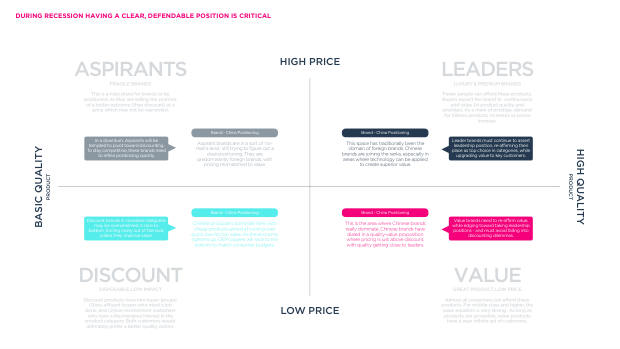
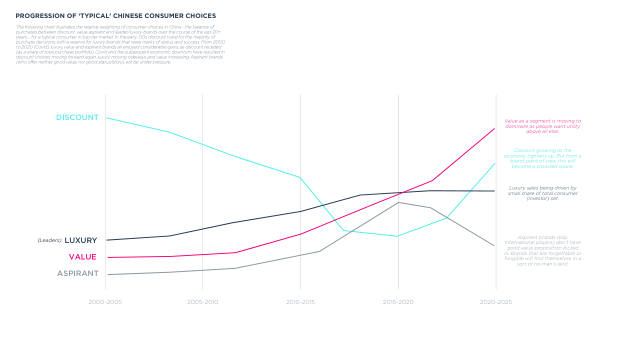
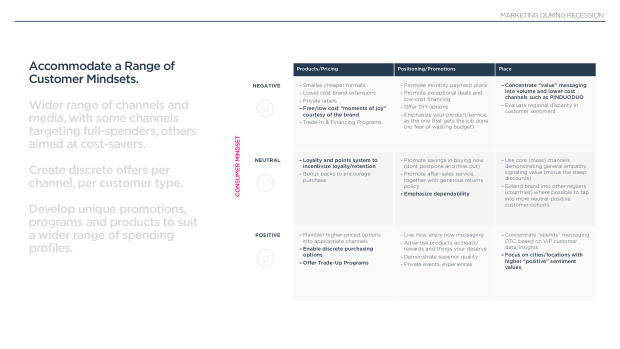
Consumption has shifted from aspiration to rational, measured buying. Weak shopping-festival results and the rise of Pinduoduo point to everyday-low-pricing displacing periodic discounts, and to brands needing to demonstrate value rather than manufacture hype.
Budgets pause; efficiency dominates.
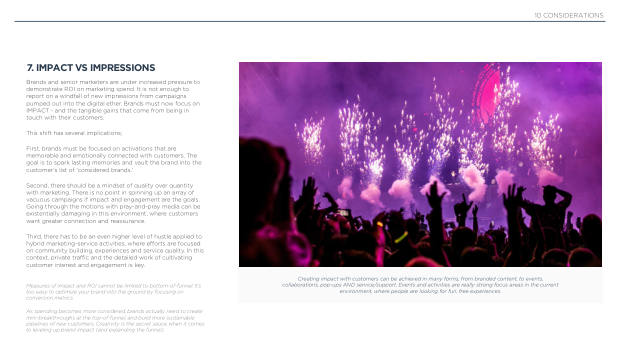
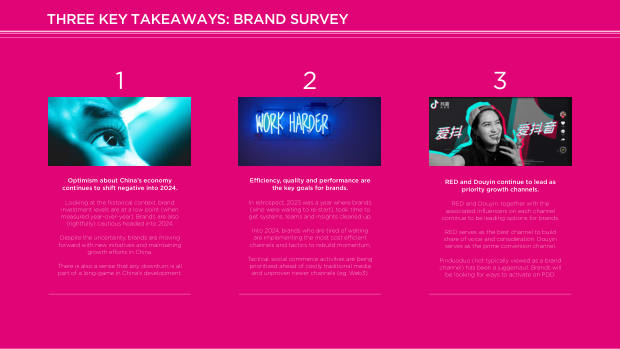
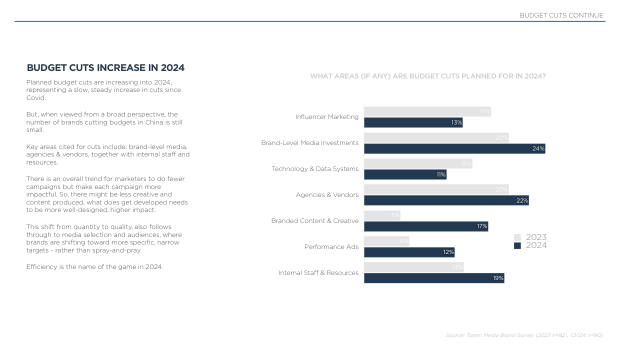
38% of brands plan no change to marketing spend and only 26% an increase, while those cutting by more than 10% rose to 16% from 9%. The theme is fewer but higher-impact campaigns, and narrower targeting over spray-and-pray.
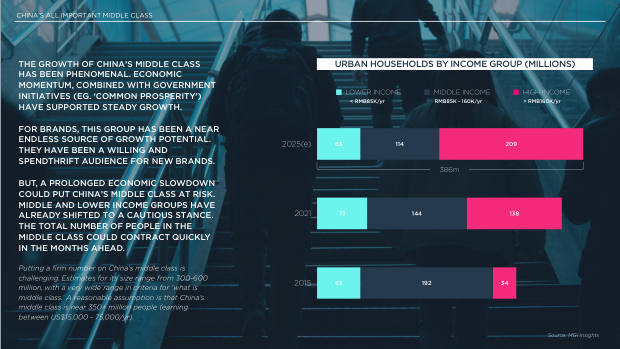
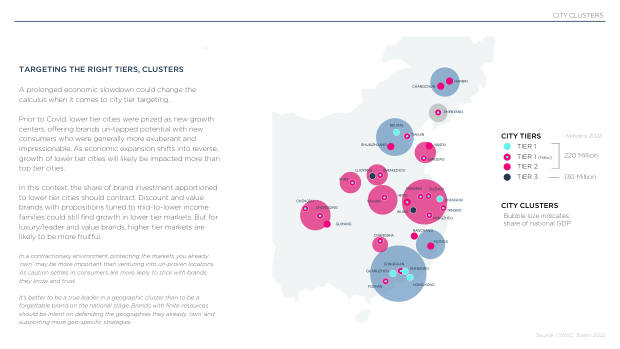
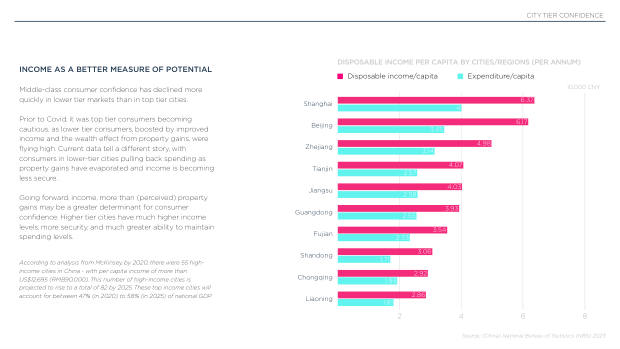
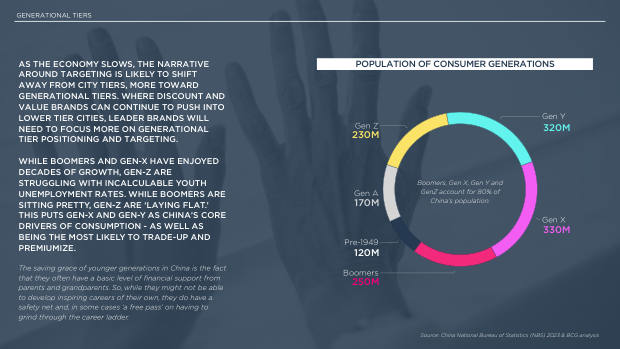
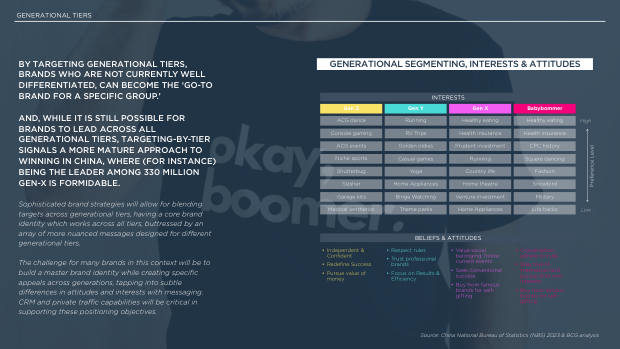
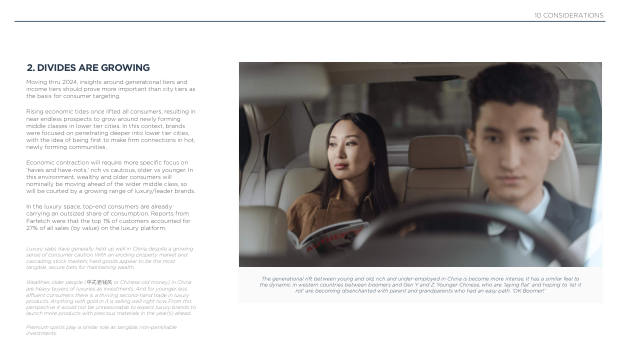
Divides widen — target by generation and income, not just city tier.
Economic contraction sharpens the split between wealthy/older and cautious/younger consumers. In luxury, concentration is stark: on Farfetch the top 1% of customers accounted for 27% of sales by value.
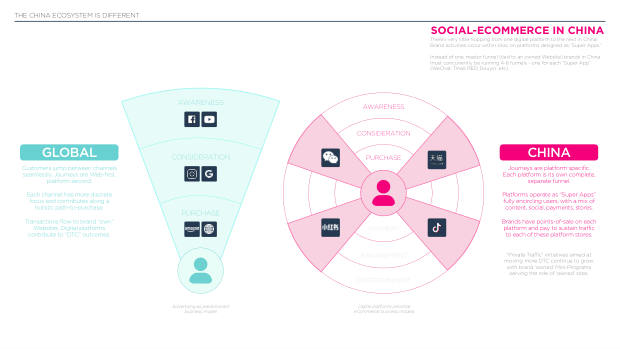
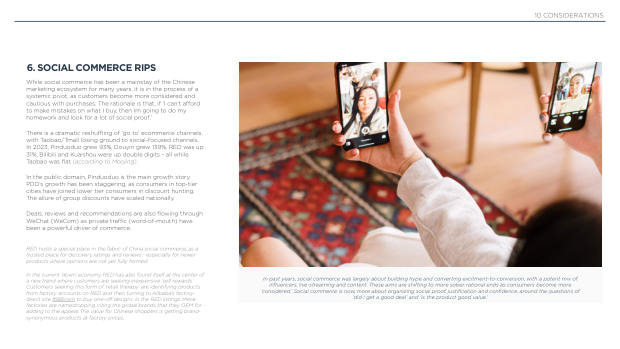
Social commerce reshuffles toward social proof.
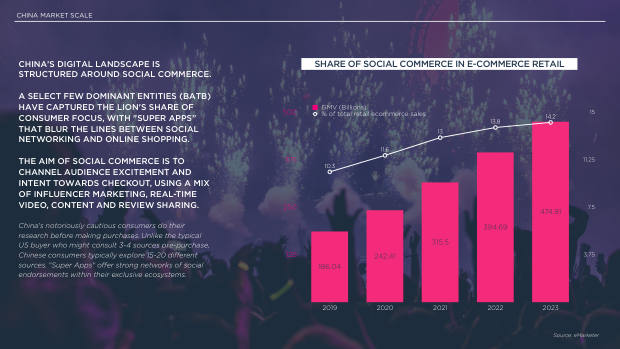
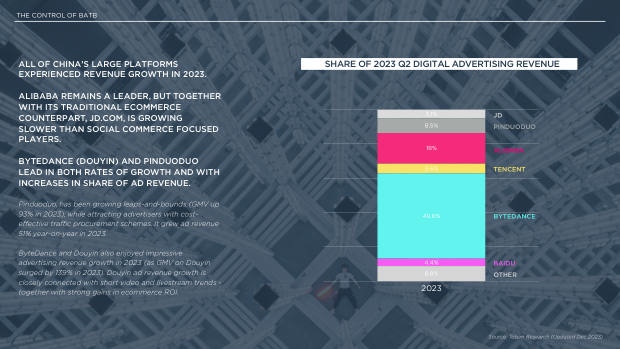
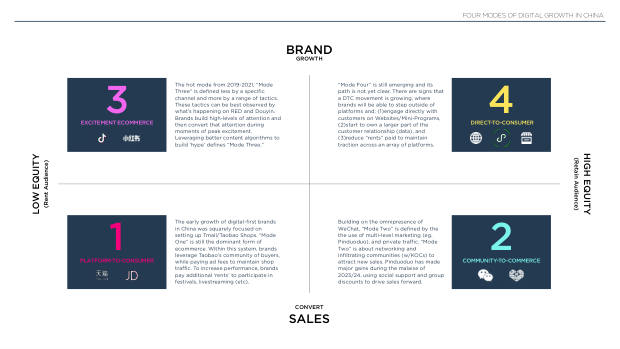
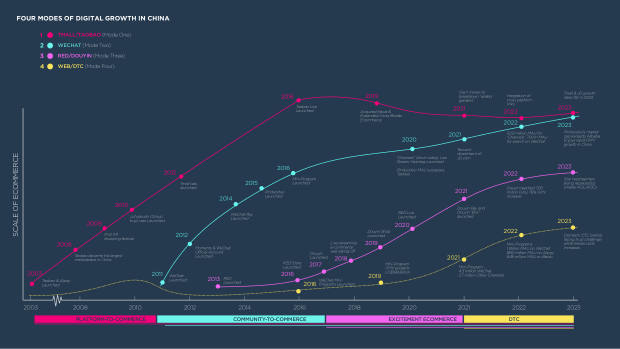
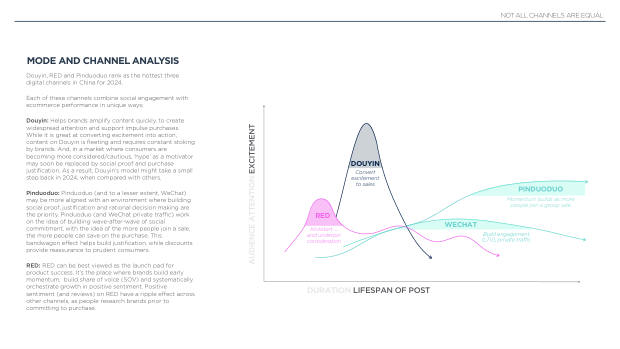
With cautious buyers doing more homework — Chinese consumers typically consult 15–20 sources pre-purchase versus 3–4 in the US — channels realigned in 2023: Pinduoduo grew 93%, Douyin 139% and RED 31% while Taobao was flat. Social commerce's job shifts from building hype to organising reassurance.
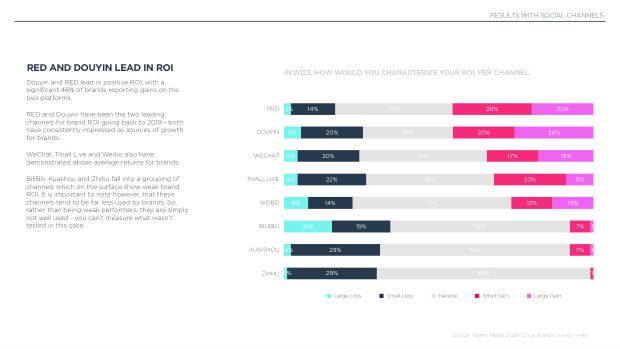
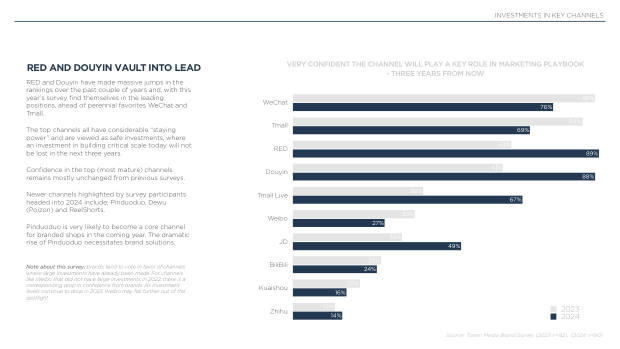
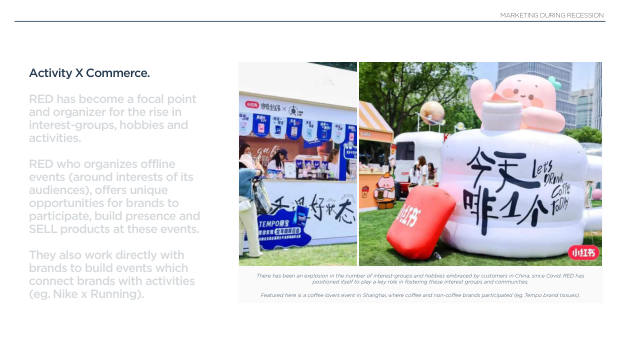
RED and Douyin lead on returns and new spend.
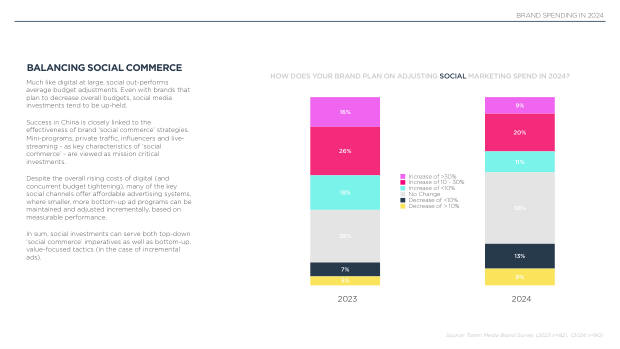
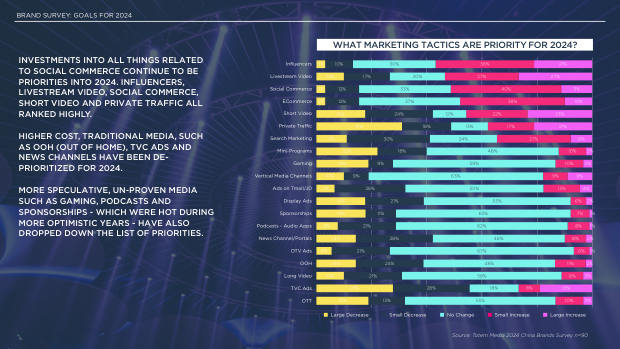
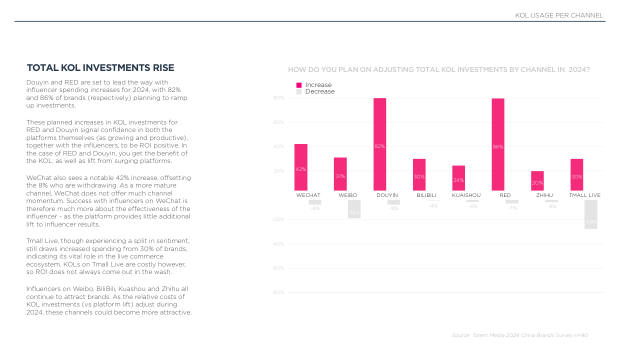
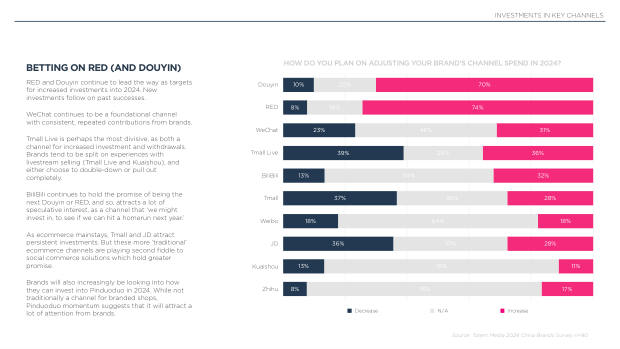
46% of brands reported ROI gains on RED and Douyin, the two strongest channels since 2019. For 2024, 86% of brands planned to raise KOL spend on RED and 82% on Douyin; WeChat drew a 42% increase.
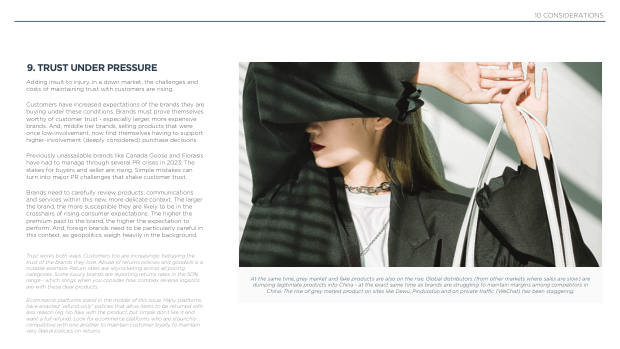
Trust becomes costlier to hold.
Higher-priced and foreign brands face rising expectations, while abuse of returns cuts the other way — some luxury brands reported return rates near 50%, compounded by grey-market and refund-only pressures.
Digital still dominates, but is over-weighted.
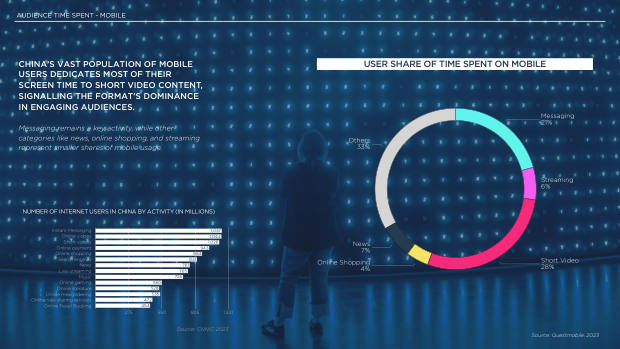
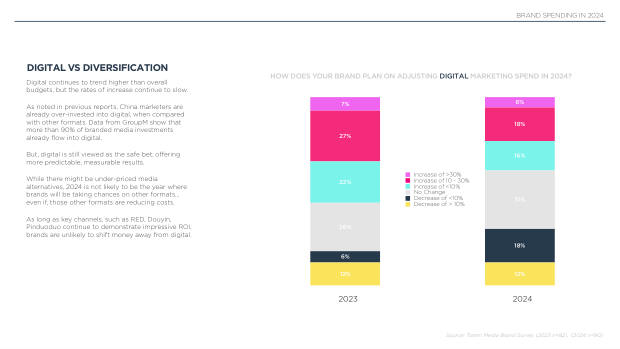
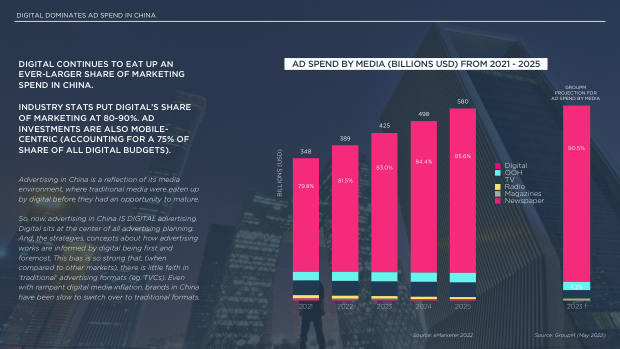
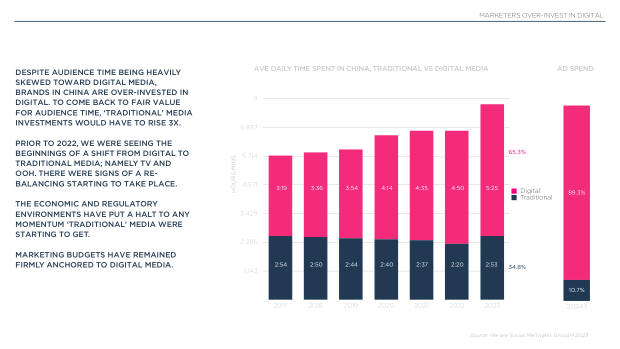
Digital accounts for 80–90% of ad spend (roughly 75% of it mobile) against a much smaller share of user time, leaving traditional formats under-priced. Even so, brands held to digital in 2024 as the measurable, safe bet.
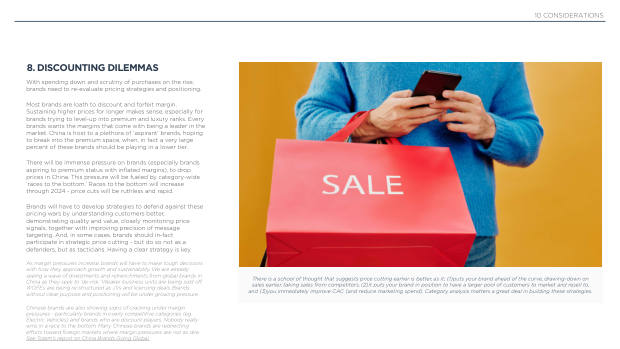
Discounting dilemmas and retrenchment.
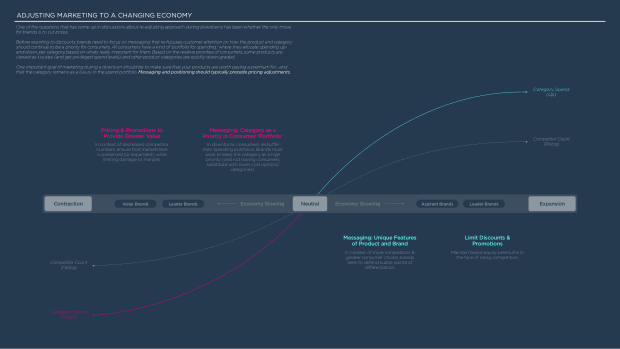
Category-wide "races to the bottom" intensified, driving divestments, WOFE-to-JV restructurings and licensing deals, with margin pressure most acute in over-competitive categories such as EVs.



















What is the outlook for marketing in China in 2024?
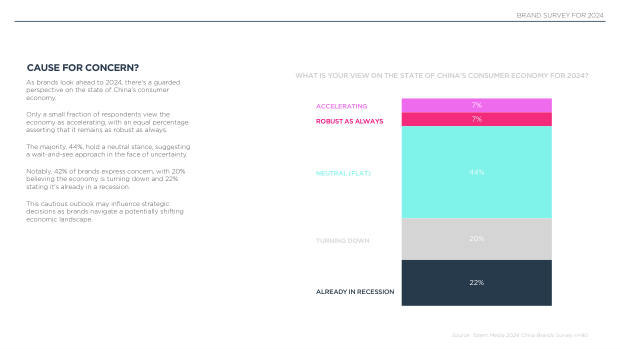
Cautious and softening. Neutral-to-optimistic outlooks fell to 54% from 63%, and 42% of leaders saw the consumer economy turning down or already in recession.
How are marketing budgets changing?
Mostly on pause — 38% of brands plan no change and only 26% an increase, down from 51% a year earlier, with a growing minority cutting by more than 10%.
What matters most to Chinese consumers now?
Value. Buying has become more rational and considered, favouring utility and everyday low pricing over novelty and festival-driven impulse purchases.
Which channels are brands prioritising?
RED and Douyin, where 46% of brands reported ROI gains and the great majority planned to raise KOL investment; Pinduoduo's rise is pushing brands to find ways to activate there too.
Who produces the report and how large is the sample?
Totem's 9th annual China report, built on a survey of 90 China marketing leaders conducted in November 2023, connecting the macro-economy and consumer shifts to the marketing and media landscape.
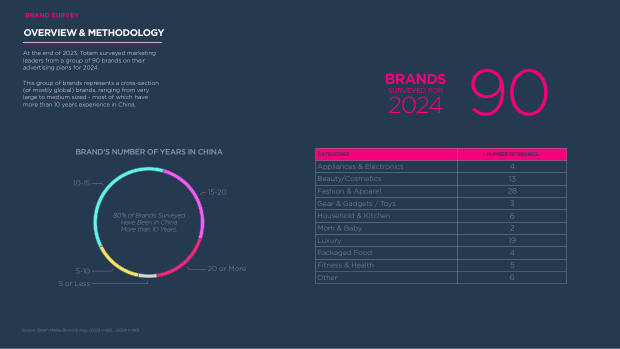
Totem's 9th consecutive annual China report, designed to help brand leaders stay a step ahead. It links macro-economic and consumer shifts to the detail of China's marketing and media landscape, anchored by a survey of 90 marketing leaders conducted in November 2023. Respondents are a cross-section of mostly global brands, from very large to medium-sized, 80% of which have more than ten years' experience in China.
Get the full report
Leave your details — we'll email you the PDF and give you the download straight away.