2023 China Marketing & Media Trends: re-opening, and a pivot the market must navigate
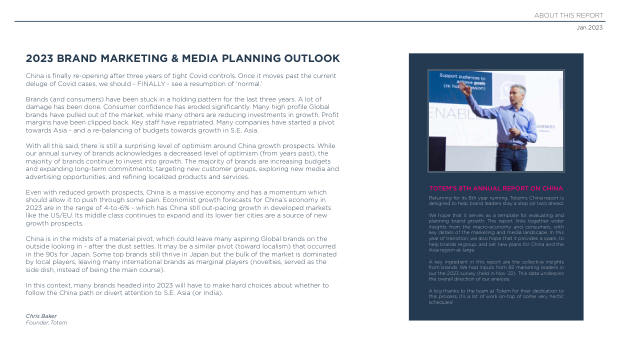
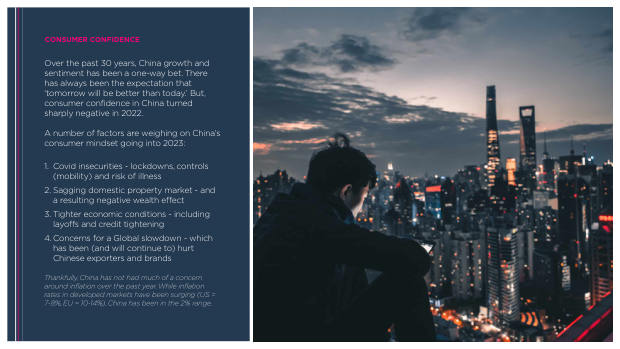
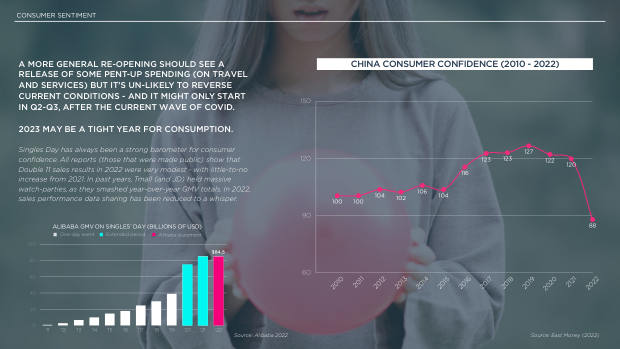
China is re-opening after three years of tight Covid controls, and once the current wave of cases passes, brands expect a resumption of "normal." The intervening period did real damage: consumer confidence eroded sharply, high-profile global brands exited, margins were clipped and many companies began re-balancing budgets toward Southeast Asia. Yet a surprising level of optimism about China's long-run prospects remains.
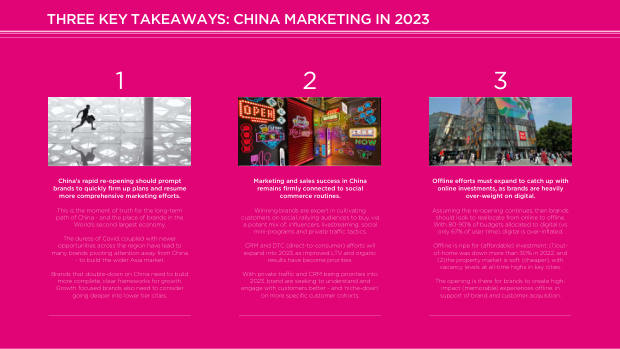
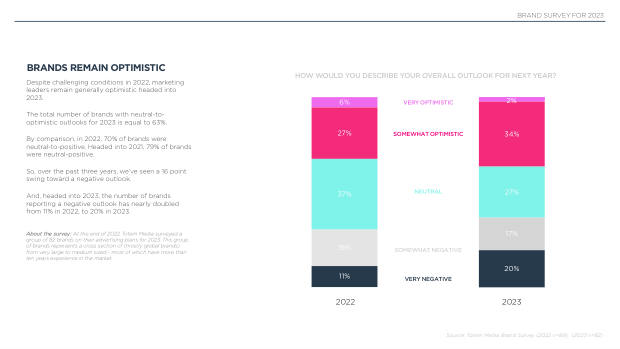
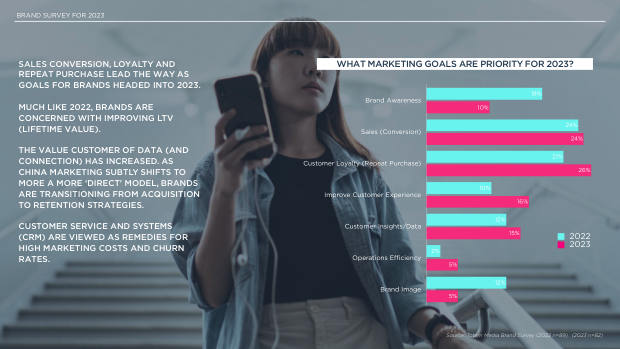
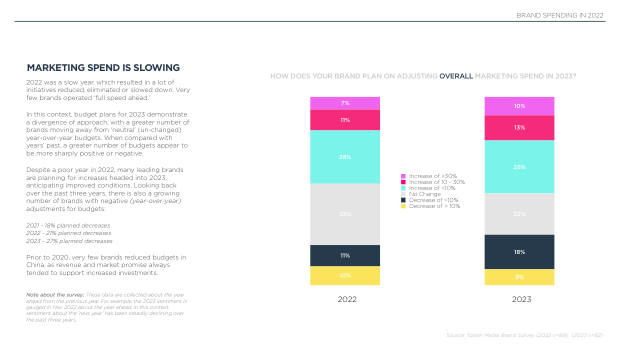
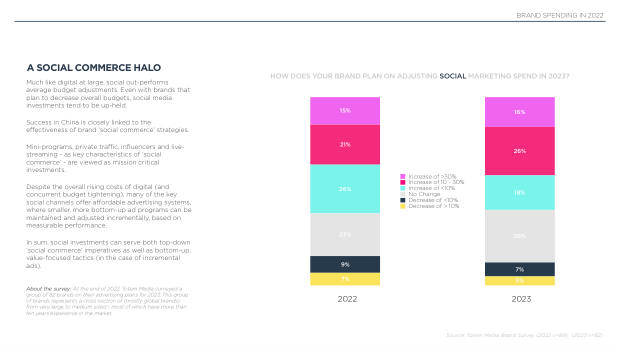
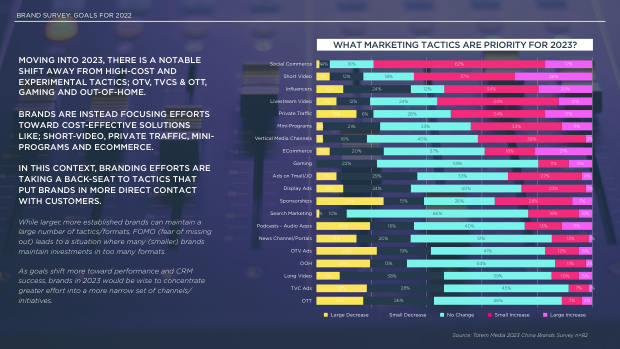
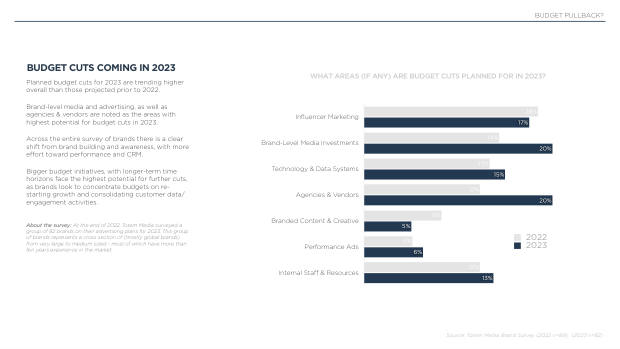
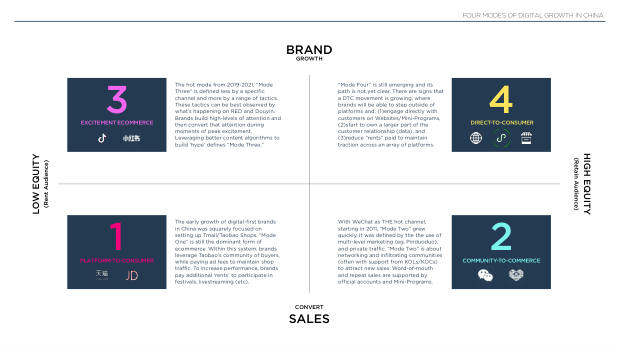
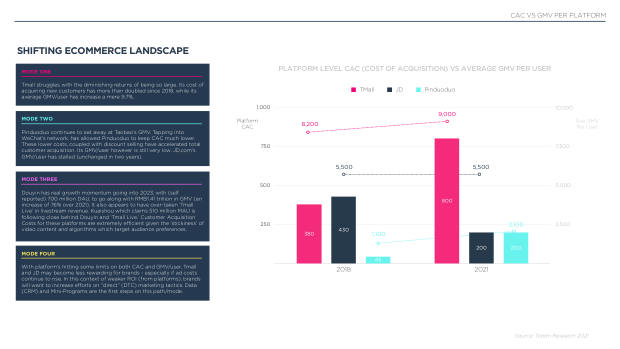
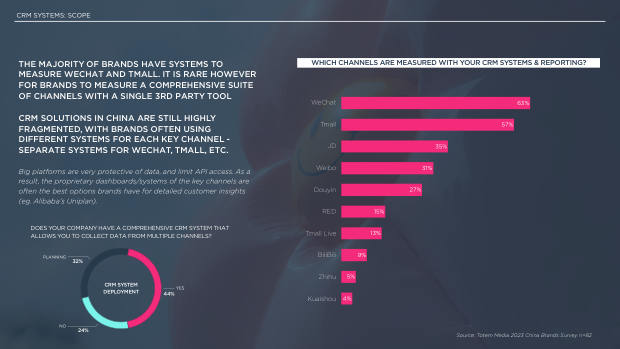
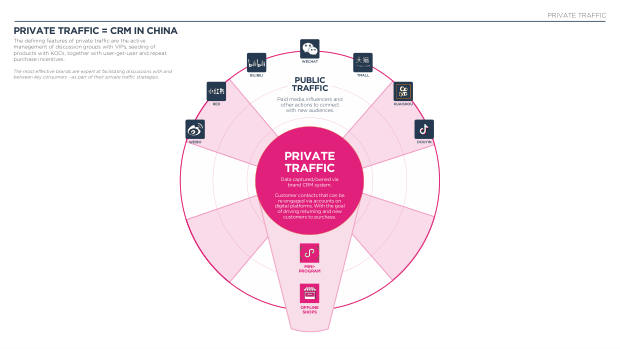
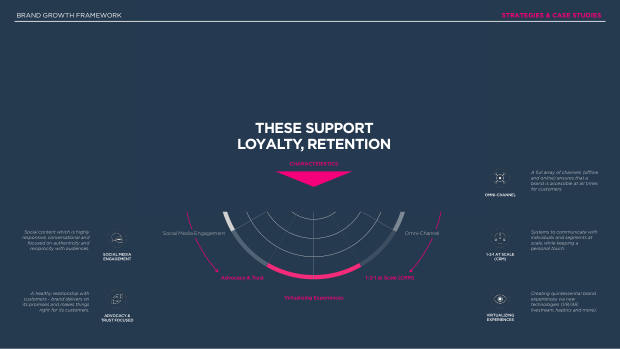
Totem's survey of 82 marketing leaders records lower but still-resilient sentiment: neutral-to-optimistic outlooks for 2023 held at 63%, down from 70% for 2022, a 16-point swing toward negative over three years, with very-negative responses nearly doubling from 11% to 20%. Most brands are still increasing budgets and long-term commitments, but the emphasis has moved to CRM, DTC and "private traffic" — connecting with and retaining customers — at the expense of costly top-of-funnel brand spend.
The report frames 2023 as a moment of truth. With economist forecasts for China's economy in the 4–6% range — still outpacing the US and EU — the market retains momentum, but China is in the midst of a material pivot toward localism reminiscent of Japan in the 1990s. Many brands face a hard choice between doubling down on China and diverting attention to Southeast Asia or India.
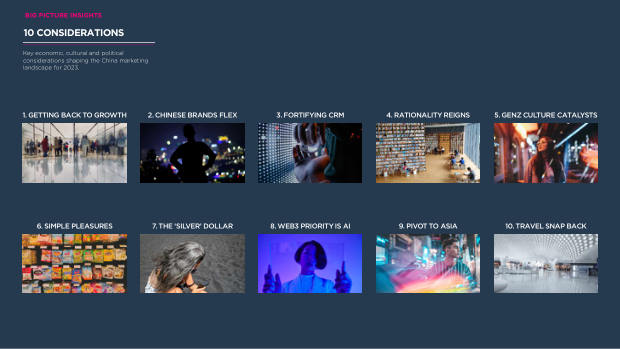
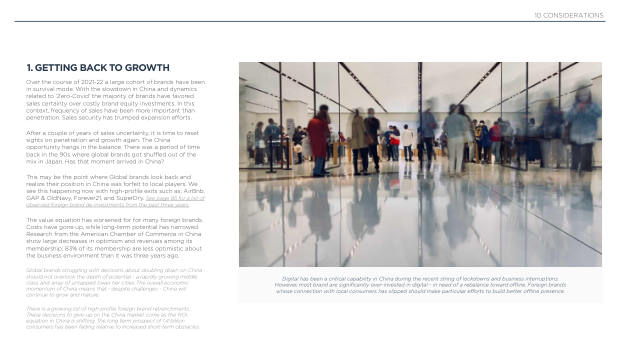
Getting back to growth — and a possible "Japan moment."
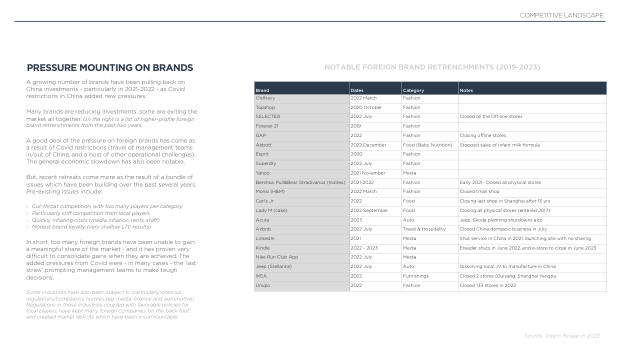
After two years in survival mode, brands must reset from sales certainty to penetration and growth. High-profile exits (AirBnb, Gap/Old Navy, Forever 21, SuperDry) and the 83% of AmCham members less optimistic than three years ago raise the question of whether global brands are being shuffled to the market's margins, as they were in 1990s Japan.
Chinese brands flex home-court advantages.
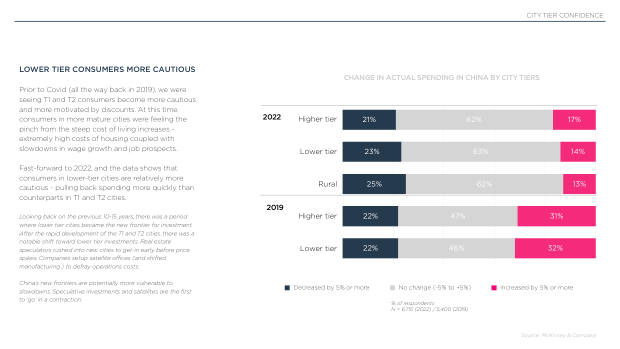
The decline of foreign brands looks increasingly systemic rather than boycott-driven: Euromonitor data show foreign apparel share fell from 47% to 40% (2013–2021) and infant formula from 52% to 35%. Local players win on pricing, iteration speed and operational fit, especially as growth shifts to lower-tier cities.
Fortifying CRM and DTC.
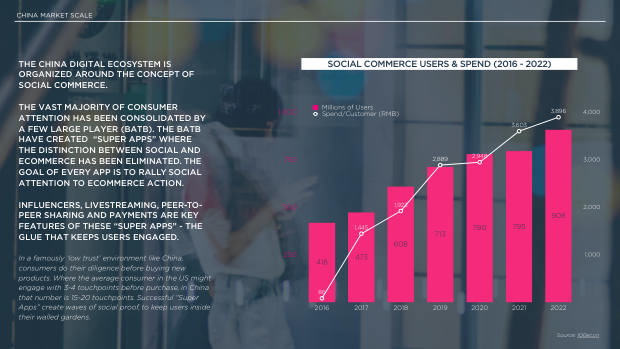
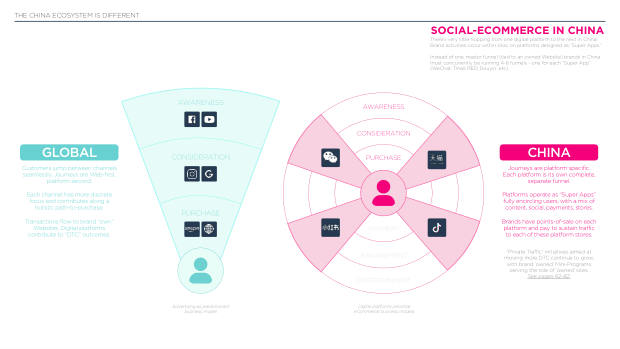
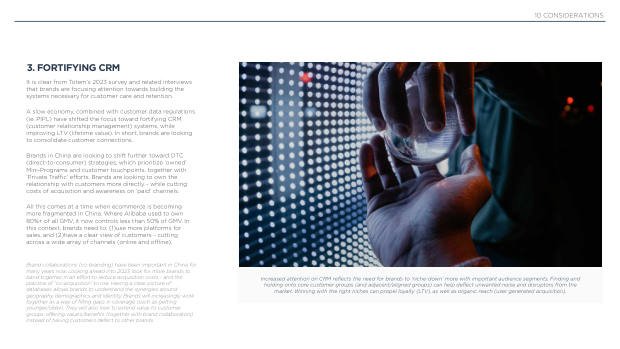
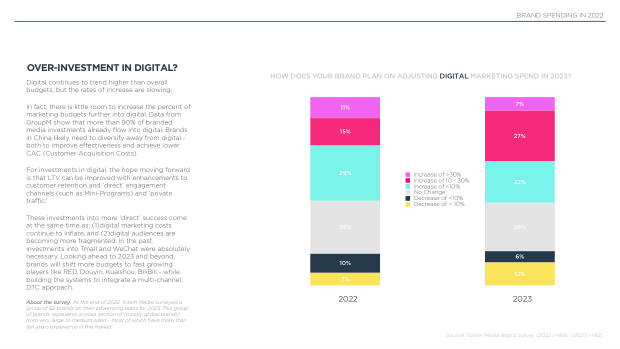
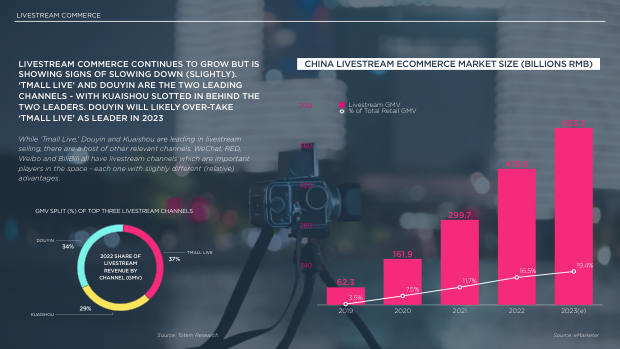
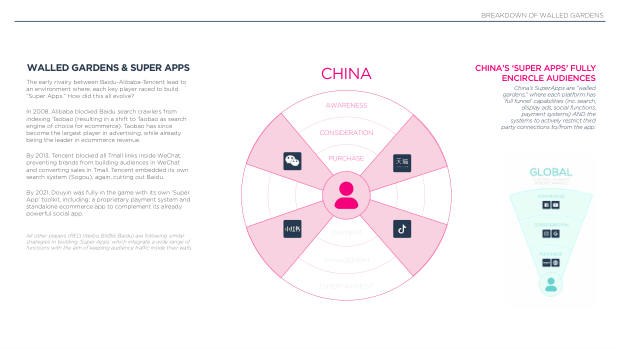
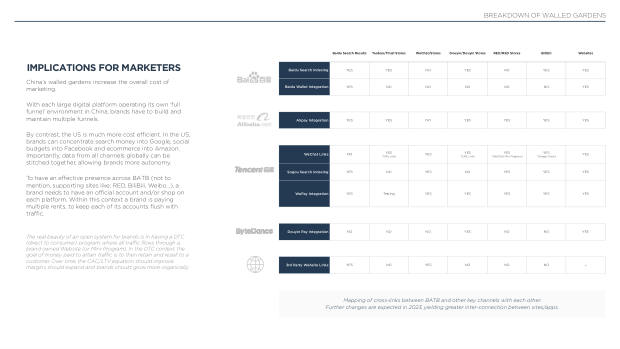
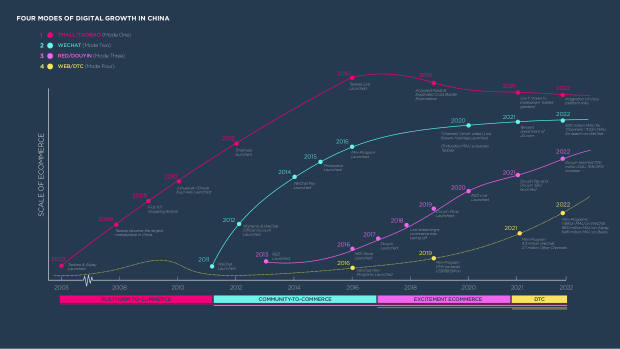
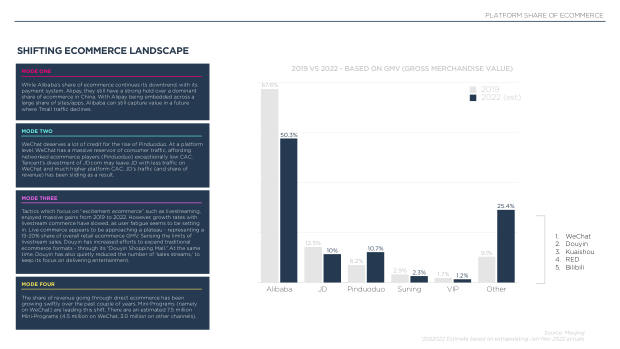
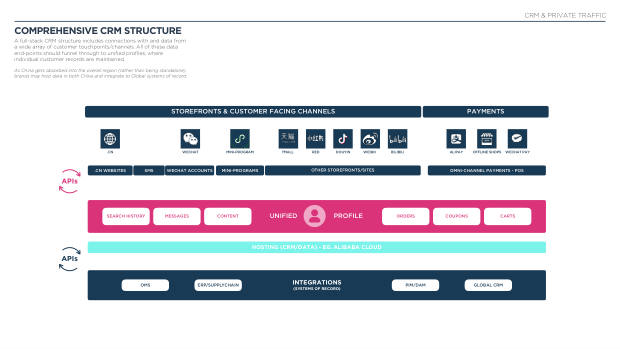
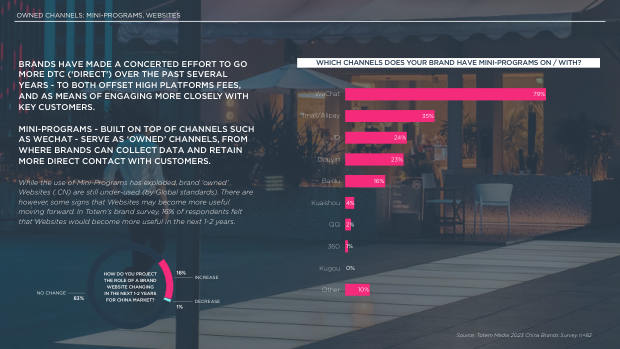
A slower economy and data rules (PIPL) have pushed brands toward owned mini-programs, private traffic and lifetime-value. The context is a fragmenting marketplace — Alibaba, once 80%+ of GMV, now controls under 50% — forcing brands to sell across more platforms while unifying their view of the customer.
Rationality reigns.
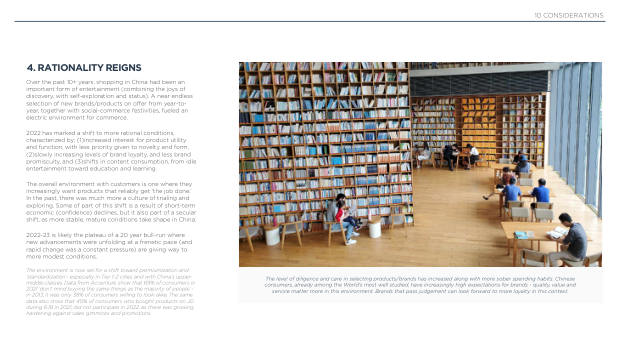
Shopping has shifted from entertainment to utility, with rising loyalty and less brand promiscuity. Accenture data show 69% of consumers in 2021 didn't mind buying what the majority buy, against 38% in 2013 — a move toward premiumisation and standardisation, especially in tier 1–2 cities.
Chasing the "silver dollar."
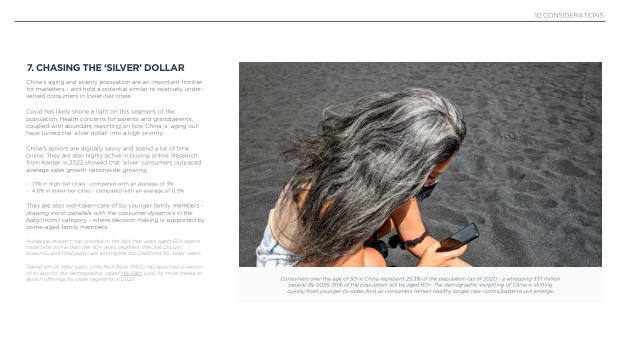
Consumers aged 50+ are 25.3% of the population — some 337 million people — and by 2035 30% will be over 60. Silver consumers outpaced average sales growth in 2022 (7.1% in high-tier cities versus a 3% average), an under-served frontier akin to lower-tier cities.
Web3 cools; AI is the near-term priority.
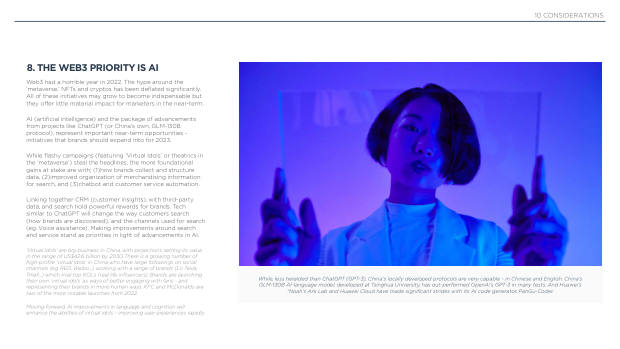
With metaverse, NFT and crypto hype deflated, the report directs brands toward AI's foundational uses — data structuring, merchandising for search, and service automation — noting virtual idols alone are projected at US$42.6bn by 2030.
Pivot to Asia — proceed carefully.
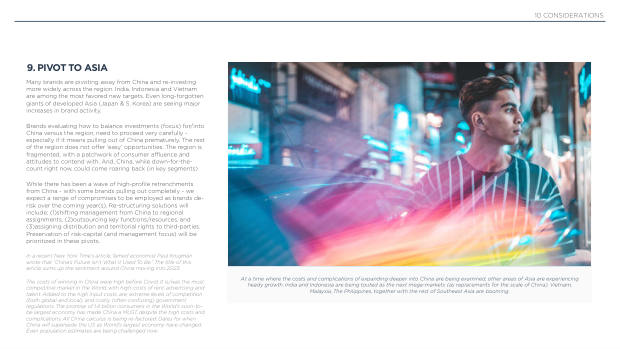
India, Indonesia and Vietnam are the favoured new targets, but the region is fragmented and offers no easy wins; brands de-risking from China are more likely to restructure (regional management, outsourcing, third-party rights) than exit outright.
Rebalance from digital to offline.
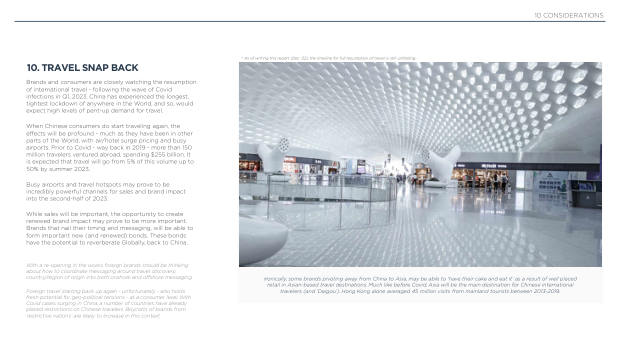
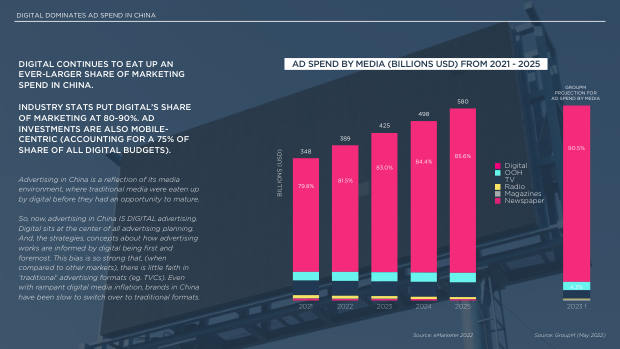
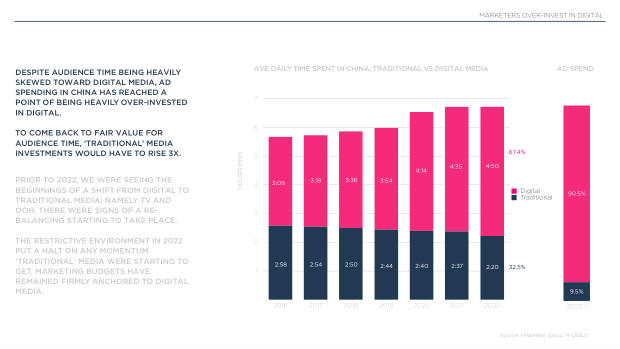
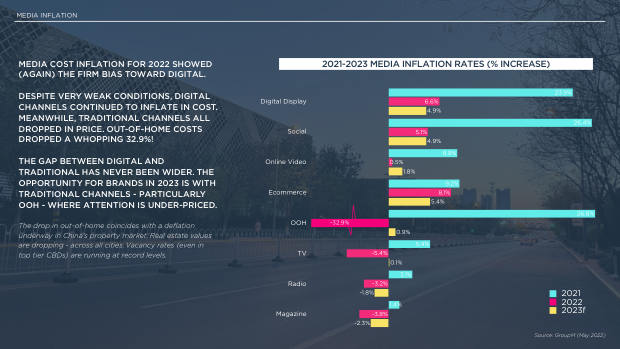
With 90%+ of branded media already flowing to digital and out-of-home down more than 30% in 2022, offline is under-priced and ripe for high-impact, memorable brand experiences — particularly as travel snaps back.
















What is the outlook for marketing in China in 2023?
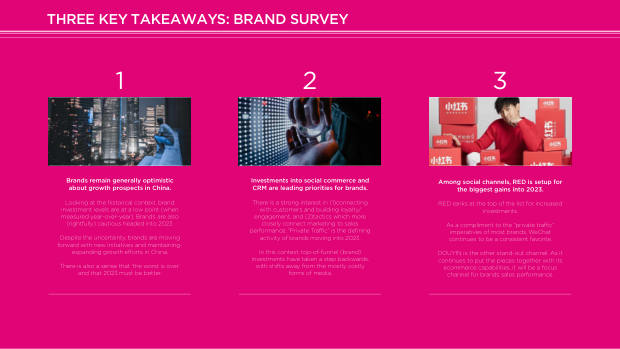
Cautiously optimistic. Neutral-to-optimistic sentiment held at 63% (down from 70%), and most brands are still investing for growth even as very-negative responses nearly doubled to 20%.
Where are marketing budgets going?
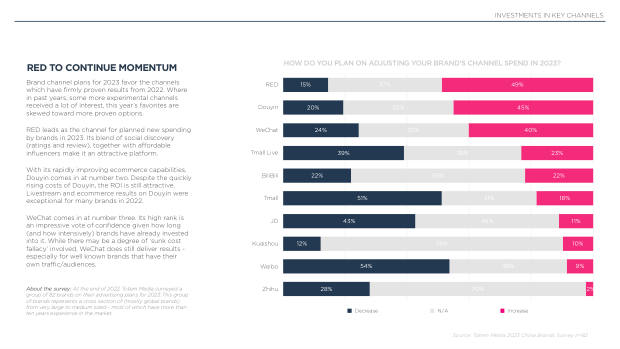
Toward CRM, DTC and private traffic — retention and owned customer relationships — and away from the costliest top-of-funnel brand and traditional media spend.
Are foreign brands losing ground to local ones?
Increasingly, and systemically. Foreign apparel share fell from 47% to 40% and infant formula from 52% to 35% between 2013 and 2021, with local brands winning on pricing, speed and market fit.
Should brands pivot from China to the rest of Asia?
Carefully. India, Indonesia and Vietnam are attractive but fragmented; the report favours de-risking through restructuring over premature exit from a market forecast to grow 4–6%.
Who produces the report and how large is the sample?
Totem's 8th annual China report, built on a survey of 82 China marketing leaders conducted in November 2022, linking the macro-economy and consumer shifts to the marketing and media landscape.
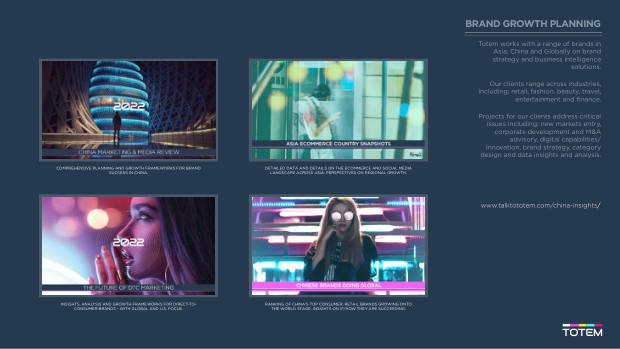
Totem's 8th consecutive annual China report, designed to help brand leaders stay a step ahead. It links macro-economic and consumer shifts to the detail of China's marketing and media landscape, anchored by a survey of 82 marketing leaders conducted in November 2022. Respondents are a cross-section of mostly global brands, from very large to medium-sized, most with more than ten years' experience in China; the report notes some selection bias as brands that had already exited could not be captured.
Get the full report
Leave your details — we'll email you the PDF and give you the download straight away.