2022 China Marketing & Media Trends: regulation, walled gardens, and a surge in local brands
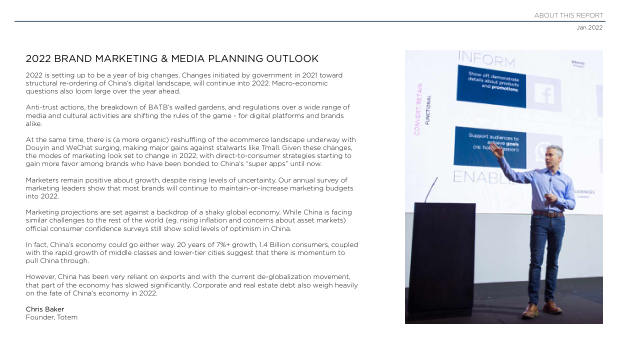
2022 sets up as a year of structural change. Government moves begun in 2021 — anti-trust action, the mandated breakdown of BATB's walled gardens, and regulation across media and cultural activity under the "common prosperity" banner — are rewriting the rules for platforms and brands alike. At the same time, a more organic reshuffle is underway as Douyin and WeChat gain against stalwarts like Tmall, nudging brands toward direct-to-consumer strategies.
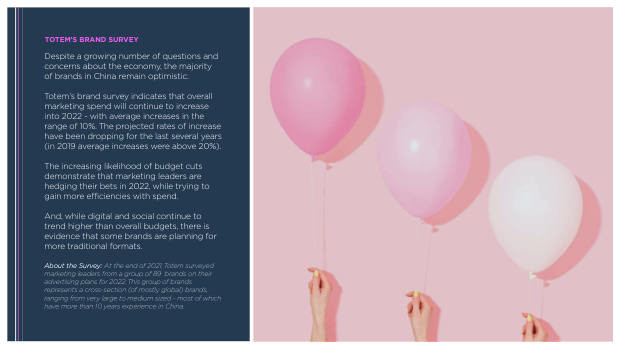
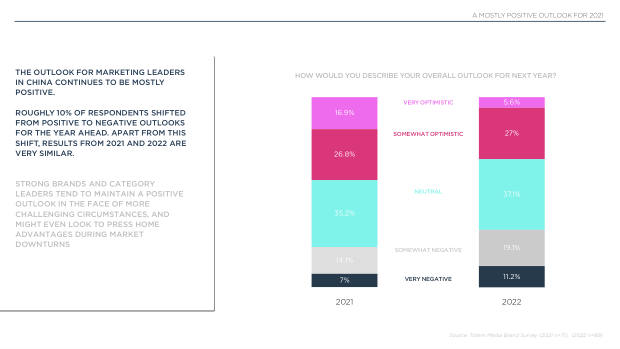
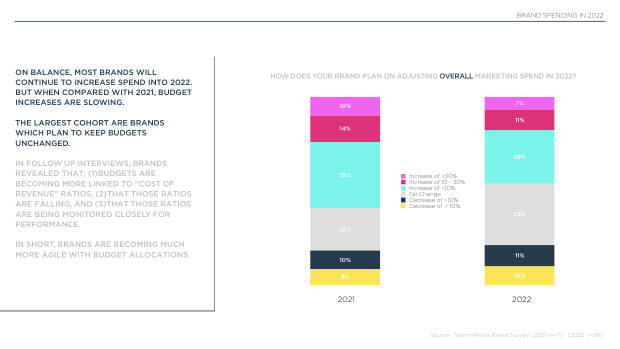
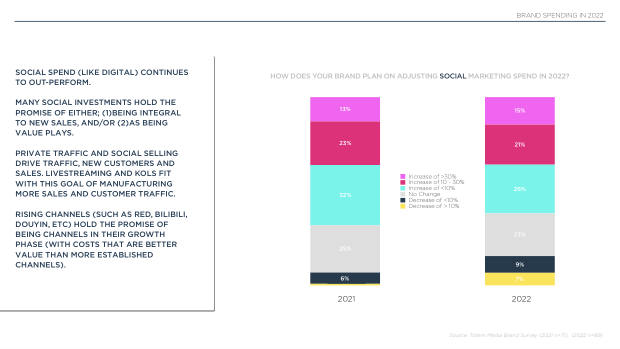
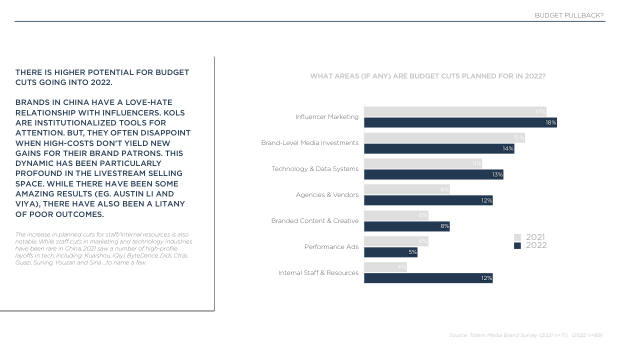
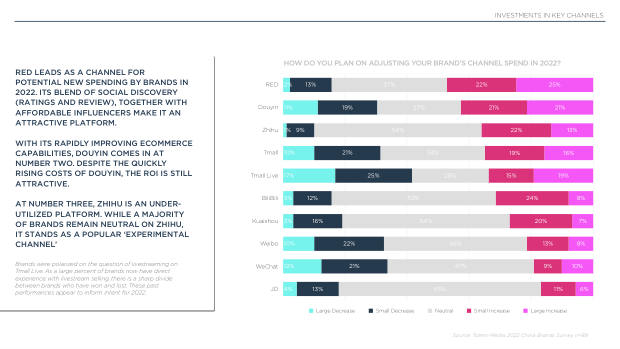
Totem's survey of 89 marketing leaders shows most brands remain positive and plan to maintain or increase marketing spend, with average increases around 10% — though the projected rate of increase has fallen steadily from above 20% in 2019, and the likelihood of budget cuts is rising as leaders hedge and chase efficiency. Roughly 10% of respondents shifted from a positive to a negative outlook year on year, but strong brands and category leaders largely held their optimism.
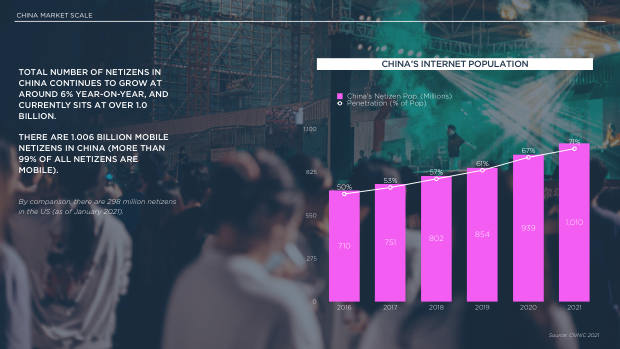
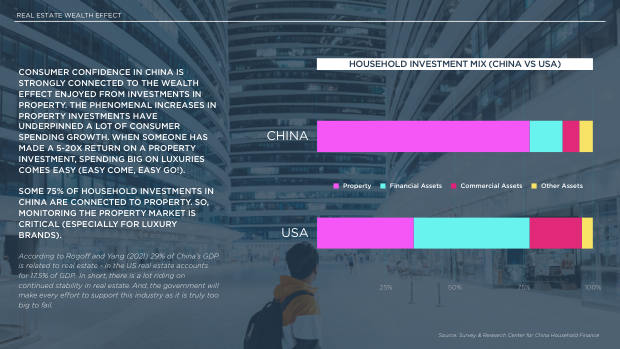
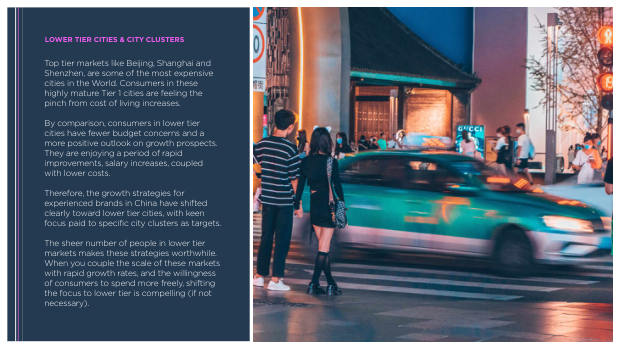
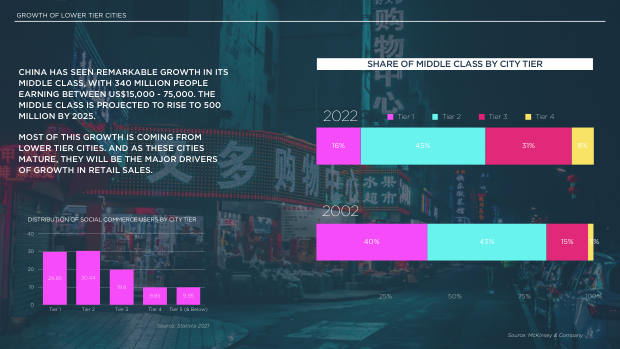
The macro backdrop is mixed. Two decades of 7%+ growth, 1.4 billion consumers, and the expansion of the middle class and lower-tier cities give China momentum, but export reliance amid de-globalisation, and corporate and real-estate debt — highlighted by indebted developers such as Evergrande — weigh on the year ahead.
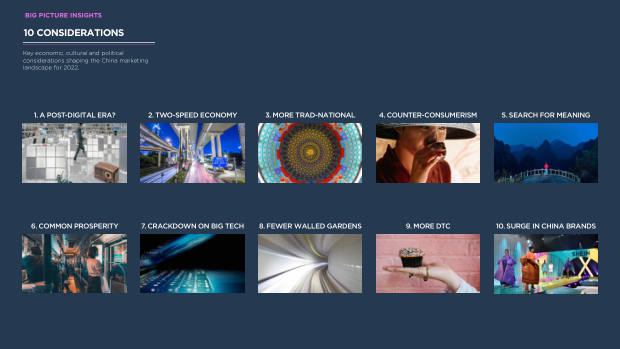
A possible post-digital turn.
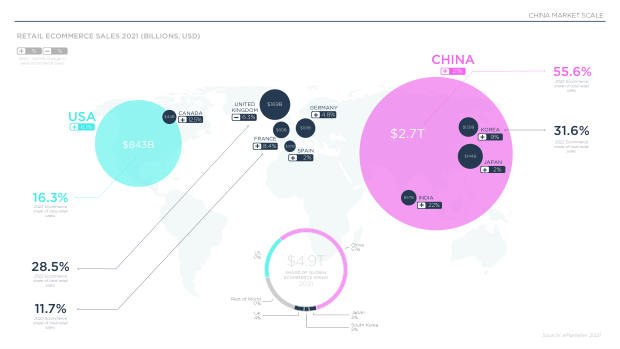
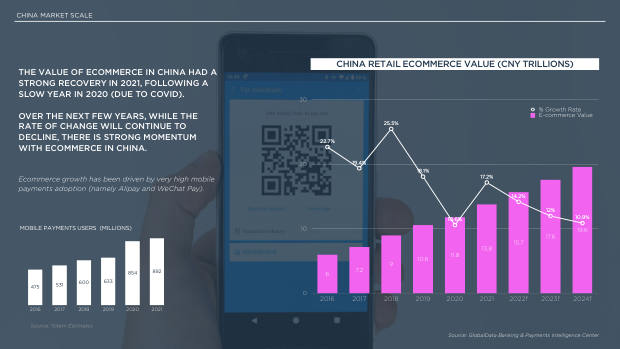
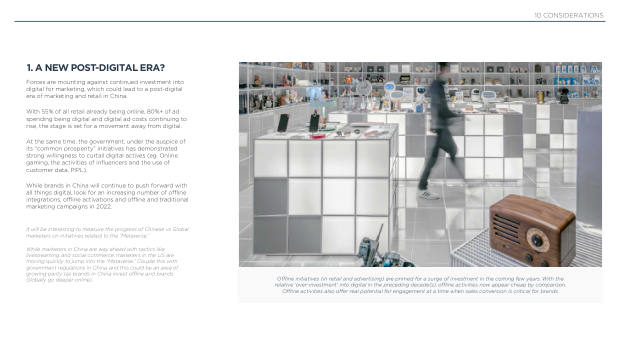
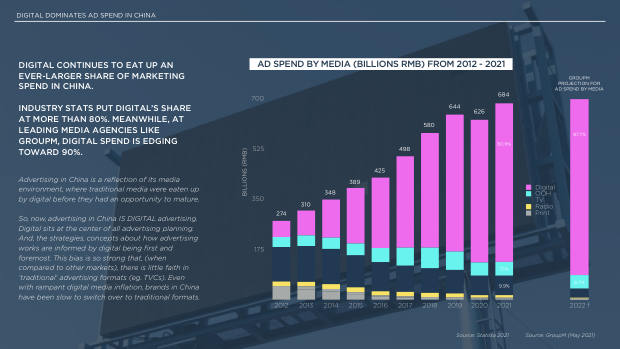
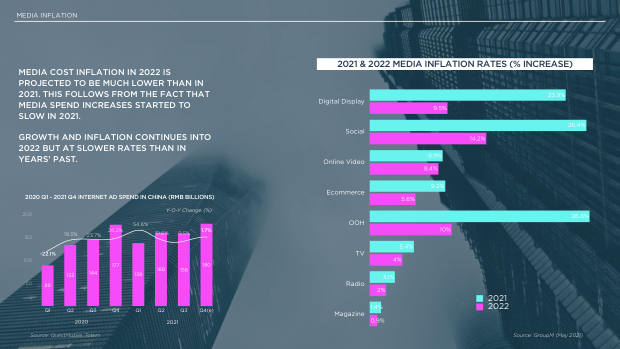
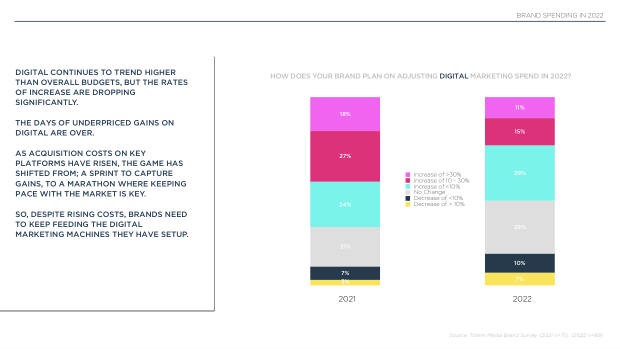
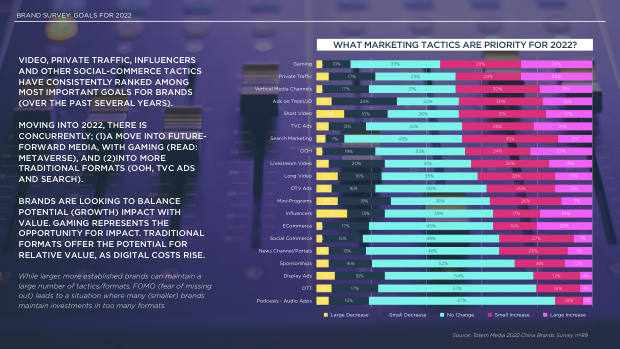
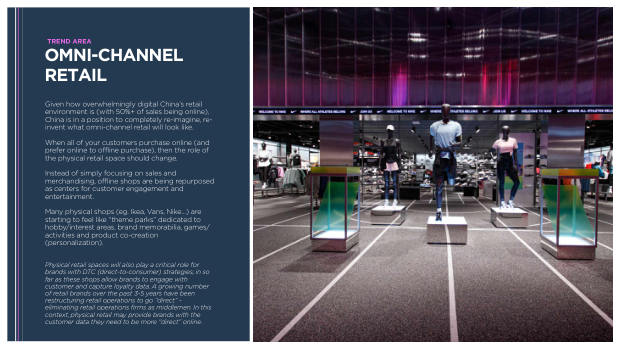
With 55% of retail already online, 80%+ of ad spend digital and digital costs still rising, the case for rebalancing toward offline is building — reinforced by "common prosperity" curbs on gaming, influencers and data use. The report expects more offline integrations, activations and traditional campaigns in 2022.
A two-speed economy.
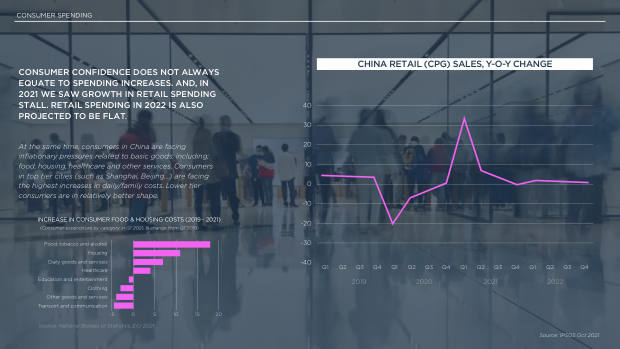
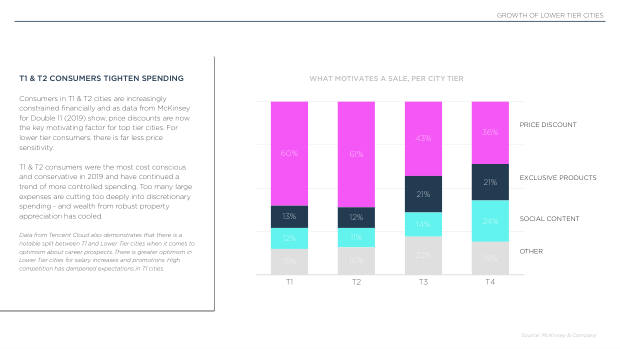
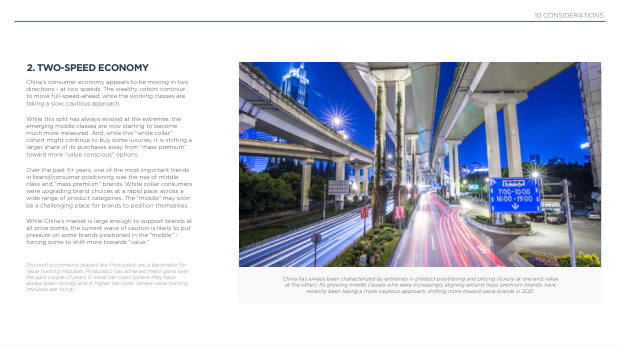
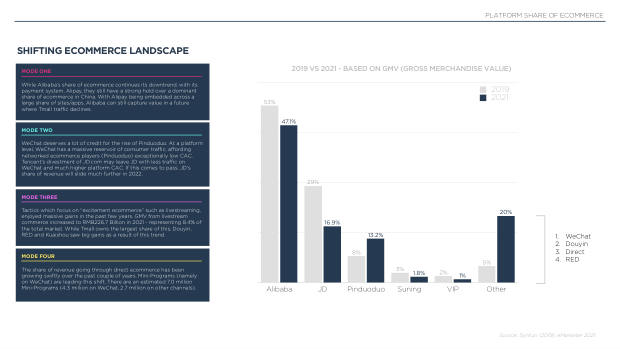
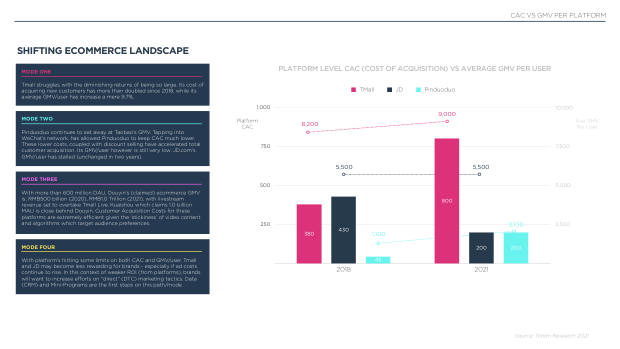
Wealthy consumers keep spending while the working and emerging middle classes turn cautious, shifting from "mass premium" toward value. Discount players such as Pinduoduo are the barometer, gaining in both lower- and higher-tier cities as value-hunting spreads.
"Common prosperity" reshapes the rulebook.
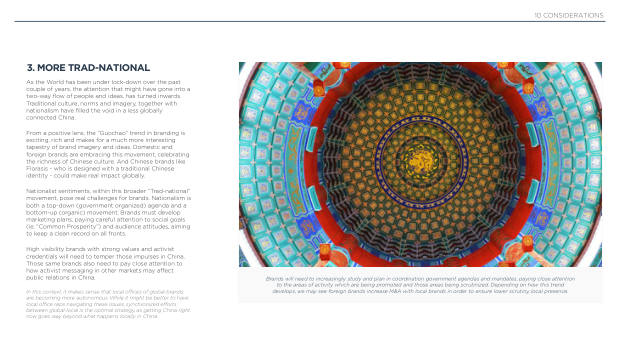
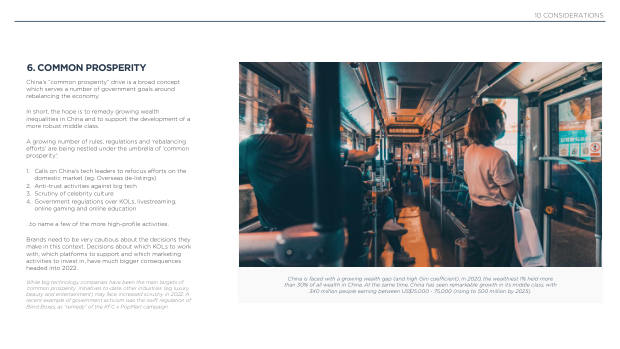
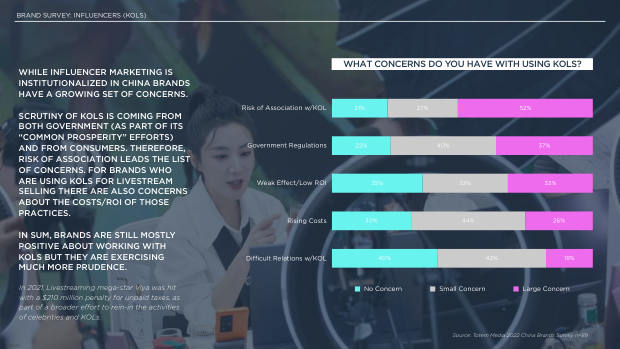
A widening set of regulations — overseas de-listings, anti-trust, scrutiny of celebrity culture, and rules over KOLs, livestreaming, gaming and education — raises the stakes on which partners, platforms and campaigns brands choose. The wealthiest 1% held more than 30% of China's wealth in 2020.
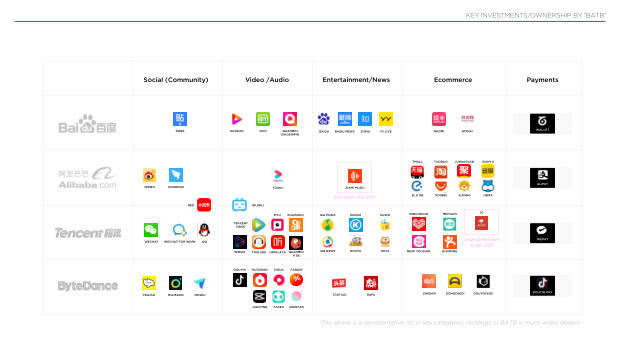
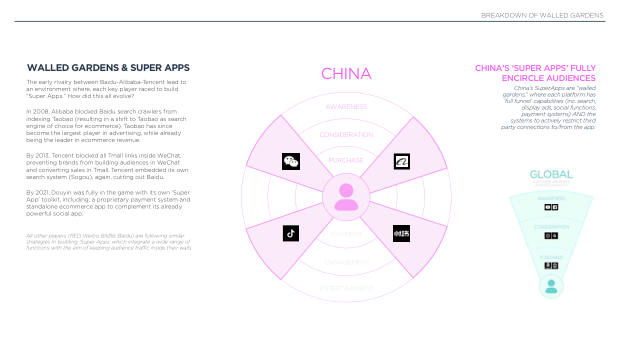
Crackdown on big tech, and fewer walled gardens.
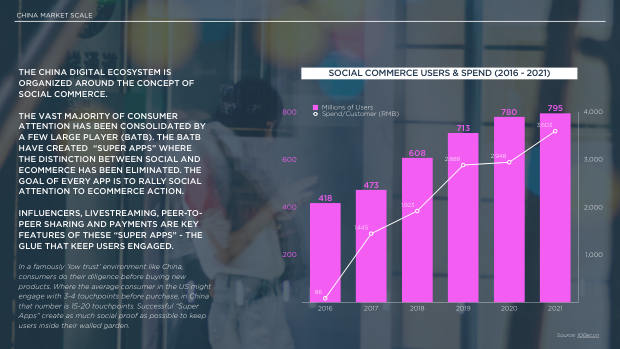
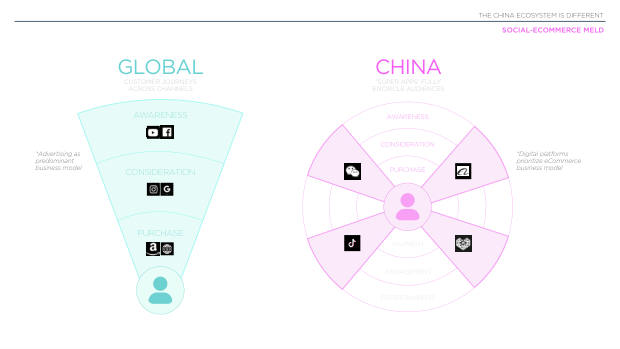
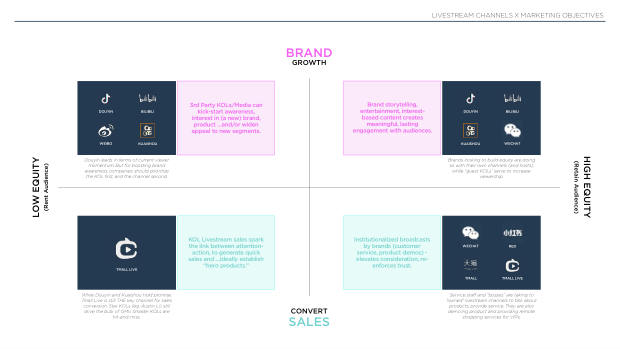
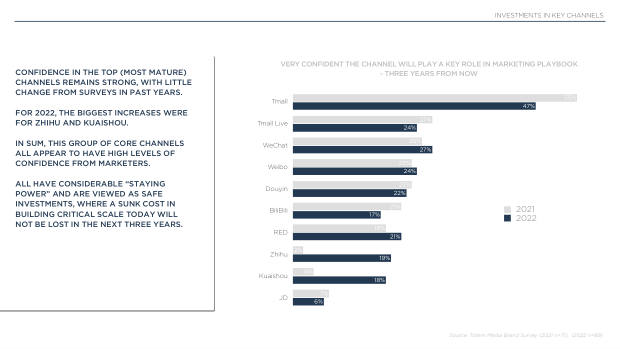
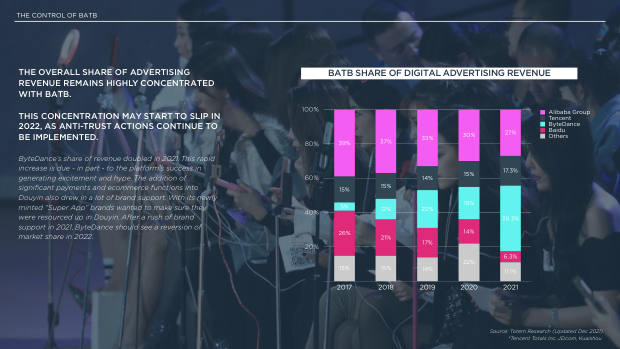
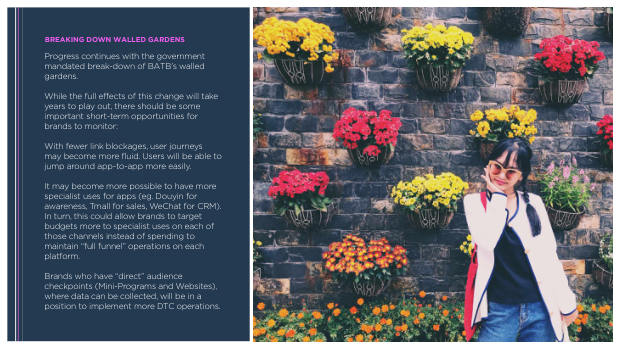
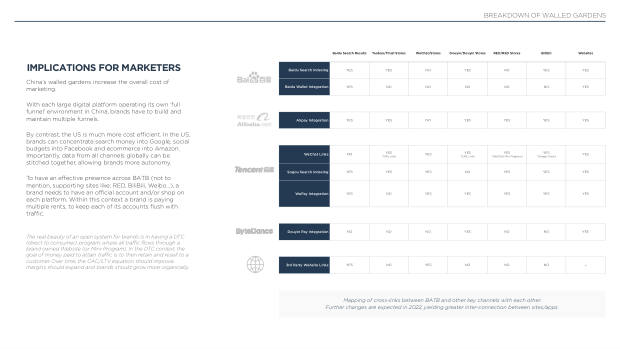
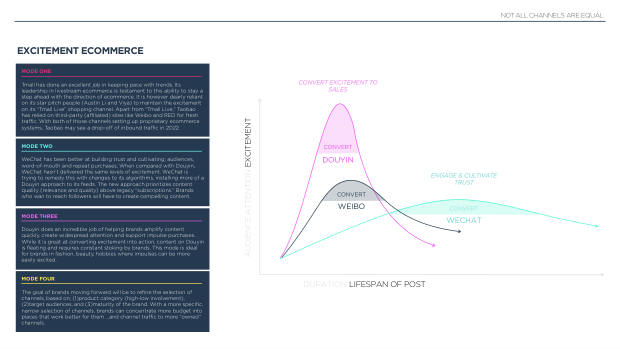
BATB control roughly 75% of user time, 80%+ of ad budget and 70% of ecommerce value; the mandated opening of link-sharing and payments could let brands optimise each platform's real strength — Douyin for interest, Tmall for conversion, WeChat for loyalty.
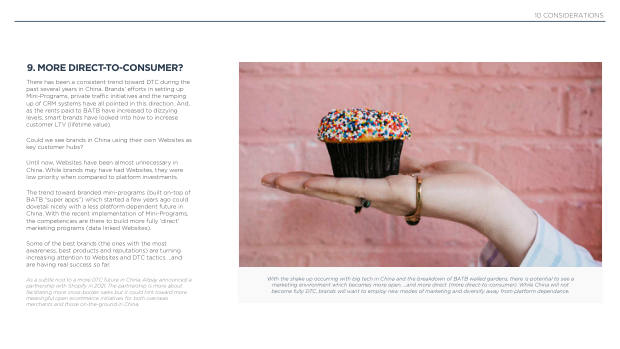
More direct-to-consumer.
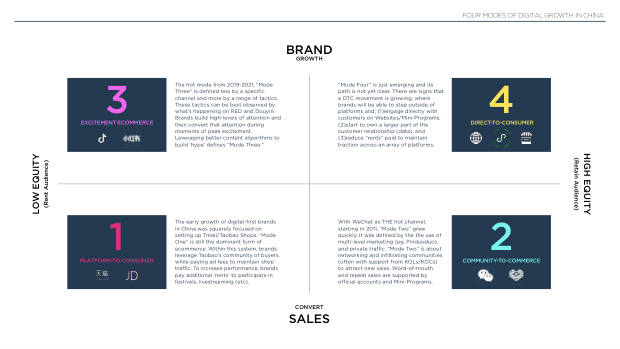
Rising platform "rents," mini-programs, private traffic and maturing CRM point toward owned, data-linked customer hubs. Alipay's 2021 Shopify partnership is read as an early nod to a more open, DTC-capable future.
A surge in Chinese brands.
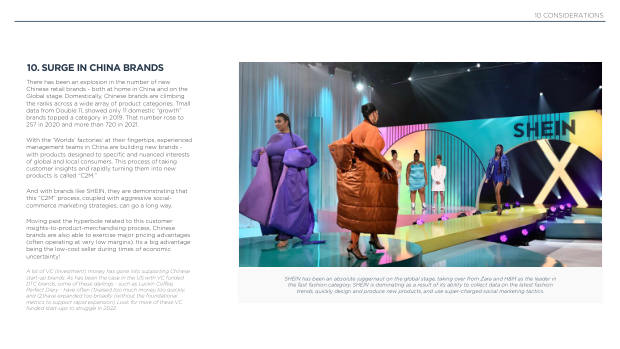
Domestic "growth" brands topping a Tmall Double 11 category rose from 11 in 2019 to 257 in 2020 and 720+ in 2021. Using rapid customer-insight-to-product ("C2M") models and aggressive social commerce, players such as SHEIN have overtaken Zara and H&M in fast fashion.
Counter-consumerism and a search for meaning.
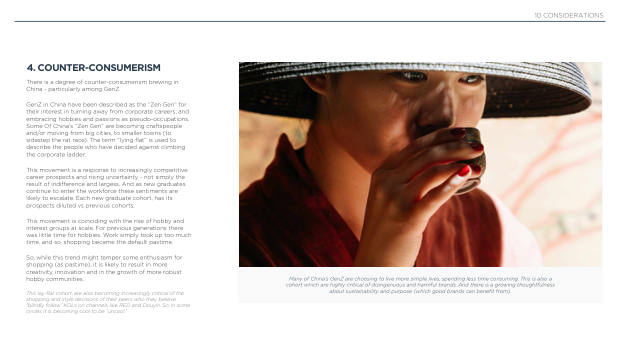
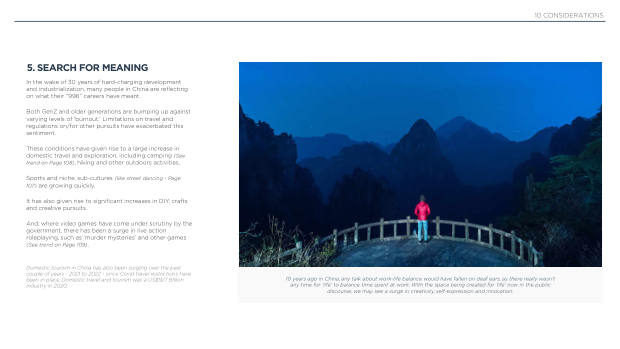
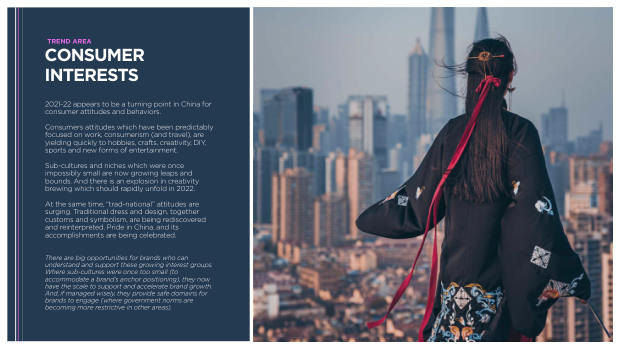
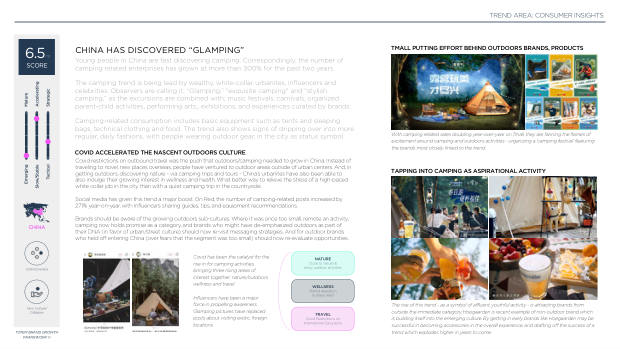
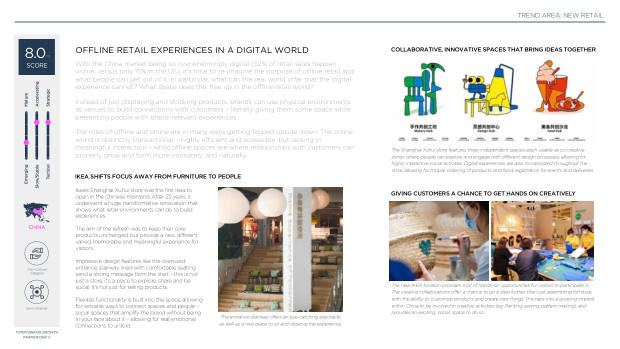
GenZ "lying flat" and turning to hobbies is tempering shopping as a pastime while lifting outdoor, sports and DIY pursuits; domestic tourism was already a US$927bn industry in 2020.
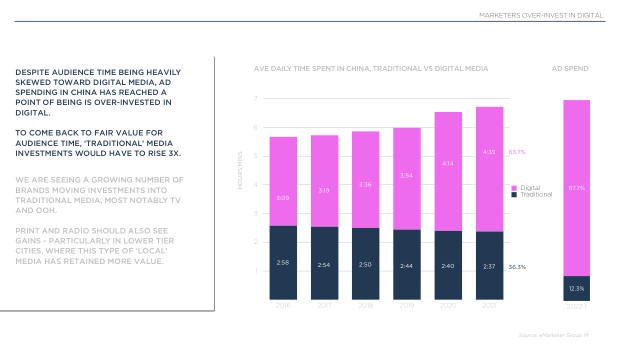
Digital is over-invested relative to attention.
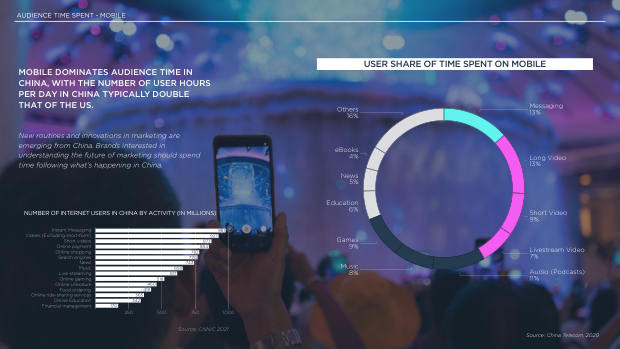
GroupM data put branded media at ~87.7% digital for 2022, well above the share of user time; to reach fair value, traditional media investment would need to roughly triple, with TV and OOH the early beneficiaries.




What is the outlook for marketing in China in 2022?
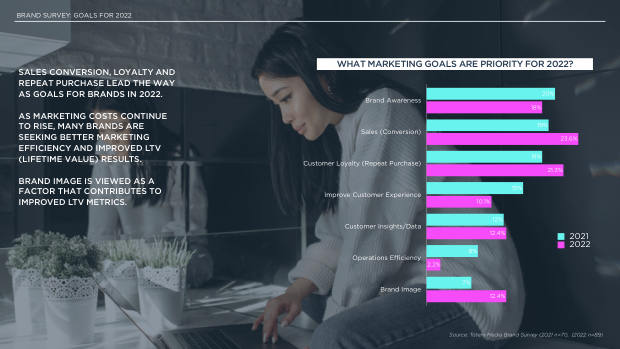
Mostly positive but cooling. Most of the 89 surveyed brands plan to maintain or raise budgets by around 10%, though the pace of increase is slowing and budget cuts are becoming more likely.
What is "common prosperity" and why does it matter to marketers?
A broad government drive to rebalance the economy, spanning anti-trust action and regulation of KOLs, livestreaming, gaming and data — raising the consequences of brands' partner, platform and campaign choices.
What does breaking down BATB's walled gardens mean for brands?
More open links and payments could let brands use each platform for its strength — Douyin for interest, Tmall for conversion, WeChat for loyalty — and lean harder on DTC and CRM.
Are Chinese brands gaining share?
Sharply. Domestic brands topping Tmall Double 11 categories jumped from 11 in 2019 to 720+ in 2021, with SHEIN's "C2M" model overtaking Zara and H&M in fast fashion.
Who produces the report and how large is the sample?
Totem's annual China report, built on a survey of 89 marketing leaders conducted at the end of 2021, linking the macro-economy and consumer shifts to the marketing and media landscape.
Totem's annual China report, designed to help brand leaders stay a step ahead. It links macro-economic and consumer shifts to the detail of China's marketing and media landscape, anchored by a survey of 89 marketing leaders conducted at the end of 2021. Respondents are a cross-section of mostly global brands, from very large to medium-sized, most with more than ten years' experience in China.
Get the full report
Leave your details — we'll email you the PDF and give you the download straight away.