China's Top 100 Global Brands 2026: from price arbitrage to brand conviction
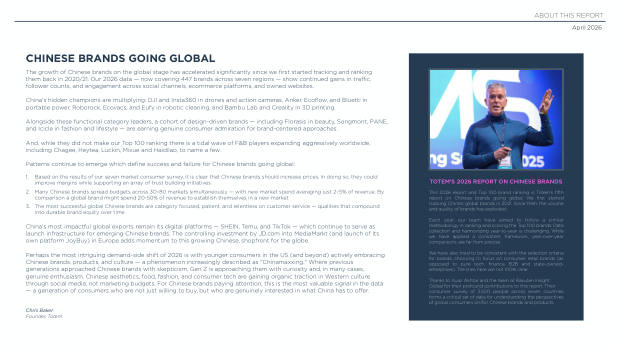
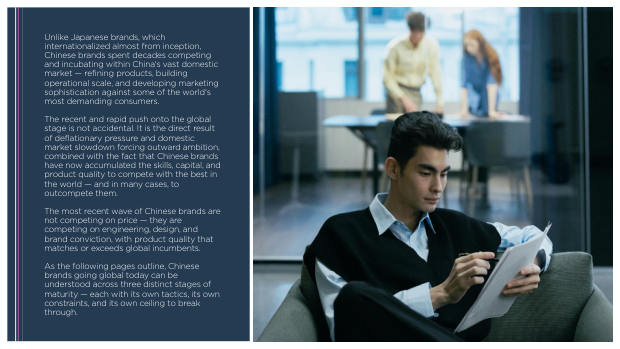
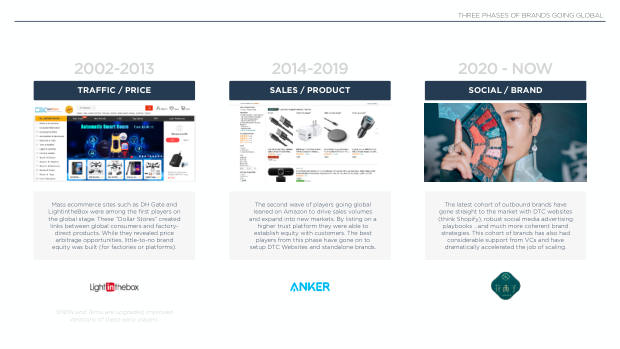
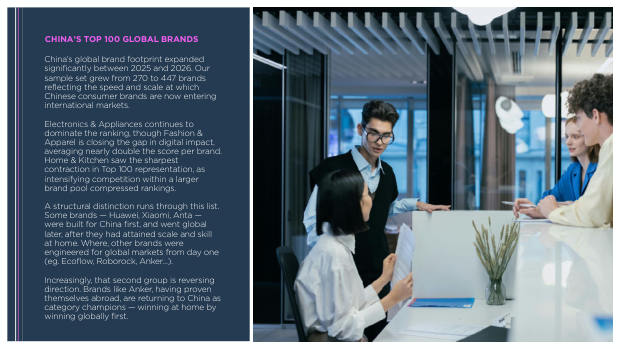
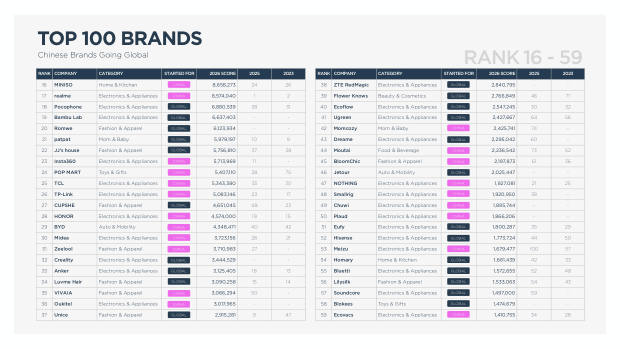
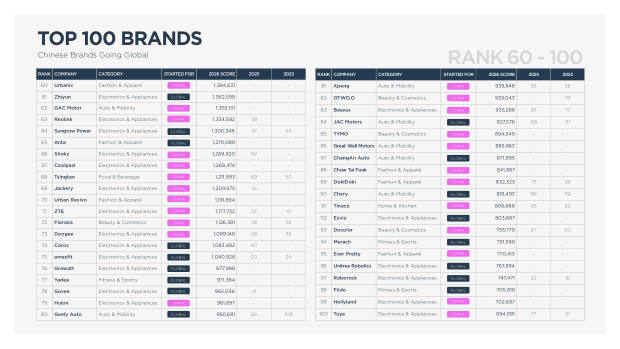
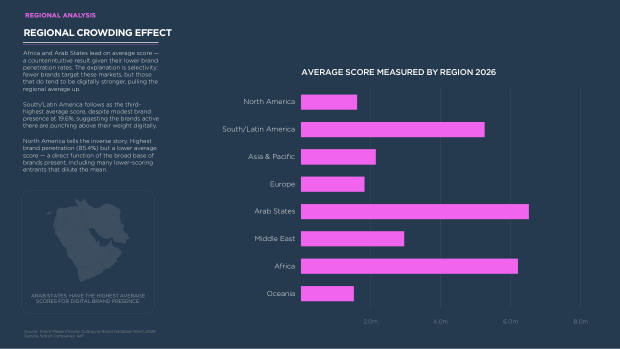
Totem's fifth annual report on Chinese brands going global tracks 447 brands across seven regions — up from 270 the prior cycle — and finds the outbound movement crossing a threshold. China is no longer just the world's factory; a widening cohort of consumer brands is now defining categories outright: DJI in drones, Anker in portable power, Roborock and Ecovacs in robotic cleaning, Bambu Lab in desktop 3D printing (entering the Top 100 at #19 in a single cycle). The competition has moved from price arbitrage to brand conviction.
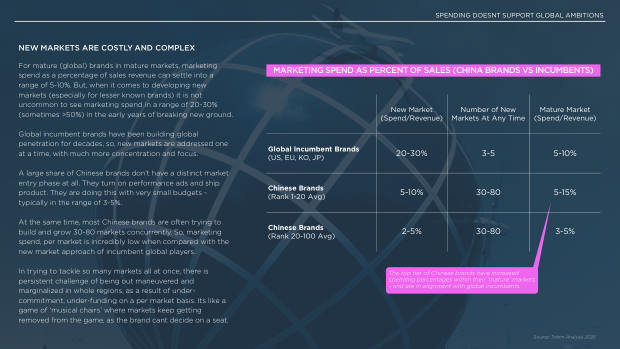
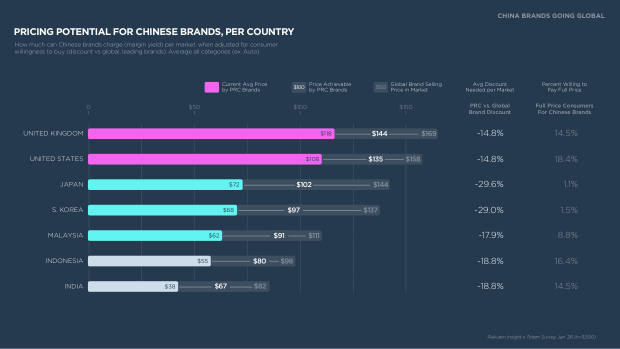
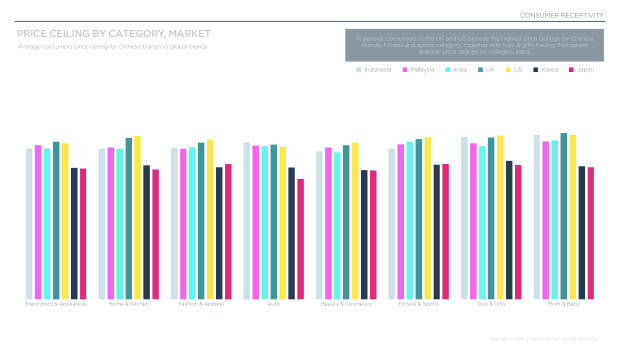
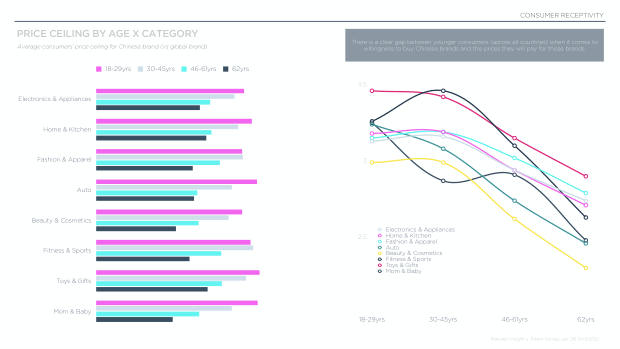
The central finding is a structural mispricing. A seven-market consumer survey of 3,500 respondents shows revealed price ceilings sitting well above actual shelf prices — Chinese brands are surrendering margin for the psychological comfort of a sale, and Western consumers increasingly read low prices as a negative quality signal. Compounding this, most brands spread thin budgets (2–5% of revenue) across 30–80 markets at once, where a global incumbent might commit 20–50% of revenue to establish a single new market.
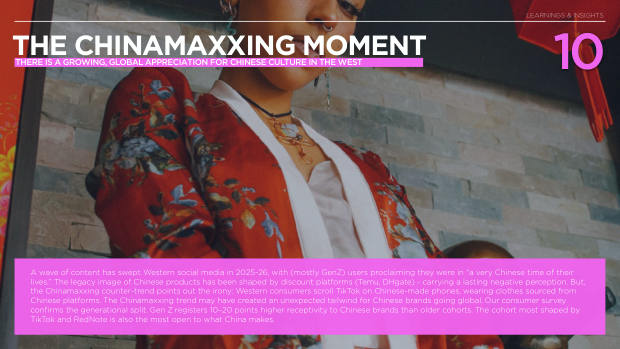
The most valuable signal in the data is demand-side. Younger Western consumers — a trend labelled "Chinamaxxing" — are embracing Chinese products and culture organically through social media rather than marketing spend. The survey confirms the generational split: Gen Z registers 10–20 points higher receptivity to Chinese brands than older cohorts, making it the most open audience to what China makes.
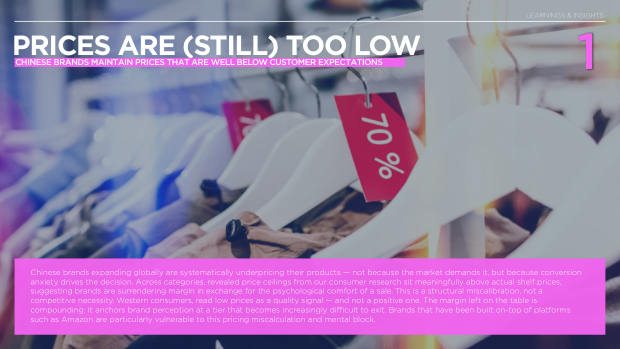
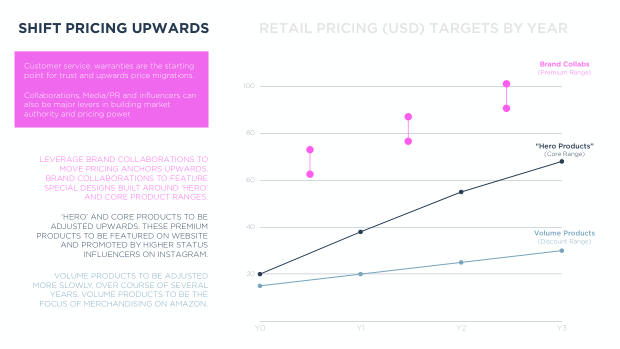
Prices are still too low.
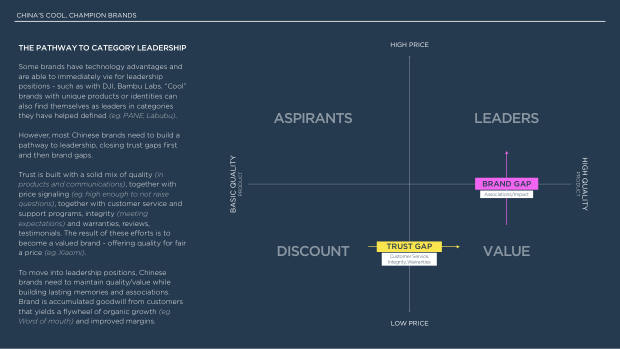
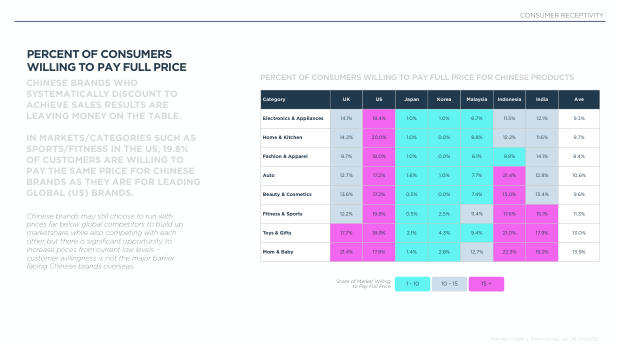
Across categories, revealed price ceilings from the consumer research sit meaningfully above shelf prices — a structural miscalibration driven by conversion anxiety, not competitive necessity. Brands built on Amazon are most vulnerable to the mental block. The margin left on the table anchors brand perception at a tier that becomes hard to exit.
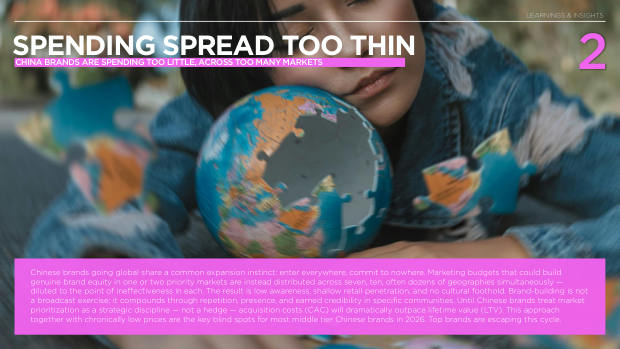
Spending is spread too thin.
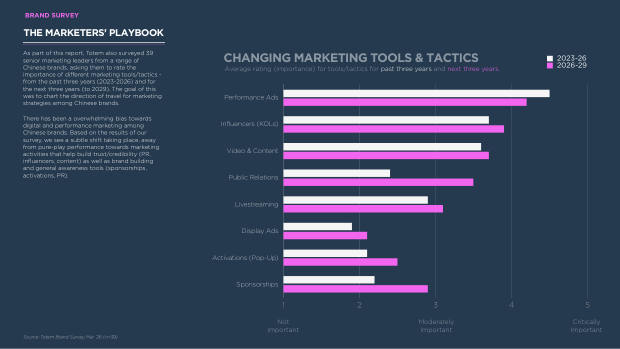
Marketing budgets that could build equity in one or two priority markets are diluted across 30–80 geographies at once. Rank 1–20 brands commit 5–10% of revenue to new markets; rank 20–100 brands just 2–5%, versus 20–30% (sometimes >50%) for incumbents entering a market one at a time. The result is low awareness, shallow retail penetration, and CAC that outpaces LTV.
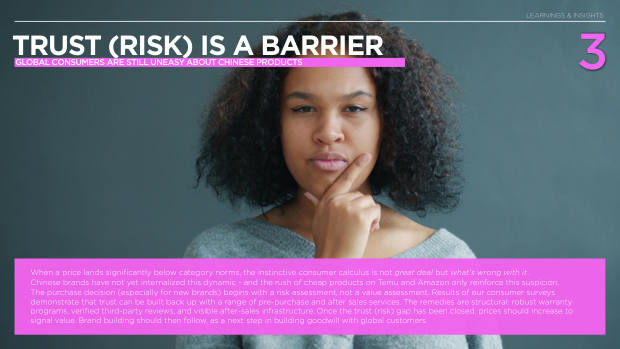
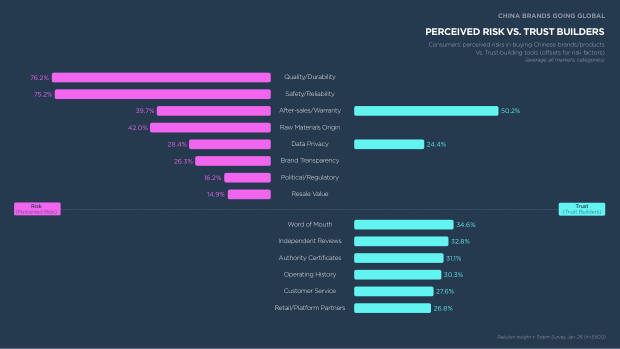
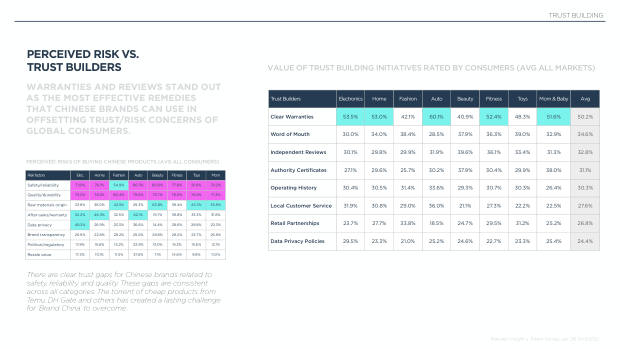
Trust (risk) is the barrier, not willingness.
When a price lands far below category norms, the consumer instinct is "what's wrong with it." The purchase decision starts as a risk assessment, not a value assessment. Survey data rank clear warranties (50.2% average) and word-of-mouth/independent reviews (34.6% / 32.8%) as the most effective offsets — remedies that are structural, not promotional.
Amazon remains the launch pad.
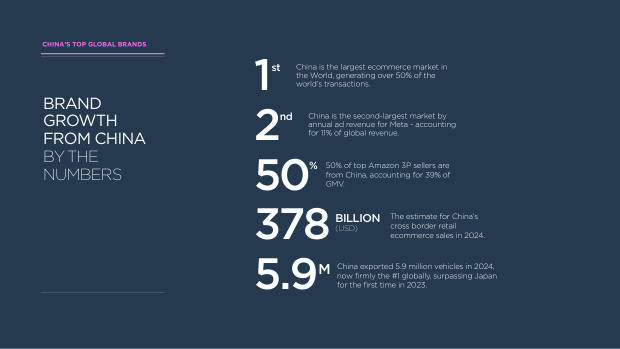
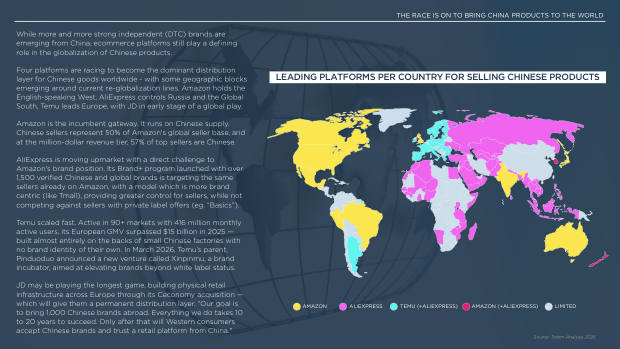
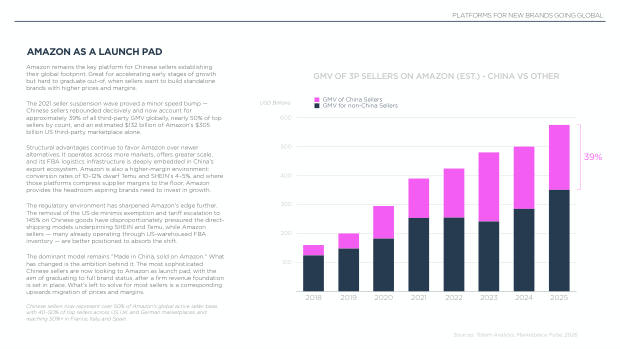
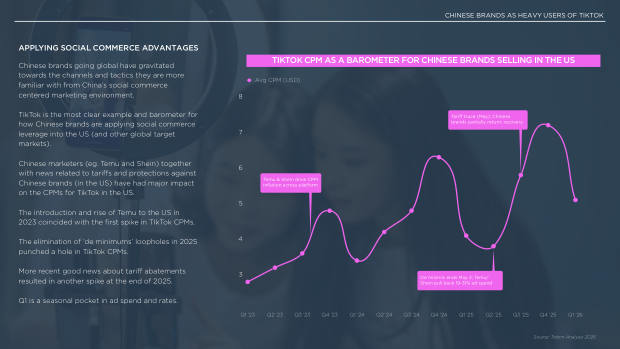
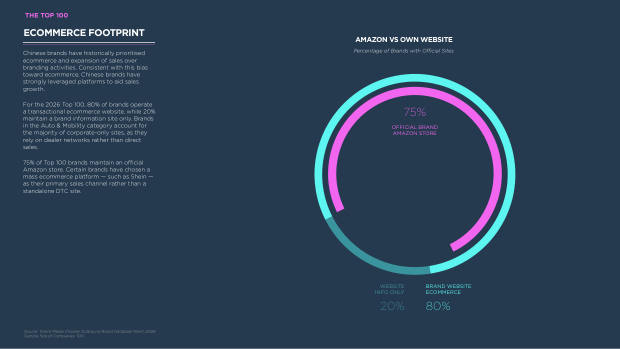
Chinese sellers now exceed 50% of Amazon's global active seller base and represent an estimated $132 billion of Amazon's $305 billion US third-party marketplace. Amazon's 10–12% conversion dwarfs Temu and SHEIN's 4–5%, and the removal of the US de minimis exemption plus 145% tariffs have pressured direct-ship models more than warehoused FBA sellers.
Social commerce is the transferable edge.
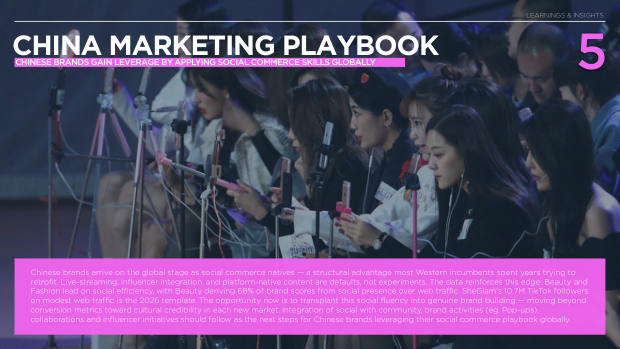
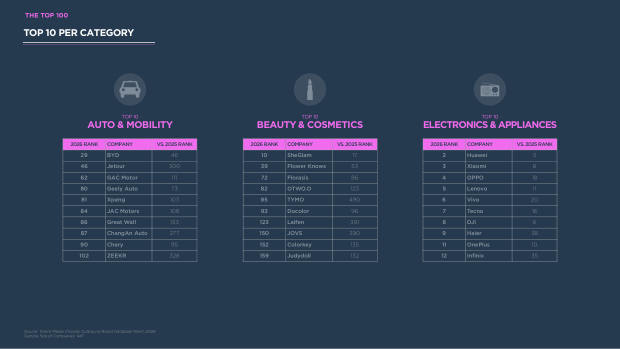
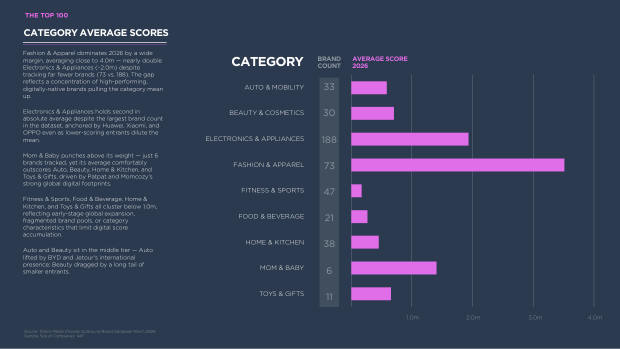
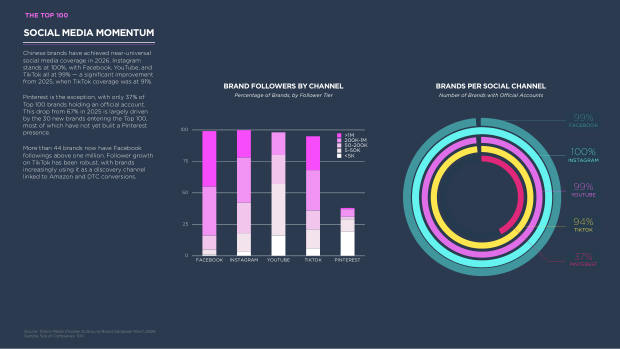
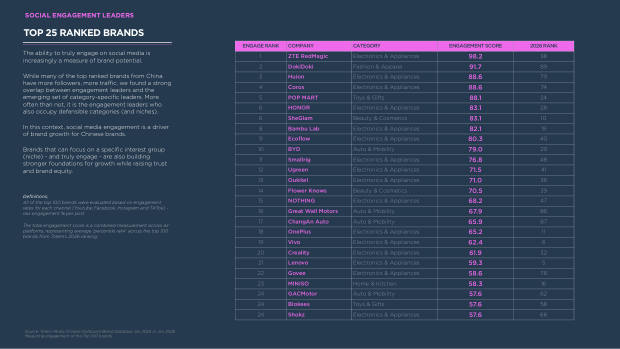
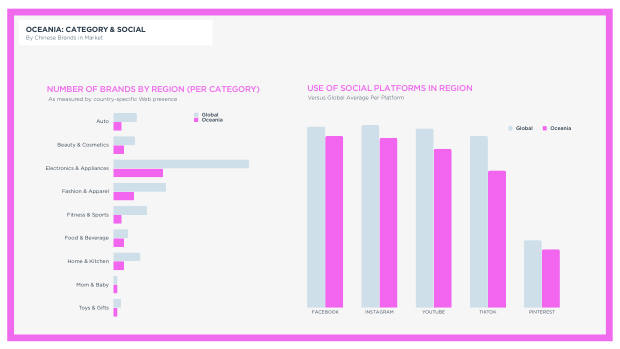
Chinese brands arrive as social-commerce natives — livestreaming and influencer integration are defaults, not experiments. Beauty derives 68% of its brand score from social presence over web traffic; SheGlam's 10.7M TikTok followers on modest web traffic is the template. The opportunity is to convert that fluency from conversion metrics into cultural credibility.
China is buying brand perception.
Organic brand-building is one route; acquisition is faster. Anta's €1.5 billion investment for a 29% stake made it Puma's largest shareholder; Youngor acquired Bonpoint. Deals are no longer about technology or supply chain — established Western brand perception is the remaining gap to close.
The Chinamaxxing tailwind.
A wave of mostly Gen-Z Western content in 2025–26 has reframed Chinese products from discount-platform skepticism toward genuine enthusiasm. The consumer survey confirms Gen Z runs 10–20 points higher in receptivity than older cohorts — an organic signal earned through TikTok and RedNote, not ad budgets.
A cohort competing on cool, not price.
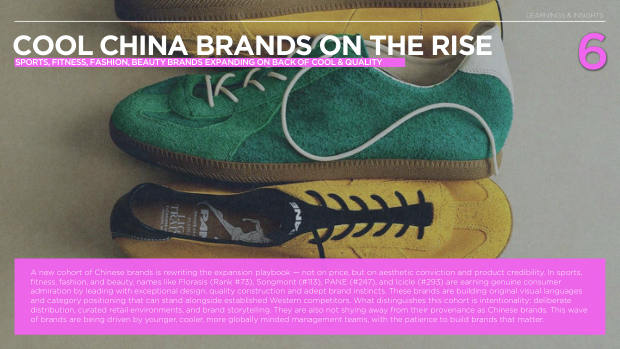
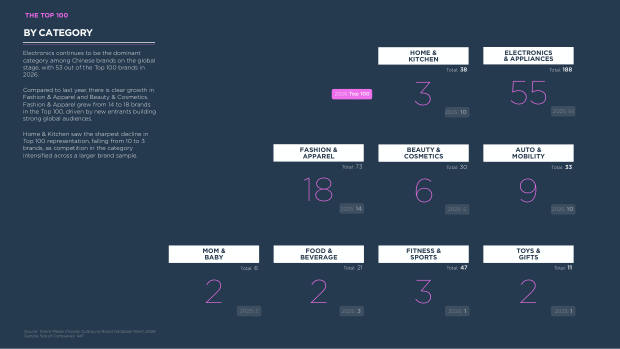
Design-driven names — Florasis (#73), Songmont (#113), PANE (#247), Icicle (#293) — are earning admiration through aesthetic conviction and product credibility, led by younger, globally minded teams that no longer hide their Chinese provenance.








What does the 2026 ranking measure, and how many brands?
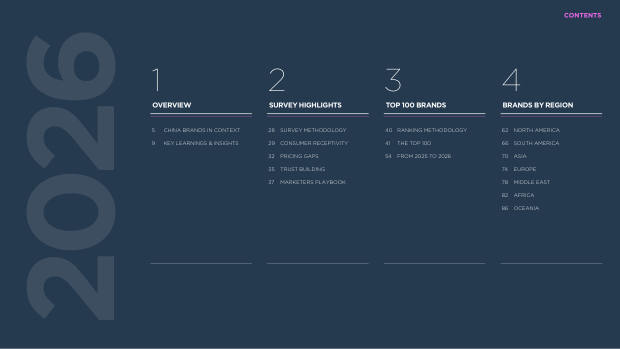
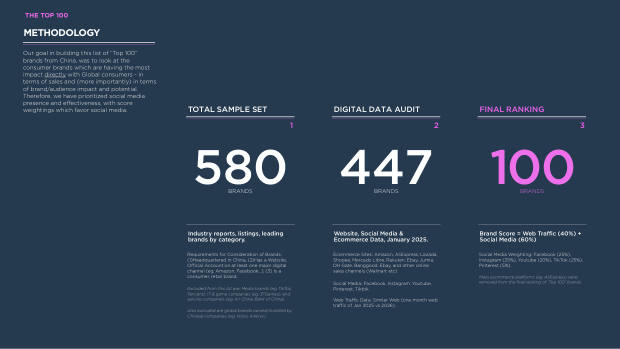
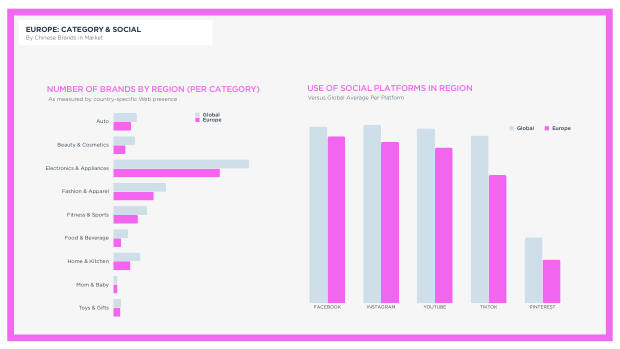
Totem's fifth annual Top 100, drawn from a total sample set of 580 brands and a digital audit of 447 across seven regions. Brand Score = Web Traffic (40%) + Social Media (60%), with mass ecommerce platforms removed from the final list.
Who leads the Top 100?
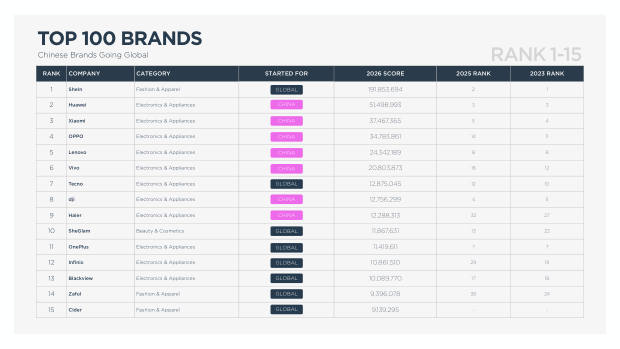
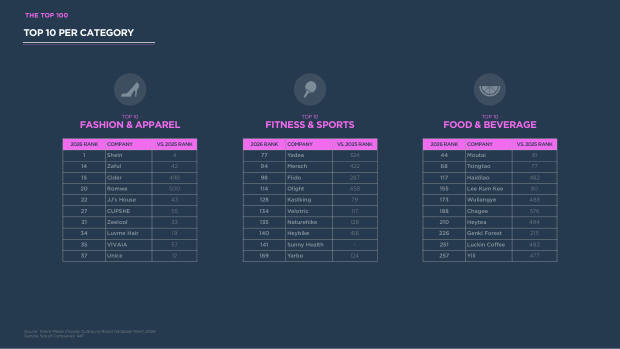
SHEIN ranks #1 (score 191.9M), followed by Huawei and Xiaomi. Bambu Lab is the standout new entrant at #19 in a single cycle.
What is the report's single biggest recommendation?
Raise prices. The seven-market survey shows consumer willingness is not the main barrier; Chinese brands are systematically underpricing and leaving margin on the table that could fund trust-building.
Which markets are most and least receptive?
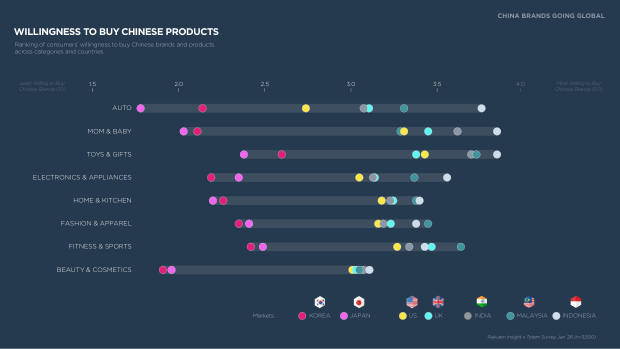
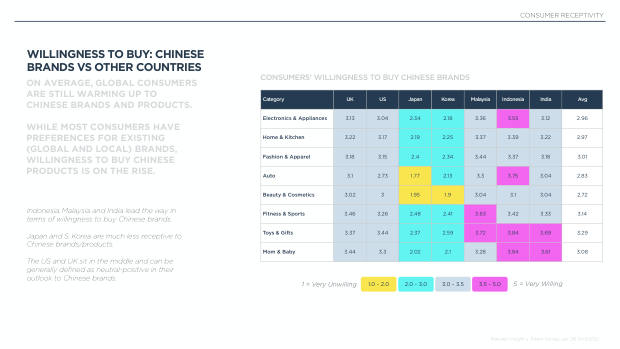
Indonesia, Malaysia and India lead willingness to buy; Japan and South Korea are least receptive; the US and UK sit neutral-positive and offer the highest price ceilings.
Who produced the consumer data?
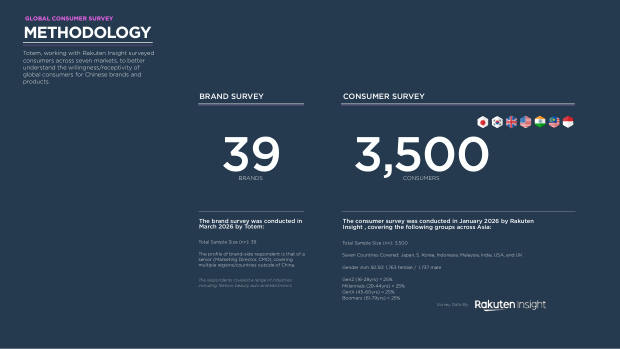
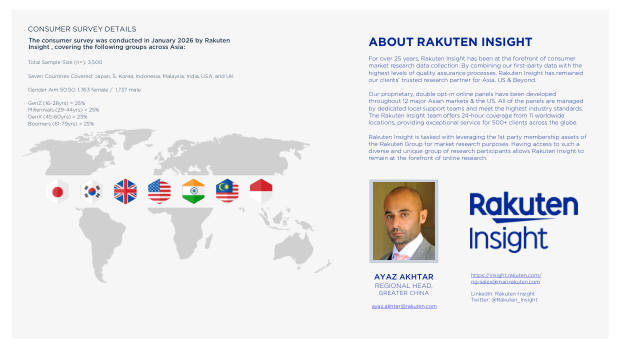
Rakuten Insight surveyed 3,500 consumers in January 2026 across Japan, South Korea, Indonesia, Malaysia, India, the USA and the UK (balanced 1,763 female / 1,737 male, evenly split across four age cohorts). Totem separately surveyed 39 senior brand-side marketers in March 2026.
Totem's fifth consecutive annual report on Chinese brands going global, first tracked in 2021. The Top 100 is built from a total sample of 580 brands, narrowed to a 447-brand digital audit (website, social and ecommerce data, January 2025 vs 2026) and scored on Web Traffic (40%) and Social Media (60%), with social weighted toward Facebook, Instagram, YouTube and TikTok. Consideration is limited to China-headquartered consumer/retail brands; media, IT/game, B2B, service and state-owned enterprises are excluded. The consumer perspective draws on a Rakuten Insight survey of 3,500 people across seven markets (January 2026); a separate Totem brand survey covered 39 senior marketing leaders (March 2026).
Get the full report
Leave your details — we'll email you the PDF and give you the download straight away.