China's Top 100 Global Brands 2024: quantity over quality, and the branding shortfall
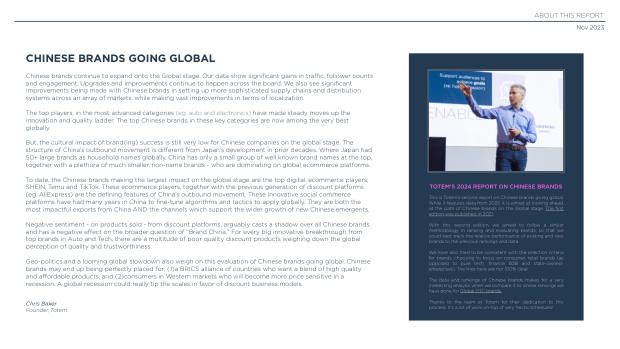
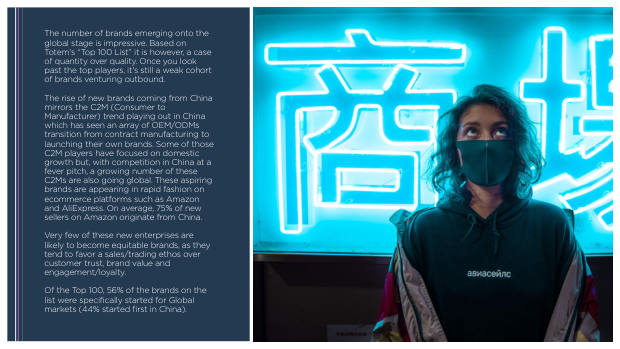
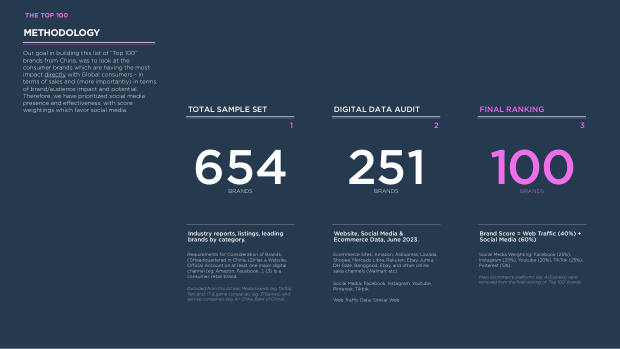
Totem's second annual report on Chinese brands going global audits 251 brands (from a total sample of 654) and ranks the Top 100. The headline is quantity over quality: beyond a small group of leaders, the outbound cohort is still weak, with a plethora of small, non-name brands dominating ecommerce platforms rather than building durable brand equity. The top players in auto and electronics have climbed the innovation ladder to rank among the world's best — but the cultural impact of Chinese branding remains low.
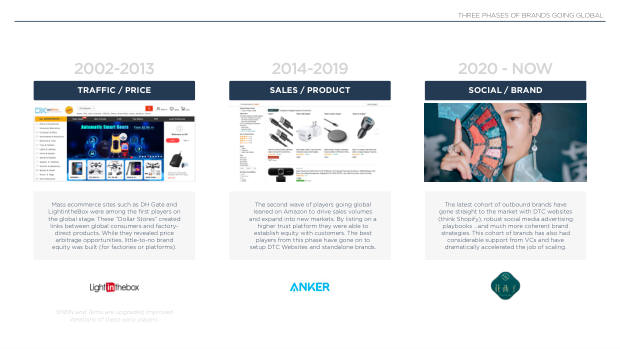
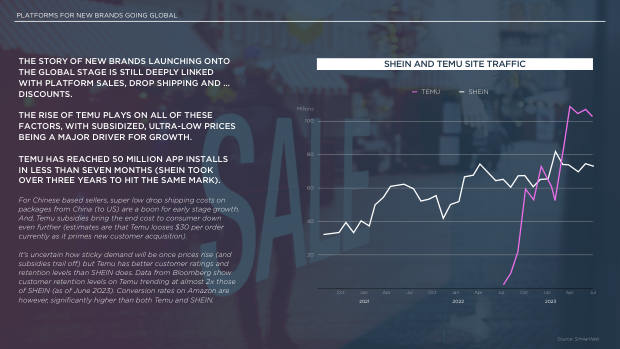
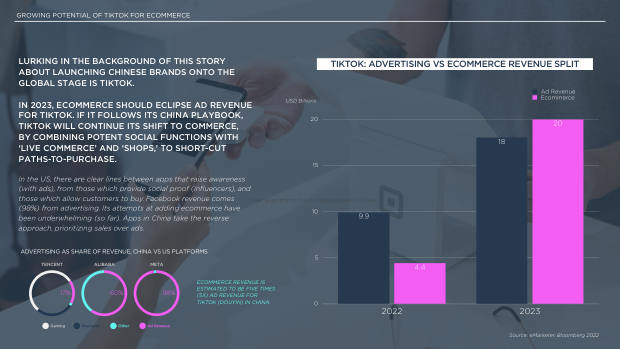
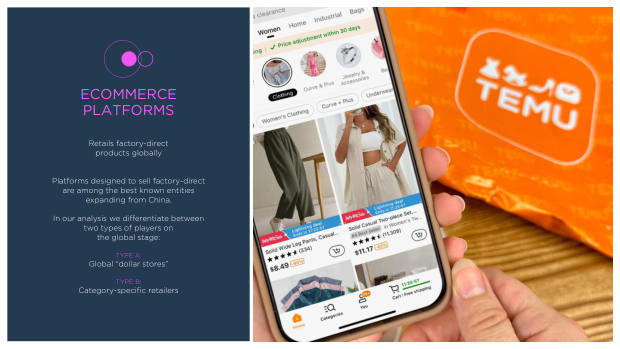
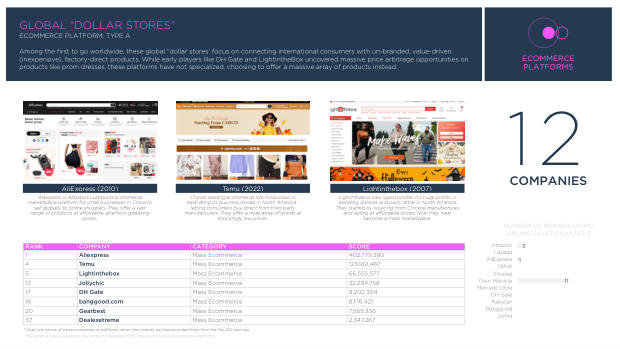
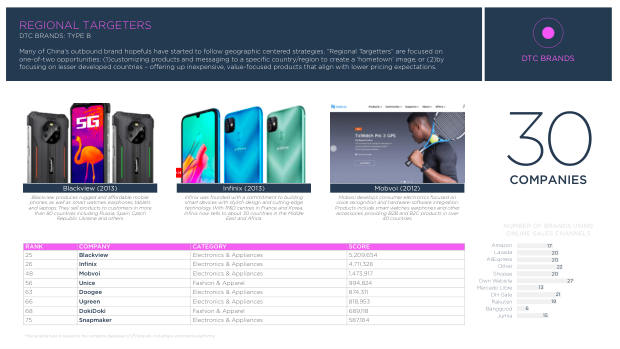
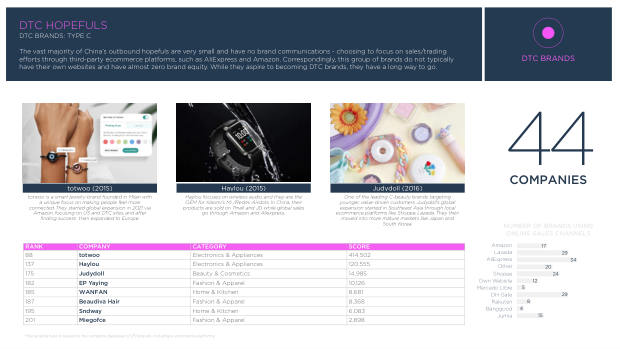
China's most impactful global exports remain its digital platforms — SHEIN, Temu and TikTok — which double as launch infrastructure for emerging brands. Yet negative sentiment on discount-platform products casts a shadow over "Brand China": for every breakthrough in auto or tech, a multitude of poor-quality discount products weighs down global perceptions of quality and trustworthiness. Of the Top 100, 56% were specifically built for global markets, while 44% started in China first.
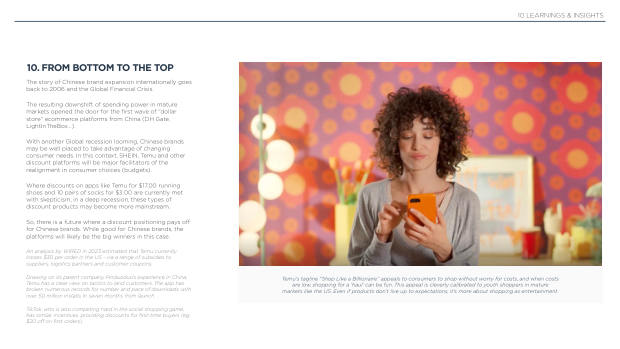
With a global slowdown looming, the report frames Chinese brands as potentially well-placed for two shifts: a BRICS-aligned bloc seeking a blend of quality and affordability, and Western consumers turning more price-sensitive in a recession. A deep downturn could tip the scales toward discount business models — good for Chinese brands, though the platforms would likely be the bigger winners.
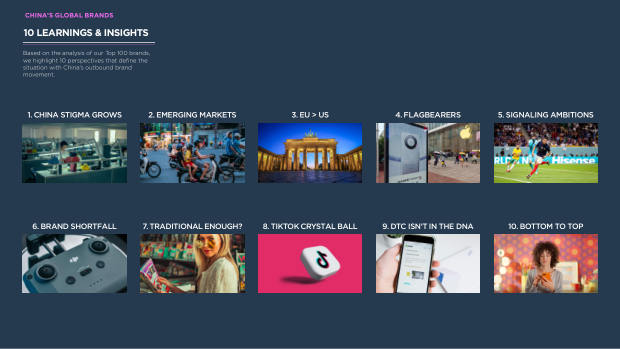
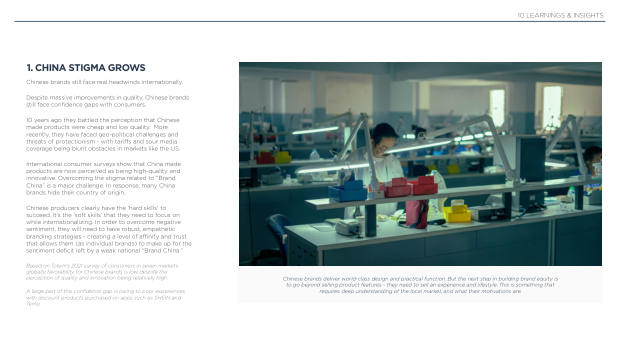
China stigma grows.
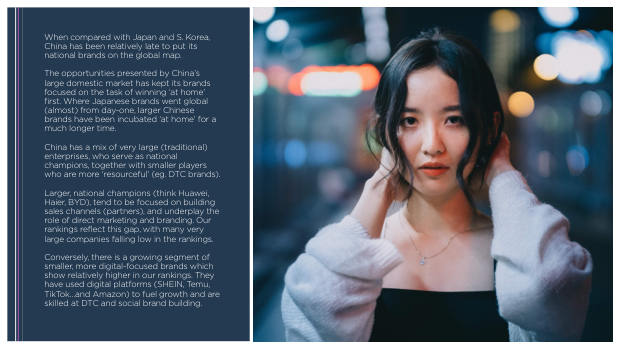
Despite major quality gains, Chinese brands still face a confidence gap. Where a decade ago the battle was "cheap and low quality," the newer obstacles are geopolitics, protectionism and sour Western media coverage. Consumer surveys now rate China-made products as high-quality and innovative, yet favourability stays low — and many brands respond by hiding their country of origin.
The branding shortfall.
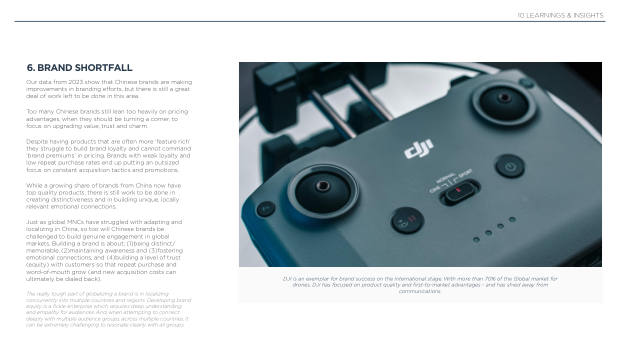
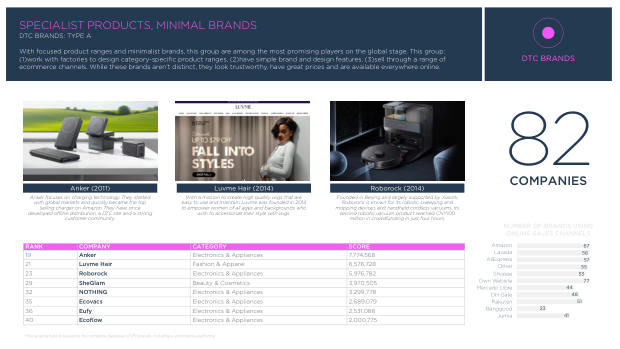
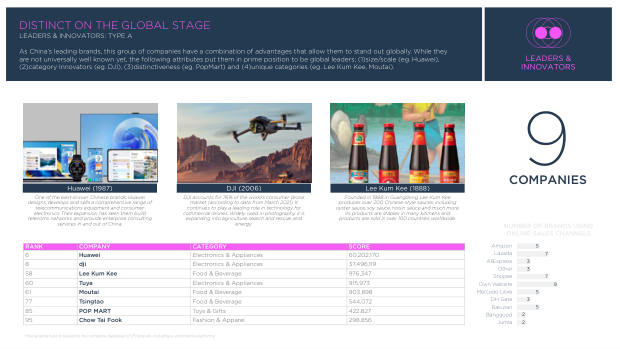
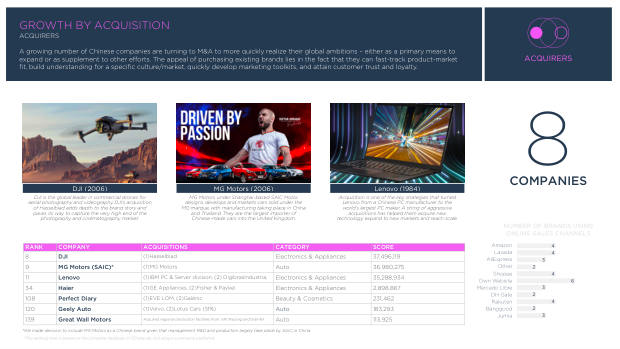
Too many brands lean on pricing advantages when they should be upgrading value, trust and charm. Feature-rich products still struggle to build loyalty or command a brand premium; weak loyalty forces an outsized focus on constant acquisition and promotion. DJI — with more than 70% of the global drone market — is held up as the exemplar of product-led success.
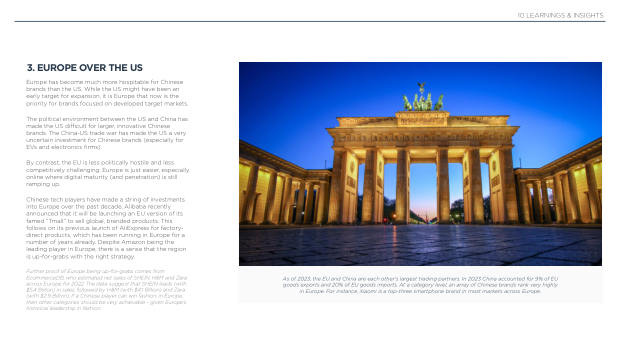
Europe over the US.
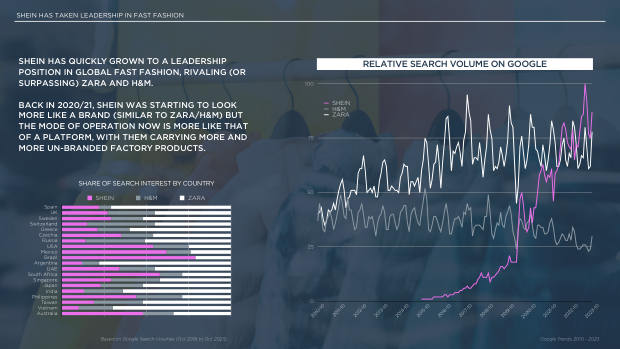
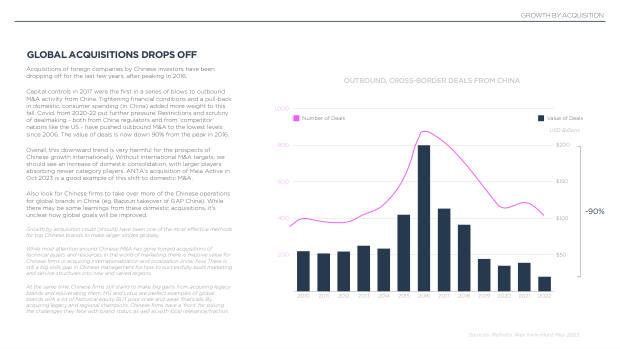
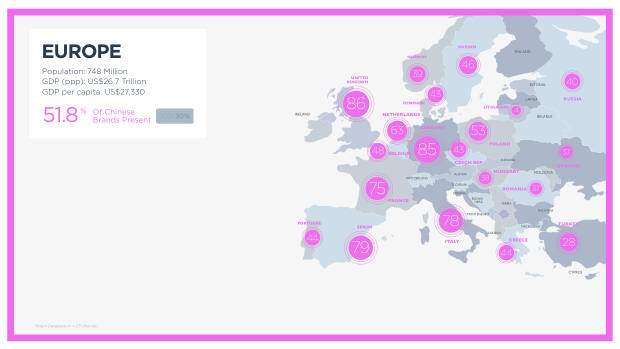
The US-China trade war has made the US an uncertain bet, especially for EV and electronics firms, while Europe is less hostile and less competitively saturated. The market is up for grabs: EcommerceDB estimated 2022 European net sales of SHEIN at $5.4B, ahead of H&M ($4.1B) and Zara ($2.9B).
Amazon propels Chinese brands.
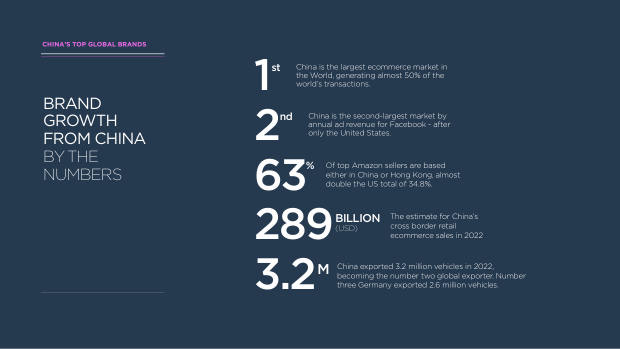
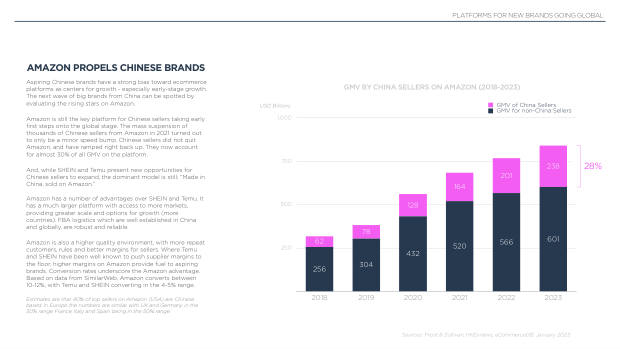
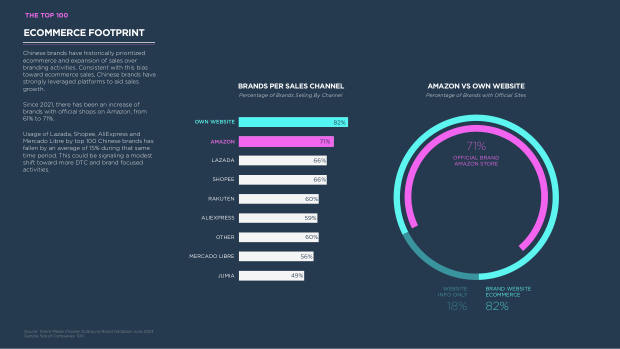
The 2021 seller purge proved a minor speed bump; Chinese sellers rebounded to roughly 28% of platform GMV. An estimated 40% of top US sellers are China-based (UK/Germany ~30%, France/Italy/Spain ~50%). Amazon's 10–12% conversion versus Temu and SHEIN's 4–5%, plus higher margins, keep "Made in China, sold on Amazon" the dominant model.
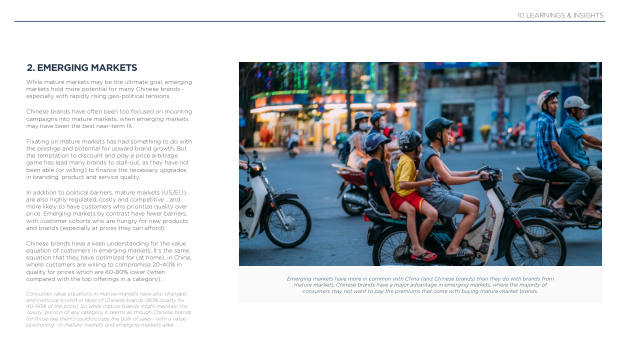
Emerging markets over mature ones.
Fixation on prestige mature markets has stalled many brands unwilling to fund the necessary upgrades. Emerging markets share China's value equation — consumers willing to trade ~20–40% of quality for prices 60–80% lower — and carry fewer regulatory and political barriers, making them the better near-term fit.
DTC isn't in the DNA.
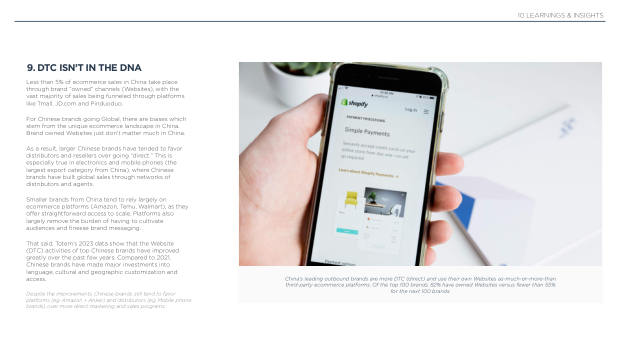
Less than 5% of ecommerce sales in China run through brand-owned channels; the rest flows through Tmall, JD and Pinduoduo. That bias travels: larger brands favour distributors and resellers, smaller brands lean on platforms. Still, 82% of the Top 100 now run owned websites, versus under 55% for the next 100 brands.
Signaling ambitions with sponsorships.
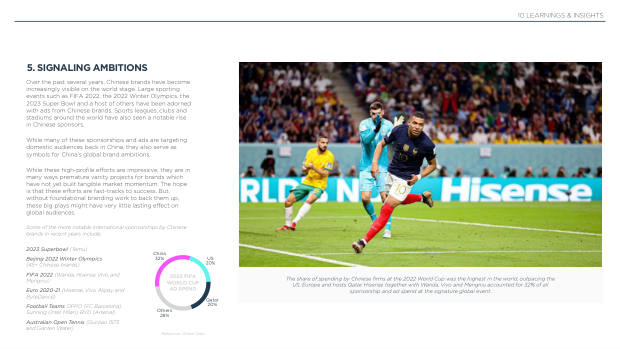
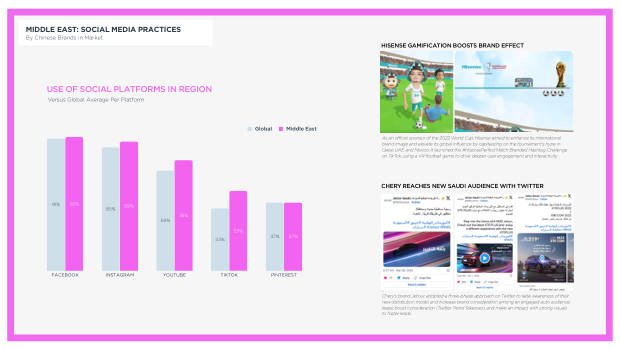
Chinese firms were the biggest spenders at the 2022 World Cup, with Hisense, Wanda, Vivo and Mengniu accounting for 32% of all sponsorship and ad spend — outpacing the US, Europe and host Qatar. The report reads many such plays as premature vanity projects without foundational branding to back them.
Category momentum is uneven.
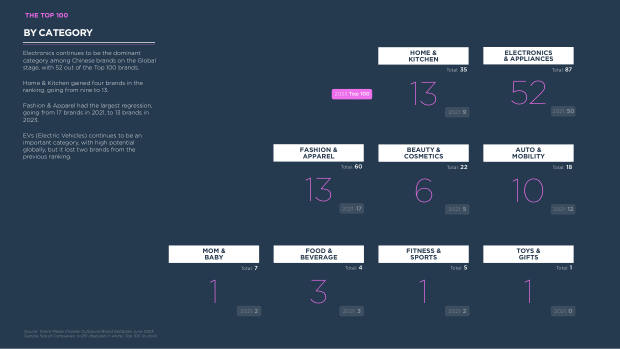
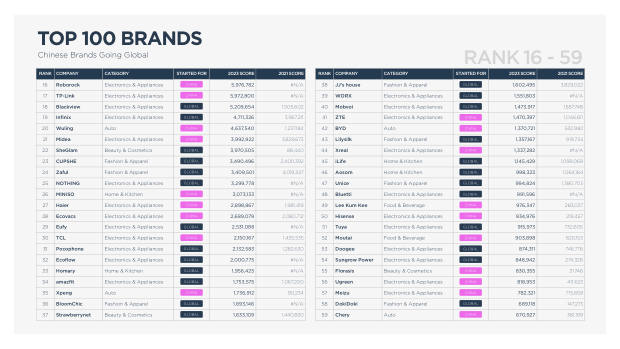
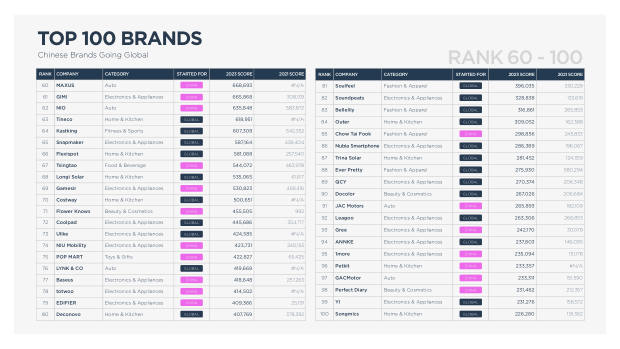
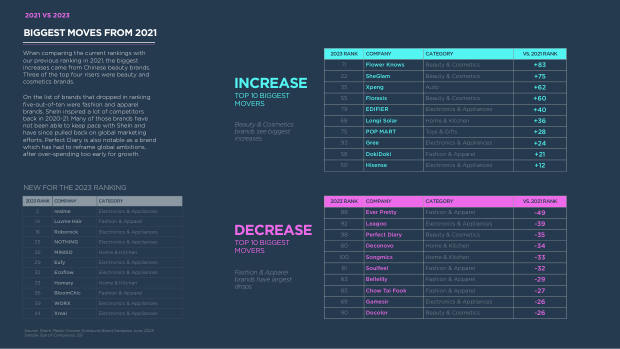
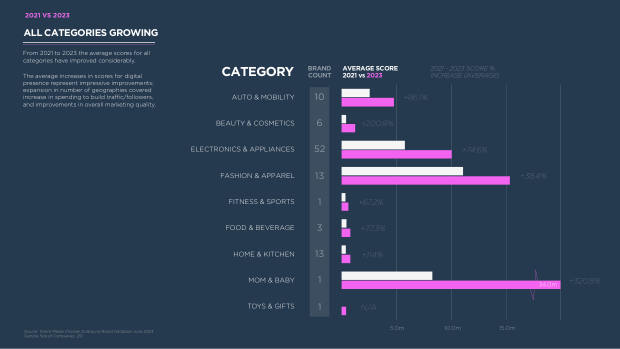
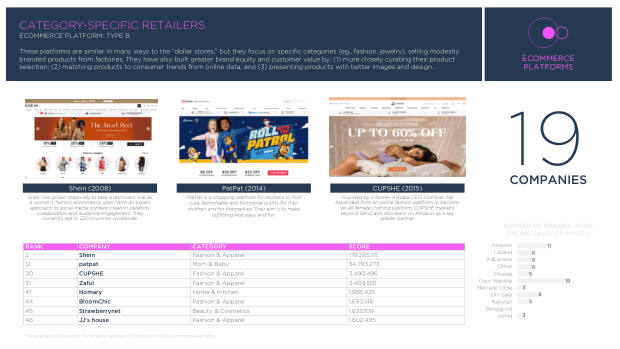
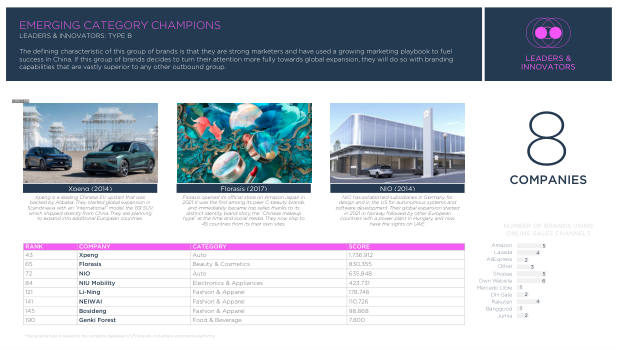
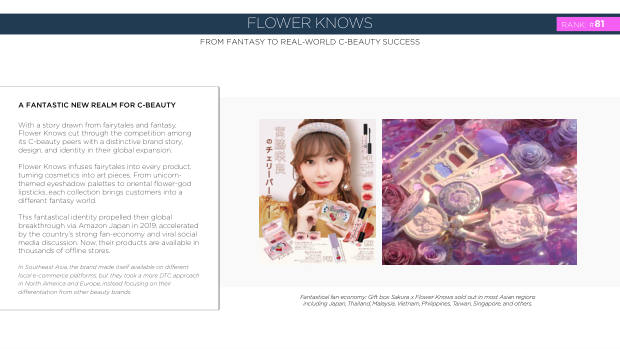
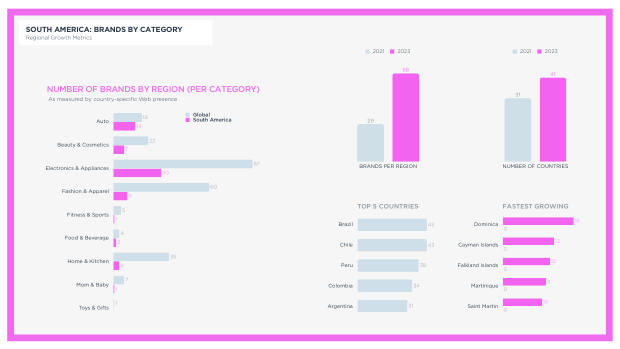
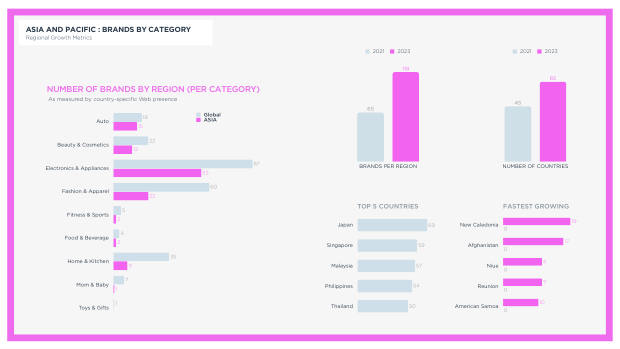
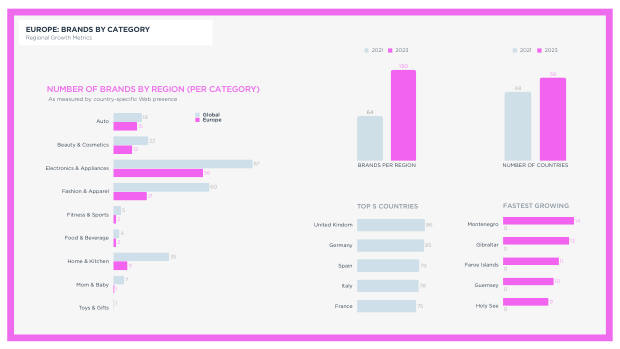
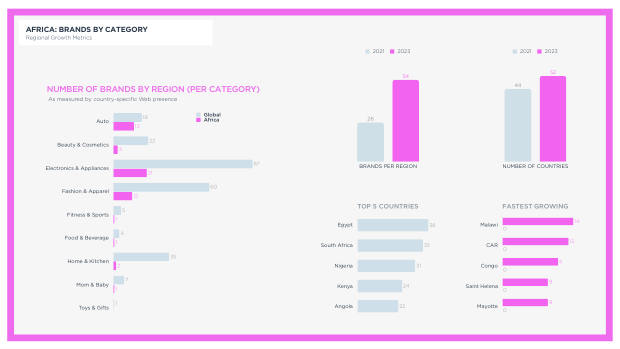
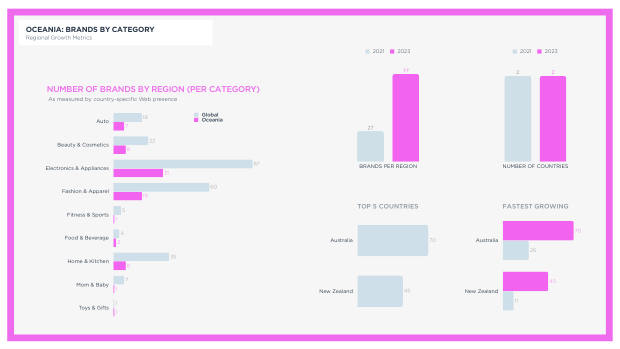
Electronics dominates with 52 of the Top 100; Home & Kitchen grew from 9 to 13 brands; Fashion & Apparel saw the largest regression, from 17 (2021) to 13. Beauty produced the biggest risers (Flower Knows +83, SheGlam +75, Florasis +60), while five of the ten biggest fallers were fashion brands unable to keep pace with SHEIN.







How large is the 2024 ranking's data set?
A total sample of 654 brands, narrowed to a 251-brand digital audit (June 2023 data) and a final Top 100. Brand Score = Web Traffic (40%) + Social Media (60%), with mass ecommerce platforms excluded from the ranking.
Who tops the Top 100?
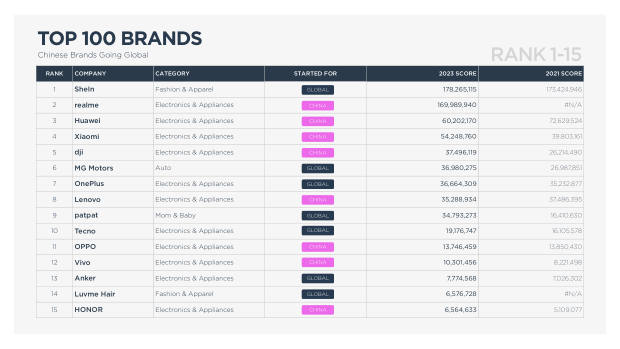
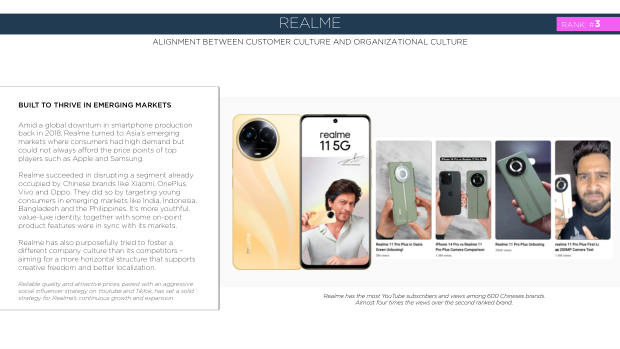
SHEIN ranks #1 (score 178.3M), followed by realme, Huawei, Xiaomi and DJI. MG Motors is the highest-ranked auto brand at #6.
Why does the report say "quantity over quality"?
Because beyond the top players the outbound cohort is thin — on average 75% of new Amazon sellers originate from China, but few are likely to become equitable brands, favouring a sales/trading ethos over trust and loyalty.
How far behind are Chinese brands on social?
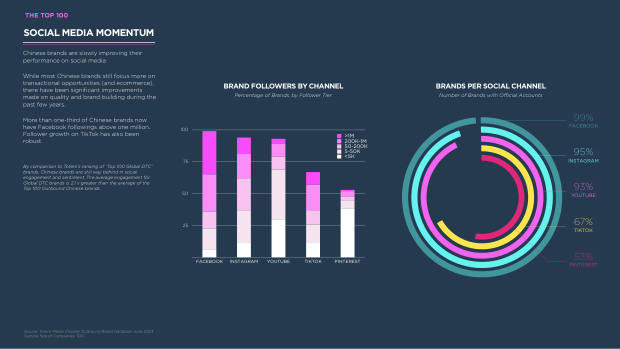
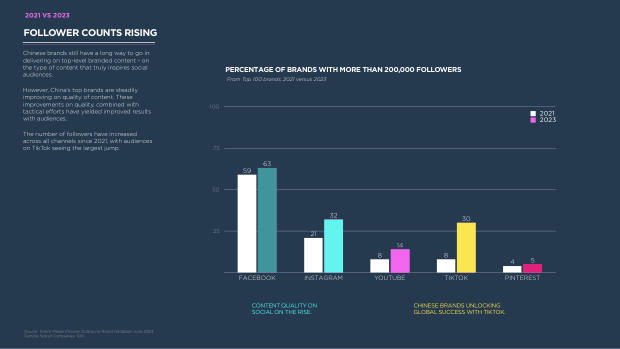
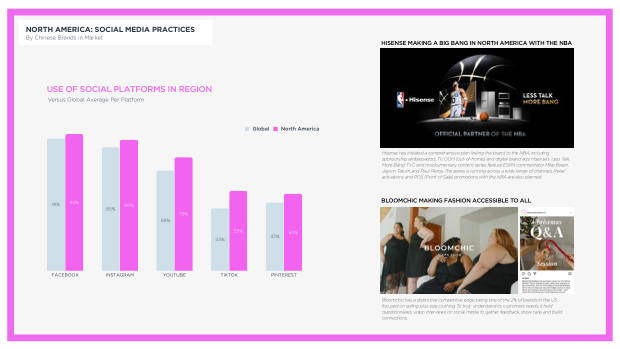
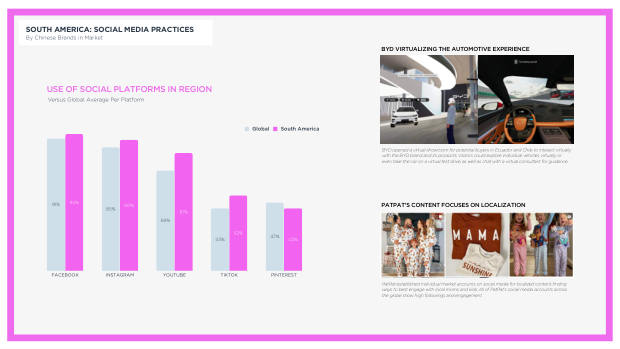
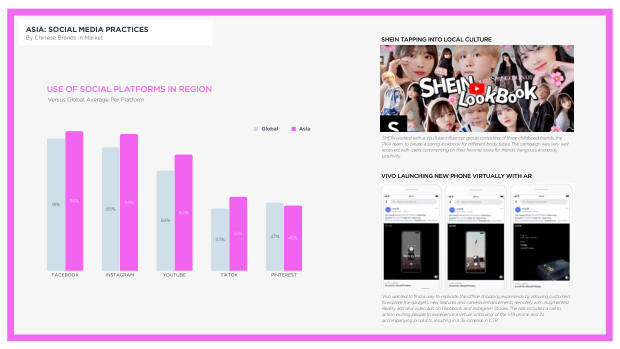
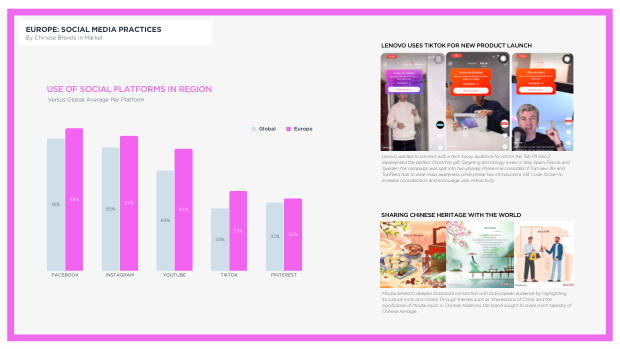
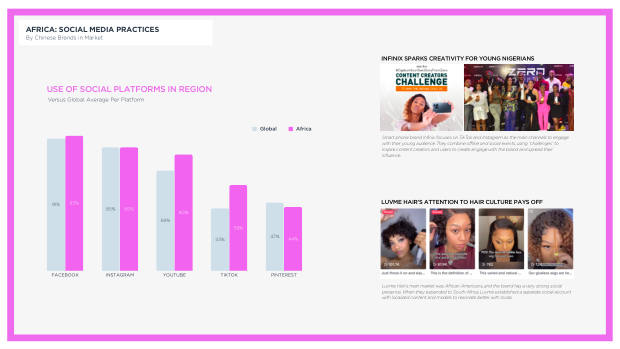
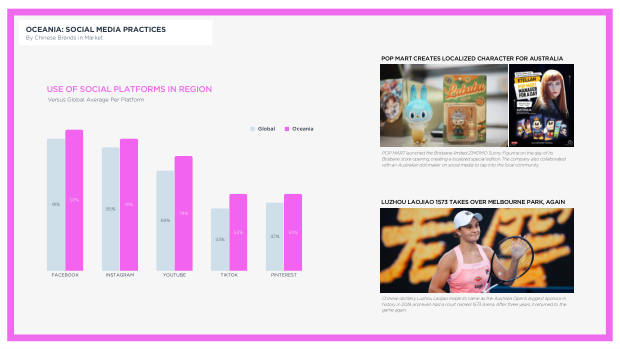
Average engagement for global DTC brands is 2.1x that of the Top 100 Chinese outbound brands, though follower counts rose across every channel from 2021 to 2023, with TikTok seeing the largest jump.
What are the "five pathways" it identifies?
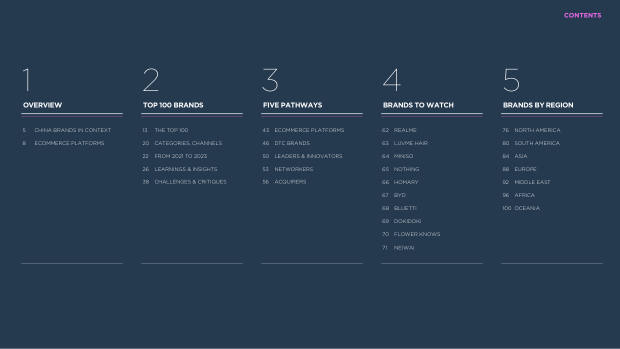
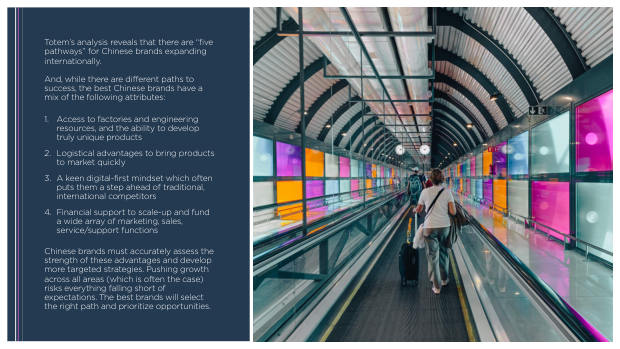
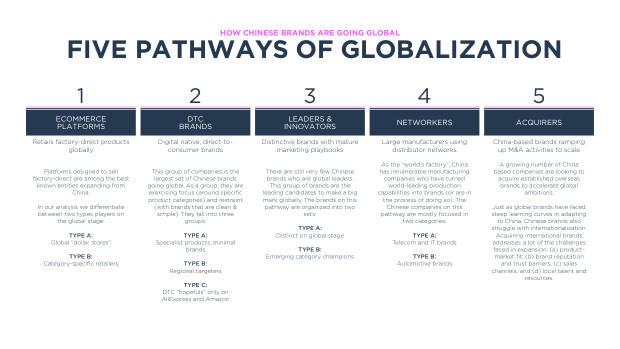
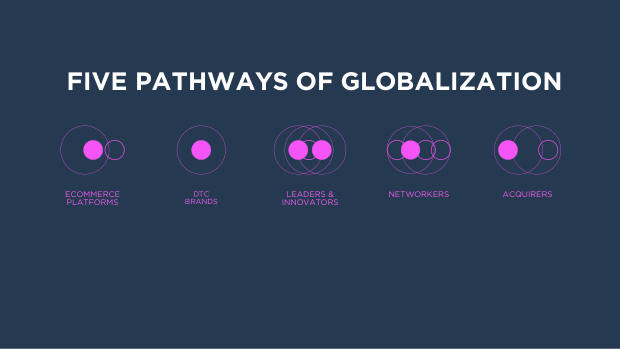
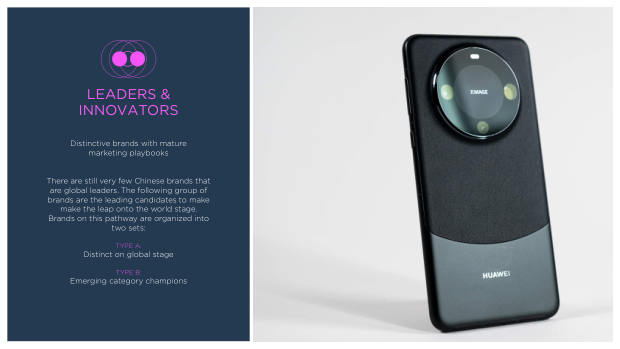
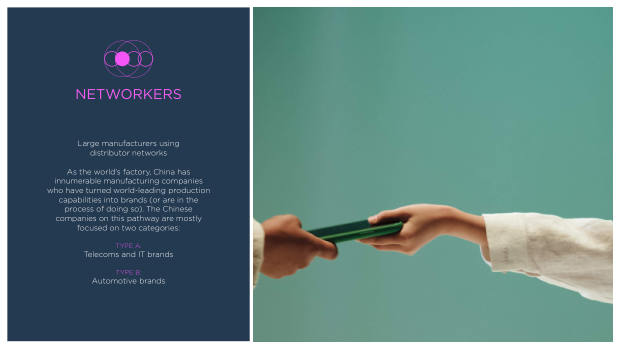
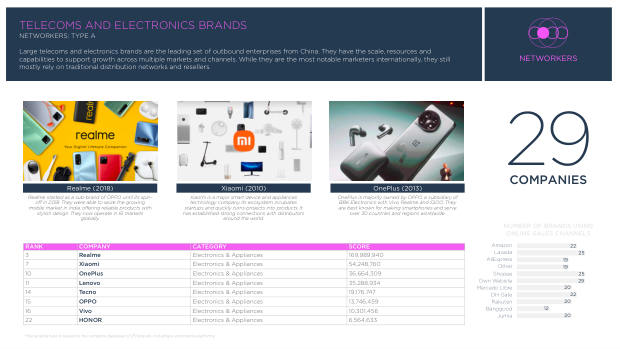
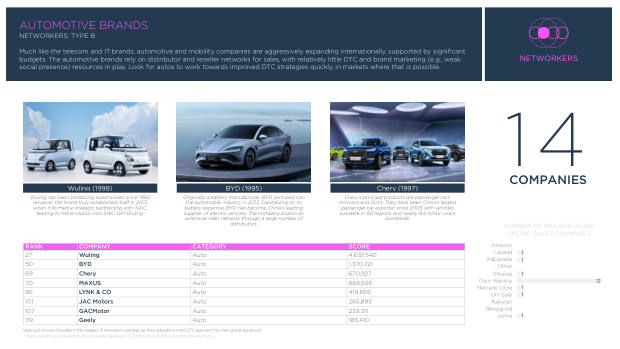
Ecommerce platforms, DTC brands, leaders & innovators, networkers (distributor-led manufacturers), and acquirers (M&A-led). The report argues the best brands select one path rather than pushing growth across all fronts.
Totem's second annual report on Chinese brands going global (the first was published in 2021), built to track relative performance year over year. From a total sample of 654 brands, a 251-brand digital audit (website, social and ecommerce data, June 2023) was scored on Web Traffic (40%) and Social Media (60%) — social weighted toward Facebook, Instagram, YouTube, TikTok and Pinterest — to produce the Top 100. Consideration is limited to China-headquartered consumer/retail brands with a website and at least one major digital channel; media, IT/game, B2B and service/state-owned enterprises are excluded, as are global brands owned or invested in by Chinese companies.
Get the full report
Leave your details — we'll email you the PDF and give you the download straight away.