Chinese Brands Going Global 2022: quantity over quality, and the long road to brand equity
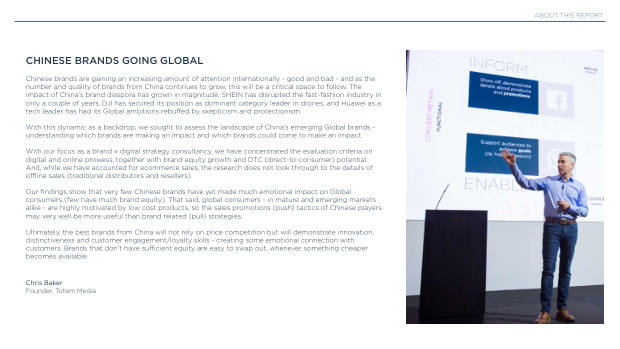
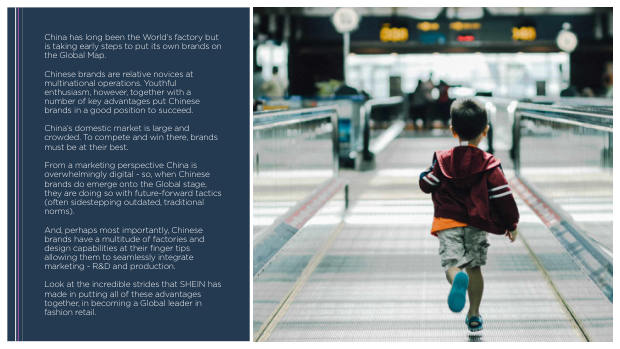
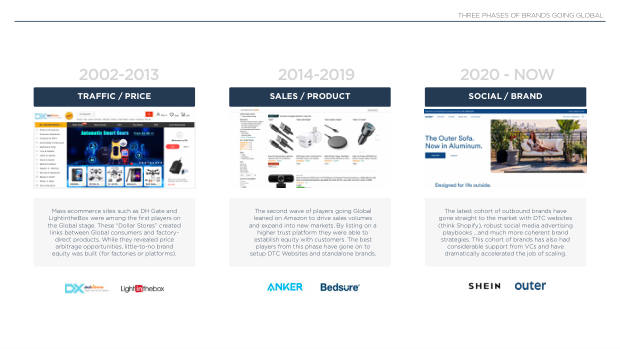
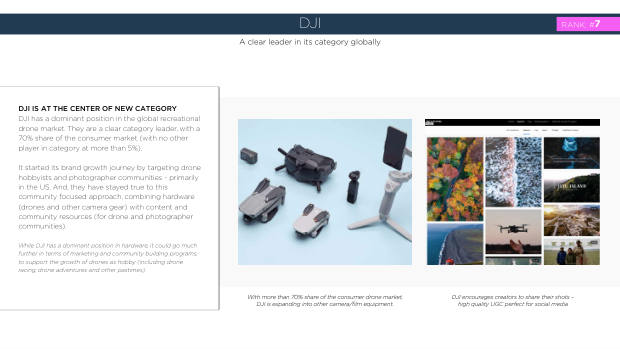
Chinese brands are gaining international attention, good and bad, but the cohort venturing outbound is still thin once you look past the leaders. Shein has disrupted fast fashion in a couple of years and DJI holds more than 70% of the global consumer-drone market, yet very few Chinese brands have built genuine emotional equity with global consumers. The advantages are real — proximity to factories and design, a digital-first mindset, and a large, brutally competitive home market that forces brands to sharpen — but most players still lean on price rather than distinctiveness.
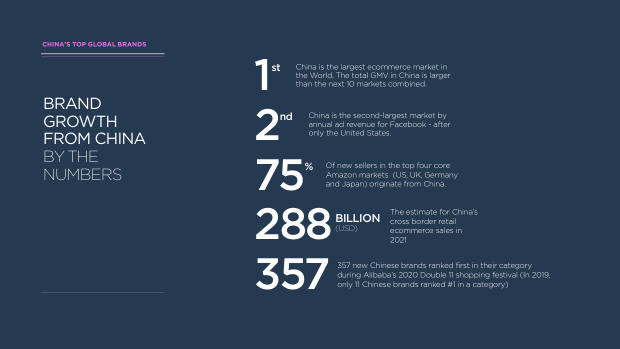
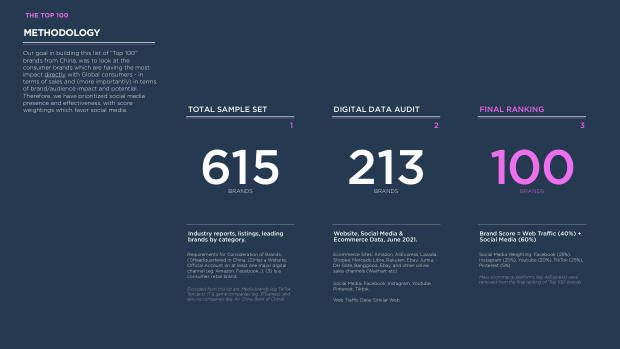
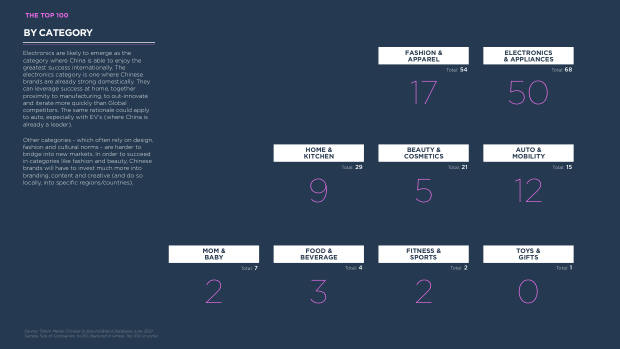
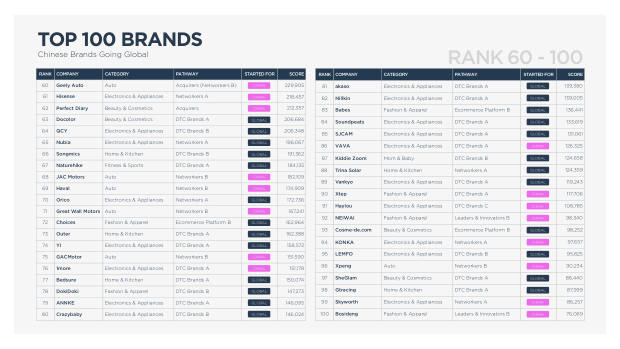
Totem screened a total sample of 615 brands down to a digital audit of 213 and a final ranking of 100, scored on web traffic (40%) and social media (60%). Shein tops the list by a wide margin, followed by Huawei and Xiaomi. Electronics and appliances dominate the Top 100 with 50 of the 100 places, ahead of fashion and apparel (17) and auto and mobility (12). The rise mirrors China's C2M (consumer-to-manufacturer) trend, and on average 75% of new sellers across the top four Amazon markets (US, UK, Germany, Japan) now originate from China.
The report's central caution is that a sales-and-trading ethos travels poorly. Most outbound brands favour acquisition tactics over trust, with weak loyalty, low repeat rates and high churn. The best of China's brands will not rely on price competition but will need to build distinctiveness, awareness and emotional connection — and to do that concurrently across multiple markets while overcoming a lingering "Brand China" stigma.
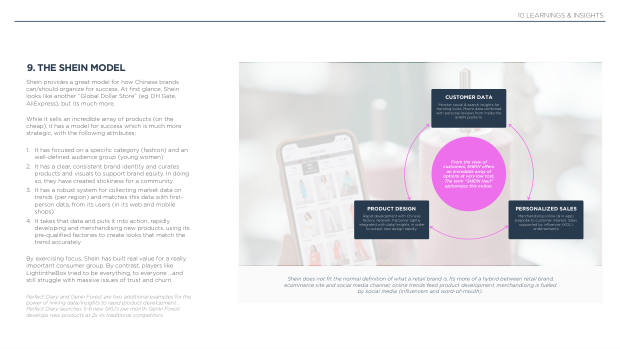
Shein leads a top-heavy field.
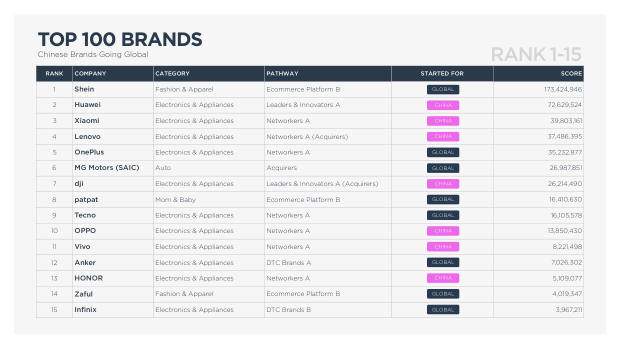
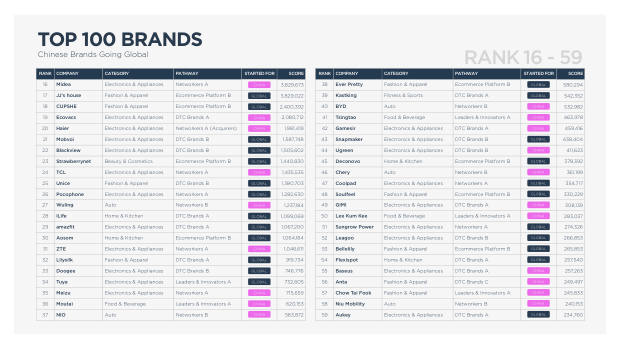
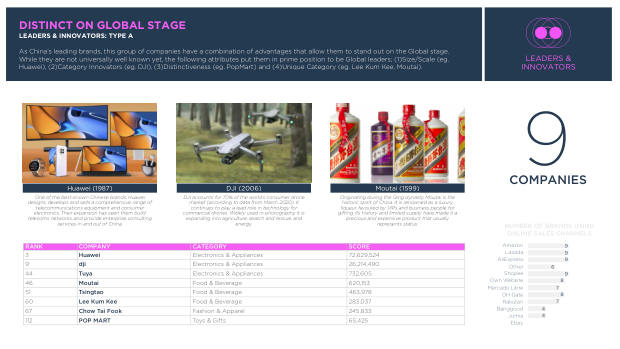
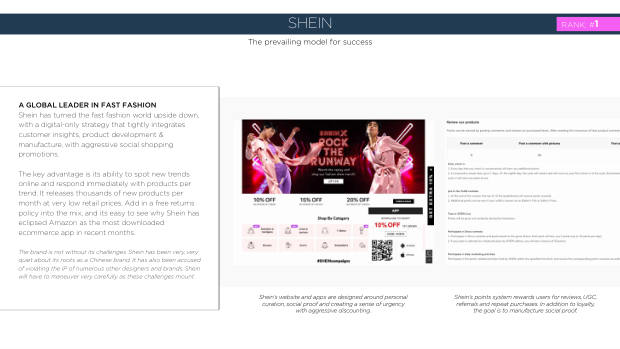
Shein tops the ranking with a brand score of roughly 173 million, ahead of Huawei (73m) and Xiaomi (40m). The report frames the wider list as a case of quantity over quality: once past the leaders, it remains a weak cohort favouring sales volume over brand building.
Electronics is where China wins first.
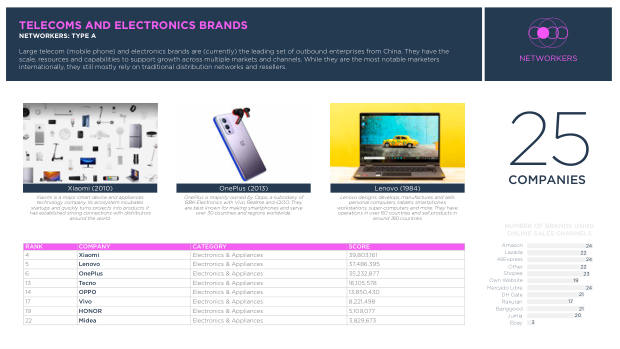
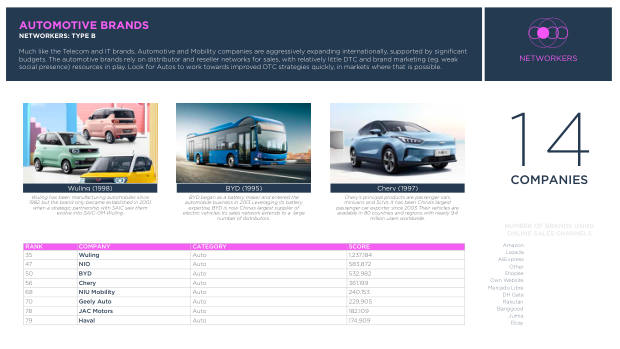
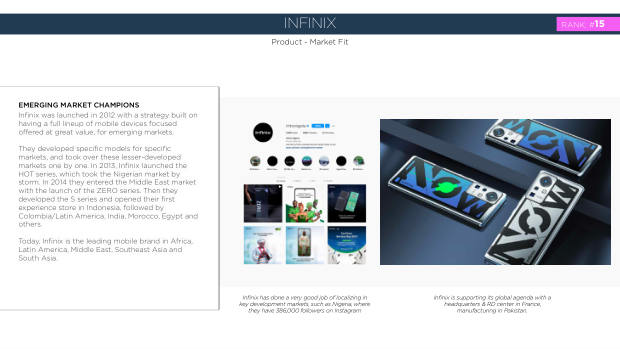
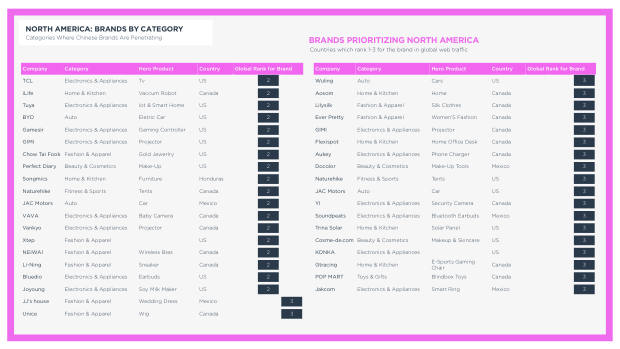
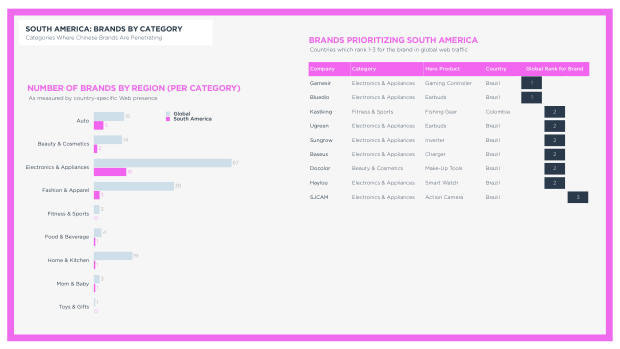
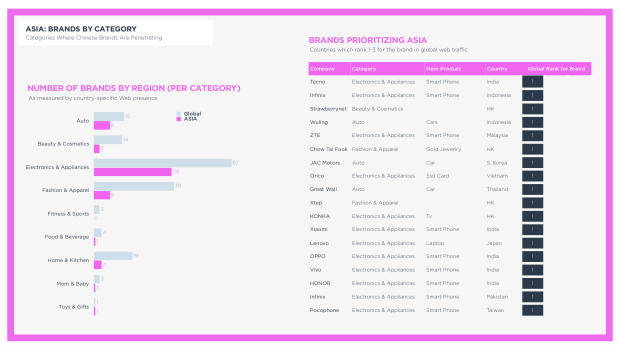
Electronics and appliances take 50 of the 100 places, versus 17 for fashion and apparel and 12 for auto and mobility. Totem argues electronics (and, by extension, EVs) is the category where Chinese brands can most readily leverage home-market strength and manufacturing proximity to out-iterate global rivals.
Ecommerce first, brand a distant second.
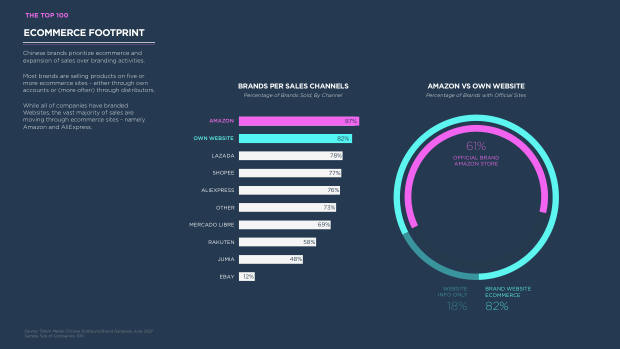
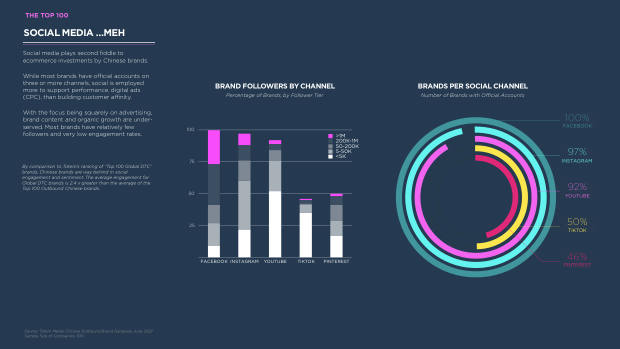
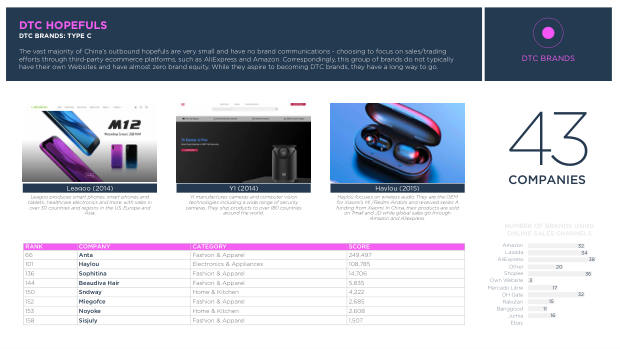
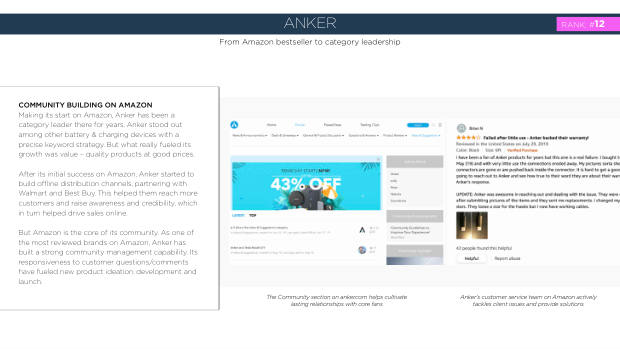
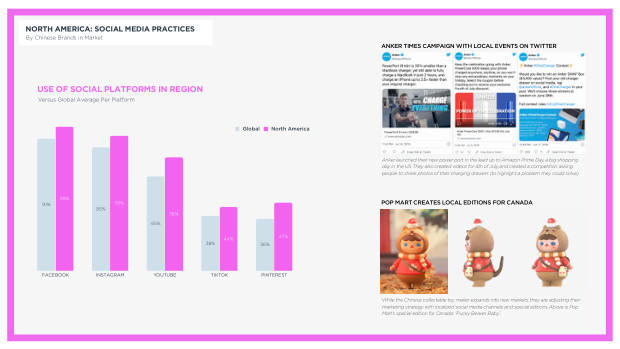
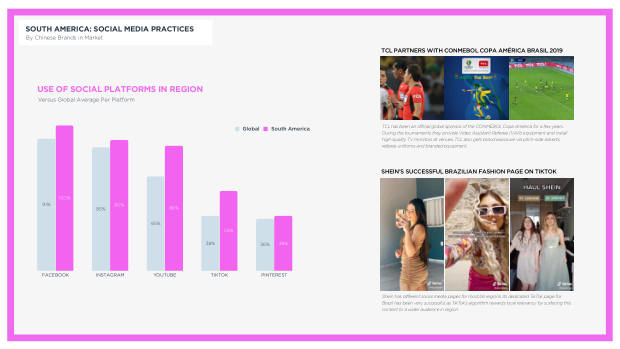
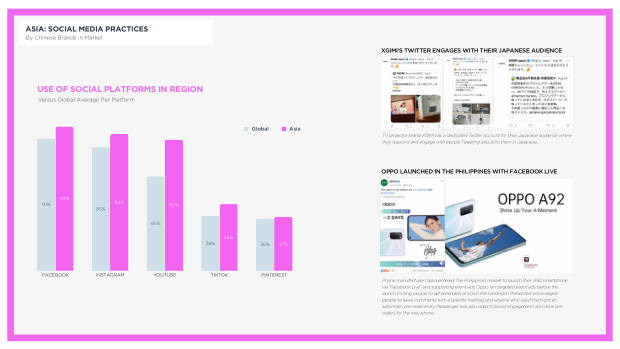
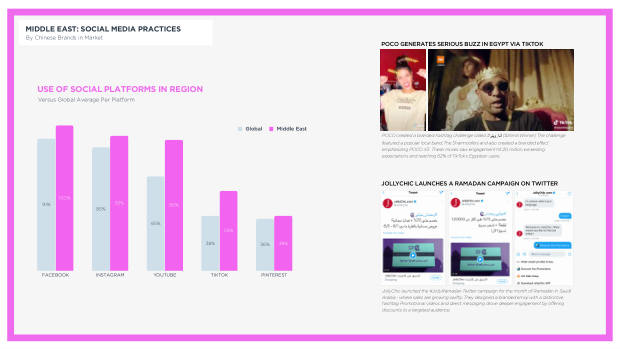
Of the Top 100, 82% run their websites as ecommerce stores and 61% operate an official Amazon store; most sell across five or more channels, led by Amazon and AliExpress. Social presence is wide but shallow — 100% are on Facebook and 97% on Instagram — but with low follower counts and weak engagement, used mainly to support performance ads rather than affinity.
A persistent brand-equity shortfall.
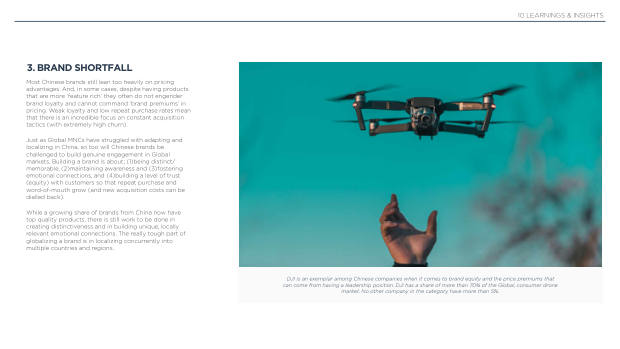
Average social engagement for the Top 100 runs at about 40% of the level of Totem's global DTC benchmark (a 2.4x gap). Weak loyalty and low repeat-purchase rates force constant, high-churn acquisition. DJI is the standout exception, using a >70% category share to command genuine price premiums.
Sponsorship as a signal, not a return.
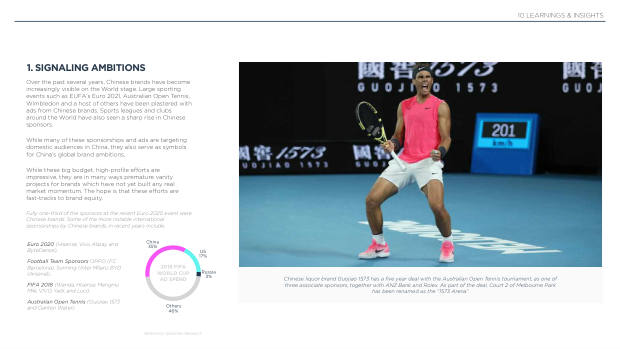
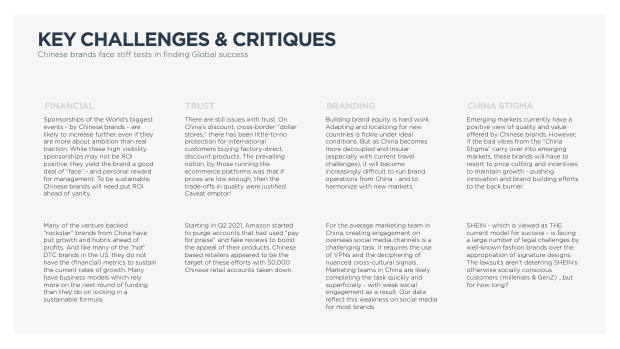
Fully one-third of sponsors at Euro 2020 were Chinese brands, and Chinese brands accounted for 35% of 2018 FIFA World Cup ad spend. Totem reads many of these high-profile deals as premature "vanity projects" that buy face more than measurable ROI.
Quality is recognised; favourability is not.
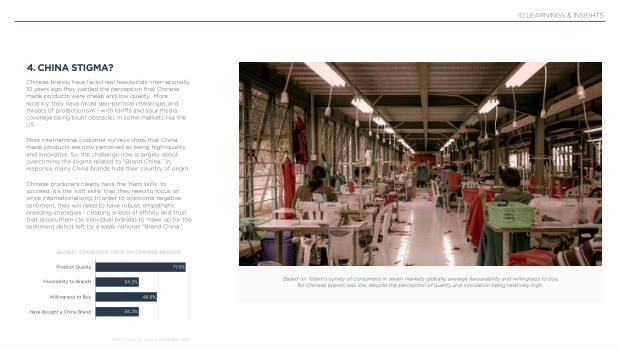
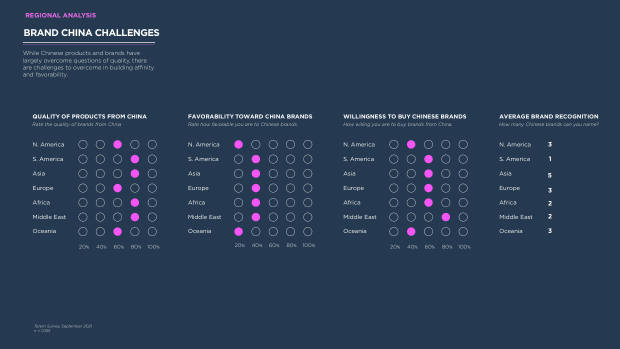
In Totem's seven-country consumer survey, 71.5% rated Chinese product quality positively, yet favourability and willingness to buy each sat at only 34.3%. The hard skills are in place; the soft skills — trust, affinity, distinctiveness — are the gap, which is why many brands hide their country of origin.
DTC is not yet in the DNA.
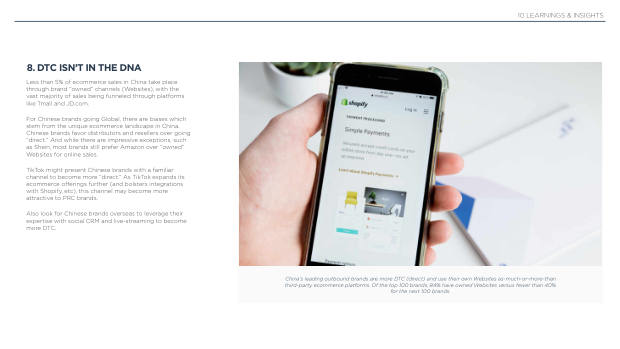
Less than 5% of ecommerce sales in China flow through brand-owned channels, and that bias carries overseas: Chinese brands prefer distributors and Amazon over owned sites. The leaders behave differently — 84% of the Top 100 have owned websites versus fewer than 40% of the next 100.
Five pathways, and a "win at home first" thesis.
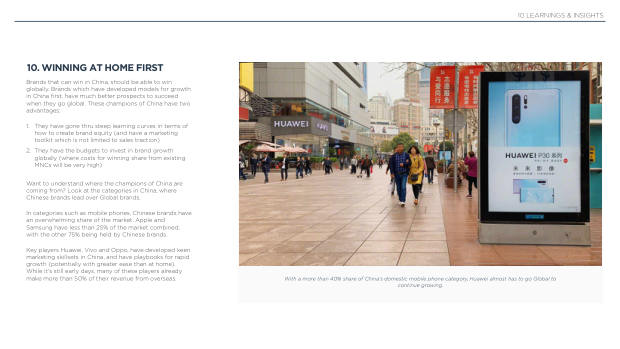
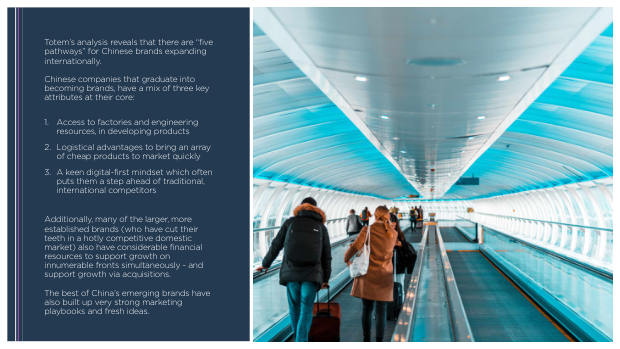
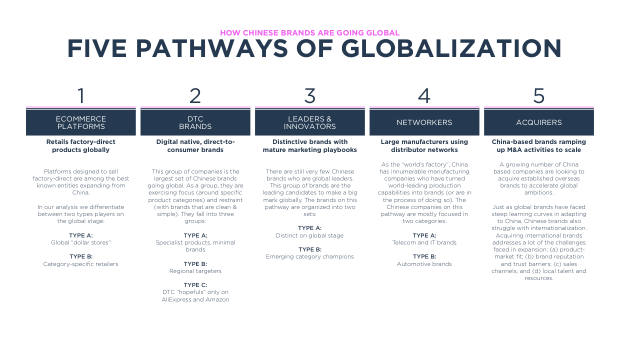
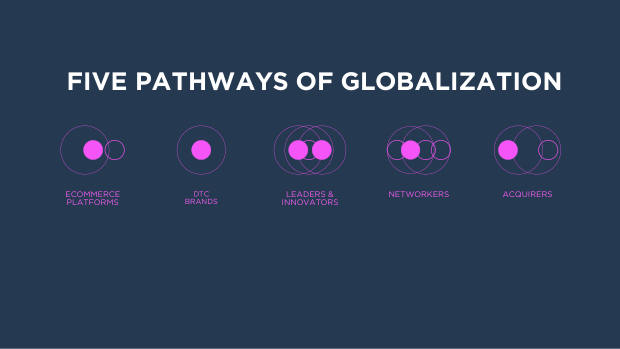
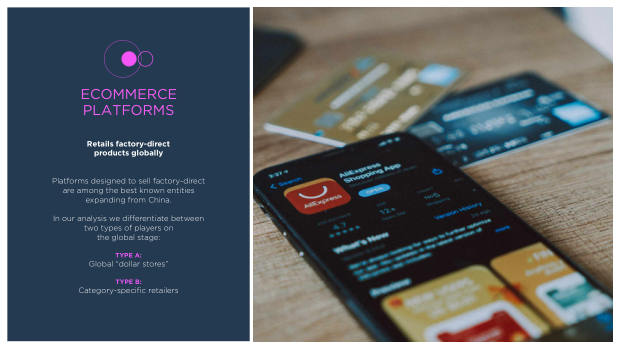
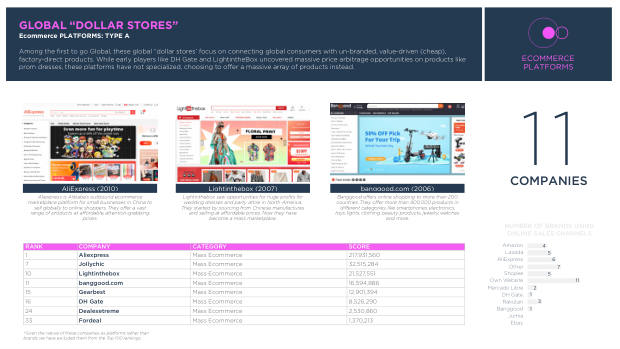
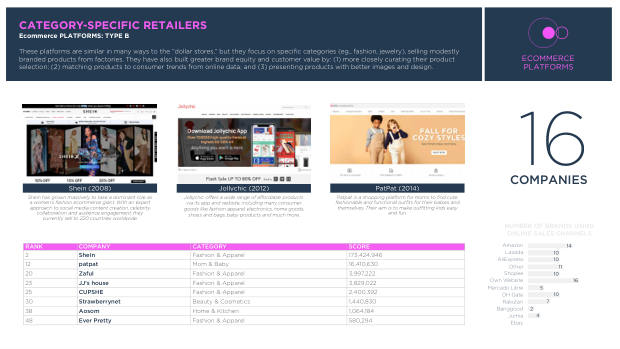
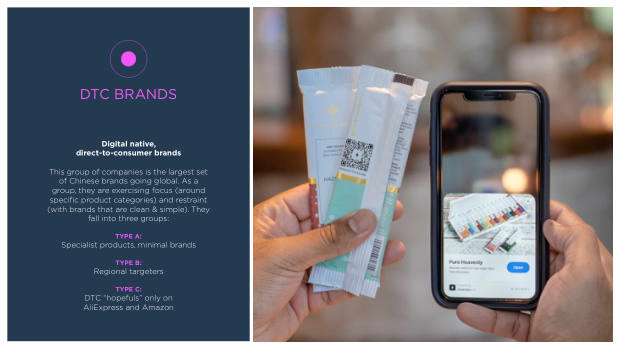
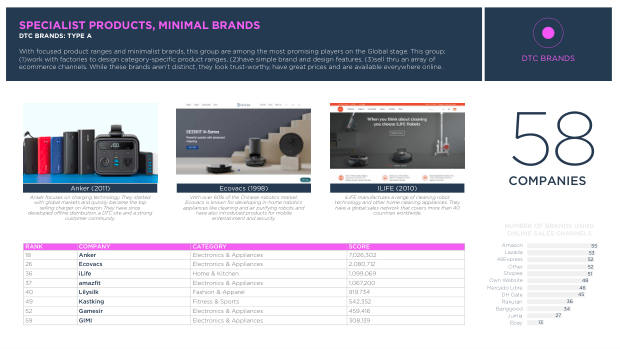
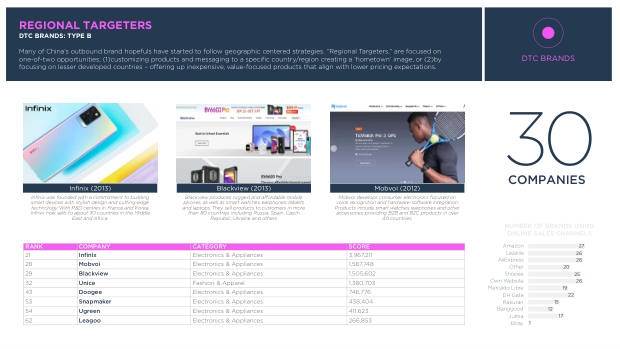
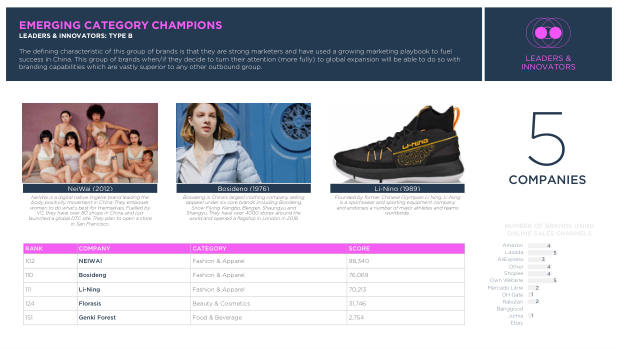
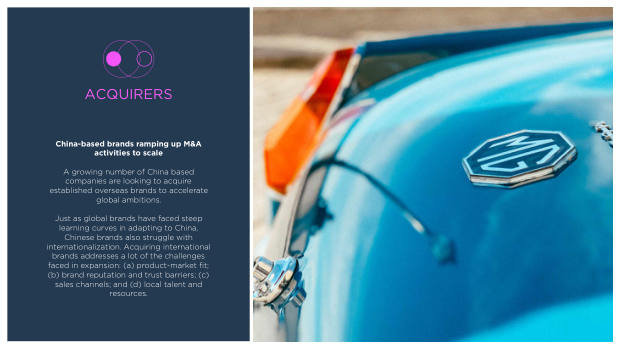
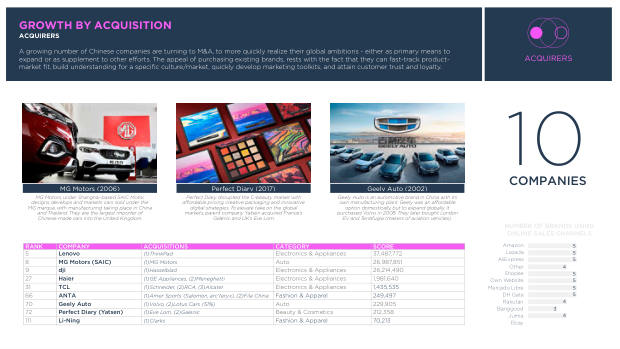
Totem sorts outbound brands into five pathways — ecommerce platforms, DTC brands, leaders and innovators, networkers, and acquirers. Its throughline: brands that learned to build equity in China's cut-throat market (Huawei, Vivo, Oppo, where Apple and Samsung hold under 25% combined) have the budgets and playbooks to succeed globally.








How was the Top 100 built?
From a total sample of 615 China-headquartered consumer brands, narrowed to a 213-brand digital audit (website, social and ecommerce data, June 2021), then a final 100 scored on web traffic (40%) and social media (60%). Mass platforms such as AliExpress were excluded from the final ranking.
Which brands lead the ranking?
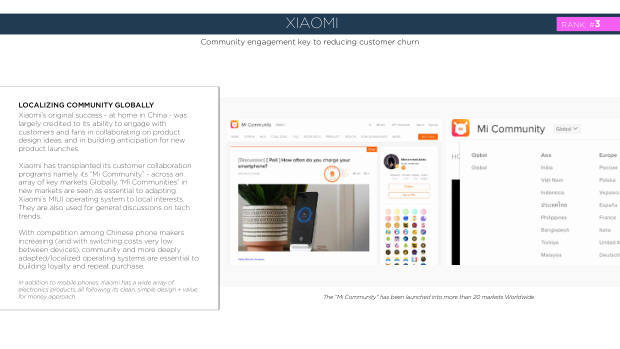
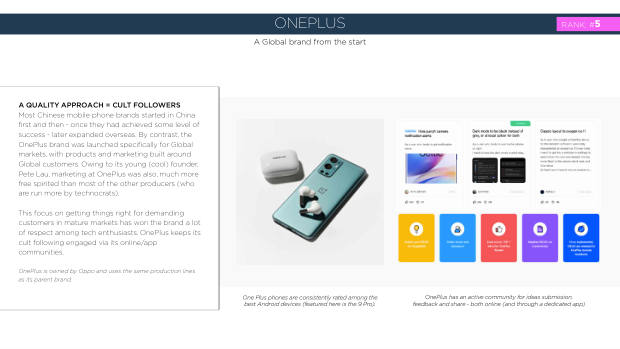
Shein is first by a wide margin (score ~173m), followed by Huawei, Xiaomi, Lenovo and OnePlus. Electronics brands fill most of the top of the list.
Why do so few Chinese brands have strong brand equity?
Most still compete on price and prioritise acquisition over loyalty, producing high churn and low repeat purchase. Average social engagement trails global DTC brands by 2.4x, and favourability sits at 34.3% despite quality perceptions of 71.5%.
What is the "Brand China" stigma?
A residual reputational headwind — geopolitical friction, tariffs and older cheap-and-low-quality perceptions — that individual brands must overcome with empathetic, locally relevant branding, often by downplaying their Chinese origin.
What does the report recommend?
Move beyond price and vanity sponsorships toward distinctiveness, sustained awareness and emotional connection, localise concurrently across markets, and follow the leaders that built equity at home before scaling abroad.
Totem's assessment of China's emerging global brands, focused on digital and online prowess, brand-equity growth and DTC potential rather than offline distribution. From a total sample of 615 China-headquartered consumer brands (each with a website and an official account on at least one major channel), Totem ran a digital data audit of 213 brands using website, social media and ecommerce data from June 2021, then produced a final Top 100 scored on web traffic (40%) and social media (60%), with social weighted across Facebook, Instagram, YouTube, TikTok and Pinterest. Media, IT/gaming and service companies were excluded, as were mass ecommerce platforms from the final ranking.
Get the full report
Leave your details — we'll email you the PDF and give you the download straight away.