Asia · Report · 2023

Asia ecommerce country snapshots: a $1.8 trillion, social-first, fragmented market

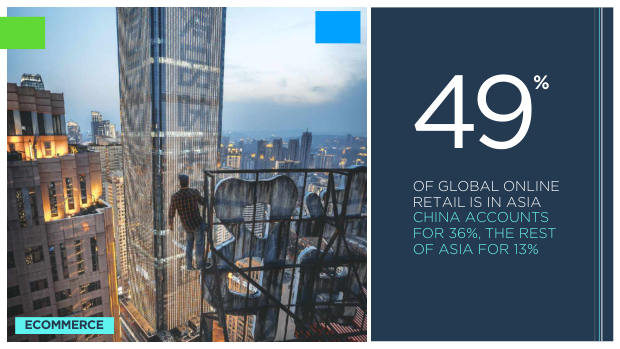
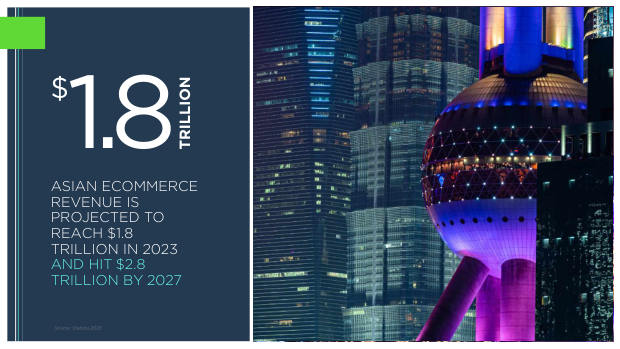
Asia is the centre of gravity for global ecommerce. Regional revenue is projected to reach $1.8 trillion in 2023 and $2.8 trillion by 2027, and the region already accounts for 49% of global online retail — China alone for 36%, the rest of Asia for 13%. By 2025 Asia is expected to have 3.1 billion online shoppers, with Southeast Asia having added over 70 million during Covid alone.

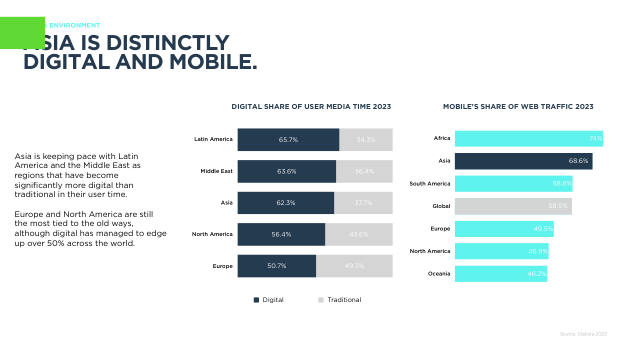
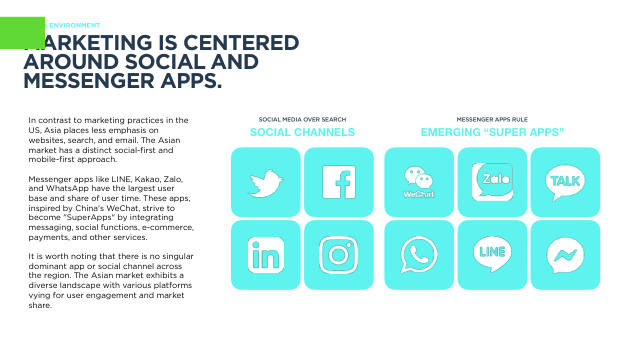
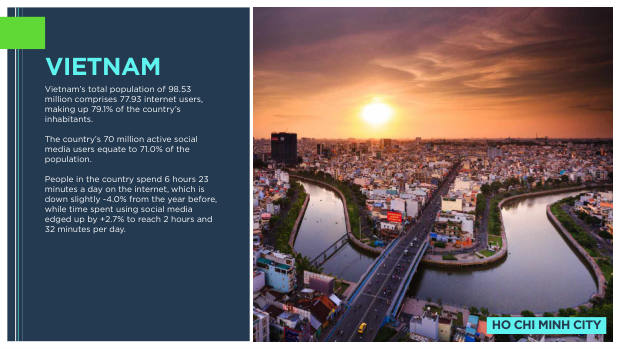
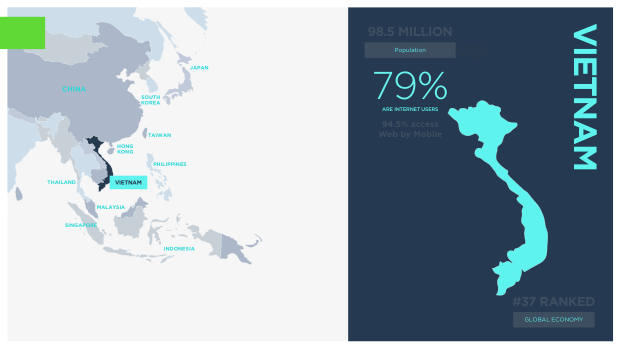
The market is distinctly digital, mobile and social-first. Unlike the US, Asia places less weight on websites, search and email, and marketing centres on social and messenger apps. Messaging platforms — LINE, Kakao, Zalo and WhatsApp, all following WeChat's "super app" template of bundling messaging, social, commerce and payments — command the largest share of user time, and social commerce dominates: in Vietnam it makes up around 65% of a $22 billion online economy.

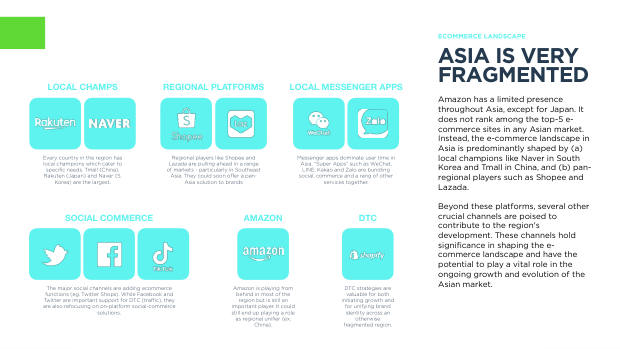
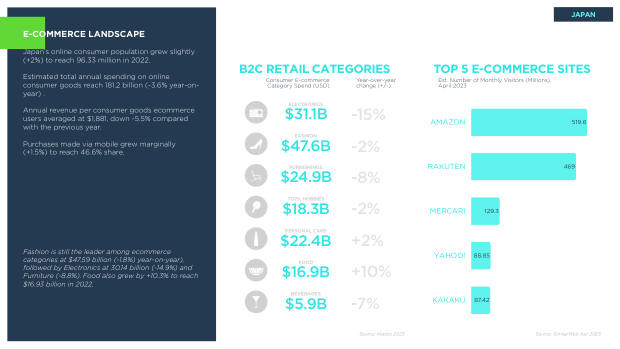
Crucially, there is no single dominant platform. Amazon does not rank among the top five ecommerce sites in any Asian market except Japan. The landscape is instead shaped by local champions (Tmall in China, Naver in South Korea, Rakuten in Japan) and pan-regional players (Shopee and Lazada). That fragmentation makes market-by-market strategy essential, and gives direct-to-consumer approaches value both for initiating growth and for unifying brand identity across the region.

$1.8T
projected Asian ecommerce revenue in 2023, rising to $2.8 trillion by 2027
49%
of global online retail that sits in Asia (China 36%, rest of Asia 13%)
3.1B
online shoppers expected in Asia by 2025
~65%
of Vietnam's $22 billion online economy that flows through social commerce
1
Asian markets where Amazon ranks in the top five ecommerce sites (Japan only)
Key findings

Ecommerce keeps rising in the East, led by China.

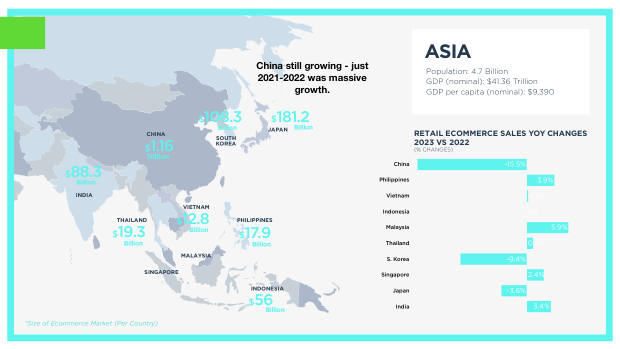
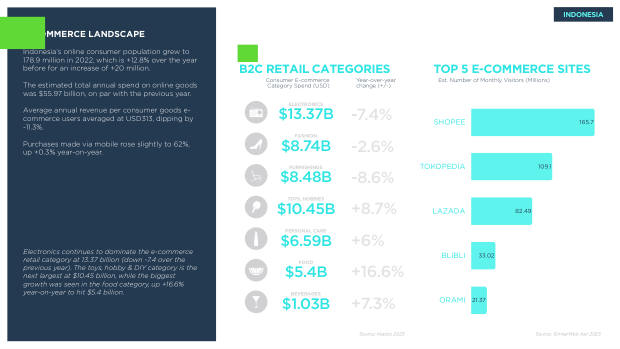
Asian ecommerce is projected at $1.8 trillion in 2023 and $2.8 trillion by 2027. China remains by far the largest B2C market — a $1.16 trillion market that, despite growth moderating from its pandemic surge, was still expanding at +3.4% year-on-year in 2023. Growth is uneven across the region, from Thailand at +5.9% and Vietnam at +2.4% to Indonesia at -9.4% and India at -15.5%.

The region is social-first and mobile-first.

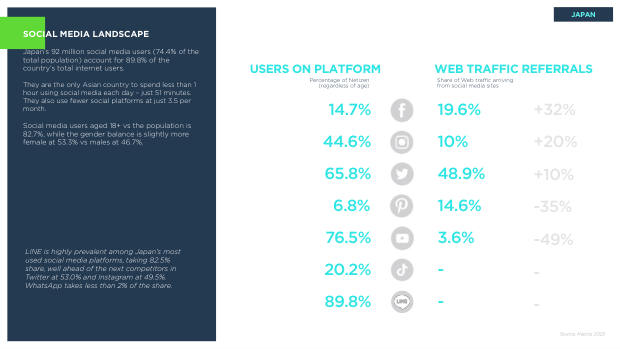
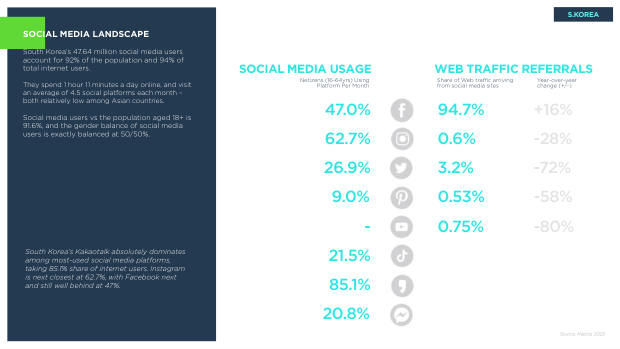
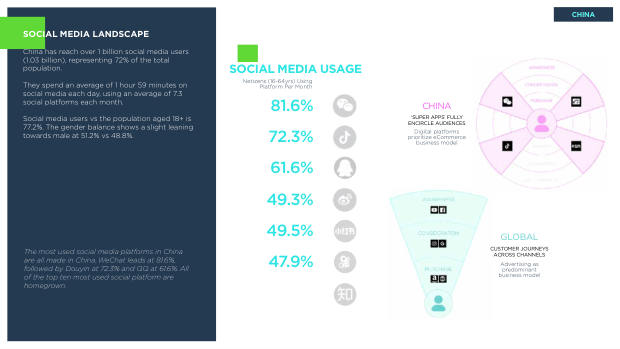
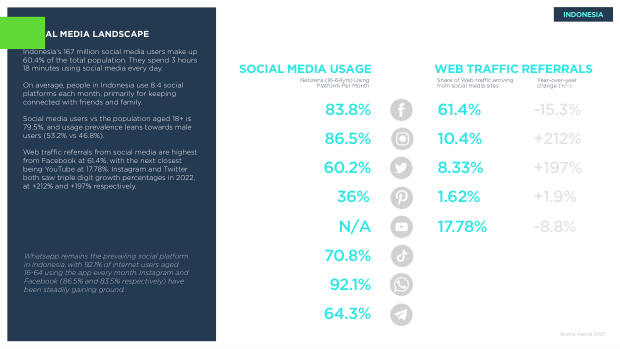
Marketing centres on social and messenger apps rather than websites, search and email. Messenger apps — LINE, Kakao, Zalo, WhatsApp — hold the largest user base and share of time, each racing to become a WeChat-style "super app" that bundles social, commerce and payments. In China, the top ten social platforms are all homegrown, led by WeChat (81.6%) and Douyin (72.3%).

Social commerce dominates the funnel.

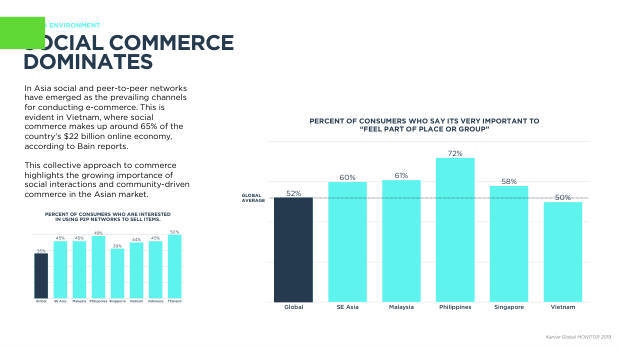
Peer-to-peer and social networks have become the prevailing ecommerce channels, exemplified by Vietnam, where social commerce makes up roughly 65% of the country's $22 billion online economy. Major social channels are adding native commerce functions, reinforcing an on-platform, community-driven model distinct from the Western search-and-website path.

The landscape is highly fragmented.

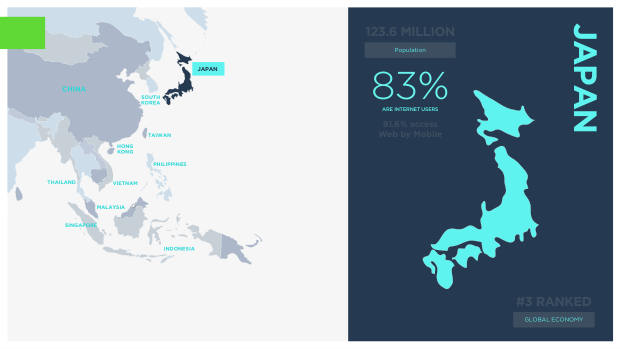
No single platform leads across Asia. Amazon is top-five in Japan only (where it ranks #1) and absent from the top five everywhere else, ceding ground to local champions (Tmall, Naver, Rakuten) and pan-regional players (Shopee, Lazada). This fragmentation is the defining strategic challenge for global brands entering the region.

China is the "big prize" — and a different world.

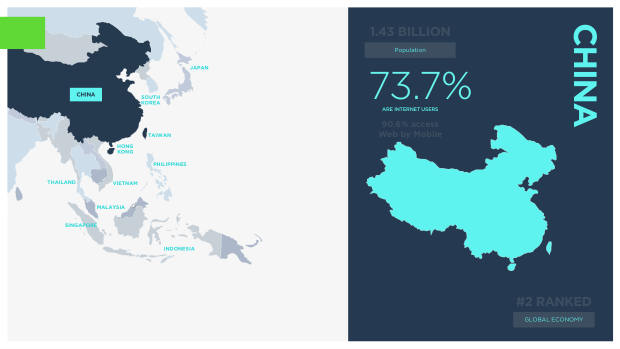
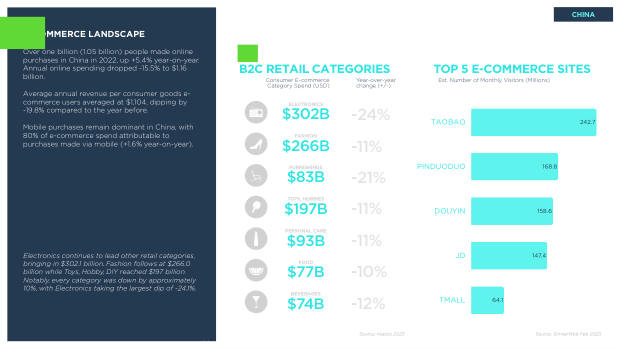
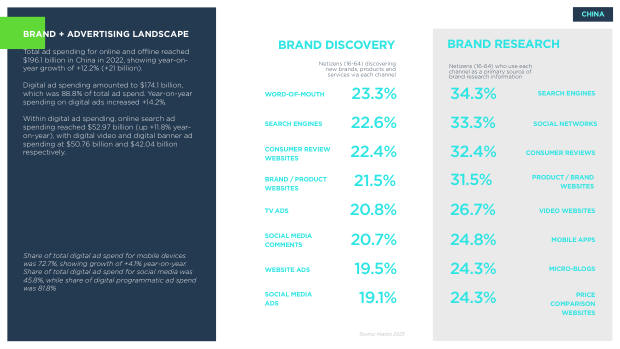
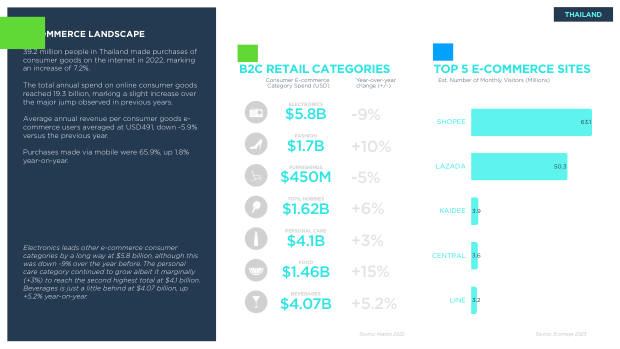
As the largest B2C ecommerce market globally, China should in many cases be the number one or only priority, since a big win there could eclipse the rest of Asia combined. But it is a separate ecosystem in language, culture and digital tooling, and its 2022 category spend fell across the board — electronics -24.1% to $302B, fashion -11% to $266B — even as digital took 88.8% of a $196 billion ad market.

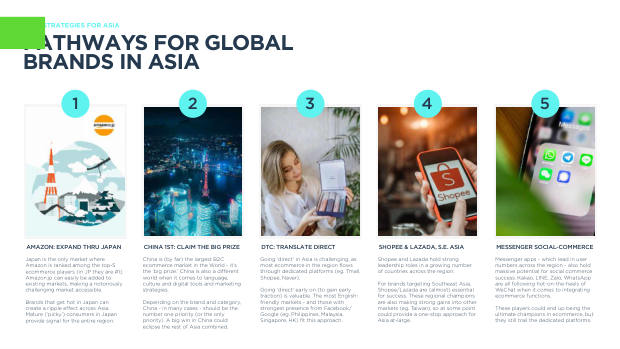
Five pathways structure entry.

The report lays out five strategies: prioritise China as the big prize; expand through Japan, the one market where Amazon leads and whose "picky" consumers signal for the region; translate DTC into English-friendly markets (Philippines, Malaysia, Singapore, Hong Kong); use Shopee and Lazada as the near-essential route into Southeast Asia; and tap messenger-app social commerce (Kakao, LINE, Zalo, WhatsApp) as a rising but still-trailing channel.

Inside the report
Asia ecommerce country snapshots: a $1.8 trillion, social-first, fragmented market — page 1Asia ecommerce country snapshots: a $1.8 trillion, social-first, fragmented market — page 2Asia ecommerce country snapshots: a $1.8 trillion, social-first, fragmented market — page 3Asia ecommerce country snapshots: a $1.8 trillion, social-first, fragmented market — page 4Asia ecommerce country snapshots: a $1.8 trillion, social-first, fragmented market — page 5Asia ecommerce country snapshots: a $1.8 trillion, social-first, fragmented market — page 6Asia ecommerce country snapshots: a $1.8 trillion, social-first, fragmented market — page 7Asia ecommerce country snapshots: a $1.8 trillion, social-first, fragmented market — page 8Asia ecommerce country snapshots: a $1.8 trillion, social-first, fragmented market — page 9Asia ecommerce country snapshots: a $1.8 trillion, social-first, fragmented market — page 10Asia ecommerce country snapshots: a $1.8 trillion, social-first, fragmented market — page 11Asia ecommerce country snapshots: a $1.8 trillion, social-first, fragmented market — page 12Asia ecommerce country snapshots: a $1.8 trillion, social-first, fragmented market — page 13Asia ecommerce country snapshots: a $1.8 trillion, social-first, fragmented market — page 14Asia ecommerce country snapshots: a $1.8 trillion, social-first, fragmented market — page 15Asia ecommerce country snapshots: a $1.8 trillion, social-first, fragmented market — page 16Asia ecommerce country snapshots: a $1.8 trillion, social-first, fragmented market — page 17Asia ecommerce country snapshots: a $1.8 trillion, social-first, fragmented market — page 18Asia ecommerce country snapshots: a $1.8 trillion, social-first, fragmented market — page 19Asia ecommerce country snapshots: a $1.8 trillion, social-first, fragmented market — page 20Asia ecommerce country snapshots: a $1.8 trillion, social-first, fragmented market — page 21Asia ecommerce country snapshots: a $1.8 trillion, social-first, fragmented market — page 22Asia ecommerce country snapshots: a $1.8 trillion, social-first, fragmented market — page 23Asia ecommerce country snapshots: a $1.8 trillion, social-first, fragmented market — page 24Asia ecommerce country snapshots: a $1.8 trillion, social-first, fragmented market — page 25Asia ecommerce country snapshots: a $1.8 trillion, social-first, fragmented market — page 26Asia ecommerce country snapshots: a $1.8 trillion, social-first, fragmented market — page 27Asia ecommerce country snapshots: a $1.8 trillion, social-first, fragmented market — page 28Asia ecommerce country snapshots: a $1.8 trillion, social-first, fragmented market — page 29Asia ecommerce country snapshots: a $1.8 trillion, social-first, fragmented market — page 30Asia ecommerce country snapshots: a $1.8 trillion, social-first, fragmented market — page 31Asia ecommerce country snapshots: a $1.8 trillion, social-first, fragmented market — page 32Asia ecommerce country snapshots: a $1.8 trillion, social-first, fragmented market — page 33Asia ecommerce country snapshots: a $1.8 trillion, social-first, fragmented market — page 34Asia ecommerce country snapshots: a $1.8 trillion, social-first, fragmented market — page 35Asia ecommerce country snapshots: a $1.8 trillion, social-first, fragmented market — page 36Asia ecommerce country snapshots: a $1.8 trillion, social-first, fragmented market — page 37Asia ecommerce country snapshots: a $1.8 trillion, social-first, fragmented market — page 38Asia ecommerce country snapshots: a $1.8 trillion, social-first, fragmented market — page 39Asia ecommerce country snapshots: a $1.8 trillion, social-first, fragmented market — page 40Asia ecommerce country snapshots: a $1.8 trillion, social-first, fragmented market — page 41Asia ecommerce country snapshots: a $1.8 trillion, social-first, fragmented market — page 42Asia ecommerce country snapshots: a $1.8 trillion, social-first, fragmented market — page 43Asia ecommerce country snapshots: a $1.8 trillion, social-first, fragmented market — page 44Asia ecommerce country snapshots: a $1.8 trillion, social-first, fragmented market — page 45Asia ecommerce country snapshots: a $1.8 trillion, social-first, fragmented market — page 46Asia ecommerce country snapshots: a $1.8 trillion, social-first, fragmented market — page 47Asia ecommerce country snapshots: a $1.8 trillion, social-first, fragmented market — page 48Asia ecommerce country snapshots: a $1.8 trillion, social-first, fragmented market — page 49Asia ecommerce country snapshots: a $1.8 trillion, social-first, fragmented market — page 50Asia ecommerce country snapshots: a $1.8 trillion, social-first, fragmented market — page 51Asia ecommerce country snapshots: a $1.8 trillion, social-first, fragmented market — page 52Asia ecommerce country snapshots: a $1.8 trillion, social-first, fragmented market — page 53Asia ecommerce country snapshots: a $1.8 trillion, social-first, fragmented market — page 54Asia ecommerce country snapshots: a $1.8 trillion, social-first, fragmented market — page 55Asia ecommerce country snapshots: a $1.8 trillion, social-first, fragmented market — page 56Asia ecommerce country snapshots: a $1.8 trillion, social-first, fragmented market — page 57Asia ecommerce country snapshots: a $1.8 trillion, social-first, fragmented market — page 58Asia ecommerce country snapshots: a $1.8 trillion, social-first, fragmented market — page 59Asia ecommerce country snapshots: a $1.8 trillion, social-first, fragmented market — page 60Asia ecommerce country snapshots: a $1.8 trillion, social-first, fragmented market — page 61Asia ecommerce country snapshots: a $1.8 trillion, social-first, fragmented market — page 62Asia ecommerce country snapshots: a $1.8 trillion, social-first, fragmented market — page 63Asia ecommerce country snapshots: a $1.8 trillion, social-first, fragmented market — page 64Asia ecommerce country snapshots: a $1.8 trillion, social-first, fragmented market — page 65Asia ecommerce country snapshots: a $1.8 trillion, social-first, fragmented market — page 66Asia ecommerce country snapshots: a $1.8 trillion, social-first, fragmented market — page 67Asia ecommerce country snapshots: a $1.8 trillion, social-first, fragmented market — page 68
Questions this report answers

How big is Asian ecommerce?

Regional revenue is projected at $1.8 trillion in 2023 and $2.8 trillion by 2027. Asia holds 49% of global online retail — China 36% and the rest of Asia 13% — and is expected to reach 3.1 billion online shoppers by 2025.

Does Amazon lead in Asia?

No. Amazon ranks in the top five ecommerce sites only in Japan, where it is #1. Elsewhere the market is led by local champions like Tmall, Naver and Rakuten and pan-regional players Shopee and Lazada.

What makes Asian marketing different from the West?

It is social-first and mobile-first, centred on social and messenger apps rather than websites, search and email. Social commerce dominates — around 65% of Vietnam's $22 billion online economy, for example — and messenger "super apps" hold the largest share of user time.
Should global brands prioritise China?

In many cases yes — it is the largest B2C ecommerce market and a big win there could eclipse the rest of Asia combined. But China is a distinct ecosystem in language, culture and digital tools, requiring a dedicated approach.

What are the recommended pathways into Asia?

Five: claim China as the big prize; expand through Japan; translate DTC into English-friendly markets; use Shopee and Lazada for Southeast Asia; and build social commerce on messenger apps like Kakao, LINE, Zalo and WhatsApp.

Methodology

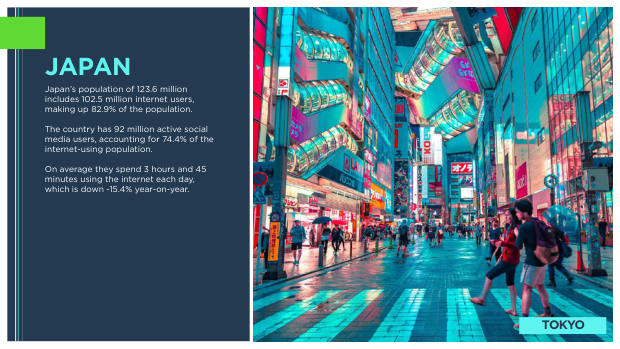
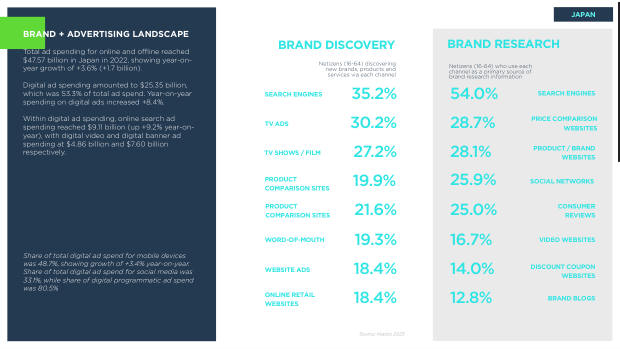
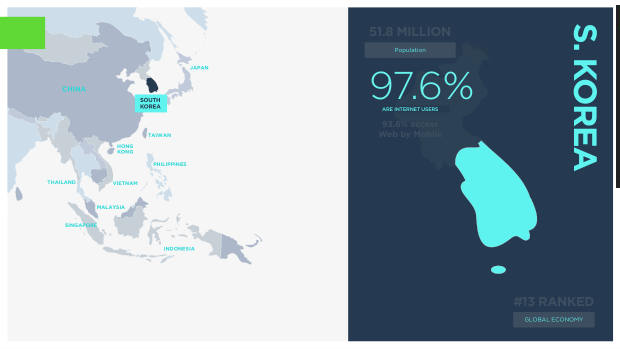
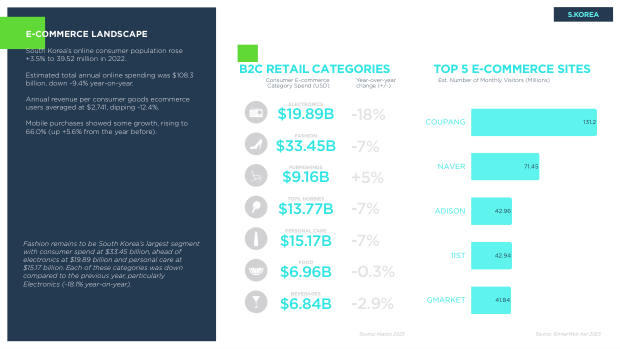
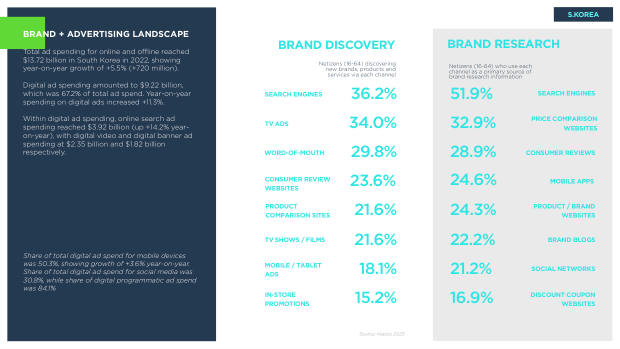
The report compiles country-level snapshots across major Asian markets — including China, Japan, South Korea, Taiwan, the Philippines, Vietnam, Thailand, Malaysia and Singapore — profiling each on population and internet penetration, social media usage, the ecommerce landscape, B2C retail categories, and the brand and advertising environment. Figures are drawn from third-party sources including Statista, Kepios, SimilarWeb, Bain and Kantar Global MONITOR, with market-size, growth and platform data reflecting 2022-2023.

Free report

Get the full report

Leave your details and we'll send the PDF to your inbox.

Your details go to Totem, never shared. Unsubscribe anytime.
← All reports