The CMO View on AI for Marketing: adoption without maturity
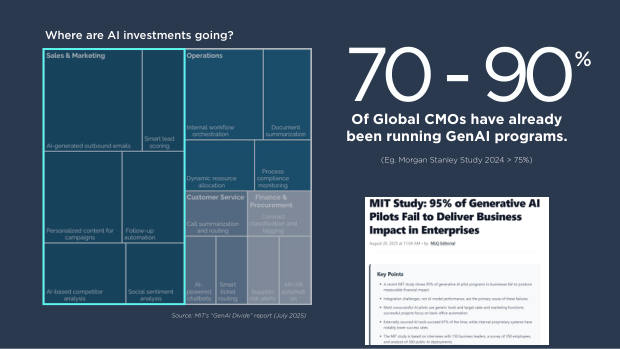
Awareness and adoption of generative AI have outrun organisational readiness. Drawing on MIT's "GenAI Divide" report (July 2025), the brief notes that 70-90% of global CMOs are already running GenAI programs — echoed by a 2024 Morgan Stanley study putting the figure above 75% — yet AI transformation remains, for most businesses, at an early stage despite the hype.
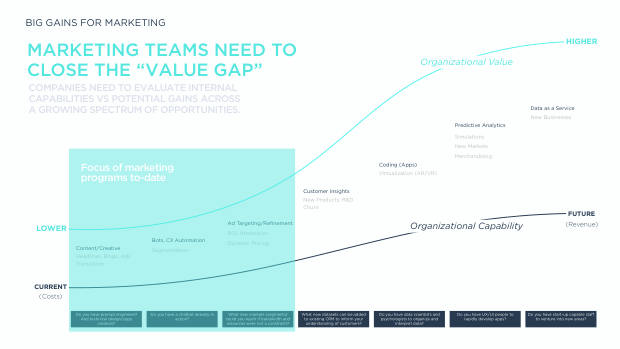
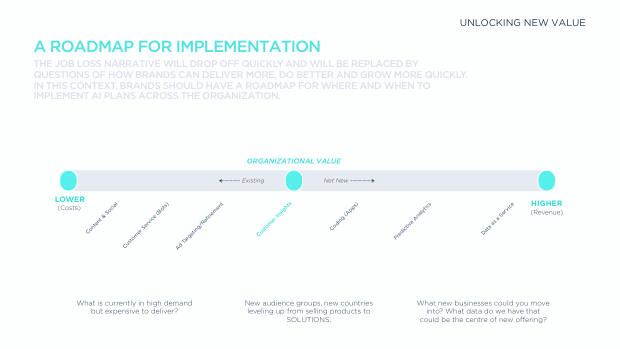
The strategic framing is a "value gap." Marketing has concentrated its AI efforts on a narrow band of use cases (content, translation, bots), while a much wider spectrum of higher-value opportunities — customer insights, predictive analytics, dynamic pricing, new products and entirely new businesses — sits under-exploited. The brief argues the job-loss narrative will fade quickly, replaced by questions of how brands can deliver more and grow faster, and that companies need a roadmap for where and when to implement AI across the organisation.
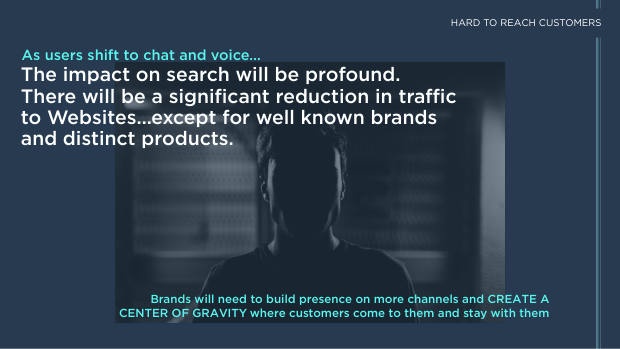
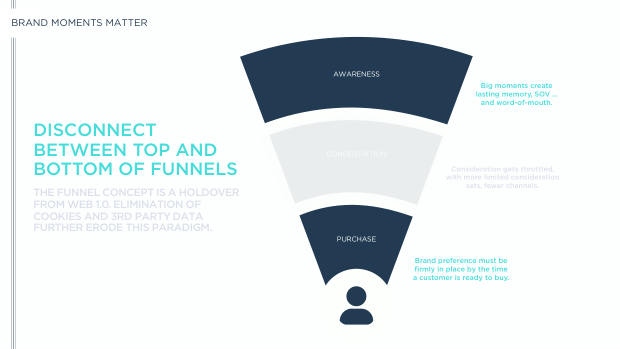
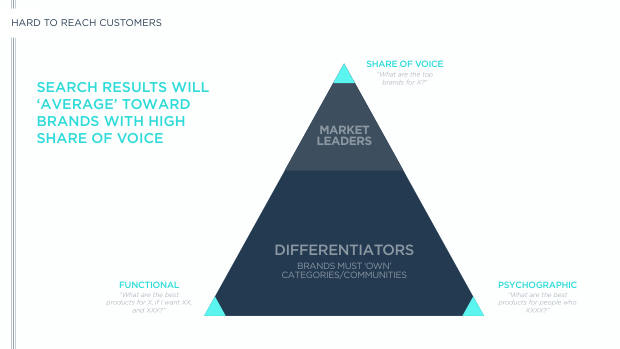
AI also reshapes the demand side. As users shift to chat and voice, website traffic will fall except for well-known brands and distinct products, search results will "average" toward brands with high share of voice, and the classic funnel — a Web 1.0 holdover already eroded by the loss of cookies and third-party data — breaks down. The response is to own categories and communities, build brand preference before purchase, and create a center of gravity where customers come and stay.
Adoption is near-universal, maturity is not.
MIT's "GenAI Divide" (July 2025) puts 70-90% of global CMOs already running GenAI programs, with a 2024 Morgan Stanley study above 75%. Despite that, and the surrounding hype, the brief stresses AI transformation is still early-stage for most businesses.
A modeled path to 2030.
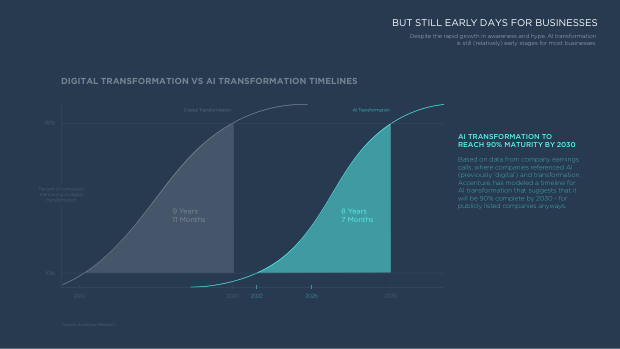
Using company earnings-call references, Accenture modeled AI transformation reaching 90% maturity by 2030 for publicly listed companies. The AI curve is compressed relative to digital — a modeled 8 years 7 months versus 9 years 11 months — underlining how quickly the shift is expected to play out.
Close the marketing "value gap."
Marketing programs to date have clustered on content, translation and CX bots. The brief maps a far broader spectrum against internal capability — ad targeting, ROI/attribution, customer insights, churn, predictive analytics, dynamic pricing, segmentation, R&D, new markets and new businesses — and prompts leaders to audit whether they have the prompt engineers, chatbots, data scientists and start-up-capable staff to capture it.
AI reshapes search and the funnel.
As users move to chat and voice, the brief warns of a significant reduction in website traffic except for well-known brands and distinct products, with results averaging toward high-share-of-voice brands. With the funnel eroded by cookie loss and third-party-data restrictions, brand preference must be established before a customer is ready to buy, and brands must "own" categories and communities.
Agents and the data question.
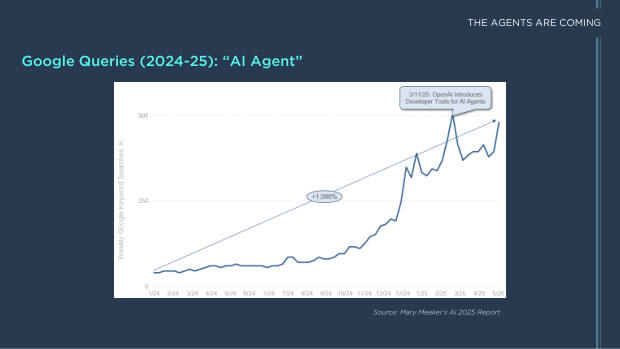
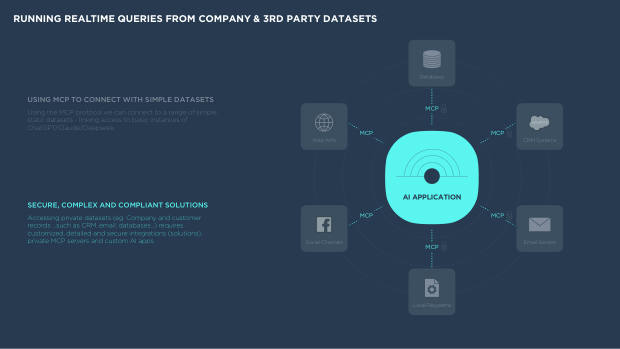
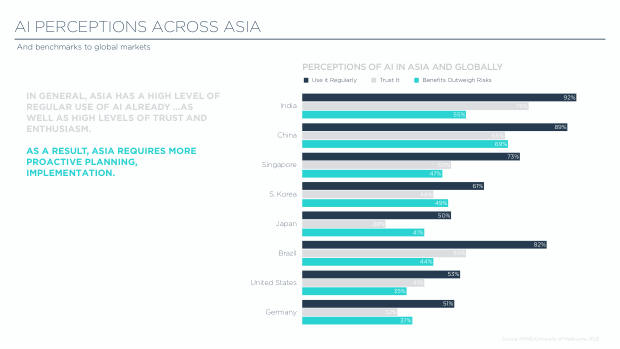
Interest in "AI agents" surged in Google queries across 2024-25 (Mary Meeker's AI 2025 report). The brief distinguishes connecting simple, static datasets via the MCP protocol from the secure, custom integrations and private MCP servers needed for sensitive CRM, email and database records. It also flags, via KPMG/University of Melbourne 2025 data, that Asia already shows high regular use of AI and high trust — requiring more proactive planning and implementation there.


How many CMOs are already using generative AI?
Between 70% and 90% of global CMOs are already running GenAI programs, according to MIT's "GenAI Divide" report (July 2025), with a 2024 Morgan Stanley study putting it above 75%.
When will AI transformation mature?
Accenture's earnings-call model projects roughly 90% maturity by 2030 for publicly listed companies, on a timeline (a modeled 8 years 7 months) compressed relative to digital transformation's 9 years 11 months.
What is the marketing "value gap"?
The gap between where marketing has applied AI so far — content, translation, bots — and the wider set of higher-value uses such as customer insights, predictive analytics, dynamic pricing and new business creation that remain under-exploited.
How will AI change search and the funnel?
Website traffic is expected to fall except for well-known brands and distinct products, results will average toward brands with high share of voice, and the traditional funnel breaks down — so brand preference must be built before purchase.
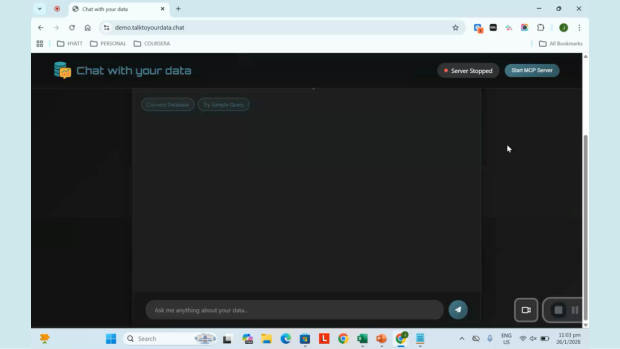
What is the difference between MCP and custom AI integrations?
The MCP protocol can link simple, static datasets to tools like ChatGPT, Claude or Deepseek, but private data such as CRM, email and databases requires secure, custom-built integrations and private MCP servers.
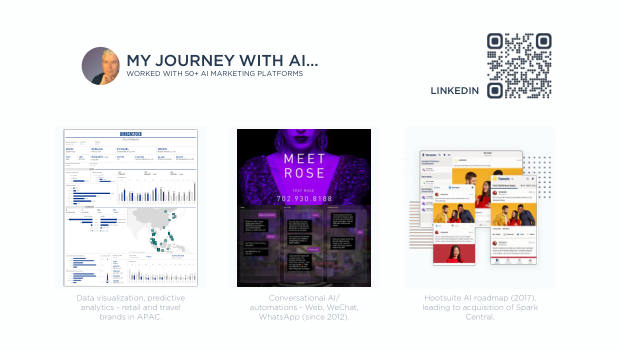
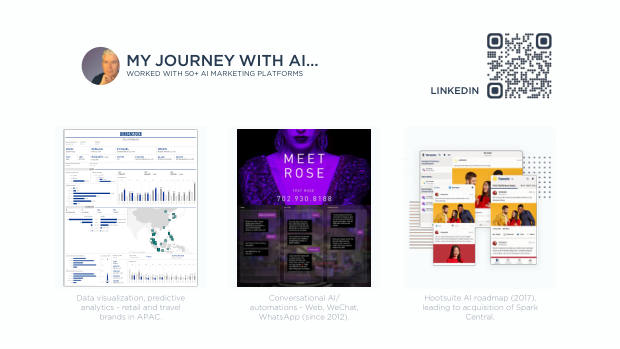
An event presentation from Totem, "The CMO View on AI for Marketing," delivered from the vantage of a practitioner who has worked with 50+ AI marketing platforms and conversational AI since 2012. It synthesises third-party research — MIT's "GenAI Divide" report (July 2025), a 2024 Morgan Stanley study, Accenture's AI-transformation modeling from company earnings calls, Mary Meeker's AI 2025 report, and KPMG/University of Melbourne's 2025 study of AI perceptions across Asia and global markets — into a roadmap view of where and when marketing organisations should implement AI.
Get the full report
Leave your details — we'll email you the PDF and give you the download straight away.